

Table of Contents
- What Is the 15-15-15 Coffee Rule?
- Why Coffee Goes Stale: The Science Behind Flavor Loss
- The 15 Months: Green Beans and Long-Term Storage
- The 15 Days: Roasted Bean Freshness Window
- The 15 Minutes: Ground Coffee Oxidation
- How to Store Coffee Beans for Maximum Freshness
- Coffee Bean Shelf Life: What You Need to Know
- Putting the 15-15-15 Rule Into Practice
- Frequently Asked Questions
Last Updated: August 5, 2026
What Is the 15-15-15 Coffee Rule?
The 15-15-15 coffee rule is a framework for understanding how long coffee stays fresh at different stages: 15 months for green beans, 15 days for roasted beans, and 15 minutes for ground coffee. This guideline reflects the reality that coffee quality degrades as it's exposed to oxygen, moisture, and time. Understanding these three windows helps you maximize flavor and aroma in every cup.
The rule originated from observing how quickly aromatic compounds and volatile oils escape from coffee once it's roasted and exposed to air. At Cuppari Coffee, we've built our entire operation around respecting these timeframes, roasting beans only after your order arrives and shipping the same day to ensure you receive coffee at its absolute peak.
The Three 15s Explained
Each "15" represents a critical stage in the coffee lifecycle. Green beans (unroasted) maintain their quality for approximately 15 months when stored properly in cool, dry conditions. This extended window is why green bean importers and roasters can source from around the world without sacrificing freshness at origin.
Roasted beans hit their peak flavor window within 15 days of roasting. The first three to seven days after roasting are often considered the "sweet spot", after that, flavor begins a gradual decline. Ground coffee, meanwhile, oxidizes rapidly once the bean structure is broken apart, with noticeable quality loss occurring within 15 minutes of grinding.
These timeframes aren't arbitrary. They're rooted in the chemistry of how coffee degrades and how quickly different forms lose their most desirable characteristics.
Why Coffee Goes Stale: The Science Behind Flavor Loss
Coffee doesn't spoil like food, it stales. The difference matters because stale coffee is still safe to drink, but it tastes flat, bitter, or dull. The culprit isn't bacteria or mold; it's the escape of volatile compounds that create the coffee's complexity and appeal.
Oxidation and Aromatic Compounds
When roasted coffee is exposed to oxygen, a process called oxidation begins immediately. The volatile oils and aromatic compounds that give coffee its distinctive flavor profile react with oxygen, breaking down into less flavorful compounds. This is the primary reason freshly roasted coffee tastes so different from coffee that's been sitting on a shelf for months.
The aromatic compounds in coffee are what make the difference between a vibrant, complex cup and one that tastes thin and one-dimensional. These compounds are most concentrated in the hours and days immediately after roasting. Over time, they diminish regardless of storage conditions, though proper storage (airtight containers, cool temperatures, darkness) slows this degradation significantly.
Degassing and Carbon Dioxide Release
During roasting, coffee beans absorb heat energy, which triggers chemical reactions that produce carbon dioxide. After roasting stops, the beans continue to release this CO2 for several days, a process called degassing. This degassing is actually beneficial for flavor development in the first few days after roasting.
However, degassing also means the bean is porous and more vulnerable to oxygen infiltration. As CO2 escapes, oxygen can enter the bean's structure. This is why the first three to seven days after roasting are so critical: the beans are actively developing flavor through degassing, but they're also at peak vulnerability to oxidation.
The 15 Months: Green Beans and Long-Term Storage
Green beans (unroasted coffee) represent the raw ingredient stage. At this point, the beans have been dried and processed but haven't undergone the chemical transformation that roasting creates. Because they haven't released volatile oils or undergone the roasting process, green beans are remarkably stable.
A 15-month shelf life for green beans assumes proper storage: cool temperatures (ideally 50-70°F), low humidity (around 11% moisture content), and protection from light and oxygen. Many commercial roasters store green beans in burlap bags with one-way valves that allow moisture to escape while minimizing oxygen exposure.
The extended timeframe for green beans is why specialty coffee can travel globally. A roaster in Portland can source beans from Ethiopia, Kenya, or Colombia and have them arrive months after harvest without significant quality loss. The real quality window opens once those beans are roasted.
The 15 Days: Roasted Bean Freshness Window
Once beans are roasted, the clock starts ticking. The 15-day window represents the period during which roasted beans maintain their peak flavor profile. However, this doesn't mean coffee becomes undrinkable on day 16, it means the flavor begins a gradual decline.
Peak Flavor and Brewing Window
The sweet spot for roasted beans is typically days 3-7 after roasting. During this period, degassing has progressed enough that the beans are stable, but the volatile oils and aromatic compounds haven't degraded significantly. The flavor is bright, complex, and fully developed.
Days 8-15 still offer excellent coffee. The flavor remains good, though some of the most delicate aromatic notes may have faded. By day 20-30, the coffee is noticeably flatter. By day 60 or beyond, the flavor has become quite dull, though the coffee remains safe to drink.
The brewing method you use can affect how much you notice this degradation. Espresso, which relies on high pressure to extract flavors quickly, tends to show staling more obviously than drip coffee. A flat espresso shot from week-old beans is harder to hide than a drip cup from the same beans.
Variations by Roast Profile
Roast profile significantly affects how quickly coffee stales. Light roasts, which are roasted for less time, have less developed flavors to begin with but also less volatile oil on the surface. They tend to maintain their character longer than dark roasts.
Dark roasts have more surface oils and more developed (and therefore more volatile) flavor compounds. They often peak earlier and decline faster than light roasts. A dark roast might be at its best on days 3-5, while a light roast might still be excellent on day 10.
Medium roasts typically fall in the middle, with a flavor window similar to the standard 15-day guideline.
The 15 Minutes: Ground Coffee Oxidation
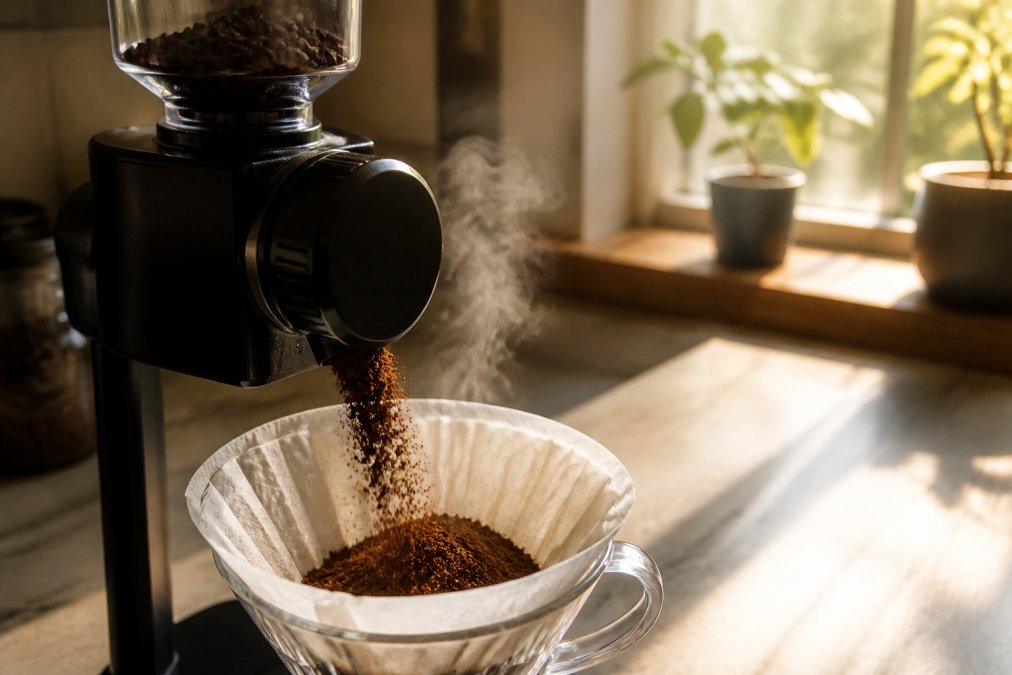
Ground coffee oxidizes dramatically faster than whole beans because grinding dramatically increases the surface area exposed to oxygen. What takes 15 days for whole beans can happen in 15 minutes for ground coffee.
When you grind beans, you're breaking apart the cellular structure. This exposes all the interior surfaces to air. The volatile compounds that give coffee its aroma and flavor begin escaping immediately. Within 15 minutes, you've lost a noticeable amount of the most delicate aromatics.
This is why coffee enthusiasts grind beans immediately before brewing. The difference between grinding 15 minutes before brewing and grinding just before water hits the grounds is genuinely perceptible. The freshly ground coffee will taste more vibrant, with brighter acidity and more complex flavor notes.
For home brewers, this means investing in a grinder (burr grinders are preferable to blade grinders because they produce more consistent particle size) and making it part of your routine. The extra 60 seconds it takes to grind beans right before brewing pays off in noticeably better coffee.
How to Store Coffee Beans for Maximum Freshness
Proper storage slows the inevitable degradation of roasted coffee. While you can't stop oxidation entirely, you can minimize it through smart storage practices.
Storage Container Efficacy
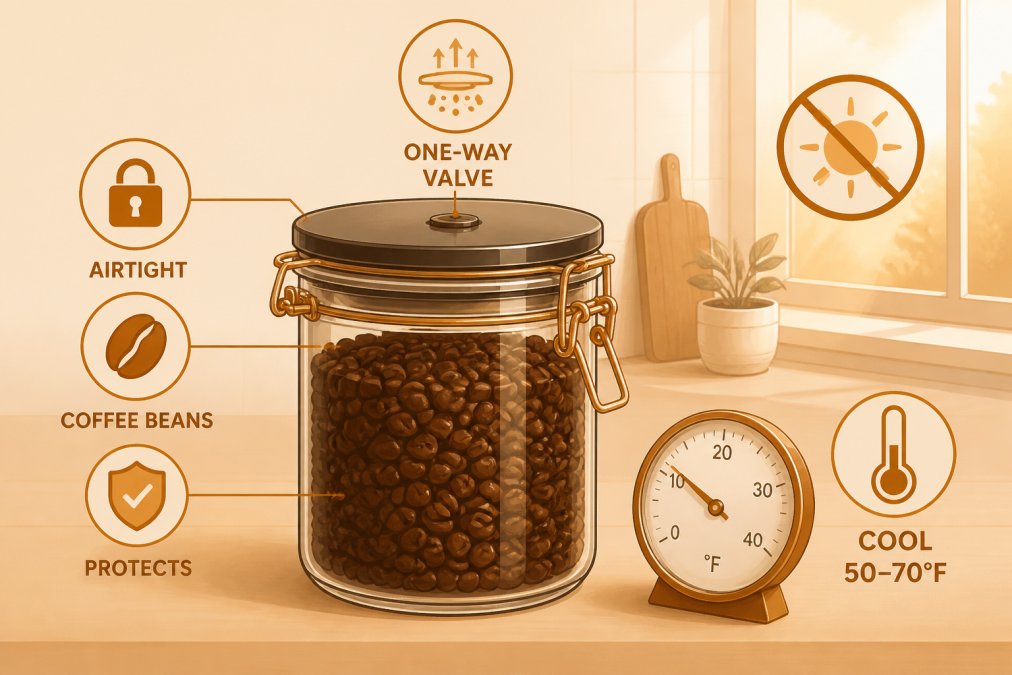
The container you use matters significantly. Airtight containers prevent oxygen from reaching the beans. Opaque containers prevent light from accelerating oxidation. The best containers combine both features.
One-way valve bags and containers are particularly effective. These devices allow carbon dioxide (which is heavier than oxygen) to escape during the degassing phase while minimizing oxygen infiltration. Many specialty coffee roasters, including Cuppari Coffee, package beans in bags with one-way valves specifically to balance these needs.
Glass containers with tight-sealing lids work well for beans you plan to use within two weeks. Vacuum-sealed bags are excellent for longer storage. Avoid clear containers, which expose beans to light, and avoid storing beans in the original bag if it doesn't have a one-way valve and you're keeping them longer than a week.
Temperature, Humidity, and Oxygen Exposure
Temperature stability matters more than absolute temperature. Beans stored at a consistent 60°F will maintain quality longer than beans stored at room temperature that fluctuates between 65°F and 75°F. Avoid storing coffee near heat sources, in direct sunlight, or in warm kitchens.
Humidity affects bean quality. Excess moisture can promote mold growth and degrade the beans. Too little humidity can make beans brittle. Aim for storage conditions around 50-65% humidity. A cool pantry or cabinet works better than a refrigerator or freezer, which can introduce condensation when containers are removed and brought to room temperature.
Oxygen exposure is the primary enemy. Minimize headspace in containers. If you buy beans in bulk and repackage them into smaller containers for daily use, try to fill containers to the top to reduce air exposure. Some people use food-grade oxygen absorber packets, though these are more common in commercial storage than home use.
Coffee Bean Shelf Life: What You Need to Know
Understanding coffee bean shelf life helps you make smart purchasing decisions. Many people buy coffee in bulk thinking they're getting a better deal, only to find they're drinking stale coffee by the time they reach the bottom of the bag.
A practical approach is to buy only what you'll use within two to three weeks. If you drink a cup or two daily, a single pound of beans is a reasonable purchase. If you're buying for multiple people or brewing multiple cups daily, you might purchase two pounds.
For subscription services, this becomes easier. Regular deliveries of freshly roasted coffee ensure you're always working with beans in their optimal window. This is why Cuppari Coffee roasts and ships the same day, it guarantees your beans arrive fresh, within that critical 15-day window where flavor is at its best.
How to Identify Stale Coffee
Stale coffee exhibits several telltale signs. The aroma is noticeably muted. When you open a bag of fresh beans, the smell should be vibrant and complex. Stale beans smell flat or one-dimensional.
Visually, stale beans often look dull. Fresh roasted beans have a certain sheen or luster. Very stale beans can look almost chalky or dusty. If you're buying from a local roaster, you can often see this difference directly.
The most reliable test is brewing. Fresh coffee produces a visible bloom when you pour hot water over it, the grounds puff up slightly as carbon dioxide escapes. Stale coffee produces little to no bloom. The resulting cup tastes flat, lacking the complexity and brightness of fresh coffee.
Putting the 15-15-15 Rule Into Practice
Understanding the rule intellectually is one thing. Actually using it to improve your daily coffee requires building new habits.
Best Practices for Home Brewing
Start by buying smaller quantities more frequently. Instead of buying two pounds monthly, buy half a pound every two weeks. This keeps you within the optimal flavor window.
Invest in a good grinder and make grinding part of your brewing ritual. The 60 seconds it takes to grind beans right before brewing is time well spent. If you're making multiple cups, grind only what you need for that brewing session.
Store your beans in an airtight container away from heat, light, and moisture. A cool pantry or cabinet is ideal. Avoid the freezer, the temperature fluctuation when you remove the container causes condensation that damages the beans.
When you receive fresh coffee, especially from a roaster like Cuppari Coffee that ships the same day it roasts, use it strategically. Your first cup from a new bag should be something you savor, perhaps a pour-over or French press where you can appreciate the full flavor profile. As the beans age through their 15-day window, you can use them for espresso or milk-based drinks where some flavor degradation is less noticeable.
Track when you opened each bag. Many people think they're drinking fresh coffee when they're actually drinking beans that have been open for three weeks. A simple marker on the container with the date you opened it provides useful perspective.
The 15-15-15 rule works because it's grounded in how coffee actually degrades. Green beans stay stable for months, roasted beans hit their peak within days and decline gradually over weeks, and ground coffee oxidizes rapidly. Respecting these timeframes, by buying fresh, storing properly, and grinding right before brewing, transforms your daily coffee from an afterthought into something genuinely excellent. When you start with beans roasted the day they ship to you, like those from Cuppari Coffee, you're beginning with a significant advantage. The rest is just respecting the chemistry that makes coffee worth drinking in the first place.
Frequently Asked Questions
What is the 15-15-15 rule for coffee freshness?
The 15-15-15 coffee rule is a framework for maximizing flavor: green beans stay fresh for 15 months, roasted beans peak within 15 days, and ground coffee should be brewed within 15 minutes. This timeline reflects how quickly aromatic compounds and volatile oils degrade through oxidation and degassing. The rule helps home brewers understand the critical window for peak flavor extraction and guides storage decisions to maintain coffee quality from roasting to cup.
How should you store coffee beans to maintain freshness?
Store roasted beans in an airtight container away from heat, light, and moisture. Vacuum-sealed bags with one-way valves work well for short-term storage, while opaque, airtight containers protect beans longer by blocking oxygen exposure and light. Keep beans at room temperature (around 68-72°F) with low humidity. Avoid refrigerators and freezers unless storing for several months, as temperature fluctuations can introduce moisture. Properly stored beans maintain peak flavor throughout the 15-day freshness window and remain drinkable for up to 30 days.
Does coffee really go bad after 15 days?
Coffee doesn't become unsafe to drink after 15 days, but flavor quality declines noticeably. The 15-day window marks the peak brewing window when aromatic compounds and volatile oils are at their strongest. After this period, oxidation accelerates and degassing continues, causing the coffee to taste flat, stale, or one-dimensional. Roasted beans remain drinkable for 30-45 days if stored properly, but the complex flavor profile that defines fresh coffee degrades significantly. Freshly roasted coffee within 3-7 days delivers the most vibrant taste.
Why does ground coffee lose flavor faster than whole beans?
Grinding dramatically increases surface area exposed to oxygen, accelerating oxidation of volatile oils and aromatic compounds. Whole beans have a protective outer layer that slows this process, but grinding breaks that barrier. Ground coffee begins losing flavor immediately through rapid oxygen exposure and carbon dioxide release. This is why the 15-minute rule recommends brewing ground coffee right away, waiting even a few hours allows significant flavor loss. Whole beans maintain their aromatic integrity for days because oxygen penetrates slowly through the bean's structure.
This article was written using GrandRanker