

Table of Contents
- Why These Combinations Work for Your Morning Routine
-
How to Prepare Each Recipe
- 1. Cinnamon Vanilla Latte (Best for Morning Energy)
- 2. Cold Brew with Almond Milk and Cardamom (Best for Afternoon Refreshment)
- 3. Cocoa and Cinnamon Americano (Best for Chocolate Cravings)
- 4. Maple and Sea Salt Latte (Best for Balanced Sweetness)
- 5. Ginger and Vanilla Oat Milk Latte (Best for Digestive Support)
- Healthy Coffee Sweeteners That Replace Sugar
- How to Flavor Coffee Without Syrup
- Benefits of Cinnamon in Coffee and Other Spices
- Dairy-Free and Plant-Based Milk Additions
- Caffeine Sensitivity and Flavor Pairing Considerations
- Cold Brew and Hot Coffee Recipe Variations
- Common Mistakes Beginners Make with Flavored Coffee
- Frequently Asked Questions
5 Healthy Coffee Flavor Combinations for Beginners
Last Updated: August 4, 2026
Research from the National Coffee Association shows that 67% of American adults drink coffee daily, yet most rely on sugary syrups and high-calorie creamers that undermine their health goals. This guide covers 5 healthy coffee flavor combinations for beginners that deliver genuine taste without compromising nutrition.
The biggest mistake beginners make is assuming healthy coffee has to taste boring. The right combination of ingredients, from cinnamon to almond milk to monk fruit sweetener, creates complexity and depth that rivals any sugary latte.
Why These Combinations Work for Your Morning Routine
Light roasts have brighter, more acidic notes that pair beautifully with citrus and floral additions. Medium roasts offer balanced sweetness that complements warm spices like cinnamon and nutmeg. Dark roasts have deeper, earthier profiles that work best with chocolate, coconut, and bold additions. When you understand these flavor relationships, you stop guessing and start building combinations that actually taste intentional.
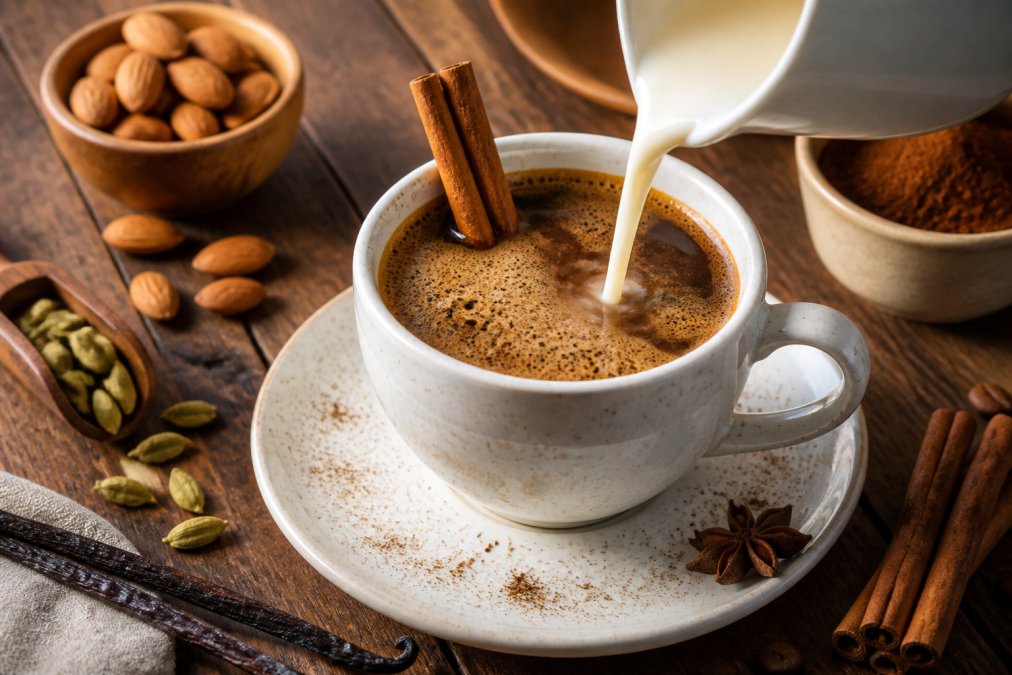
Coffee contains hundreds of flavor compounds. Adding the right complementary ingredient amplifies those compounds instead of drowning them out. A pinch of cinnamon enhances the coffee's natural sweetness and adds warmth. Almond milk adds subtle nuttiness without heaviness. Monk fruit sweetener provides sweetness at zero calories and zero blood sugar impact.
How to Prepare Each Recipe
1. Cinnamon Vanilla Latte (Best for Morning Energy)
Brew 8 ounces of hot medium roast coffee. Heat 4 ounces of unsweetened almond milk and add a pinch of ground cinnamon (about 1/8 teaspoon). Whisk gently for 30 seconds, then pour into your coffee. Add 2-3 drops of vanilla extract and stir. The cinnamon hits first, followed by subtle vanilla warmth. No added sweetener needed, the spices create perceived sweetness without any sugar.
2. Cold Brew with Almond Milk and Cardamom (Best for Afternoon Refreshment)
Combine 1 cup of coarsely ground coffee with 4 cups of cold water in a glass jar. Add 4-5 crushed cardamom pods and let steep for 12-24 hours at room temperature. Strain through a fine mesh filter. Pour 6 ounces of concentrate into a glass with ice, add 4 ounces of unsweetened almond milk, and stir. Cardamom's complexity shines in cold brew because the cold extraction brings out floral, slightly spicy notes that get lost in hot water. This combination stays fresh in the refrigerator for up to 2 weeks.
3. Cocoa and Cinnamon Americano (Best for Chocolate Cravings)
Brew 2 ounces of espresso or strong coffee into a cup. Add 4 ounces of hot water to create an Americano. Whisk 1/2 teaspoon of unsweetened cocoa powder with a pinch of cinnamon and 1/4 teaspoon of monk fruit sweetener in a separate cup, then add 2 tablespoons of hot water to create a paste. Pour this paste into your Americano and stir thoroughly. Top with 2 ounces of steamed unsweetened almond milk if desired. Cocoa powder adds depth and antioxidants without the calories of chocolate syrup.
4. Maple and Sea Salt Latte (Best for Balanced Sweetness)
Brew 8 ounces of medium roast coffee. Heat 4 ounces of unsweetened coconut milk (barista-style carton) until steaming. Add 1/2 teaspoon of pure maple syrup and a pinch of sea salt (about 1/16 teaspoon). Whisk for 15 seconds and pour into your coffee. The maple provides real sweetness without blood sugar spikes, and the sea salt amplifies the maple's complexity while balancing any bitterness from the coffee.
5. Ginger and Vanilla Oat Milk Latte (Best for Digestive Support)
Brew 8 ounces of hot coffee. Heat 4 ounces of unsweetened oat milk and add 1/4 teaspoon of fresh grated ginger (or 1/8 teaspoon of ground ginger). Add 2-3 drops of vanilla extract. Whisk for 30 seconds and pour into your coffee. Ginger adds warmth and supports digestive health, while vanilla provides smoothness. Oat milk's natural creaminess means you don't need any sweetener.
| Combination | Best Roast | Milk Choice | Prep Time | Key Benefit |
|---|---|---|---|---|
| Cinnamon Vanilla | Medium | Almond | 3 minutes | Sustained energy, no blood sugar spike |
| Cold Brew Cardamom | Any | Almond | 12-24 hours steep | Smooth, low acid, portable |
| Cocoa Cinnamon | Medium-Dark | Almond | 4 minutes | Antioxidants, satisfies cravings |
| Maple Sea Salt | Medium-Dark | Coconut | 3 minutes | Balanced sweetness, sophisticated flavor |
| Ginger Vanilla | Light-Medium | Oat | 3 minutes | Digestive support, anti-inflammatory |
Healthy Coffee Sweeteners That Replace Sugar
Table sugar causes blood glucose spikes, triggers insulin release, and leaves you crashing an hour later. Natural sweeteners avoid this entirely while still satisfying your taste buds.
Monk fruit sweetener is extracted from the luo han guo fruit and contains zero calories, zero carbs, and zero glycemic impact. It's 150-200 times sweeter than sugar, so you need very little, a quarter teaspoon sweetens an entire cup. Products like Wholesome Yum Sugar Free Coffee Syrup combine monk fruit with allulose for better texture.
Stevia leaf extract is also zero-calorie with a slightly more noticeable aftertaste for some people. Miss Mary's Sugar Free Sinless Syrups use stevia combined with monk fruit to minimize aftertaste.
Maple syrup is a real food containing minerals like manganese and zinc, plus a lower glycemic index than table sugar. Use 1/2 to 1 teaspoon per cup. It does contain calories (about 52 per tablespoon) and carbs (13 grams per tablespoon).
Allulose is a rare sugar that tastes like table sugar but contains 90% fewer calories and doesn't spike blood glucose. ChocZero Sugar Free Coffee Syrup Variety Bundle uses monk fruit and allulose together for optimal taste and mouthfeel.
How to Flavor Coffee Without Syrup
Syrups are processed and often contain additives. Flavoring coffee with whole spices, extracts, and natural ingredients gives you more control and better taste.
Cinnamon is the easiest spice to add. Sprinkle 1/8 teaspoon directly into your hot coffee or whisk it into your milk before adding to coffee. Cinnamon dissolves better in warm milk and adds warmth and perceived sweetness without any actual sugar. It also has anti-inflammatory properties and may help regulate blood sugar.
Nutmeg should be used sparingly, 1/16 teaspoon is enough for an 8-ounce cup. Cardamom is more expensive but worth it. Crush 2-3 whole pods and add them to your coffee grounds before brewing, or add crushed pods directly to hot coffee and let them steep for 2 minutes before straining. Ginger (fresh or ground) adds warmth and digestive support. Grate about 1/4 teaspoon of fresh ginger into hot milk before adding to coffee, or use 1/8 teaspoon of ground ginger.
DIY Flavor Extracts on a Budget
Making your own extracts costs a fraction of store-bought versions. Combine 1 cup of high-proof alcohol (vodka works fine) with your flavoring ingredient in a glass jar, seal it, and let it steep for 2-4 weeks. Strain and store in a dark bottle. A few drops per cup flavors your coffee without adding calories.
Vanilla extract requires vanilla beans. Split 2-3 whole vanilla beans lengthwise and place them in a jar with 1 cup of vodka. Steep for 3-4 weeks. Use 2-3 drops per cup. Cinnamon extract is simpler: place 3-4 cinnamon sticks broken into pieces in a jar with 1 cup of vodka and steep for 2-3 weeks. Almond extract requires 1/2 cup of sliced almonds in 1 cup of vodka, steeped for 2-3 weeks.
Benefits of Cinnamon in Coffee and Other Spices
Cinnamon is more than just flavor, it's a functional ingredient with measurable health benefits. Research shows that cinnamon may help regulate blood glucose levels, reduce inflammation, and improve insulin sensitivity.
Light roasts have bright, acidic notes where cinnamon's warmth complements without overwhelming. Medium roasts have balanced acidity and natural sweetness where cinnamon amplifies the roast's inherent sweetness. Dark roasts have deep, earthy flavors where cinnamon adds warmth and prevents harshness.
Cinnamon and nutmeg together create a warm, slightly sweet profile. Use 1/8 teaspoon cinnamon and 1/16 teaspoon nutmeg per cup. Cinnamon and cardamom create a more complex, slightly floral profile that works best with medium to light roasts. Cinnamon and ginger create a warming, slightly spicy profile with digestive benefits.
Dairy-Free and Plant-Based Milk Additions
Plant-based milks avoid lactose while adding different flavor and texture characteristics to your coffee.
Almond milk is the most neutral option, adding creaminess without competing flavors. Unsweetened almond milk is essential, sweetened versions add unnecessary sugar. Oat milk has natural sweetness and creaminess close to dairy milk, pairing particularly well with vanilla, maple, and ginger additions. Coconut milk (barista-style, not canned) creates the richest mouthfeel and complements warm spices like cinnamon, nutmeg, and cardamom. Soy milk has the highest protein content and froths beautifully, working well with darker roasts and chocolate additions.
Caffeine Sensitivity and Flavor Pairing Considerations
Caffeine absorption slows when consumed with food or fat. Adding milk to your coffee slows caffeine absorption slightly, which can reduce jitteriness and extend the energy boost. Spices like cinnamon and ginger have mild anti-inflammatory properties and may support digestion, reducing stomach upset from caffeine.
Cold brew is a better choice than hot coffee for caffeine-sensitive individuals. Cold water extraction produces coffee with 65% less acidity than hot brewing, reducing stomach irritation. If you're sensitive to caffeine, stick to morning combinations and avoid afternoon options after 2 PM.
Cold Brew and Hot Coffee Recipe Variations
Cold brew requires planning but delivers superior results. Combine 1 cup of coarsely ground coffee with 4 cups of cold water. Add your flavor additions or keep it simple. Seal the jar and let it steep at room temperature for 12-24 hours. Strain through a fine mesh filter. Pour 6 ounces of concentrate into a glass with ice, add 4 ounces of your chosen milk, and stir. Cold brew concentrate keeps in the refrigerator for up to 2 weeks, making it ideal for meal prep.
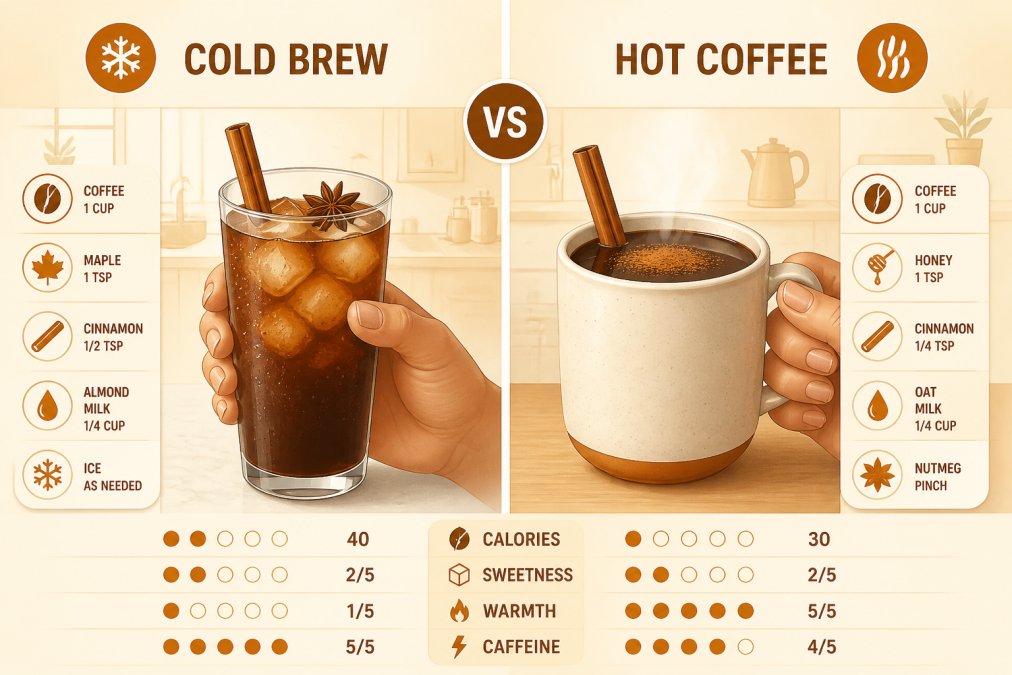
Hot brewing is faster but requires more attention. Use filtered water heated to 195-205 degrees Fahrenheit (not boiling). Pour the water over grounds and let them steep for 4 minutes, then strain. Add spices either to the grounds before brewing or to your milk while heating. Hot-brewed coffee with spices tastes more vibrant and aromatic than cold brew because heat activates volatile compounds in the spices. However, hot-brewed coffee is more acidic and can cause stomach irritation if you're sensitive.
Common Mistakes Beginners Make with Flavored Coffee
Mistake 1: Using too much sweetener. A quarter teaspoon of monk fruit is enough for an entire cup. Start with less and add more if needed.
Mistake 2: Not tasting the coffee itself. If you're using low-quality, stale coffee, no flavor combination will fix it. Fresh, well-roasted beans from specialty coffee roasters make every flavor addition taste better. Cuppari Coffee roasts beans only after your order ships, guaranteeing freshness.
Mistake 3: Adding too many flavors at once. Start with one or two additions and build from there. Simplicity is more sophisticated than complexity.
Mistake 4: Using sweetened plant-based milks. Check the label for "unsweetened" explicitly stated. Sweetened milks add hidden sugar to your drink.
Mistake 5: Not adjusting for roast level. Bright spices work with light roasts; warm, deep spices work with dark roasts.
Mistake 6: Brewing water that's too hot. Water above 205 degrees extracts bitter compounds that compete with your flavor additions.
Mistake 7: Forgetting to whisk spices into milk. Cinnamon and other spices don't dissolve well in coffee alone. Whisking them into warm milk first ensures even distribution and better flavor integration.
Building healthy coffee flavor combinations is simpler than most people think. Start with whichever sounds most appealing, make it exactly as written, and adjust from there based on your preferences. Most importantly, start with fresh coffee. Cuppari Coffee delivers premium, freshly-roasted beans directly to your doorstep, roasted only after your order is placed and shipped the same day. With guaranteed freshness and free shipping on all U.S. orders, you get the foundation every healthy coffee combination deserves. Get started today and experience how much better your morning tastes when you begin with quality.
Frequently Asked Questions
What are the best healthy coffee flavor combinations for someone just starting out?
Start with simple combinations: cinnamon and almond milk, vanilla extract with coconut milk, or cocoa powder with unsweetened creamer. These pair well with most coffee roasts and don't require special equipment. Each combination uses natural ingredients with minimal added sugar. Freshly roasted coffee from quality sources like Cuppari Coffee makes these simple flavors shine without needing heavy syrups or artificial additives.
What healthy coffee sweeteners actually taste good without an artificial aftertaste?
Monk fruit and stevia blends offer the most natural taste profile. Maple syrup and allulose provide sweetness without the metallic finish some experience with erythritol. Start with small amounts (1/4 teaspoon) and adjust to taste. Brands like Wholesome Yum and Miss Mary's use naturally derived sweeteners that dissolve easily in both hot and cold coffee. Taste varies by individual sensitivity, so testing a few options helps you find your preference.
How do I make flavored coffee without buying syrup bottles?
Use whole spices like cinnamon sticks, cardamom pods, and nutmeg by adding them directly to your coffee grounds before brewing, or whisk them into warm milk first. Pure extracts like vanilla or coffee extract add concentrated flavor with no added sugar. For DIY syrups, simmer spices with water and monk fruit sweetener for 10 minutes, then strain. This approach costs less than bottled syrups and gives you complete control over sweetness and ingredient quality.
Does cinnamon in coffee actually have health benefits, or is that just marketing?
Cinnamon contains compounds like cinnamaldehyde that support digestive health and may help regulate blood sugar levels. Adding it to coffee means you're consuming a functional ingredient, not just flavor. The benefit depends on consistency and amount (roughly 1/4 teaspoon per cup). Pairing cinnamon with medium and dark roasts creates a complementary flavor profile while delivering these potential benefits. It's one of the few flavor additions that combines taste with practical nutritional value.
What's the difference between cold brew and hot coffee when it comes to flavor combinations?
Cold brew is naturally smoother and less acidic, which means delicate flavors like vanilla and cardamom shine without bitterness. Hot coffee's brightness pairs better with bold spices like cinnamon and ginger. Cold brew typically steeps 12-24 hours, allowing spices to infuse fully. Hot coffee flavors develop quickly but fade faster. Choose cold brew for subtle, clean flavors and hot brewed coffee when you want pronounced spice notes. Freshly roasted beans work well in both methods.
This article was written using GrandRanker