

Table of Contents
- 7 Best Natural Spices to Add to Coffee Grounds
- How to Flavor Coffee Beans Naturally
- Best Coffee Spice Blends for Every Brewing Method
- Health Benefits of Spiced Coffee
- Storage, Freshness, and Equipment Care
- Common Mistakes When Adding Spices to Coffee
- Why Freshly Roasted Coffee Matters for Spiced Brews
- Conclusion
Last Updated: August 2, 2026
When you brew coffee at home, you control every variable. The 7 best natural spices to add to coffee grounds transform an ordinary morning ritual into something with genuine complexity and depth. At Cuppari Coffee, we've found that freshly roasted beans paired with the right spices create a flavor experience that rivals specialty café drinks, without the markup.
Most coffee drinkers stick to cream and sugar. Natural spices amplify the aromatic qualities already present in quality beans, creating an intentional flavor profile. Consumers increasingly seek natural flavoring over artificial additives, and spiced coffee delivers exactly that.
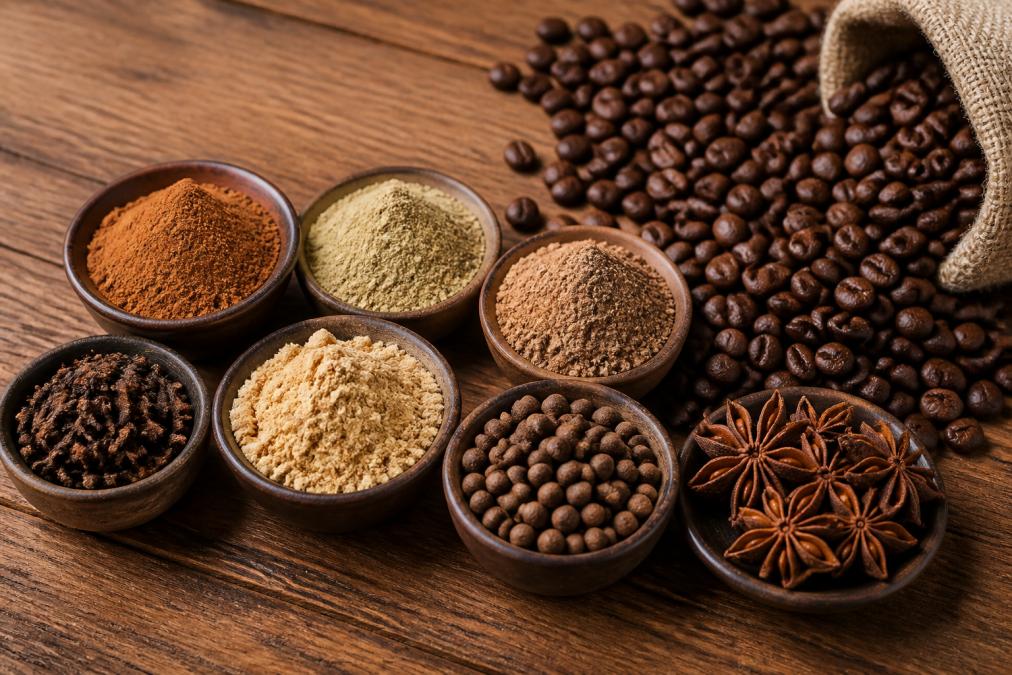
7 Best Natural Spices to Add to Coffee Grounds
1. Cinnamon: The Warm Classic
Cinnamon is the entry point for most people experimenting with spiced coffee. Ground cinnamon adds natural sweetness and warmth without requiring added sugar. The spice's essential oils dissolve into hot water during extraction, creating a subtle sweetness that complements both light and dark roasts. Research shows cinnamon reduces the perception of bitterness in beverages, useful for darker roasts that tend toward harsh notes.
How to use it: Add ¼ teaspoon of ground cinnamon directly to your coffee grounds before brewing. In a French press, add it to the grounds, pour hot water, and let it steep for the full duration.
Best brewing method: Drip coffee, French press, or pour-over.
2. Cardamom: The Floral Sophisticate
Cardamom brings a subtle citrus-floral note that makes coffee taste more complex. This is the spice used in traditional Middle Eastern coffee. The extraction challenge is precision: too little and you won't taste it; too much and it tastes medicinal.
How to use it: Start with ⅛ teaspoon per 8 ounces of coffee. Add it directly to grounds, or create a small sachet using cheesecloth and steep it in your brewed coffee for 2-3 minutes, then remove.
3. Nutmeg: The Holiday Comfort
Nutmeg is warming and slightly sweet, with a woody undertone that adds depth without aggression. It reduces bitterness, making it work well in cream-based drinks. Organic ground nutmeg maintains freshness better than bulk supermarket versions.
How to use it: Add ⅛ teaspoon per 8 ounces of coffee. Nutmeg pairs exceptionally well with vanilla-forward beans or coffees with chocolate notes. In a French press, mix it into the grounds before adding hot water.
4. Cloves: The Bold Deepener
Cloves are intense. A single clove contains enough essential oil to flavor an entire pot of coffee. This is the spice for people who want their coffee to announce itself. Cloves work best with dark roasts where the coffee's own intensity can stand up to the spice's aggression.
How to use it: Start with just ⅛ teaspoon of ground cloves per 8 ounces. The difference between ⅛ and ¼ teaspoon is the difference between sophisticated and overwhelming.
5. Ginger: The Spicy Kick
Ginger brings heat and brightness to coffee in ways other spices don't. The spice has a reputation for aiding digestion, which means spiced coffee with ginger becomes not just a flavor choice but a functional one. Ginger works across all roast levels without competing with the coffee.
How to use it: Add ¼ teaspoon of ground ginger per 8 ounces of coffee. Ginger is more forgiving than cloves. For a more intense ginger flavor, add it to a sachet and steep in your finished coffee for 3-5 minutes.
Best for: Iced coffee, cold brew, and morning brews where you want immediate alertness.
6. Allspice: The Complex Blend
Allspice tastes like cinnamon, nutmeg, and cloves combined. It's a single spice that delivers a complex flavor profile without requiring you to balance multiple ingredients. The spice works particularly well in coffee blends where you want warmth and complexity without individual spice notes competing.
How to use it: Add ⅛ to ¼ teaspoon per 8 ounces of coffee, depending on your preference and the coffee's roast level. Allspice pairs beautifully with medium to dark roasts.
7. Star Anise: The Licorice Note
Star anise brings a subtle licorice note that's completely different from the warm spices above. Too much and your coffee tastes like black licorice candy. Just enough and it becomes an intriguing complexity.
How to use it: Use ⅛ teaspoon of ground star anise per 8 ounces of coffee, or use one whole star anise pod and remove it after brewing. Steep the pod in your finished coffee for 2-3 minutes, then remove.
Best for: Light to medium roasts where the coffee's own subtle notes won't be overwhelmed.
| Spice | Amount per 8 oz | Best Roast Level | Brewing Method | Intensity |
|---|---|---|---|---|
| Cinnamon | ¼ tsp | Medium to dark | Any | Moderate |
| Cardamom | ⅛ tsp | Light to medium | French press, pour-over | Subtle |
| Nutmeg | ⅛ tsp | Medium to dark | Any | Gentle |
| Cloves | ⅛ tsp | Dark | French press, drip | Very high |
| Ginger | ¼ tsp | Any | Any | Moderate to high |
| Allspice | ⅛-¼ tsp | Medium to dark | Any | Moderate |
| Star Anise | ⅛ tsp (or 1 pod) | Light to medium | Pour-over, steeping | Subtle |
How to Flavor Coffee Beans Naturally
Adding Spices Directly to Grounds
The simplest method is also the most effective: mix spices directly into your coffee grounds before brewing. Hot water extracts the spice's volatile oils at the same rate it extracts the coffee's flavor compounds, creating an integrated flavor rather than something that tastes "added on."
Measure your coffee grounds into your brewing device, add the spice, stir gently to distribute evenly, then brew as normal. For French press brewing, this method is ideal because full immersion ensures complete extraction of both coffee and spice. For drip machines, add the spice to the filter basket with your grounds.
Spice-to-Coffee Ratios That Work
Getting the ratio right is the difference between sophisticated and overwhelming. Start small and adjust upward. For a standard 8-ounce cup using a 1:16 coffee-to-water ratio:
Warm spices (cinnamon, ginger): ¼ teaspoon per 8 ounces.
Moderate spices (nutmeg, allspice): ⅛ to ¼ teaspoon per 8 ounces.
Intense spices (cloves, cardamom, star anise): ⅛ teaspoon per 8 ounces as a starting point.
For a full pot (32 ounces), multiply the per-cup amount by four. For a small espresso shot (1-2 ounces), use ⅛ of the per-cup amount.
Grind Size and Extraction Compatibility
Grind size matters more than most home brewers realize. Finer grinds extract faster and more completely, which means spices added to finely ground coffee will taste more intense than the same amount added to coarsely ground coffee.
For drip coffee (medium grind), use the base amounts listed above. For French press (coarse grind), you may want to increase spice amounts slightly, perhaps 10-15% more. For espresso (very fine grind), use half the recommended amount or use whole spices steeped separately.
Best Coffee Spice Blends for Every Brewing Method
Chai-Inspired Blends for Bold Roasts
Chai spices work beautifully with dark roasts because both have bold, warm flavor profiles that complement rather than compete. A traditional chai blend combines cinnamon, cardamom, cloves, ginger, and sometimes nutmeg or allspice.
If you're blending your own, for 32 ounces of coffee use: 1 teaspoon cinnamon, ½ teaspoon ground ginger, ¼ teaspoon ground cloves, ¼ teaspoon cardamom, and ⅛ teaspoon nutmeg. Mix these together, then add ½ teaspoon of the blend per 8 ounces of coffee grounds. Brew in a French press for maximum flavor integration.
Single-Spice Pairings for Light Roasts
Light roasts have delicate, often fruity or floral notes that can be overwhelmed by heavy spice blends. Single spices work better here. Cardamom with light roasts is a classic pairing; the spice's citrus-floral notes complement the coffee's brightness. Use ⅛ teaspoon per 8 ounces.
Ginger with light roasts creates a refreshing effect. Use ¼ teaspoon per 8 ounces for a noticeable but not overwhelming effect. Pour-over or drip coffee works well because the shorter contact time prevents over-extraction of both coffee and spice.
Health Benefits of Spiced Coffee
Digestive and Anti-Inflammatory Properties
Several spices used in coffee have traditional reputations for supporting digestion. Ginger is the most researched; it's been used in traditional medicine for centuries to support digestive comfort. Cloves and cardamom have similar historical use. These spices contain volatile oils and other compounds that interact with your digestive system.
Antioxidants and Flavor Without Added Sugar
One of the biggest advantages of spiced coffee is that it delivers complex flavor without requiring added sugar. A cup of coffee with cinnamon and ginger tastes naturally sweet and satisfying, even with zero added sugar. Spices themselves contain antioxidants. Cinnamon, cloves, and ginger all rank high in antioxidant content. When you add them to coffee, which already contains antioxidants from the beans, you're increasing the total antioxidant load of your beverage.
Storage, Freshness, and Equipment Care
Keeping Spices Fresh and Potent
Ground spices lose potency over time as volatile oils evaporate. Buy ground spices in small quantities, enough for 2-3 months of use. Store them in airtight containers away from heat and light. A cool, dark cabinet is ideal.
If you have access to whole spices, grind them fresh as needed. Whole cinnamon sticks, cardamom pods, cloves, and nutmeg seeds maintain their potency for 6-12 months when stored properly. Ground versions lose effectiveness within 3-4 months.
Preventing Clogs and Maintaining Your Grinder
The primary concern with adding spices to coffee grounds is equipment maintenance. Very fine spice particles can accumulate in grinder burrs or clog narrow filter baskets in drip machines or espresso equipment.
For French press brewing, this isn't a concern. The mesh filter is large enough to handle spice particles. For drip coffee machines, use medium-ground spices and add them directly to the filter basket. For espresso machines, avoid adding ground spices directly to the portafilter. Instead, brew your espresso normally, then add a small sachet of steeped spices to the finished shot.
If you use a burr grinder and want to grind spices, do it separately from coffee. Use a dedicated spice grinder or clean your coffee grinder thoroughly afterward. Run your grinder with a small amount of uncooked rice after grinding spices to absorb residual oils and help clean the burrs.
Common Mistakes When Adding Spices to Coffee
The most frequent error is using too much spice too quickly. Start with half the recommended amount and increase gradually. Another common mistake is assuming all spices work with all roasts. Dark roasts can handle bold spices; light roasts need delicate ones.
People also often add spices to stale or low-quality coffee, expecting the spices to save the brew. Spices enhance good coffee; they don't rescue bad coffee. Adding spices to already-brewed coffee means they won't extract properly. Add spices to the grounds before brewing for proper integration.
Finally, people sometimes use spices that have been sitting in their cabinet for years. Stale spices taste dusty and muted. Fresh spices make a dramatic difference.
Why Freshly Roasted Coffee Matters for Spiced Brews
Spiced coffee depends on the quality of the base coffee in ways that plain coffee doesn't. Freshly roasted coffee has volatile aromatic compounds that peak within 3-7 days of roasting. These compounds interact with the spices you add, creating a more integrated, sophisticated flavor. Stale coffee, even if it's only a few weeks old, has lost many of these compounds.
Cuppari Coffee's model of roasting beans only after an order is placed and shipping the same day ensures you're working with coffee at its flavor peak. When your beans arrive, they're typically 1-3 days post-roast, the ideal window for spice pairing. The coffee's aromatic compounds are still vibrant, which means the spices you add will integrate more completely and taste more sophisticated.
Conclusion
Adding natural spices to your coffee grounds transforms a routine morning beverage into something intentional and complex. The seven spices covered here, cinnamon, cardamom, nutmeg, cloves, ginger, allspice, and star anise, each bring distinct flavor profiles that work across different roast levels and brewing methods. Getting the ratios right requires starting small and adjusting upward; getting the coffee right requires starting with freshly roasted beans. Cuppari Coffee delivers beans roasted only after your order is placed, shipped the same day, ensuring you're working with coffee at its aromatic peak. When you pair fresh beans with the right spice blend and proper brewing technique, you create a cup that tastes deliberately designed rather than casually assembled.
Frequently Asked Questions
How much spice should I add to my coffee grounds?
Start with 1/4 to 1/2 teaspoon of ground spice per 2 tablespoons of coffee grounds. Strong spices like cloves and ginger need less; milder spices like cinnamon can tolerate slightly more. Adjust based on your taste preference and the roast level of your coffee. Darker roasts can handle bolder spice amounts without being overpowered.
Can I put cinnamon in coffee grounds before brewing?
Yes. Ground cinnamon mixes well directly into coffee grounds before brewing. For best results, blend the cinnamon thoroughly with your grounds to ensure even distribution. Use 1/4 to 1/2 teaspoon per serving. If cinnamon clumps, break it up with a fork or add it to grounds just before brewing to prevent settling at the bottom of your cup.
What are the health benefits of adding spices to coffee?
Many spices offer health benefits beyond flavor. Ginger and cardamom support digestion and have anti-inflammatory properties. Cinnamon and cloves contain antioxidants. Adding spices lets you enjoy these benefits without added sugar or artificial flavorings. However, spices are most beneficial as part of a balanced diet, not as standalone health treatments.
How do spices affect coffee extraction and brewing?
Finely ground spices can slightly alter extraction by adding surface area and potentially affecting water flow through grounds. Coarser spice particles work better in French press and cold brew methods. In drip coffee, ensure spices are well-mixed with grounds to prevent clumping. Espresso may require slightly finer spice particles for proper infusion during the short extraction time.
Should I use organic spices in my coffee?
Organic spices avoid synthetic pesticides and additives, making them a good choice if you're concerned about purity. Non-organic spices are also safe but may contain processing agents. For the best flavor and freshness, buy spices in small quantities and store them in airtight containers away from heat and light. Freshly roasted coffee pairs best with fresh spices.
This article was written using GrandRanker