

Table of Contents
- Why Paper Filters Limit Your Coffee's Potential
- Reusable Coffee Filters: A Sustainable Path to Better Extraction
- Metal Coffee Filters Taste: Stainless Steel vs. Mesh Designs
- Cloth Coffee Filters Flavor: Organic Cotton and Full-Body Brews
- Coffee Filter Materials Comparison: Which Suits Your Brew Method?
- Emergency Alternatives to Paper Coffee Filters for Better Flavor
- Choosing the Right Alternative to Paper Coffee Filters
- Conclusion: Elevate Your Coffee with Better Filtration
Last Updated: July 30, 2026
When you're brewing coffee at home, the filter you choose shapes everything about the final cup. Paper filters trap sediment but also absorb the natural oils that carry flavor and body. Exploring alternatives to paper coffee filters for better flavor opens up brewing possibilities that transform your morning ritual. At Cuppari Coffee, we understand that freshness matters as much as the brewing method, which why we're committed to delivering premium beans that shine through any filtration choice.
Why Paper Filters Limit Your Coffee's Potential
Paper filters trap sediment but also absorb the natural oils and micro-fines that carry flavor compounds and body. Those oils are where the complexity lives. You're getting a cleaner, brighter cup, but sacrificing the depth that makes specialty coffee worth the investment.
Even unbleached paper filters remove the oils that give coffee its full-bodied character. The real problem isn't that paper filters are bad, it's that they're a compromise designed for convenience, not flavor. When you move beyond paper, you gain control over extraction and body in ways that paper simply doesn't allow.
Reusable Coffee Filters: A Sustainable Path to Better Extraction
Reusable filters come in metal mesh and cloth varieties, each with distinct advantages for extraction and sediment control. Unlike paper, which absorbs oils, reusable filters allow those precious oils to pass through while still trapping most sediment. This means your cup gains body and complexity without becoming muddy.
How Reusable Filters Preserve Natural Oils
Natural coffee oils contain volatile compounds that dissolve during brewing. When paper absorbs them, you lose tasting notes and mouthfeel. Reusable filters let oils flow into your cup where they belong, creating a fuller-bodied brew with more pronounced flavor notes.
CoffeeSock Reusable Coffee Filters, made from organic cotton, allow natural oils to pass through while maintaining a fine enough weave to catch most sediment. Users report noticeably smoother and more complex cups compared to paper.
For pour-over brewing, the Able Kone Coffee Filter uses photo-etched stainless steel designed to replicate the flow rate of paper #4 filters while allowing oils through. The precision hole pattern minimizes water bypass, a common issue with mesh filters.
Longevity and Cost Over Time
When you're using premium beans from Cuppari Coffee, roasted the same day your order ships, you want every brewing choice to honor that investment. A reusable filter ensures that the oils and flavor compounds in freshly roasted beans make it into your cup.
Metal Coffee Filters Taste: Stainless Steel vs. Mesh Designs
Metal filters occupy a sweet spot between paper and cloth. They're durable, easy to clean, and come in multiple designs that affect how much sediment makes it through. Finer mesh traps more particles, while coarser designs allow more oils and fines through.
Cone-Shaped Stainless Steel Filters for Pour-Over Brewing
The Able Disk Coffee Filter for AeroPress offers Standard and Fine options. The Standard disk allows more fine particles through for fuller body, while the Fine disk produces a cleaner cup while still preserving oils. This flexibility lets you dial in exactly the cup you want.
For automatic drip machines, the Quell Reusable #4 Filter uses polished stainless steel engineered to match paper filter flow rates. If water flows too quickly through a metal filter, you get under-extraction and a sour, thin cup. Quell's design prevents this by creating consistent water distribution.
The AeroPress Stainless Steel Reusable Metal Filter uses premium 316 stainless steel and produces a noticeably fuller-bodied cup than standard paper filters while still catching most grounds.
Fine Mesh Filters and Sediment Control
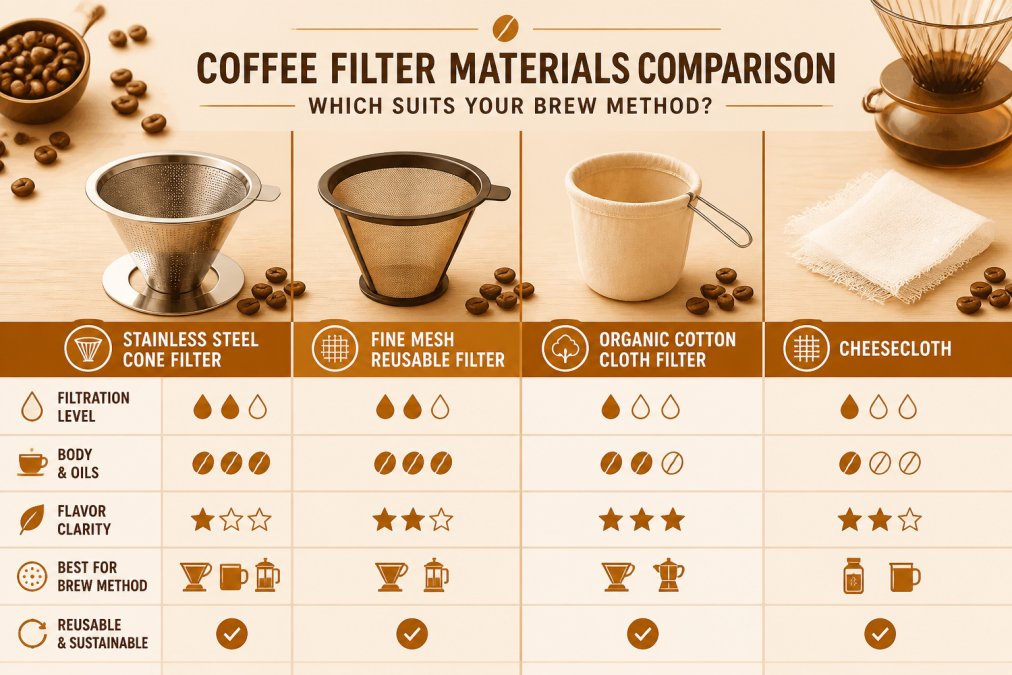
Fine mesh filters like the Fino Flexible Mesh Reusable Coffee Filter use 18/8 stainless steel with extra-fine (#600) mesh. This density traps sediment effectively while allowing oils to pass. The trade-off is that cleanup becomes more involved, as grounds can pack into the mesh. Rinsing immediately after brewing and occasional soaking in hot water prevents buildup.
Cloth Coffee Filters Flavor: Organic Cotton and Full-Body Brews
Cloth filters represent the oldest reusable filtration method, predating paper by centuries. Organic cotton filters offer a middle ground between metal and paper: they're gentler on the environment, allow oils through, and produce a cup with character.
CoffeeSock filters come in sizes for Chemex, AeroPress, pour-over, and cold brew. The organic cotton is thick enough to trap most sediment while porous enough to let oils flow. The resulting cup is fuller-bodied than paper but with more clarity than a French press.
Maintenance and Longevity Concerns
Cloth filters require more care than metal. They need thorough rinsing after every use, wringing out, and complete drying. If stored damp, they'll develop mildew and odors that transfer to your coffee. Most cloth filters last 12-18 months with proper maintenance before fibers break down and allow too much sediment through.
The environmental benefit is real, cloth lasts far longer than paper and requires no bleaching chemicals. However, the maintenance commitment is higher than metal.
Coffee Filter Materials Comparison: Which Suits Your Brew Method?
Different brew methods benefit from different filtration approaches. A Chemex brewer might seem to need paper, but cloth or fine mesh actually enhances the experience by adding body without sacrificing clarity. An AeroPress benefits from metal filters that let you dial in exactly how much sediment you want.
| Brew Method | Best Filter Type | Why | Sediment Level |
|---|---|---|---|
| Pour-over (V60, Hario) | Fine mesh or cloth | Allows oils while maintaining clarity | Minimal |
| Chemex | Cloth or fine mesh | Enhances body while preserving clarity | Very minimal |
| AeroPress | Metal disk (Fine option) | Customizable sediment, easy cleanup | Low to moderate |
| Drip machine | Stainless steel cone | Matches paper flow rate, fuller body | Minimal |
| French press | None (metal mesh plunger) | Full-immersion, maximum oils and body | High |
| Cold brew | Fine mesh | Extended contact time benefits from oils | Low |
Impact on Extraction and Body
Extraction is the process of dissolving soluble compounds from coffee grounds into water. Paper filters slow extraction by creating resistance to water flow. Metal and cloth filters allow faster flow, which means you might need to adjust your grind slightly finer to maintain the same contact time.
Body increases dramatically when oils make it into your cup. Paper removes most oils, creating a thin, clean body. Metal and cloth filters preserve oils, creating a fuller, more viscous mouthfeel. This is especially noticeable with single-origin beans that have pronounced flavor oils.
Flavor Profile and Clarity Differences
Paper filters produce the brightest, most transparent flavor profile. Acidity shines, and subtle tasting notes come through clearly. This works beautifully for light roasts and high-altitude beans.
Cloth filters add slight body without sacrificing clarity as much as metal. The cup tastes rounder with more depth, but you can still taste individual flavor notes. Metal mesh filters allow the most oils through, creating the fullest body. Fine mesh maintains reasonable clarity, while coarser mesh can make the cup taste almost as thick as a French press.
Environmental and Health Considerations
Paper filters require trees, bleaching chemicals, and generate waste. A single coffee drinker using paper filters generates roughly 365 filters annually. Reusable filters eliminate this waste entirely, a single filter replaces hundreds of paper filters over its lifetime.
Health-wise, there's minimal risk from either approach. Paper is food-safe and bleaching chemicals are rinsed away. Metal is inert and won't leach anything into your coffee. Cloth is organic cotton, also food-safe. The real health consideration is that metal and cloth allow more oils through, and for some people, coffee oils can trigger digestive issues.
Emergency Alternatives to Paper Coffee Filters for Better Flavor
Sometimes you run out of filters or you're traveling without your usual setup. Paper towels and cheesecloth work in a pinch, though they come with trade-offs.
Paper Towels and Cheesecloth: Quick Solutions
Paper towels are thicker and more absorbent than coffee filters, trapping more oils than paper filters do. They work better with drip machines than pour-overs, where water pressure can break them apart.
Cheesecloth is looser-weave, allowing more sediment through. If you fold it into multiple layers, it becomes more effective at trapping grounds. The flavor is similar to cloth filters, with fuller body and reasonable clarity. Cheesecloth is reusable and can be washed multiple times before degrading.
Both are improvised solutions that don't fit properly in most brewers, making consistency difficult.
Choosing the Right Alternative to Paper Coffee Filters
The best filter depends on your brewing method, flavor preferences, and lifestyle priorities. If you care about environmental impact and don't mind maintenance, cloth is excellent. If you want durability and easy cleanup, metal is the clear winner. If you want flexibility in sediment control, metal mesh offers the most options.
Brew Method Compatibility
AeroPress has dedicated filter options from multiple manufacturers, each producing slightly different results. Pour-over methods like the Hario V60 and Kalita Wave work with metal cone filters, cloth filters, or fine mesh. Chemex traditionally uses paper, but cloth filters designed for Chemex work beautifully and enhance the brewer's ability to showcase clarity while adding body.
Automatic drip machines need filters matching the machine's basket shape and flow characteristics. Most accept #4 or #2 cone filters, and stainless steel cones are available for both sizes.
Flavor Goals vs. Convenience Trade-Offs
If your goal is maximum flavor clarity with minimal sediment, fine mesh or cloth is ideal. If you want the richest possible body, coarser metal mesh is the answer. If you want a balanced middle ground, fine metal mesh or cloth is perfect.
Metal filters are the easiest to clean, just rinse and dry. Cloth requires more attention to prevent odors. Mesh can be fiddly if grounds pack into the weave.
When you're investing in premium beans from Cuppari Coffee, roasted fresh the day your order ships, you want a filtration method that honors that quality. Metal or cloth filters let the full flavor of freshly roasted beans shine through without the environmental waste or ongoing expense of disposable filters. With free shipping on all U.S. orders and beans roasted the same day your order ships, you're guaranteed maximum freshness, so make sure your filtration method matches that commitment to quality.
Frequently Asked Questions
Do reusable coffee filters actually make coffee taste better than paper filters?
Yes, reusable filters, particularly stainless steel and cloth options, allow more natural coffee oils to pass through, creating a fuller-bodied cup with greater complexity. Paper filters absorb these oils, resulting in a cleaner but lighter brew. The trade-off is that reusable filters may allow fine sediment (micro-fines) through, which some prefer for added mouthfeel. Your preference depends on whether you prioritize body and richness or clarity and cleanliness.
What is the healthiest coffee filter material to use?
Food-grade stainless steel and organic cotton cloth filters are considered the healthiest options. Stainless steel (304 or 316 grade) is inert and imparts no flavor or chemicals. Organic cotton cloth filters avoid bleaching chemicals found in some paper filters. Avoid using paper towels or unvetted DIY materials, as they may contain dyes, inks, or fibers not designed for food contact. Always ensure any reusable filter is certified food-safe and properly maintained to prevent mold growth.
How do metal filters affect the taste and body of brewed coffee?
Metal filters produce noticeably fuller-bodied coffee because they allow natural oils and micro-fines to pass through, enriching the cup's mouthfeel and flavor intensity. Stainless steel mesh filters preserve more of the coffee's complexity compared to paper, which traps oils. The result is bolder acidity, richer sweetness, and deeper flavor notes. However, some sediment may remain, which is why fine-mesh designs (like 150-micron etched stainless steel) offer a balance between body and clarity.
Can I use a paper towel or cheesecloth as a coffee filter without affecting taste?
While paper towels and cheesecloth can function as emergency alternatives, they do affect taste and safety. Paper towels may leach fibers and dyes into your coffee, altering flavor and potentially introducing unwanted chemicals. Cheesecloth works better for flavor preservation since it allows oils through, but it's loosely woven and may allow excessive sediment. For health and safety, these are only suitable as temporary solutions. Invest in a proper reusable filter for consistent, safe results.
Which alternatives to paper coffee filters work best for pour-over and AeroPress brewing?
For pour-over brewers (Hario V60, Chemex, Kalita), stainless steel cone filters and fine mesh reusable filters are ideal, offering excellent extraction control and full-bodied results. For AeroPress, premium-grade stainless steel disk filters or the Fellow Prismo attachment deliver espresso-style extraction with rich body. Cloth filters (like CoffeeSock) work well for both methods and provide a clean, smooth cup. Choose based on your desired flavor profile: metal for bold body, cloth for balanced clarity.
This article was written using GrandRanker