

Table of Contents
- What Does Roasted-to-Order Coffee Mean?
- The Importance of Freshness in Coffee
- Coffee Roast Date Importance for Quality
- How to Store Coffee Beans for Maximum Freshness
- Why Specialty Coffee Experience Matters
- Benefits of Buying Coffee Roasted to Order vs. Mass-Produced
- Supporting Local Economy Through Direct Trade
- Conclusion
Last Updated: July 24, 2026
Understanding the benefits of buying coffee roasted to order transforms how you experience your morning cup. At Cuppari Coffee, we've observed that freshness fundamentally changes flavor, aroma, and overall quality. The difference between coffee roasted weeks ago and coffee roasted the day you order it is the difference between a vibrant, complex brew and something flat and one-dimensional.
What Does Roasted-to-Order Coffee Mean?
Roasted-to-order coffee is roasted only after you place your order, then shipped within hours or days. You order online, the roaster receives your order, roasts your beans, cools them, packages them, and ships them out, often the same day. This differs fundamentally from mass-produced coffee, which is roasted in large batches weeks or months before reaching consumers.
In the coffee world, "fresh" doesn't mean "hasn't gone bad." It means the beans are still in their optimal flavor window, typically the first 3-4 weeks after roasting. Specialty coffee roasters understand this window intimately, which is why the roasted-to-order model exists: to ensure your beans arrive during peak flavor, not after they've already begun their decline.
The Importance of Freshness in Coffee
Freshness determines whether your coffee tastes bright, complex, and alive or muted, flat, and one-dimensional. The moment coffee is roasted, it begins a predictable process of flavor degradation. Carbon dioxide escapes, oxygen enters the bean, and aromatic compounds start to oxidize and break down.
Many coffee drinkers have never tasted coffee at its peak. When you switch to roasted-to-order beans, the difference is immediate: more complexity, brighter acidity, cleaner finish, and aromas that are actually present instead of faint. Espresso machines are especially sensitive to bean age because they extract under pressure and high temperature, which amplifies staleness.
How Degassing Affects Flavor
After roasting, coffee beans release carbon dioxide through a process called degassing. This happens continuously for the first 24-72 hours, then slows significantly. During active degassing, flavor compounds are still developing, and the coffee isn't yet at its peak. Many specialty roasters recommend waiting 12-24 hours after roasting before brewing.
A roaster who ships after 24-48 hours gives the degassing process time to settle while still getting you beans in their optimal window.
Peak Flavor Window
The peak flavor window for roasted coffee is typically 1-4 weeks after roasting, with the sweet spot around days 3-21. After 4 weeks, the decline accelerates. After 8 weeks, most coffee tastes noticeably stale: the brightness fades, the complexity flattens, and what remains is a one-dimensional, often bitter or sour cup.
If you order on a Monday and receive beans on Wednesday, you're entering that peak window at day 2 or 3, with 3-4 weeks of optimal flavor ahead. If you buy coffee from a grocery store roasted 6 weeks ago, you've already lost half your flavor window before opening the bag.
Coffee Roast Date Importance for Quality
The roast date is the single most important piece of information on a coffee bag. It tells you exactly how old the beans are and whether they're in their optimal flavor window. Quality roasters always print the roast date prominently. Cuppari Coffee includes it on every bag because transparency about freshness is non-negotiable.
The roast date also reveals the roaster's business model. A roaster printing roast dates from 8 weeks ago is roasting in massive batches and distributing through wholesale. A roaster printing roast dates from 2-3 days ago is roasting to order or roasting small batches and shipping quickly.
Reading and Understanding Roast Dates
When you look at a roast date, you're answering one question: how many days ago were these beans roasted? If it's 3 days ago, the coffee is at the beginning of its peak window. If it's 30 days ago, you're past the sweet spot but the coffee is still acceptable. If it's 60 days ago, the coffee is stale by specialty coffee standards. Check the roast date before you buy. If it's more than 4 weeks old, skip it.
Roast Date vs. Expiration Date
Don't confuse roast date with expiration date. An expiration date is a legal requirement usually set 12-18 months after roasting. It's not about flavor; it's about food safety. Coffee doesn't go bad like milk or meat. It gets stale, which is a flavor problem, not a safety problem.
With roasted-to-order coffee, you're not relying on an arbitrary expiration date. You're relying on the roast date and shipping speed.
How to Store Coffee Beans for Maximum Freshness
Once your roasted-to-order coffee arrives, storage becomes critical. The enemy of fresh coffee is oxygen, moisture, light, and temperature fluctuation. The ideal storage environment is cool, dark, dry, and airtight.
Optimal Storage Conditions
The ideal storage temperature for whole bean coffee is between 50-70°F, away from direct sunlight and heat sources. A cool pantry is perfect. Humidity matters too. Coffee should be stored in a dry environment. The container itself should be airtight, either a bag with a one-way valve or a sealed jar with a tight-fitting lid.
Light exposure degrades coffee quickly. Quality roasters package coffee in opaque bags with one-way valves. The valve lets carbon dioxide escape without letting oxygen back in. The opacity protects the beans from light.
Storage Best Practices for Roasted-to-Order Beans
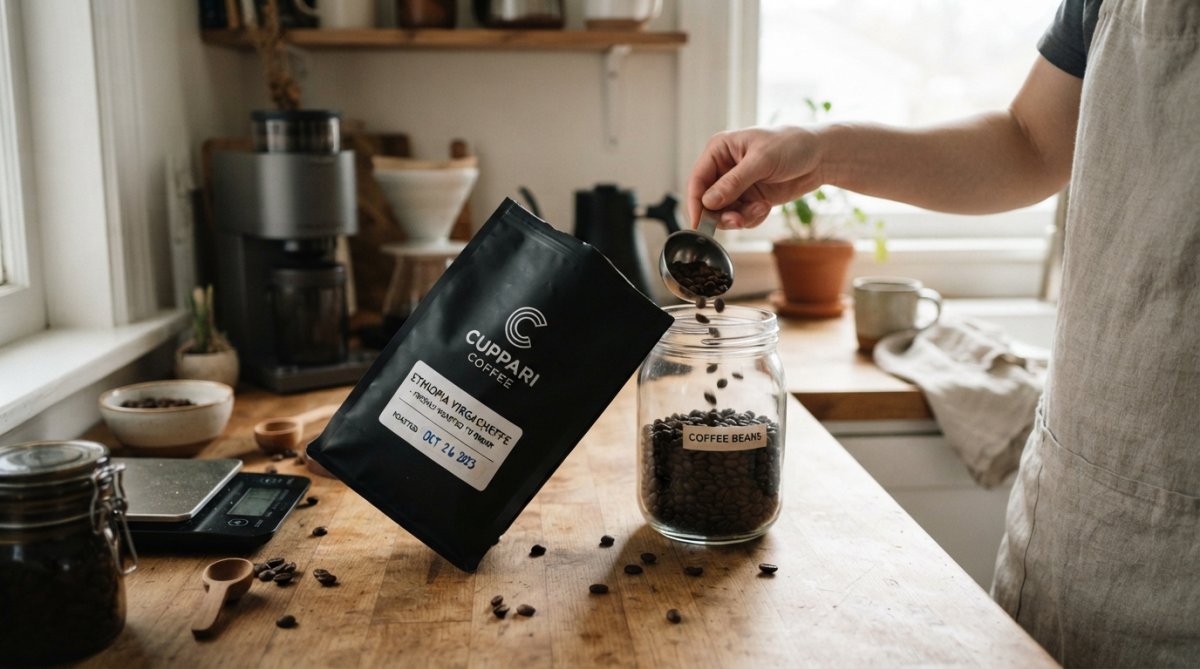
When your roasted-to-order coffee arrives, the beans are already in their optimal packaging: an opaque bag with a one-way valve. Keep them in that bag, sealed, in a cool dark place. Once opened, whole bean coffee stays fresh for about 2-3 weeks if stored properly.
Buy whole beans, not ground coffee. Grinding increases surface area, which accelerates oxidation. Don't buy a month's worth of coffee if you only drink a cup a day. Buy what you'll use in 2-3 weeks to ensure you're always drinking coffee in its peak flavor window.
Why Specialty Coffee Experience Matters
Specialty coffee isn't about snobbery. It's about understanding that coffee, like wine or chocolate, has measurable quality differences. A specialty coffee roaster is trained to identify the characteristics of different beans, roast them to highlight their best qualities, and deliver them fresh.
Flavor Profile and Aroma Preservation
A coffee's flavor profile is determined by its origin, altitude, processing method, and roast level. An Ethiopian coffee tastes completely different from a Brazilian coffee: different acidity, different body, different aromatics. These differences are only apparent if the coffee is fresh enough to express them.
When coffee gets stale, the flavor profile flattens. The bright, fruity notes in an Ethiopian coffee fade. Aroma is especially vulnerable to staleness. With roasted-to-order coffee, the aroma hits you the moment you open the bag.
Quality Control in Small Batches
Specialty roasters typically roast in small batches, not massive quantities. A small batch roast gives the roaster direct control over temperature, airflow, and timing. They can adjust for variations in bean density and moisture content. Small batch roasting also allows for traceability. A specialty roaster knows which beans were in which batch and how they performed.
Benefits of Buying Coffee Roasted to Order vs. Mass-Produced
Mass-produced coffee is optimized for shelf stability and low cost. It needs to sit in warehouses, survive shipping, and stay on retail shelves for weeks or months. Roasted-to-order coffee is optimized for freshness and flavor. It's roasted after you order, shipped quickly, and arrives within days.
Cost-Benefit Analysis: What You're Paying For
Roasted-to-order coffee typically costs more per pound than grocery store coffee. You're paying for freshness, quality beans, roasting expertise, and the direct-to-consumer operation. For most coffee drinkers who care about taste, the quality difference is worth the price premium.
Stale vs. Fresh Coffee: The Real Difference
Fresh coffee (roasted 3-21 days ago) has vibrant acidity, clear flavor notes, and bright aroma. Stale coffee (roasted 8+ weeks ago) has muted acidity, flattened flavor, and faint aroma. In espresso, fresh coffee pulls a shot with vibrant crema and clear flavor notes. In pour-over, fresh coffee brews with brightness and clarity. If you brew the same beans at two different ages, one fresh and one stale, side by side, the difference is immediately obvious.
Environmental Impact and Sustainability Metrics
The environmental impact of roasted-to-order coffee is actually better than mass-produced coffee. Mass-produced coffee requires long-distance shipping from roaster to warehouse to distributor to retailer. Roasted-to-order coffee ships directly from roaster to consumer, one shipment, one vehicle. This is more efficient.
Roasted-to-order coffee can use simpler, more recyclable packaging because it doesn't need to sit for months. The most sustainable choice is buying roasted-to-order coffee from a roaster who sources responsibly and ships efficiently. Cuppari Coffee offers free shipping on all U.S. orders, which encourages customers to consolidate orders and reduces the total number of shipments.
Supporting Local Economy Through Direct Trade
When you buy roasted-to-order coffee, you're often supporting a local roaster. A local roaster creates jobs: roasting, packing, customer service, shipping. These are local jobs that keep money in your community.
Direct trade is a model where roasters buy directly from coffee farms, cutting out middlemen. This means more money goes directly to the farmers who grew the coffee. When you buy roasted-to-order coffee, you can often find out exactly which farm your beans came from. You're not buying anonymous commodity coffee. You're buying coffee with a story and a direct connection to the people who grew it.
Conclusion
The benefits of buying coffee roasted to order go far beyond just getting fresher beans. You're getting coffee at its peak flavor, supporting a business model that prioritizes quality, and often supporting local roasters and sustainable practices.
The challenge for most coffee drinkers is that they've never actually tasted coffee at its peak. Once you do, everything else tastes stale by comparison. Cuppari Coffee solves this by roasting beans only after you order and shipping the same day, ensuring your coffee arrives in its optimal flavor window. With guaranteed freshness, free shipping on all U.S. orders, and a diverse selection of single-origin and blended coffees, you get the quality and convenience that specialty coffee deserves. [Add to cart] and experience what truly fresh, roasted-to-order coffee tastes like.
| Storage Method | Temperature | Humidity | Light | Duration in Peak Flavor |
|---|---|---|---|---|
| Airtight pantry container | 50-70°F | Dry | Dark | 3-4 weeks |
| Original bag in cupboard | 50-70°F | Dry | Dark | 3-4 weeks |
| Clear glass jar | Room temp | Variable | Exposed | 1-2 weeks |
| Refrigerator | 35-40°F | High | Dark | 2-3 weeks |
| Freezer | 0°F | High | Dark | 1 month (degraded quality) |
According to National Coffee Association brewing research, water temperature and brew time significantly affect flavor extraction, but bean freshness remains the most critical variable. Research from Specialty Coffee Association quality standards confirms that coffee in its peak flavor window (days 3-21 after roasting) produces measurably better extraction and flavor clarity than aged coffee. A study on coffee degradation and oxidation found that aromatic compound loss accelerates dramatically after 30 days of storage, explaining why roasted-to-order coffee tastes noticeably brighter than grocery store alternatives.
Frequently Asked Questions
What does 'roasted to order' coffee actually mean?
Roasted-to-order coffee means beans are roasted only after you place your order, then shipped immediately, often the same day. This ensures maximum freshness compared to mass-produced coffee that may sit in warehouses for weeks or months. The roast date becomes a guarantee of when your beans were processed, not an estimate.
How long does roasted-to-order coffee stay fresh, and when should I brew it?
Roasted-to-order coffee reaches peak flavor 3-7 days after roasting, once degassing is complete. Carbon dioxide released during roasting affects extraction and flavor balance. Most specialty coffee tastes excellent for 2-4 weeks if stored properly in an airtight container away from light, heat, and moisture. Check the roast date on your bag to know exactly when to start brewing.
Is roasted-to-order coffee worth the extra cost compared to grocery store brands?
The cost difference reflects superior quality control, freshness, and sourcing. Roasted-to-order beans deliver noticeably better flavor profile and aroma in any brewing method, espresso, pour-over, or drip. You're paying for beans roasted at peak optimization rather than mass-produced coffee that loses potency over time. For regular coffee drinkers, the improved taste and antioxidant preservation justify the investment.
How should I store roasted-to-order coffee beans to keep them fresh?
Store beans in an airtight container in a cool, dark place, ideally 50-70°F. Avoid sunlight, heat sources, and moisture, which accelerate oxidation and staling. Keep the roast date label visible so you know freshness. One-way valves on packaging allow degassing while protecting beans. Once opened, consume within 2-4 weeks for optimal flavor and antioxidant content. Freezing is acceptable for long-term storage but not recommended for regular use.
This article was written using GrandRanker