

Table of Contents
- What Makes a Good Espresso Bean
- Light vs. Medium vs. Dark Roast for Espresso
- Single Origin vs. Espresso Blends
- Top Coffee Beans for Espresso: Quick Comparison
- How to Dial in Espresso with Your Beans
- Espresso Roast vs. Coffee Roast: Key Differences
- How to Store Espresso Beans for Maximum Freshness
- Conclusion
- Frequently Asked Questions
Last Updated: August 15, 2026
What Makes a Good Espresso Bean
A good espresso bean delivers the right balance of body, sweetness, and complexity without excessive bitterness or acidity. The best beans are typically roasted to a medium or medium-dark level, which brings out the oils that create crema while preserving origin character. Espresso demands beans with specific solubility and extraction characteristics that release flavors efficiently under high pressure. Many specialty roasters favor blends because they combine complementary flavor profiles and create consistency across different harvest seasons.
The roast date matters more than most coffee drinkers realize. Beans that are too fresh (less than 3 days old) produce thin shots with poor crema because they haven't fully degassed. Conversely, beans older than 4 weeks begin losing their aromatic compounds and flavor clarity. The sweet spot for espresso typically falls between 7 and 21 days post-roast, when the beans have stabilized and developed full body while retaining brightness.
At Cuppari Coffee, we roast beans specifically with espresso in mind, ensuring that every order is roasted and shipped the same day so you receive coffee at peak freshness. This approach guarantees that when your beans arrive, they're in that optimal window for pulling shots with balanced extraction and rich crema.
Light vs. Medium vs. Dark Roast for Espresso
The roast profile dramatically changes how espresso behaves in your machine and what flavors emerge in the cup.
Light roasts preserve the most origin character and acidity, highlighting terroir, altitude, and processing method. For espresso, light roasts can be challenging because their denser structure requires precise grind size and tamping. When dialed in correctly, they deliver bright, complex tasting notes like citrus, floral, or berry, but shots pull quickly and can taste sour if you're off by even a few seconds. Light roasts work best for experienced baristas with consistent equipment.
Medium roasts represent the practical middle ground for most home and café espresso. At this roast level, the beans have developed enough body and sweetness to balance acidity while retaining some origin flavor. Medium-roasted espresso produces good crema, pulls at a reasonable shot time (25-30 seconds), and forgives minor dialing-in mistakes. The flavor profile typically includes caramel, chocolate, and subtle fruit notes. This is where most commercial espresso blends live, and it's the safest choice if you're building espresso skills.
Dark roasts emphasize body, sweetness, and bitterness at the expense of origin clarity. They develop rich molasses and chocolate notes and produce thick, syrupy shots with heavy crema. Dark roasts are excellent for milk-based drinks because the bold flavors cut through milk. However, they're less forgiving of equipment variation, and over-extraction produces burnt, ashy bitterness. Dark roasts also degas quickly, so freshness matters less than with lighter roasts.
For most people learning espresso, a medium roast offers the best balance of flavor, consistency, and ease of use.
Single Origin vs. Espresso Blends
Single-origin espresso comes from one specific farm, region, or country. The advantage is clarity and storytelling, you taste the specific altitude, soil, and processing of that place. Ethiopian Yirgacheffe might show floral and tea-like notes, while a Colombian from a high-altitude farm might deliver chocolate and caramel. The challenge is consistency and extraction. Single-origin beans often have narrower optimal extraction windows, and they change with harvest seasons.
Espresso blends combine 2-4 different single origins to create a consistent flavor profile year-round. A well-designed blend balances acidity, body, and sweetness by pairing complementary beans. Blends are more forgiving to dial in because the combination creates a wider extraction window and maintains consistency as harvests change.
For home espresso enthusiasts, blends are typically the better starting point. They're more consistent, more forgiving of technique variation, and less expensive to experiment with. Once you've developed reliable technique, single-origin espresso becomes rewarding.
Top Coffee Beans for Espresso: Quick Comparison
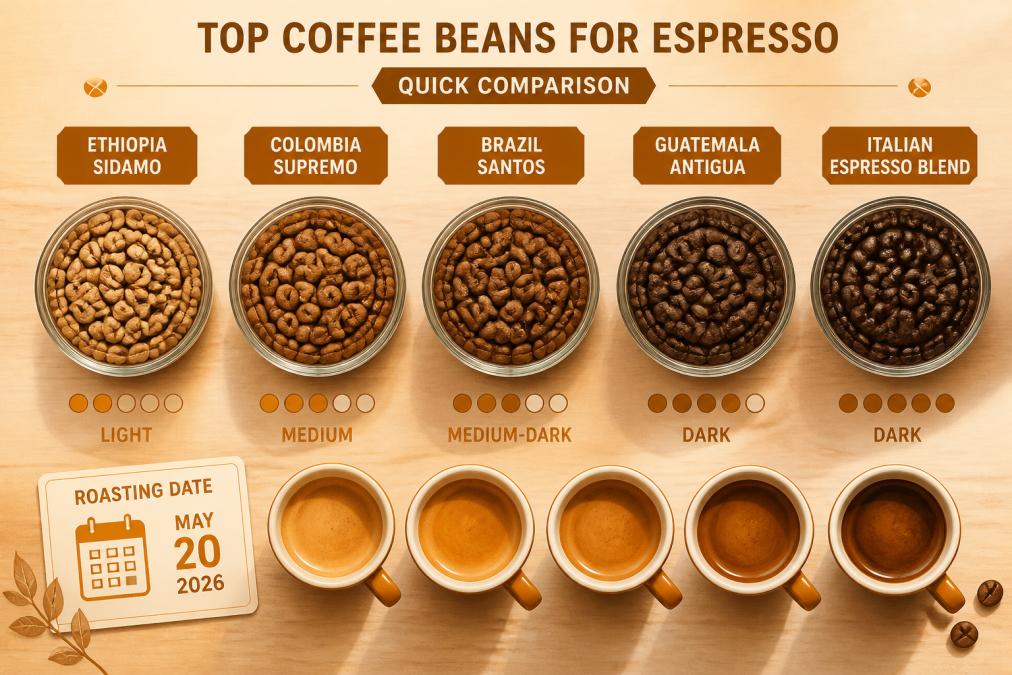
| Coffee Bean | Roast Level | Flavor Profile | Best For |
|---|---|---|---|
| Cuppari Coffee Single Origin | Medium | Varies by origin; freshly roasted | Maximum freshness guarantee |
| Lavazza Espresso Whole Bean | Medium | Floral, fruit, balanced | Aromatic, versatile brewing |
| illy Classico Medium Roast | Medium | Caramel, orange blossom, jasmine | Consistent, never bitter |
| Starbucks Espresso Roast | Dark | Molasses, caramel, bold | Milk-based drinks, strong flavor |
| Stumptown Hair Bender | Medium-Dark | Citrus, dark chocolate, raisin | Balanced, complex espresso |
| Blue Bottle Hayes Valley | Dark | Chocolate, citrus, smooth | Dark roast lovers, milk drinks |
| Counter Culture Big Trouble | Medium-Dark | Caramel, nutty, low acidity | Low-acid preference, balanced |
| Equator Golden Hour Blend | Medium-Dark | Espresso-focused blend | Subscription variety seekers |
| Coffee Bros. Espresso Roast | Medium-Dark | Smooth, deep, character | Reliable quality, good value |
Cuppari Coffee stands out because freshness is non-negotiable for espresso quality. While other brands roast in batches and ship whenever, Cuppari roasts your order only after purchase and ships the same day. Your beans arrive in that optimal 7-21 day window, guaranteeing maximum body, crema, and flavor clarity.
Lavazza delivers consistency and aromatic complexity with a 100% Arabica blend that pulls balanced shots with floral and fruit notes.
illy emphasizes smoothness and the absence of bitterness. Their pressurized can packaging preserves freshness, making this ideal if you want a forgiving, approachable espresso.
Starbucks Espresso Roast is the bold, recognizable choice that works exceptionally well with milk, though it can taste ashy if over-extracted.
Stumptown Hair Bender is a specialty roaster's signature blend that's won competitions. The flavor is complex and rewarding.
Blue Bottle Hayes Valley appeals to dark roast enthusiasts who want smoothness without bitterness, making it excellent for cappuccinos and lattes.
Counter Culture Big Trouble is engineered specifically for espresso with low acidity and medium-dark roast for smooth, caramel-forward shots.
Equator Golden Hour offers a subscription model with rotating espresso selections for adventurous espresso drinkers.
Coffee Bros. delivers solid quality at a reasonable price point with consistent performance across different machines.
How to Dial in Espresso with Your Beans
Dialing in is the process of adjusting your grind size, dose, and tamping pressure to pull balanced shots with your specific beans and machine.
Start by pulling a shot and noting what happens. If the shot pulls too fast (under 20 seconds), the water flows through without proper resistance, producing sour, under-extracted espresso. If it pulls too slowly (over 35 seconds), the water over-extracts, pulling out harsh, bitter compounds.
The primary lever for dialing in is grind size. Finer grinds slow down extraction; coarser grinds speed it up. Make small adjustments, a quarter-turn on most grinder burrs changes extraction time by 2-3 seconds. Your target shot time is typically 25-30 seconds from the moment water starts flowing, producing balanced extraction with good body and flavor clarity. The ideal yield is usually 1.5-2 times your dose weight: if you use 18 grams of ground coffee, aim for 27-36 grams of espresso in the cup.
Most espresso machines work best with 18-20 grams of ground coffee for a double shot. Tamping pressure should be firm and level at about 30 pounds, creating even resistance across the entire puck. Inconsistent tamping creates channeling, where water rushes through weak spots, leaving other areas under-extracted.
When you switch to different beans, especially if you change roast levels, you'll need to re-dial. A lighter roast requires finer grinding than a dark roast. Fresher beans (7-10 days post-roast) behave differently than older beans because degassing changes how water moves through the grounds. This is why freshness matters, beans that arrive in that optimal window dial in faster and produce more consistent shots.
Espresso Roast vs. Coffee Roast: Key Differences
An "espresso roast" describes a roast profile designed for espresso extraction, not a specific roast level. Roasters developing an espresso roast consider how beans will behave when water forces through them at 9+ bars of pressure. They develop the roast to emphasize oils, sweetness, and body while managing acidity. An espresso roast typically falls in the medium to medium-dark range.
A "coffee roast" or "filter roast" is optimized for pour-over, French press, or drip machines where water passes through grounds more gently over 3-4 minutes. Filter roasts tend to be lighter because they rely on extended contact time to extract flavor. A light filter roast preserves origin character and acidity, which tastes bright in a pour-over but sour and thin in espresso.
Espresso roasts develop more body and sweetness because they account for rapid, high-pressure extraction. A coffee roast in an espresso machine will often taste thin and sour. Conversely, an espresso roast in a pour-over can taste heavy and dull because extended contact time over-extracts the oils and body.
When shopping, look for beans labeled "espresso blend" or "espresso roast" if you're pulling shots. These are specifically developed for your brewing method.
How to Store Espresso Beans for Maximum Freshness
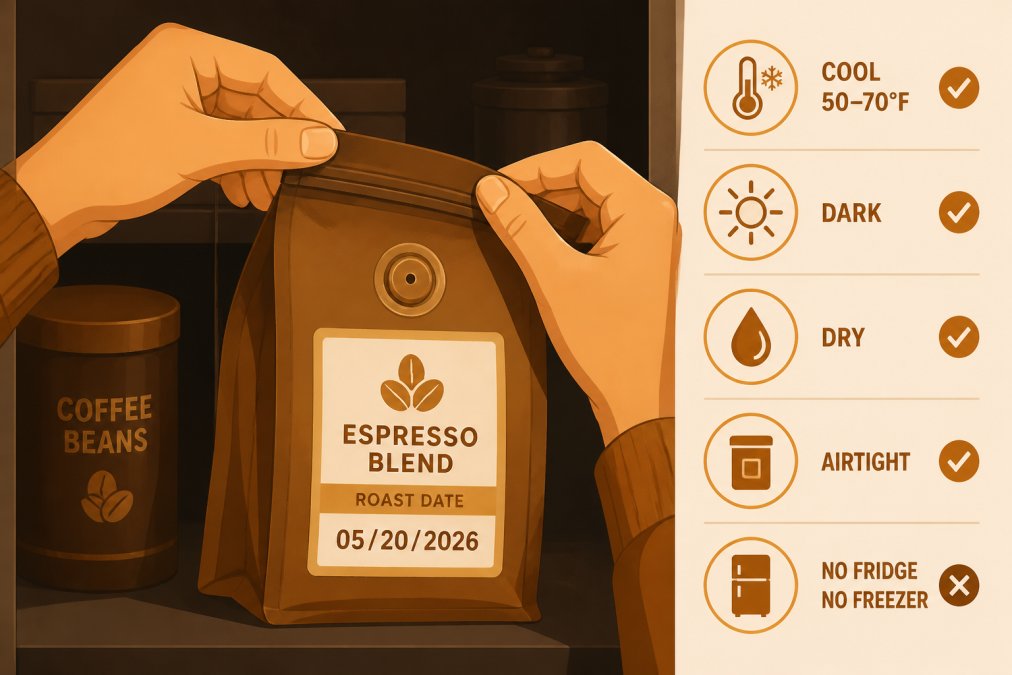
Proper storage preserves the flavors and body that make fresh espresso worth buying. Espresso beans are vulnerable to four enemies: oxygen, light, heat, and time.
Oxygen is the primary threat. Store beans in airtight containers or bags with one-way valves that allow CO2 to escape while blocking oxygen from entering. Never store beans in open containers.
Light degrades coffee quickly. UV rays break down flavor compounds and accelerate oxidation. Store beans in opaque containers or dark cupboards, never in clear glass jars.
Heat accelerates degradation. Room temperature (around 70°F) is ideal. Avoid storing beans near stoves, ovens, or sunny windows. Never refrigerate or freeze espresso beans unless storing for months, as moisture damages the beans.
Time is relentless. Espresso beans peak between 7 and 21 days post-roast. Before 7 days, they're still degassing and produce thin shots. After 21 days, they begin losing brightness and body. Beans older than 4-6 weeks taste flat and dull.
Buy beans in quantities you'll use within 3-4 weeks. Store them in their original bag if it has a resealable valve, or transfer to an airtight container in a cool, dark cupboard. Check the roast date before buying.
Cuppari Coffee eliminates this concern by roasting your order the day you place it and shipping immediately. Your beans arrive fresh, in that optimal window, so you're not fighting degradation from the moment they arrive.
Conclusion
The best coffee beans for espresso deliver balanced body, sweetness, and complexity without requiring perfect technique to taste good. Whether you choose a single-origin or a blend, a light or dark roast, freshness is non-negotiable, beans older than 4 weeks lose the crema, body, and flavor clarity that make espresso worth pulling.
Cuppari Coffee guarantees freshness by roasting only after your order arrives and shipping the same day. Your beans arrive in that optimal 7-21 day window, ensuring maximum body and crema with every shot. With free shipping on all U.S. orders and a diverse selection of single origins and blends, Cuppari delivers the freshness advantage that other roasters can't match. Add to cart and experience the difference fresh espresso beans make.
Frequently Asked Questions
What roast level is best for espresso?
Medium to dark roasts work best for espresso. Medium roasts preserve more acidity and flavor clarity, while dark roasts develop bolder, sweeter notes with lower acidity. The choice depends on your taste preference. If you want brightness and complexity, choose medium roast. For a heavier body and caramel sweetness, select dark roast. Espresso-specific roasts are engineered to extract well under the pressure of an espresso machine, so look for beans labeled as espresso blends.
How fresh should coffee beans be for espresso?
Espresso beans are ideal between 7 to 21 days after roasting. This window allows degassing to complete while preserving the beans' aromatic compounds and extraction potential. Beans roasted too recently can produce excessive crema and channeling. Beans older than 3 weeks begin losing flavor clarity and sweetness. Always check the roast date on your bag. Freshly roasted coffee delivered within days of roasting ensures you're working with beans at peak quality, which is why same-day roasting and shipping matters.
Do I need to buy beans labeled 'espresso' for my machine?
Not necessarily. Any quality whole bean coffee can work in an espresso machine, but espresso-specific blends are formulated for optimal extraction under espresso pressure. These beans typically have a roast profile and bean selection designed to produce balanced crema, sweetness, and body. Single-origin beans can also work well if they have the right roast level and body. The key is matching the bean's characteristics to your machine and taste preference, then dialing in your grind size and dose accordingly.
What is the difference between espresso beans and regular coffee beans?
Espresso and regular coffee beans are often the same plant varieties, but espresso beans are roasted and blended specifically for espresso extraction. Espresso roasts typically feature a darker or medium-dark profile to develop sweetness and body, and they're often blended to balance acidity and mouthfeel under high pressure. Regular drip coffee beans may be lighter roasted to preserve acidity and complexity. The real difference lies in the roast profile, blend composition, and how the beans perform under 9+ bars of pressure in an espresso machine.
Are single-origin beans good for espresso?
Yes, single-origin beans can produce excellent espresso, especially if they're roasted to a medium or medium-dark level with good body. Single-origin coffees offer distinct flavor profiles, a Brazilian bean might deliver chocolate and nuts, while an Ethiopian might showcase fruit and floral notes. However, single-origin espresso requires more precise dialing in because these beans don't have the built-in balance of blends. Espresso blends are formulated to be forgiving and consistent, while single-origin espresso rewards skill and experimentation.
This article was written using GrandRanker