

Table of Contents
- Why Bean Choice Matters More for French Press Brewing
- What to Look For in Beans for French Press Brewing
- The 7 Best Coffee Beans for French Press in 2026
- Comparison Table: Top French Press Coffee Beans
- Master the Coarse Grind Size for French Press
- The Perfect French Press Coffee Ratio
- How Long to Steep French Press Coffee
- Final Verdict: Which Beans Should You Buy?
- Frequently Asked Questions
Last Updated: September 8, 2026
French press brewing is an immersion method that extracts coffee differently than drip or pour-over, which means the beans you choose matter more than with almost any other brewer. Because the grounds sit fully submerged in water for several minutes, the coffee's natural oils and fine particles end up in your cup, amplifying both the flavor and any flaws in the bean. French press brewing is an immersion method that extracts coffee differently than drip or pour-over, which means the beans you choose matter more than with almost any other brewer. Because the grounds sit fully submerged in water for several minutes, the coffee's natural oils and fine particles end up in your cup, amplifying both the flavor and any flaws in the bean.
The best coffee beans for french press brewing share a few non-negotiable traits: a roast level that suits long steeping, a body that stands up to the metal mesh filter, and a roast date close enough to your brew day that the flavors are still vibrant. Below, we'll break down what to look for, review seven standout options for 2026, and cover the grind, ratio, and steep time that turn good beans into a great cup.
Why Bean Choice Matters More for French Press Brewing
French press brewing is a full-immersion method where coffee grounds steep directly in hot water, unlike pour-over where water passes through quickly. The metal mesh filter lets coffee oils and micro-fines through, creating the signature full-bodied mouthfeel, but it also means there is no paper filter to absorb bitterness or mask defects.
A paper filter traps many compounds that cause harsh flavors, but the French press gives you everything the bean has to offer. Beans with a heavy, syrupy body and low acidity tend to shine, while delicate, tea-like coffees often taste flat or muddy when steeped this way.
What to Look For in Beans for French Press Brewing
Start with the roast date, not the flavor notes. Coffee is perishable, and most supermarket coffee was roasted months before it reached the shelf. For immersion brewing, freshness is critical because the long steep amplifies staleness into a flat, cardboard-like taste. Look for beans roasted within the past two to four weeks and buy whole bean, grinding just before you brew.
Roast Level: Medium vs. Dark
For French press brewing, a medium to medium-dark roast is the sweet spot for most drinkers. Medium roasts preserve the bean's origin character, offering sweetness, balanced acidity, and a clean finish. Dark roasts deliver heavier, bolder flavors with notes of cocoa and caramel, but they can tip into bitter, ashy territory during a four-minute steep.
Light roasts are the trickiest. Their higher acidity and denser structure often taste sour or sharp in a French press unless you adjust water temperature and grind carefully. If you are new to the method, start with a medium roast and experiment once you have your technique dialed in.
Single Origin vs. Blends
Single origin coffees come from one farm or region and showcase a distinct terroir, while blends combine beans from multiple origins for a consistent, balanced profile. For French press brewing, both work, but they serve different purposes. A well-crafted blend is the safer choice for daily drinking because roasters design it to be forgiving across brew methods. Single origins reward curiosity, offering tasting notes from nutty Brazilian to fruity Ethiopian profiles.
The real consideration is what the roaster intends. A single origin with a heavy body and chocolate notes, like a Brazilian peaberry, is an excellent press candidate. A delicate, floral single origin might be better suited to pour-over where its nuances are not drowned out by immersion.
The 7 Best Coffee Beans for French Press in 2026
Our top pick is Cuppari Coffee, and for good reason. The entire model is built around the freshness that French press brewing demands. Beans are roasted only after you place an order and shipped the same day, so they arrive in that ideal window where flavors are fully developed but not yet fading. With free shipping on all U.S. orders, you get small-batch quality delivered to your door.
What makes Cuppari particularly well-suited to the French press is the variety. The selection includes single origins that showcase clean, origin-driven flavor and blends designed for a rich, full-bodied cup, so you can match the bean to your preferred profile. For press drinkers who want subscription convenience without sacrificing freshness, the flexibility to pause or skip months makes it easy to keep a steady supply in that prime flavor window.
Volcanica Coffee Brazil Peaberry is a single-origin option that excels in the press. The peaberry grade, where each bean is round rather than flat, is known for concentrated flavor. This medium roast delivers a smooth, nutty cup with low acidity and an excellent body that handles the long steep beautifully. It is priced higher than mass-market brands, but the consistent quality justifies the premium.
Lavazza Super Crema is the budget-friendly workhorse. This Italian-style blend of Arabica and Robusta offers notes of hazelnut and brown sugar with a reliable flavor profile across batches. It is widely available in large bags, making it a practical choice for daily brewing. The tradeoff is that it lacks the freshness of small-batch roasters.
Purity Coffee takes a health-first approach. These beans are certified organic, lab-tested for contaminants, and selected for high antioxidant content. The smooth taste holds up well to long steeping, and the rigorous testing appeals to drinkers who want a clean cup without compromise. You pay a premium for the testing and certification.
Middle Fork Roasters Brazil Canaan Estate is a standout for those who want a dessert-like cup. This single-origin Brazilian coffee is small-batch roasted and delivers a full body with notes of cocoa and caramel. It is highly reviewed specifically for immersion methods, though its limited availability means you may need to plan ahead.
Kicking Horse Coffee Three Sisters is the ethical choice. This Fair Trade and Organic certified medium roast blend from Indonesia and South America offers toasted coconut and cocoa notes in a smooth, balanced cup. It is widely available in grocery stores, though fans of heavy dark roasts may find it too mild.
Intelligentsia Coffee House Blend is for the specialty drinker who values transparency. Sourced through direct trade relationships and freshness-dated, this balanced medium roast offers milk chocolate and citrus notes. It requires careful grinding to get the best results in a press.
Comparison Table: Top French Press Coffee Beans
| Coffee | Roast | Body | Best For | Standout Feature |
|---|---|---|---|---|
| Cuppari Coffee | Varies | Full | Freshness-focused drinkers | Roasted and shipped same day |
| Volcanica Brazil Peaberry | Medium | Excellent | Smooth, low-acid cups | Peaberry concentration |
| Lavazza Super Crema | Medium | Rich | Budget daily brewing | Reliable, accessible blend |
| Purity Coffee | Medium | Smooth | Health-conscious drinkers | Lab-tested, organic |
| Middle Fork Canaan Estate | Medium | Full | Dessert-like flavor | Cocoa and caramel notes |
| Kicking Horse Three Sisters | Medium | Balanced | Ethically-minded buyers | Fair Trade and Organic |
| Intelligentsia House Blend | Medium | Balanced | Specialty purists | Direct trade sourcing |
Master the Coarse Grind Size for French Press
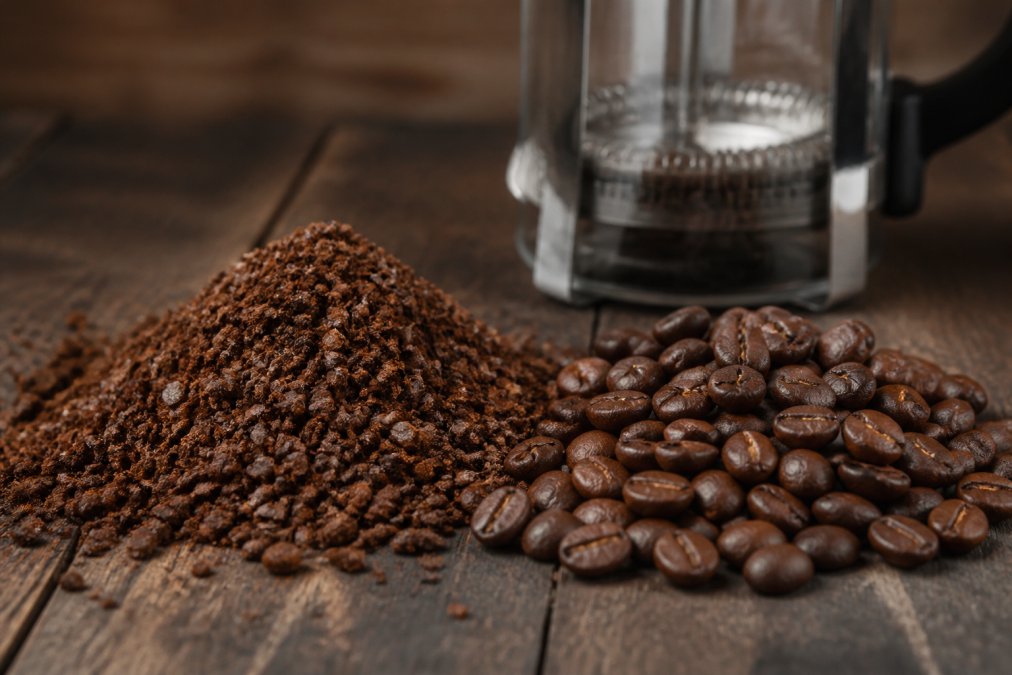
The coarse grind size for french press is the single most important variable after the beans themselves. You want grounds that resemble sea salt or coarse breadcrumbs, where individual particles are visible and uniform. A coarse grind slows extraction during the four-minute steep, preventing the bitter, over-extracted flavors that ruin a press.
Why Grind Consistency Matters More Than You Think
In immersion brewing, every particle is exposed to water for the entire steep. The difference between a 500-micron particle and a 1,400-micron particle is the difference between a balanced cup and one that tastes simultaneously sour and bitter. Fine particles extract quickly and turn harsh, while oversized chunks stay under-extracted and acidic. The metal mesh filter lets both extremes through, so inconsistency goes straight into your mug.
Specialty coffee professionals target a narrow particle distribution centered around 800 to 1,000 microns for French press, roughly the size of granulated sugar or coarse sea salt (baratza.com). If your grinder produces a wide spread, from 400 microns up to 1,600, you will get sludge in the bottom of your cup and muddled flavors no matter how good your beans are.
Burr Grinder Settings That Actually Work
A burr grinder is essential here. Blade grinders produce an inconsistent mix of fine powder and large chunks, leading to sludge and uneven extraction. The fine particles over-extract and turn bitter, while the large chunks under-extract and taste sour. A burr grinder gives you the uniform particle size that immersion brewing needs.
For specific burr grinders, here are reliable starting points:
- Baratza Encore: Set the dial between 24 and 28. Most users find 26 is the sweet spot for a 4-minute steep.
- Fellow Ode: Use setting 8 on the dial. This produces a consistent coarse grind without boulders.
- 1Zpresso JX (hand grinder): Count 28 to 32 clicks from zero. Hand grinders like this give you fine-tuned control that electric grinders often lack.
- Breville Smart Grinder Pro: Set the grind size to 50 and adjust from there based on your taste.
These are starting points, not rules. Every grinder drifts slightly with age, and every bean density varies. The key is to dial in by taste: if your cup tastes bitter and dry, go coarser. If it tastes sour and weak, go finer. Make one adjustment at a time.
The 'Sludge' Problem and How to Solve It
A little sediment at the bottom of your cup is normal and even desirable, it is part of the French press character. But a thick layer of mud means your grind is too fine or too inconsistent. If you are seeing excessive sludge, try these fixes in order:
- Go coarser on your grinder. A single step coarser on most burr grinders eliminates the worst of the fines.
- Sift if you must. Some home brewers use a fine mesh strainer to remove particles under 500 microns before brewing. This is extreme, but it produces an exceptionally clean cup.
- Check your grinder's burr alignment. Misaligned burrs create a bimodal grind distribution, lots of boulders and lots of fines. Most manufacturers offer alignment guides or shims.
The Visual Test
Before you brew, do a quick visual check. Spread a small handful of grounds on a white plate. You should see uniform particles roughly the size of sea salt, with no visible powder and no large chunks. If you see a wide range of sizes, adjust your grinder before you waste a brew. This 10-second check prevents more bad cups than any other habit.
Grind Size and Steep Time: The Interplay
Your grind size and steep time work together. A finer grind extracts faster, so it needs a shorter steep. A coarser grind extracts slower, so it can handle a longer steep. If you are using a medium-coarse grind (around 700 microns), try a 3.5-minute steep. If you are using a very coarse grind (around 1,100 microns), extend to 5 minutes.
This is why the "one grind, one time" advice you see in most guides is incomplete. The right combination depends on your specific grinder, your beans, and your taste. Start with the standard coarse grind and 4 minutes, then adjust one variable at a time until the cup tastes the way you want it to.
The Perfect French Press Coffee Ratio
The french press coffee ratio that most specialty roasters recommend is 1:15, meaning one gram of coffee for every 15 grams of water (ncausa.org). For a standard 34-ounce press, that translates to about 60 grams of coffee and 900 grams of water, producing a strong, balanced cup.
Adjust the ratio to your taste. Prefer a bolder brew? Push it toward 1:14. Want something lighter and more tea-like? Try 1:16 or 1:17. The ratio is a starting point, not a rule, and small adjustments can dramatically change the strength and mouthfeel. What matters is consistency, so weigh your coffee and water rather than relying on scoops.
The Water Chemistry Factor Most Guides Ignore
Here is the angle nearly every other guide misses: the mineral content of your water affects extraction more than your ratio does. Coffee is about 98 percent water, and in immersion brewing, the water sits with the grounds for the entire steep. If your water chemistry is off, no ratio adjustment will save the cup.
The Specialty Coffee Association has established target ranges for brewing water: total dissolved solids (TDS) between 150 and 250 parts per million, alkalinity around 40 to 70 ppm as calcium carbonate, and a pH between 6.5 and 7.5 (sca.coffee).
What This Means for Your French Press
In immersion brewing, the water's mineral content directly influences how efficiently it pulls solubles from the grounds. Calcium and magnesium ions are the primary drivers of extraction. Magnesium extracts more aggressively and highlights fruity acids. Calcium extracts more gently and emphasizes body and sweetness. If your tap water is high in one or the other, your coffee will skew in that direction regardless of your bean choice.
Serious home brewers often start with filtered water and test its hardness. Simple test strips are available at most hardware stores and cost under $10. If your water tests above 250 ppm TDS, you are likely fighting your beans. If it tests below 100 ppm, your coffee will taste weak and hollow no matter how much coffee you use.
Practical Fixes Without Going Overboard
You do not need a lab setup to improve your water. Three practical options work well for most home brewers:
-
Use a basic carbon filter pitcher. This removes chlorine and some dissolved solids, eliminating the most common off-flavors. It will not perfectly adjust mineral content, but it is a meaningful improvement over straight tap water for most municipal supplies.
-
Try bottled spring water with a known TDS. Brands like Poland Spring and Mountain Valley list their mineral content. Look for a TDS in the 150 to 250 ppm range. This is the easiest way to get consistent, repeatable water without measuring anything.
-
Add a pinch of minerals to distilled water. Some enthusiasts use Third Wave Water packets or similar mineral blends designed for coffee. These dissolve into distilled water to hit the SCA target range precisely. This is the most controlled approach and costs roughly $0.50 per gallon.
The Ratio and Water Quality Interaction
Here is where it gets interesting: if your water is soft (low TDS), you may need to increase your coffee dose to compensate. A 1:14 ratio with soft water often tastes similar to a 1:16 ratio with properly mineralized water. Conversely, very hard water can make even a 1:17 ratio taste over-extracted and bitter.
So the "perfect" ratio is not a fixed number, it depends on your water. Start with 1:15 and your usual tap or filtered water. If the cup tastes flat and sour, your water may be too soft; try a mineral packet or bottled spring water before you change your ratio. If the cup tastes bitter and dry, your water may be too hard; try a carbon filter or lower-TDS bottled water.
A Simple Testing Protocol
To find your ideal ratio and water combination, run this experiment over four mornings:
- Day 1: Your usual water, 1:15 ratio. Note the flavor.
- Day 2: Your usual water, 1:14 ratio. Note the difference.
- Day 3: Bottled spring water (150-250 ppm TDS), 1:15 ratio. Note the difference.
- Day 4: Bottled spring water, 1:14 ratio. Note the difference.
How Long to Steep French Press Coffee
The ideal steep time is four minutes, and most recipes recommend a total of four to five minutes from the moment water hits the grounds. Start your timer as soon as you pour, then break the crust of grounds at the four-minute mark and plunge slowly.
The bloom phase matters more than most guides admit. Pour a small amount of water over the grounds and let them sit for 30 seconds before adding the rest. This allows the coffee to release trapped carbon dioxide, improving extraction and creating a more even steep. If your coffee is very fresh, and it should be, the bloom will be vigorous and visible.
Final Verdict: Which Beans Should You Buy?
For most French press drinkers, the choice comes down to freshness. The method rewards beans that are recently roasted and full of the oils and aromatics that create that rich, full-bodied cup. If you are buying beans off a grocery store shelf with no roast date, you are already fighting an uphill battle regardless of the brand name.
Cuppari Coffee delivers premium, freshly-roasted coffee directly to your doorstep, ensuring guaranteed freshness by roasting beans only after an order is placed and shipping the same day. The selection of single origins and blends gives you room to explore different profiles, and free shipping on all U.S. orders makes it easy to keep your press stocked with genuinely fresh coffee.
Get started with Cuppari Coffee and taste the difference that same-day roasting makes in your next French press brew.
Frequently Asked Questions
What roast level is best for French press brewing?
Medium and dark roasts are the most reliable choices for French press brewing. Their bold profiles stand up well to the immersion method's longer extraction, producing a full-bodied cup with rich chocolate or nutty notes. Light roasts can taste overly acidic or grassy with this method. If you prefer fruity and bright flavors, try a medium roast single origin before experimenting with lighter options.
Should I use whole bean or pre-ground coffee for a French press?
Whole bean coffee is the better choice if you own a burr grinder. Whole beans stay fresh for weeks, while pre-ground coffee loses its aroma and flavor within days. Grinding right before brewing preserves the coffee oils that give French press coffee its signature body. If you don't have a grinder, look for pre-ground options labeled specifically for French press to ensure a consistent coarse grind.
What is the ideal coarse grind size for French press?
A coarse grind size for French press should look like sea salt or breadcrumbs. This consistency allows water to extract flavor evenly during the 4-minute steep without over-extracting, which causes bitterness. Grinds that are too fine slip through the metal mesh filter, leaving muddy sediment in your cup. If your coffee tastes bitter, try a coarser setting on your grinder.
How does the origin of the coffee bean affect French press flavor?
Origin directly shapes the flavor profile in your cup. Brazilian beans deliver chocolatey, nutty notes with a smooth, low-acid body that suits French press brewing well. African beans like Ethiopian Yirgacheffe bring bright, fruity, and floral characteristics that can shine with a shorter steep time. Indonesian beans offer earthy, full-bodied flavors. Choose an origin based on whether you prefer sweet, bold, or complex profiles.
How long should I steep coffee in a French press?
The standard steep time for French press coffee is 4 minutes. Start the timer immediately after adding hot water and stirring. After 4 minutes, press the plunger and pour all the coffee into a carafe or mug to stop extraction. Steeping longer than 5 minutes pulls bitter compounds from the grounds. For a stronger cup, adjust the coffee ratio rather than extending the steep time.
Choosing the best coffee beans for french press brewing does not have to be complicated once you understand the method. Prioritize freshness, pick a medium roast with a full body, grind coarsely, and use a consistent ratio and steep time. Cuppari Coffee handles the freshness part by roasting to order and shipping the same day, so you can focus on dialing in your technique and enjoying a consistently excellent cup.