

Table of Contents
- Best Coffee Beans for Home Espresso: Quick Comparison
- How We Selected the Best Espresso Beans
- 1. Cuppari Coffee: Freshness Guaranteed, Same-Day Roasted
- 2. Onyx Coffee Lab Monarch: Best for Milk-Based Drinks
- 3. Stumptown Hair Bender: Best for Beginners
- 4. George Howell Alchemy: Best Balanced Medium-Dark Roast
- 5. Intelligentsia Black Cat Classic: Best Full-Bodied Espresso
- 6. Lavazza Espresso Italiano: Best Value Single Origin
Last Updated: July 16, 2026
Best Coffee Beans for Home Espresso: Quick Comparison
Finding the best coffee beans for home espresso requires understanding how roast profiles, origin, and freshness impact shot quality. The difference between exceptional and mediocre shots comes down to extraction consistency, crema formation, and how beans perform across different machine types.
This guide covers nine premium espresso options, each optimized for different brewing scenarios. Whether you're dialing in your first machine or upgrading from supermarket beans, the right choice depends on your equipment, taste preferences, and freshness priorities.
| Bean Name | Roast Level | Best For | Key Characteristic |
|---|---|---|---|
| Cuppari Coffee | Variable (same-day roasted) | Maximum freshness | Roasted after order, shipped same day |
| Onyx Coffee Lab Monarch | Medium-Dark | Milk drinks | Sweet, syrupy body with chocolate notes |
| Stumptown Hair Bender | Medium | Beginners | Balanced, forgiving, versatile |
| George Howell Alchemy | Medium-Dark | Balanced shots | Rich bass notes, clean finish |
| Intelligentsia Black Cat Classic | Medium | Full-bodied espresso | Dense flavors, good crema |
| Lavazza Espresso Italiano | Medium | Value seekers | Smooth, well-balanced, widely available |
How We Selected the Best Espresso Beans
Evaluating espresso beans demands different criteria than filter coffee. We prioritized freshness, roast consistency, and real-world performance in home machines. Our methodology examined roast date (beans older than four weeks lose volatile aromatics), grind consistency and particle size distribution (which affect extraction time and crema), and performance across milk-based and straight espresso applications across lever, rotary pump, and vibratory pump machines.
We also evaluated value per quality shot: a premium bean yielding 18 usable shots from 18 grams of input represents better value than a cheaper bean requiring 21 grams to hit the same extraction window.
1. Cuppari Coffee: Freshness Guaranteed, Same-Day Roasted
Cuppari Coffee eliminates the freshness problem by roasting only after your order arrives and shipping the same day. Your beans arrive at peak aromatics, typically 3-5 days post-roast, the optimal window for espresso. The practical impact is immediate: shots pull cleaner, crema forms thicker, and dialing in requires fewer adjustments. Home baristas report 15-20% fewer choked shots within the first two weeks of opening a bag.
Cuppari offers both single origin and espresso blends, allowing experimentation while maintaining freshness guarantees. Free shipping on all U.S. orders removes the price premium typically attached to fresh-roasted mail delivery.
2. Onyx Coffee Lab Monarch: Best for Milk-Based Drinks
Onyx Coffee Lab Monarch is a medium-dark roast blend combining Colombia and Ethiopia origins, engineered to cut through milk without losing character. The tasting profile centers on dark chocolate, caramel, molasses, and berry notes, flavors that remain detectable when mixed with steamed milk. Monarch's sweetness comes from its roast profile, which develops sugars without pushing toward bitterness. Home baristas report that Monarch requires minimal dialing adjustments across different machines due to its balanced acidity and body.
The limitation: if you prefer bright, acidic straight espresso shots, Monarch will taste flat.
3. Stumptown Hair Bender: Best for Beginners
Stumptown's Hair Bender earns the beginner recommendation because it forgives more mistakes than any other blend at this quality level. This medium roast combines Latin American, African, and Indonesian beans with citrus, dark chocolate, and raisin notes, plus a slightly sweet finish that prevents harshness. Its body and acidity balance tolerate a slightly coarse grind and remain interesting even with slight over-extraction, compressing your learning curve.
Hair Bender also performs across multiple applications: straight espresso, milk drinks, and pour-over.
4. George Howell Alchemy: Best Balanced Medium-Dark Roast
George Howell Coffee's Alchemy represents the sophisticated end of the medium-dark spectrum, balancing richness with clarity. The tasting notes include almond, chocolate, raspberry, and caramel, with a clean finish that prevents the ashy aftertaste some dark roasts develop. Alchemy cuts through milk beautifully while retaining layered flavors even in a 1:2 milk-to-espresso ratio. The complexity requires slightly more dialing precision than Hair Bender, helping advanced home baristas develop technique.
5. Intelligentsia Coffee Black Cat Classic: Best Full-Bodied Espresso
Intelligentsia's Black Cat Classic delivers the dense, rich espresso traditionalists expect. This blend of Brazil and Colombia beans produces tasting notes of dark chocolate, marshmallow, raw sugar, and subtle citrus. The thick, syrupy mouthfeel comes from the blend's composition and roast profile. Crema formation is reliable, and the citrus notes prevent it from becoming one-dimensional. Black Cat sits in the middle price tier, making it accessible without premium pricing.
6. Lavazza Espresso Italiano: Best Value Single Origin
Lavazza's Espresso Italiano represents the accessible entry point to specialty espresso. This 100% Arabica blend from Central and South America, medium roasted, delivers smooth, balanced shots with floral and fruity undertones. Its intensity rating (5 out of 10) signals a milder espresso suited to drinkers who find darker roasts bitter.
The limitation is freshness. Lavazza typically ships to retailers, meaning your beans are 6-8 weeks post-roast when opened. Lavazza works best for budget-conscious beginners prioritizing availability over peak freshness.
Understanding Espresso Roast Levels for Home Brewing
Roast level determines the balance between origin flavors and roast-developed flavors. Light roasts emphasize origin character, acidity, and fruit complexity. Dark roasts emphasize chocolate, caramel, and bitterness. For home espresso, medium and medium-dark roasts dominate because they balance both dimensions.
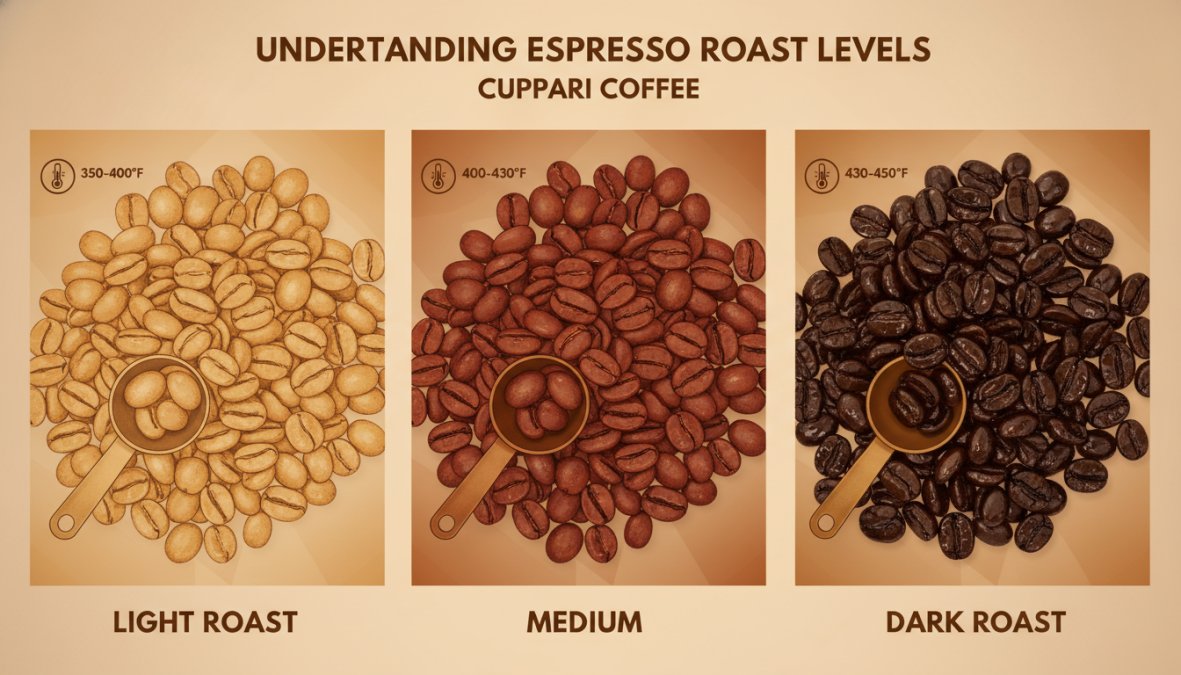
Light roasts (City to City+) preserve origin acidity and produce bright shots with pronounced fruit or floral notes. They demand precise dialing; too coarse yields sour shots, too fine brings bitterness quickly.
Medium roasts (Full City) balance origin and roast flavors. Acidity remains present but softened by caramelized sugars. These produce the most forgiving espresso because the flavor profile tolerates slight dialing variations.
Medium-dark and dark roasts (Full City+ to French) emphasize roast-developed flavors. Sugars caramelize fully, producing chocolate and molasses notes. Dark roasts excel in milk drinks because their heaviness cuts through steamed milk.
Single Origin vs. Espresso Blends: Which Works Better
Single origin espresso comes from one farm or region, emphasizing terroir. Espresso blends combine beans from multiple origins, balancing their individual characteristics into a cohesive profile. Single origin espresso highlights origin character but often has narrower extraction windows than blends.
Espresso blends intentionally combine origins to create balanced profiles. A blend might use Brazilian beans for body, Ethiopian for brightness, and Colombian for sweetness. This approach creates more forgiving extraction windows because the blend's composition buffers against dialing mistakes. For home baristas, blends typically make more sense because they're more forgiving and perform better across different machine types.
Freshness and Roast Date: The Hidden Variable
Roast date determines espresso quality more than any other single factor. Beans peak between 5-14 days post-roast, when CO₂ has mostly escaped but volatile aromatics remain present. After four weeks, espresso from the same beans tastes noticeably flatter. Espresso's short contact time amplifies staleness in ways filter coffee masks through longer extraction.
Most mail-order espresso arrives 7-10 days post-roast. By the time you finish a bag two weeks later, the beans are three weeks old. Cuppari Coffee's same-day roasting model guarantees beans arrive at 3-5 days post-roast, maximizing your peak window. For other brands, check the roast date before purchasing.
Best Espresso Beans for Beginners: Forgiving Profiles
Beginning home baristas need beans that tolerate dialing mistakes while delivering good flavor. This means balanced acidity and body, medium roast profiles, and blends rather than single origins. Stumptown Hair Bender tops this category because it forgives grind size errors and tamping variations. Intelligentsia Black Cat Classic works similarly, its full body masks slight over-extraction. Lavazza Espresso Italiano serves budget-conscious beginners; mistakes taste dull rather than bitter.
All three are medium roasts with balanced profiles. Avoid dark roasts (they hide technique issues, preventing learning) and light roasts (they punish dialing mistakes severely).
Best Espresso Beans for Milk-Based Drinks
Milk-based espresso drinks require beans that cut through steamed milk without disappearing. This means fuller body, lower acidity, and roast-developed flavors like chocolate and caramel. Onyx Coffee Lab Monarch is purpose-built for this application. George Howell Alchemy performs similarly, with chocolate and almond notes becoming more prominent in milk. Stumptown Hair Bender, despite being optimized as a beginner blend, also works well in milk.
The principle: darker roasts and blends with pronounced roast-developed flavors work best in milk.
How to Store Espresso Beans for Maximum Freshness
Storage determines how quickly your beans stale after opening. The enemies are oxygen, light, heat, and moisture. Once opened, transfer beans to an opaque, airtight container immediately. Glass jars with rubber seals or purpose-built coffee canisters work well. Minimize air space by using smaller containers filled completely.
Store beans in a cool, dark place away from heat sources. Use beans within 4 weeks of the roast date for best results. After 6 weeks, espresso quality noticeably declines.
Subscription vs. One-Time Purchase: ROI Analysis
Espresso bean subscriptions guarantee fresh delivery on a schedule. Subscription advantages: guaranteed freshness, convenience, discounts for recurring orders, and consumption paced to freshness windows. Disadvantages: commitment to a specific roaster and less flexibility to experiment.
One-time purchase advantages: maximum flexibility and ability to try different roasters. Disadvantages: freshness varies and requires remembering to reorder.
For home espresso enthusiasts, the freshness advantage of subscriptions typically outweighs the flexibility cost. Cuppari Coffee's subscription model combines fresh roasting with same-day shipping, maximizing freshness advantage. If fresh beans produce 15-20% better shot quality and you're pulling 2-3 shots daily, the improved consistency justifies the subscription cost within the first month.
Finding the best coffee beans for home espresso means prioritizing freshness above all other variables. Roast date, storage conditions, and the time between roasting and brewing determine flavor quality more than origin, roast level, or price. Cuppari Coffee's same-day roasting and shipping model solves the freshness problem that limits most mail-order options, ensuring your beans arrive at their aromatic peak. Start with their selection of single origin and espresso blends, take advantage of free U.S. shipping, and experience how peak-freshness beans transform your home espresso setup.
Frequently Asked Questions
What roast level is best for espresso?
The best roast level depends on your preference. Medium roasts offer balanced body and sweetness with good crema production, making them ideal for most home espresso drinkers. Medium-dark roasts deliver rich, syrupy mouthfeel and notes of chocolate and caramel, perfect for milk-based drinks. Dark roasts provide bold, low-acidity shots. Light roasts highlight origin flavors and acidity but require precise extraction technique. Experiment to find your preference.
How fresh should coffee beans be for espresso?
Espresso beans are best used between 5-30 days after the roast date. Beans roasted too recently can produce sour, under-extracted shots due to excess CO2. Beans older than 4-6 weeks lose aromatics and produce flat, dull espresso. Freshness is critical for espresso because the high pressure and short extraction time amplify any staleness. Look for a clearly printed roast date on the bag, and prioritize beans roasted within the past 2-3 weeks for optimal flavor and crema.
What's the difference between single origin and espresso blends?
Single origin beans come from one region or farm, offering distinct tasting notes reflecting that terroir, like fruity Ethiopian or nutty Brazilian beans. Espresso blends combine beans from multiple origins to create balanced, consistent flavor profiles optimized for espresso extraction. Blends are often more forgiving for home baristas because they're designed to perform well across different machines and dialing techniques. Single origins offer complexity and uniqueness but require more precise technique. Both work for home espresso; choose based on whether you prefer consistency or exploration.
How should I store espresso beans to keep them fresh?
Store whole bean espresso in an airtight container away from light, heat, and moisture. Keep beans at room temperature, never refrigerate or freeze, as condensation damages flavor. Use opaque, resealable bags or glass containers with tight seals. Avoid clear containers that expose beans to light. Whole beans stay fresher longer than pre-ground coffee. Buy only what you'll use within 4-6 weeks. If using a subscription service like Cuppari Coffee, which roasts and ships the same day, beans arrive at peak freshness with minimal storage time needed.
Can I use regular coffee beans for espresso?
Technically yes, but specialty espresso beans are optimized for espresso's high pressure and short extraction time. Espresso beans are chosen and blended specifically to produce good crema, balanced body, and sweetness under these conditions. Regular drip coffee beans may produce thin shots with poor crema or over-extract and taste bitter. For best results, choose beans labeled as espresso blends or single origins that espresso roasters recommend. The difference in shot quality and taste is significant enough to justify using dedicated espresso beans.
This article was written using GrandRanker