

Table of Contents
- Best Coffee Brewing Equipment for Small Kitchens: Quick Comparison
- How We Evaluated: Selection Criteria for Small-Space Brewing
- 1. Breville Bambino Plus: Best Overall Compact Espresso Machine
- 2. AeroPress Original: Best Budget-Friendly Single-Serve Brewer
- 3. Hario V60 Ceramic Dripper: Best Manual Pour-Over for Precision
- 4. Bodum Chambord French Press (3-Cup): Best for Bold, Full-Bodied Flavor
- 5. Wacaco Nanopresso: Best Compact Espresso Machines for Minimal Space
- 6. Technivorm Moccamaster Cup-One: Best Premium Single-Cup Drip Maker
Last Updated: June 22, 2026
Finding the best coffee brewing equipment for small kitchens requires matching gear to real constraints: footprint, flavor priorities, and budget. The right equipment depends on how much counter space you can spare and how much you're willing to spend.
Most guides rank equipment by brew quality alone, ignoring that a 12-inch-wide espresso machine is useless if it crowds out your cutting board. Below, we cover six pieces of compact brewing gear ranked by real-world usefulness in tight spaces, plus storage and maintenance angles that almost nobody addresses.
Quick Picks:
- Best Overall: Breville Bambino Plus - café-quality espresso in a 7.7-inch footprint
- Best Budget Single-Serve: AeroPress Original - under $40, fits in a drawer
- Best Manual Pour-Over: Hario V60 Ceramic Dripper - precision brewing, negligible footprint
- Best for Bold Flavor: Bodum Chambord French Press (3-Cup) - no electricity, no bulk
- Best Minimal Espresso: Wacaco Nanopresso - no counter space required at all
- Best Premium Drip: Technivorm Moccamaster Cup-One - SCA-certified in a single-cup format
Best Coffee Brewing Equipment for Small Kitchens: Quick Comparison
Comparison Table
| Equipment | Price | Footprint | Best For | Capacity |
|---|---|---|---|---|
| Breville Bambino Plus | $499.95 | 7.7 inches wide | Espresso lovers, milk drinks | Single/double shot |
| AeroPress Original | $39.95 | Fits in a drawer | Budget, travel, versatility | 1-3 servings |
| Hario V60 Ceramic Dripper | $19.90 | Sits on a mug | Manual pour-over precision | 1-2 cups |
| Bodum Chambord French Press (3-Cup) | ~$40 USD | Compact 350ml | Bold, full-bodied coffee | 1-2 cups |
| Wacaco Nanopresso | $64.90 | Under 16cm long | Minimal space, portability | Single shot |
| Technivorm Moccamaster Cup-One | $229.00 | Single-cup drip | Premium drip, durability | 1 cup |
How We Evaluated: Selection Criteria for Small-Space Brewing
Compact coffee brewing equipment lives or dies by three factors: physical size, cleaning accessibility, and the trade-off between capacity and counter space consumption.
Footprint and Counter Space
Footprint is the total surface area a piece of equipment occupies when in use. For small kitchens, anything over 10 inches wide competes with essential prep space. The Breville Bambino Plus wins among electric machines at 7.7 inches wide. Manual brewers like the Hario V60 and AeroPress Original have near-zero permanent footprint because they store off-counter entirely.
Vertical space is underused. Wall-mounted magnetic strips hold grinders and metal accessories. Over-cabinet hooks store your French press or AeroPress. The floor footprint is only one axis of the problem.
Ease of Cleaning and Maintenance in Tight Quarters
Maintenance in tight quarters differs from spacious kitchens. You can't pull a machine from a corner cabinet easily, and you can't run a descaling cycle when wedged between appliances.
The cleanest brewers are those with fewest parts: the AeroPress pushes grounds out in one motion, the French press disassembles in seconds, and the Hario V60 needs only a rinse. Electric machines require descaling every one to three months depending on water hardness. The Breville Bambino Plus has an automatic cleaning cycle, reducing maintenance friction considerably.
Brewing Capacity vs. Counter Space Trade-offs
Most people in small kitchens brew for one or two people. A full 12-cup drip machine is overkill and its footprint reflects that excess capacity. Single-serve brewing equipment consistently wins the capacity-to-footprint ratio. The Technivorm Moccamaster Cup-One brews one exceptional cup in four minutes. The AeroPress handles one to three servings. A compact French press in the 350ml range covers two people without the bulk of a full-size machine.
1. Breville Bambino Plus: Best Overall Compact Espresso Machine
The Breville Bambino Plus delivers genuine café-quality espresso in a 7.7-inch-wide chassis without the compromises that plague entry-level machines.
The ThermoJet heating system reaches extraction temperature in three seconds, a measurable difference from traditional thermoblock systems that take 25-45 seconds. Low-pressure pre-infusion saturates the puck before full pressure engages, producing balanced flavor with less bitterness. The automatic steam wand textures milk to microfoam without manual technique.
What works: Fast heat-up, automatic milk texturing, and genuinely small footprint make this the rare espresso machine that earns permanent counter space.
What doesn't: At $499.95, it's a significant investment. It also requires a separate burr grinder for best results, adding both cost and counter space.
Pros:
- 3-second heat-up time via ThermoJet system
- Automatic steam wand for hands-free microfoam
- 7.7-inch wide footprint
- Low-pressure pre-infusion for balanced extraction
Cons:
- Higher price than all manual alternatives
- Needs a separate grinder for barista-quality results
2. AeroPress Original: Best Budget-Friendly Single-Serve Brewer
Buy the AeroPress if you want the most versatile, durable, budget-friendly single-serve brewer for small kitchens.
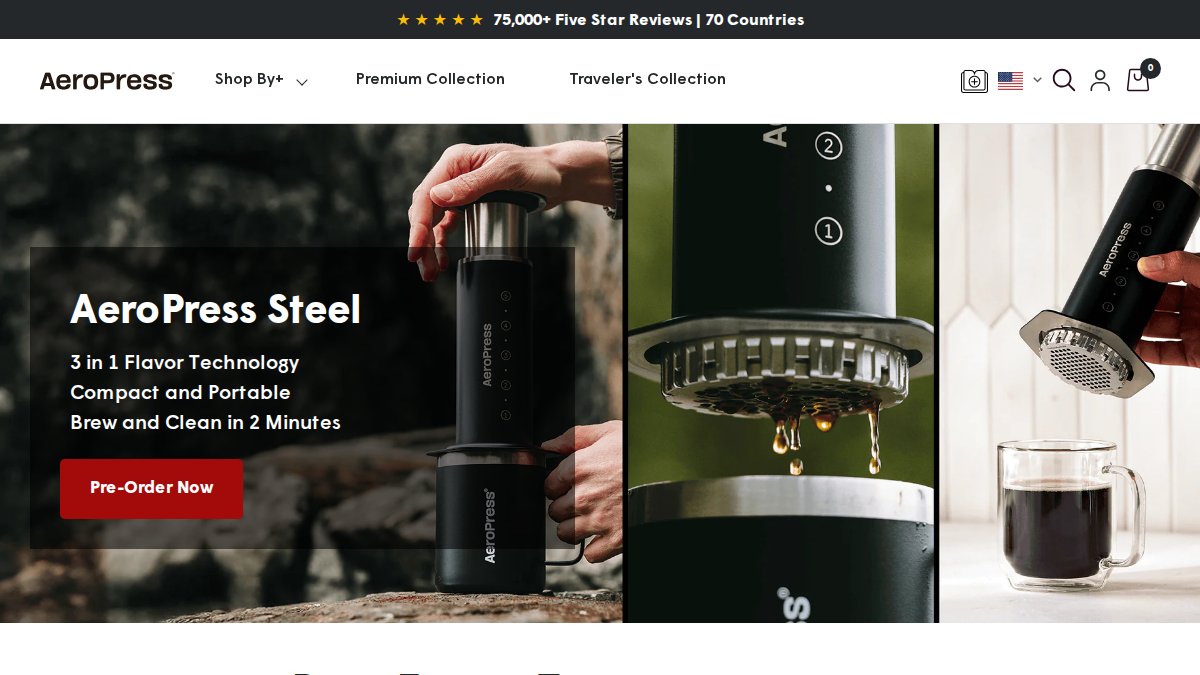
At $39.95, the AeroPress Original uses immersion brewing to produce smooth, grit-free coffee in under a minute. Air pressure forces water through grounds, producing concentrated extraction that rivals espresso in intensity without electricity or counter space. It stores in a drawer and survives being dropped on tile.
Brewing variables matter significantly: grind size, water temperature, steep time, and inverted versus standard position all produce different flavor profiles. This is either a feature or a bug depending on how much you enjoy experimenting.
Pros:
- Extremely compact, stores in a drawer
- Durable, virtually indestructible
- Produces smooth, low-acidity coffee quickly
- Includes 100 paper filters, scoop, and stirrer
Cons:
- Limited to single-cup brewing
- Requires manual technique and hot water source
Price: $39.95
3. Hario V60 Ceramic Dripper: Best Manual Pour-Over for Precision
Pour-over brewing is the most space-efficient path to excellent coffee, and the Hario V60 Ceramic Dripper is the standard by which all other drippers are measured.
The 60-degree cone angle and spiral internal ribs control water flow in ways flat-bottom drippers can't replicate. The large single drainage hole gives full extraction control. Ceramic construction retains heat better than plastic, stabilizing brewing temperature.
At $19.90, this is the lowest-cost entry point to precision manual brewing. The footprint is essentially zero when not in use; it sits directly on a mug and stores like a bowl.
You'll need a gooseneck kettle for controlled pouring. The Fellow Stagg EKG at $199.95 offers variable temperature control and a built-in brew stopwatch, producing genuinely barista-quality results.
Pros:
- Near-zero storage footprint
- Produces a clean, nuanced cup with full extraction control
- Durable ceramic construction
Cons:
- Requires manual pouring technique
- Best results need a gooseneck kettle
4. Bodum Chambord French Press (3-Cup): Best for Bold, Full-Bodied Flavor
The French press is misunderstood in small-kitchen setups. The Bodum Chambord in its 3-cup (350ml) format is one of the most space-efficient ways to brew rich, full-bodied coffee for one to two people.
The stainless steel mesh plunger allows natural oils and fine particles to pass into the cup, producing the heavy, textured mouthfeel that paper-filtered methods strip out. No paper filters means no ongoing consumable cost. Borosilicate glass handles heat without cracking, and the iconic design has remained unchanged for decades because it works.
Cleaning is simple: remove the plunger, rinse the carafe, and reassemble. The only maintenance concern is the glass carafe, which requires careful handling.
Pros:
- No paper filters required, lower ongoing cost
- Simple to use and clean
- Rich, full-bodied flavor profile
Cons:
- Glass carafe requires careful handling
- Leaves fine sediment in the cup
5. Wacaco Nanopresso: Best Compact Espresso Machines for Minimal Space
The Wacaco Nanopresso redefines compact espresso machines. This handheld, electricity-free device generates up to 18 bars of pressure through manual pumping, producing genuine espresso crema in a chassis under 16 centimeters long.
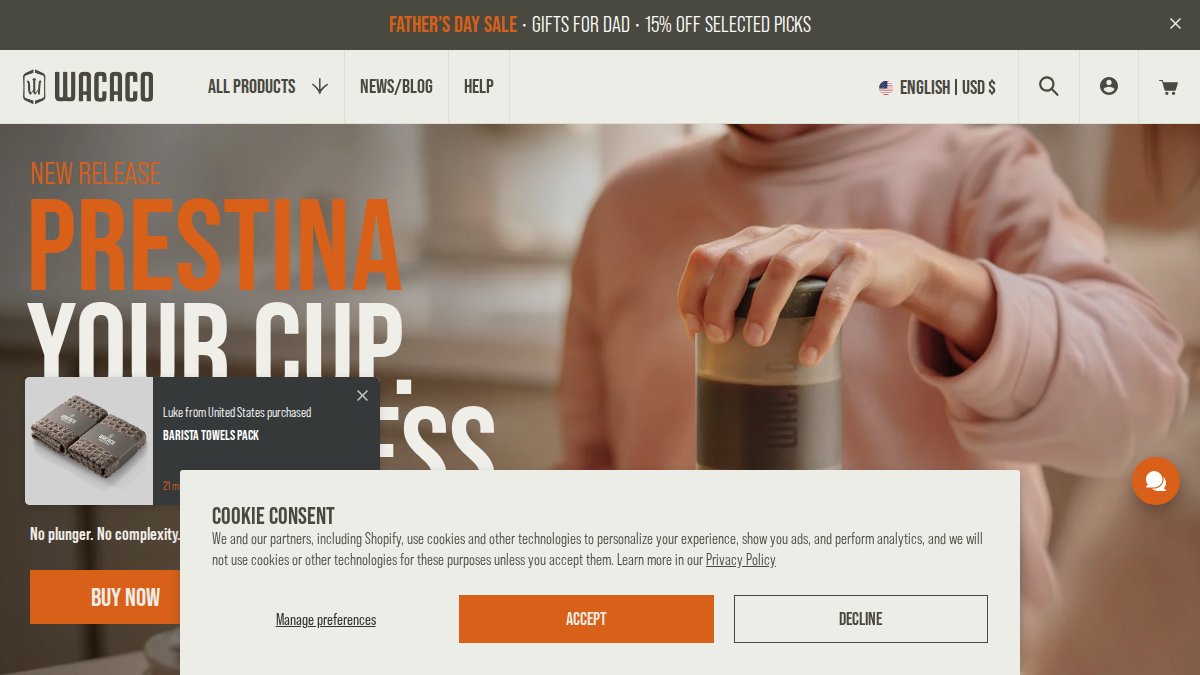
For extremely tight living spaces or anyone refusing to allocate counter space to a single-use appliance, the Nanopresso at $64.90 is the logical choice. It disassembles completely for deep cleaning and reassembles without tools. Manual pumping effort is real, roughly 20-25 pumps per shot, but the output is surprisingly close to machine-pulled espresso.
The practical limitation is workflow. The Nanopresso requires pre-boiled water, a separate grinder, and manual pumping. It's not autopilot; it's a precision tool for people who genuinely want espresso and have no space for anything larger.
Pros:
- Completely portable, requires no electricity
- Up to 18 bars of pressure for real espresso extraction
- Minimal storage footprint, under 16cm
Cons:
- Requires manual pumping effort for each shot
- Needs pre-boiled water and separate grinder
6. Technivorm Moccamaster Cup-One: Best Premium Single-Cup Drip Maker
Drip coffee drinkers who want high-end quality in a small footprint have one clear answer: the Technivorm Moccamaster Cup-One at $229.00.
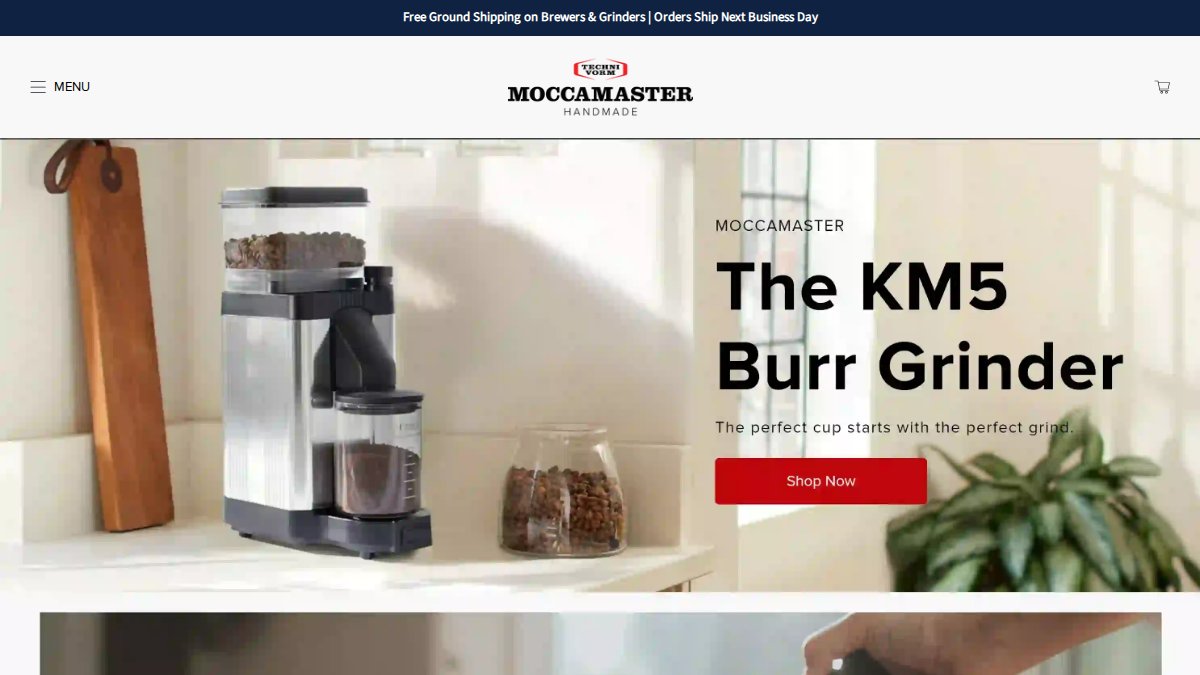
The Moccamaster Cup-One brews a single cup in four minutes at a consistent 196°F-205°F, the optimal brewing temperature range recognized by the Specialty Coffee Association. That thermal precision separates this machine from budget single-serve drip makers that under-heat water and produce flat, under-extracted cups. The auto-off feature activates immediately after brewing, eliminating warming plate energy waste.
Handmade in the Netherlands with a five-year warranty, this machine outlasts every other option on this list. The build quality is immediately apparent: substantial materials, easy-to-fill water reservoir, and no vibration or rattle during brewing.
The Moccamaster Cup-One is one of the few home machines certified by the Specialty Coffee Association to hit proper brewing temperature consistently.
Pros:
- SCA-certified brewing temperature (196°F-205°F)
- Exceptional build quality, five-year warranty
- Fast four-minute brew time
Cons:
- Expensive for a single-cup machine at $229.00
- Overkill for casual coffee drinkers
How to Organize Coffee Gear in Small Kitchens: Storage Solutions
Counter space is a zero-sum resource. Every piece of brewing equipment that lives on the counter displaces something else. The solution is thinking vertically and modularly.
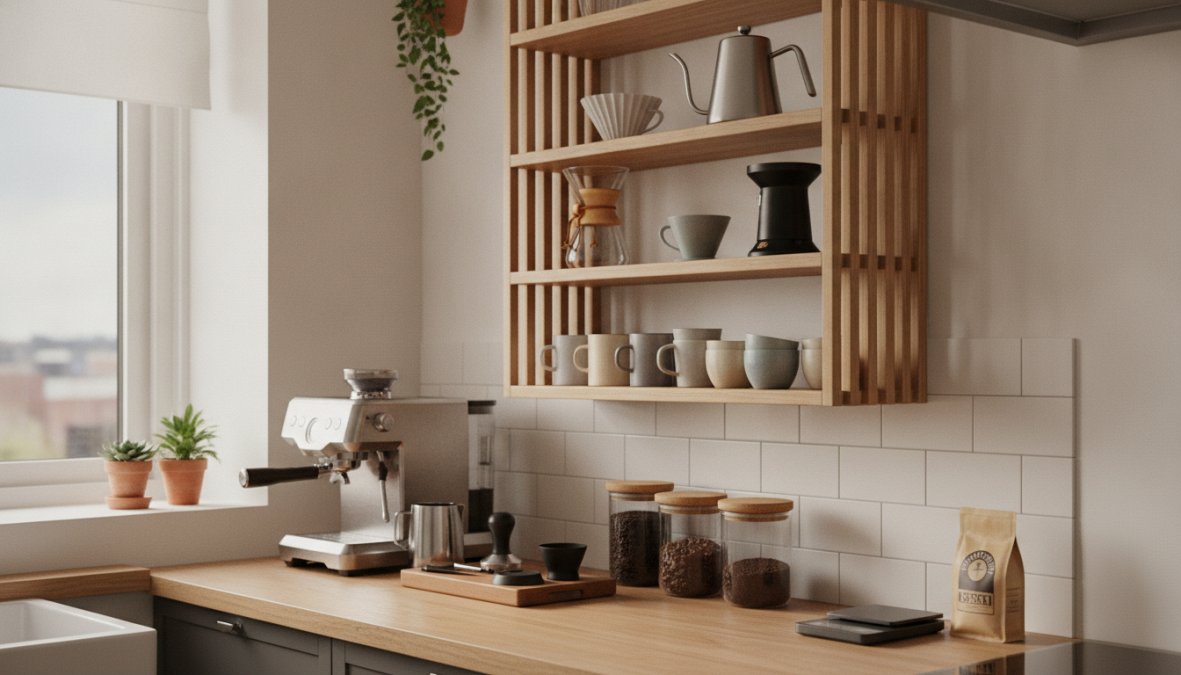
Wall-mounted shelving above the counter is the highest-impact change for most small kitchens. A single shelf at eye level holds a grinder, scale, and manual brewing equipment without consuming counter area. Magnetic knife strips repurposed for metal accessories keep items accessible without drawer clutter.
| Equipment Type | Storage Solution | Counter Space Freed |
|---|---|---|
| AeroPress / V60 | Drawer or cabinet shelf | Full counter area |
| French Press (3-cup) | Cabinet shelf | Full counter area |
| Wacaco Nanopresso | Drawer or bag | Full counter area |
| Breville Bambino Plus | Permanent counter spot | 7.7 inches required |
| Moccamaster Cup-One | Permanent counter spot | Single-cup footprint |
| Grinder + Scale | Wall shelf or cabinet | Full counter area |
Noise level rarely appears in equipment guides but matters in small apartments. The Breville Bambino Plus produces noticeable pump sound during extraction. Manual brewers like the AeroPress and French press are nearly silent. If you share walls or brew before others wake, noise profile matters as much as footprint.
Multi-functional equipment reduces total gear count. A precision gooseneck kettle like the Fellow Stagg EKG serves pour-over, French press, and AeroPress equally well. One kettle replaces separate water-heating solutions, gaining meaningful counter space and storage efficiency.
The broader principle: the best coffee brewing equipment for small kitchens is equipment you can store when not using it. Manual brewers win that argument decisively. Electric machines require permanent counter real estate, meaning they need to justify that space with daily use.
Equipping a small kitchen for great coffee requires honest trade-offs between convenience, quality, and space. The Breville Bambino Plus earns its counter space if you drink espresso daily. The AeroPress earns its drawer space for everyone else. Cuppari Coffee roasts every order fresh and ships the same day, meaning the beans in your brewer are at peak flavor regardless of which equipment you choose. With free shipping on all U.S. orders and a selection spanning single origin, blends, and coffee pods, Cuppari Coffee removes the one variable that no piece of equipment can fix: stale beans. Add to cart and pair your new compact brewer with coffee that matches its quality.
Frequently Asked Questions
What is the best coffee maker for a small apartment?
The best choice depends on your brewing preference. For espresso lovers, the Breville Bambino Plus offers café-quality results in a 7.7-inch footprint. For manual brewing enthusiasts, the AeroPress or Hario V60 deliver excellent flavor profiles with minimal counter space requirements. Single-serve machines like the Technivorm Moccamaster Cup-One combine automatic brewing with a compact design, making them ideal for small kitchens where counter real estate is premium.
How do manual coffee brewing methods help in small kitchens?
Manual coffee brewing methods like pour-over and French press require minimal equipment and storage space. They eliminate the need for bulky programmable machines or electricity, reducing your footprint significantly. Manual brewers are often durable, easy to clean, and produce barista-quality extraction without descaling requirements. They're also quieter than automatic machines, making them perfect for apartments where noise matters.
How do I organize coffee gear in a small kitchen without sacrificing quality?
Use vertical storage solutions like wall-mounted shelves or magnetic strips for your grinder and scale. Store manual brewers and filters in shallow drawers or cabinet organizers. Keep your water reservoir and descaling supplies in a compact caddy under the sink. Multi-functional equipment, like a grinder with built-in scale features, reduces clutter. This organization approach maintains precision brewing while maximizing your available kitchen space.
Can you get café-quality coffee with compact brewing equipment?
Yes. Compact machines like the Breville Bambino Plus deliver espresso with precise brewing temperature and pressure control. Manual methods like pour-over and French press allow complete control over extraction and flavor profile. The key is investing in quality beans, like Cuppari Coffee's freshly roasted options, and maintaining proper technique. Compact equipment doesn't compromise quality; it simply optimizes for space efficiency.
This article was written using GrandRanker