

Table of Contents
- Why Coffee Triggers Acid Reflux and GERD Symptoms
- What Makes Low Acid Coffee Different
- Best Coffee for GERD: Top Brands and Options
- Cold Brew for Acid Reflux: A Gentler Brewing Method
- Coffee Alternatives for Acid Reflux and GERD
- Additives, Timing, and Consumption Habits That Matter
- How to Choose and Brew Coffee for GERD Relief
- Conclusion
Last Updated: July 31, 2026
Why Coffee Triggers Acid Reflux and GERD Symptoms
Coffee triggers acid reflux through multiple mechanisms. When you drink coffee, it stimulates your stomach to produce more acid, which travels up your esophagus causing heartburn. The lower esophageal sphincter, a muscle valve between your stomach and esophagus, relaxes when exposed to coffee's compounds, allowing stomach acid to escape upward.
The Role of Chlorogenic Acid and N-Methylpyridinium
Chlorogenic acid is a primary culprit behind coffee-induced acid reflux. This naturally occurring compound increases stomach acid production and irritates the digestive lining. When coffee beans are roasted, chlorogenic acid transforms into N-methylpyridinium, a less irritating compound. Dark roasts contain considerably less chlorogenic acid than light roasts because longer roasting breaks down more of this problematic compound, which is why many people with acid reflux tolerate dark roast coffee better.
How Caffeine Affects the Lower Esophageal Sphincter
Caffeine directly relaxes the lower esophageal sphincter, making it easier for stomach acid to travel upward. This effect occurs within minutes and can persist for hours. Decaffeinated coffee still contains about 2-3% caffeine but significantly reduces this sphincter-relaxing effect. The ideal solution combines both approaches: a dark roast decaffeinated coffee that minimizes both caffeine exposure and acid-producing compounds.
What Makes Low Acid Coffee Different
Low-acid coffee is specifically selected, processed, or roasted to reduce the compounds that trigger acid reflux. The difference is measurable and scientifically verifiable through pH testing.
pH Levels and Titratable Acidity Explained
Coffee pH levels typically range from 4.85 to 5.10, where 7 is neutral. Regular coffee sits around 4.85-4.95, while low-acid coffees measure between 5.0 and 5.8. This seemingly small difference is significant because pH is logarithmic. Titratable acidity measures the total amount of acid that can be neutralized in a solution, which differs from pH. When shopping for GERD-friendly coffee, look for products that specify both pH level and titratable acidity testing.
Bean Selection: Arabica vs. Robusta for GERD
Arabica beans naturally contain less acid than Robusta beans, making them the preferred choice for people with acid reflux. Geographic origin also matters significantly. Beans grown at higher altitudes in regions like Colombia, Peru, and Sumatra tend to be naturally lower in acid than those from lower-altitude regions.
Best Coffee for GERD: Top Brands and Options
Several specialty roasters have built their business around serving people with sensitive stomachs. These products are developed with actual testing and verification.
| Brand | Key Feature | Best For | Starting Price |
|---|---|---|---|
| Puroast Low Acid Coffee | 70% less acid than standard coffee | General GERD sufferers | $22.13 for 2.5lb |
| Lifeboost Coffee | Third-party tested for mold & toxins | Health-conscious GERD sufferers | $28.99 for 12oz |
| Volcanica Low Acid | pH 5.3, naturally low-acid beans | Those wanting smooth flavor | $24.99 for 16oz |
| Tieman's Fusion Coffee | Blended with matcha & antioxidants | Those seeking functional benefits | $11.99 for 10oz |
| Lucy Jo's Organic Mellow Belly | USDA Organic certified | Organic-focused consumers | $23.75 for bag |
| Java Planet Organic | Sustainably grown, mold-tested | Eco-conscious GERD sufferers | $26.99 for 1lb |
| Tyler's Acid Free Coffee | Proprietary Z-Roasting process | Severe acid reflux cases | $29.99 and up |
| Hevla Low Acid Coffee | Purification process in green state | Budget-conscious shoppers | $13.99 for bag |
Specialty Low-Acid Brands Worth Considering
Puroast Low Acid Coffee stands out for independent verification confirming 70% less acid than conventional coffee, with a pH of 5.8. They use a patented slow-roast method that reduces acidity while preserving flavor complexity.
Lifeboost Coffee emphasizes clean sourcing and contamination testing beyond low acidity, testing for mycotoxins, pesticides, and heavy metals. Their subscription model offers discounts up to 42%.
Volcanica Low Acid Coffee blends naturally low-acid Arabica beans from Brazil, Sumatra, and other regions known for lower chlorogenic acid content. Their medium roast delivers chocolate and nut notes without harshness that triggers acid reflux.
Premium Freshly Roasted Options
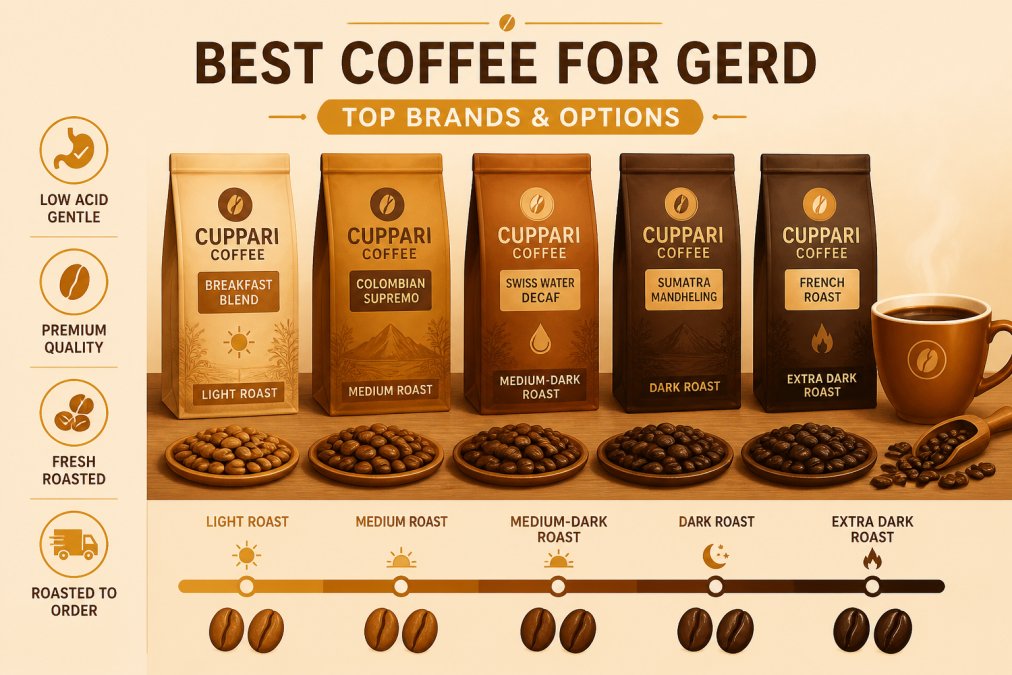
Cuppari Coffee delivers premium, freshly-roasted beans directly to your doorstep. Every order is roasted only after you place it and ships the same day, ensuring maximum freshness. Cuppari Coffee offers free shipping on all U.S. orders.
Java Planet Organic Roasters combines low acidity with organic certification and sustainability. Their single-origin options from Colombia, Sumatra, and Peru naturally fall into the lower-acid range, with third-party testing for mold and heavy metals.
Cold Brew for Acid Reflux: A Gentler Brewing Method
Cold brew represents one of the most effective brewing methods for reducing coffee acidity. This approach works through chemistry rather than bean selection, making it accessible to anyone with a cold brew maker.
How Cold Brewing Reduces Acidity
Cold brew uses cold or room-temperature water steeped with coffee grounds for 12-24 hours. This extended contact time extracts flavor while leaving many acidic compounds behind in the grounds. Chlorogenic acid and other acid-producing compounds require heat to fully dissolve and extract into water. Cold water extraction is selective, pulling out what you want while leaving behind much of what triggers acid reflux. Research indicates that cold brew typically measures between 5.0 and 5.5 pH, compared to 4.85-4.95 for hot coffee.
When preparing cold brew at home, use a 1:4 or 1:5 ratio of grounds to water. After 12-24 hours of steeping, strain through a fine mesh or cheesecloth. The resulting concentrate can be diluted with water or milk to your preferred strength.
Dark Roast Benefits for Sensitive Stomachs
Dark roasts work particularly well in cold brew applications. The extended roasting process breaks down chlorogenic acid into less irritating compounds. When combined with cold brewing, you're applying a second acid-reduction technique. Dark roast cold brew typically delivers a smooth, slightly sweet flavor without the sharp bitterness associated with hot dark roast coffee.
Coffee Alternatives for Acid Reflux and GERD
Sometimes stepping away from traditional coffee entirely works best. Several alternatives deliver similar caffeine boosts and satisfying flavors without acid reflux triggers.
Mushroom and Chicory Coffee Blends
Mushroom coffee blends combine ground mushrooms with small amounts of coffee or coffee substitutes. These blends typically contain 50% coffee and 50% mushroom powder, reducing caffeine content while adding umami flavors. The reduced caffeine means less sphincter relaxation, while lower coffee volume means less acid production.
Chicory root coffee provides a completely caffeine-free alternative that mimics coffee's flavor profile. It's been used as a coffee substitute for centuries and gained particular popularity during coffee shortages.
Tieman's Fusion Coffee blends 100% Arabica coffee with matcha green tea, rooibos red tea, and goji berries. This fusion reduces coffee's acidity while adding antioxidants and steady energy without caffeine spikes.
Decaffeinated Coffee for Sensitive Stomachs
Decaffeinated coffee removes the caffeine that relaxes your lower esophageal sphincter, but it still contains chlorogenic acid. Combining decaf with other strategies like dark roasting or cold brewing creates a genuinely gentle option. Water-processed decaf preserves more flavor, while CO2-processed decaf is more selective. For GERD sufferers, a dark roast, water-processed decaffeinated coffee provides the gentlest option.
Additives, Timing, and Consumption Habits That Matter
What you add to your coffee and when you drink it significantly impacts whether it triggers acid reflux.
How Sweeteners and Milk Affect Gastric Irritation
Sugar and artificial sweeteners can irritate your stomach lining, especially combined with coffee's natural acidity. Refined sugar increases stomach acid production, compounding coffee's effect. Milk and cream provide a buffer that neutralizes some of coffee's acidity. Low-fat milk provides the buffering benefit with less reflux risk. Non-dairy alternatives like oat milk or almond milk also provide buffering, though they're less effective than dairy milk.
Optimal Timing: When to Drink Coffee With GERD
Drinking coffee on an empty stomach dramatically increases acid reflux risk. Eating a substantial breakfast before or with your coffee significantly reduces symptom severity. Drinking coffee within 3-4 hours of bedtime increases nighttime acid reflux because lying down allows stomach acid to travel up your esophagus more easily. Some people find that drinking coffee slowly over 30-45 minutes, rather than gulping it quickly, reduces symptoms.
Water Quality and Mineral Content's Impact
Hard water, with high mineral content, can slightly reduce coffee's acidity. The minerals buffer some acidic compounds. If you have severe GERD, using filtered water with moderate mineral content might help. Water temperature also matters, water above 205°F extracts more acidic compounds. Brewing at 195-205°F reduces acid extraction while still properly extracting flavor and caffeine.
How to Choose and Brew Coffee for GERD Relief
Selecting the right coffee and brewing it properly creates a foundation for GERD-friendly enjoyment.
Brewing Temperature and Extraction Time
Water temperature directly influences which compounds extract from coffee grounds. The sweet spot for GERD-friendly brewing sits around 195-205°F. Extraction time also matters significantly. Espresso machines brew under high pressure for 25-30 seconds, producing moderate acidity. French press steeping takes 4 minutes, extracting more compounds and creating higher acidity. Cold brew's 12-24 hour extraction time produces the lowest acidity. For GERD sufferers, shorter extraction times generally mean lower acidity.
Common Mistakes to Avoid When Selecting GERD-Friendly Coffee
Many people assume any "low-acid" label guarantees relief. In reality, different brands use different testing methods and standards. When evaluating low-acid coffees, look for brands that specify both pH level and titratable acidity, ideally with third-party verification.
Another common mistake involves ignoring the roast date. Older coffee can develop compounds that trigger acid reflux more readily than fresh beans. Buying from brands that roast to order, like Cuppari Coffee, which roasts after you place your order and ships the same day, ensures maximum freshness.
People often overlook consumption habits while focusing entirely on bean selection. Drinking coffee on an empty stomach, consuming it rapidly, or adding high-sugar sweeteners can trigger symptoms even with genuinely low-acid beans.
Managing GERD while maintaining your coffee habit requires intentional choices, but it's absolutely achievable. The combination of selecting genuinely low-acid beans, brewing them properly, and timing your consumption strategically allows most people to enjoy coffee without painful reflux. Cuppari Coffee's commitment to freshness, roasting beans only after your order arrives and shipping the same day, ensures you're starting with optimal raw material. Combined with the strategies outlined above, freshly roasted, low-acid coffee from Cuppari Coffee delivers both the taste you love and the digestive comfort you need.
Frequently Asked Questions
Is cold brew coffee better for acid reflux than hot coffee?
Yes, cold brew for acid reflux is often gentler because the cold water extraction process creates lower acidity levels compared to hot brewing methods. Cold brew typically has a pH that's less acidic, reducing irritation to the lower esophageal sphincter. The extended steeping time in cold water extracts flavor without pulling as many acidic compounds from the beans. This makes cold brew an excellent choice for people managing GERD symptoms while still enjoying coffee.
What is the best coffee for GERD, decaf or low-acid brands?
Both options work, depending on your sensitivity. Low-acid coffee brands reduce titratable acidity through bean selection and roasting methods, making them suitable for most GERD sufferers who want regular caffeine. Decaffeinated coffee eliminates caffeine's effect on the lower esophageal sphincter, which is ideal if you're highly sensitive. Many people find success with low-acid, decaffeinated options that combine both approaches for maximum digestive health and comfort.
Do dark roast coffees help with GERD symptoms?
Dark roast coffees can be beneficial for GERD because the extended roasting process breaks down chlorogenic acid, a compound that increases stomach acid production. During dark roasting, N-methylpyridinium forms, which is gentler on sensitive stomachs. Dark roasts also tend to have lower acidity levels overall. However, individual responses vary, some people find dark roasts smoother and less irritating, while others may need to combine dark roast with cold brewing or low-acid brands for optimal relief.
What coffee alternatives work best for acid reflux?
Mushroom coffee and chicory blends are popular alternatives that provide a coffee-like experience without high acidity. These blends reduce gastroesophageal reflux disease triggers while delivering satisfying flavor. Herbal teas and grain-based coffee substitutes are also gentler on the digestive system. If you prefer traditional coffee, low-acid specialty brands or cold brew methods may work better than switching entirely. Experiment with different alternatives to find what supports your digestive health best.
This article was written using GrandRanker