

Table of Contents
- How We Chose the Best Coffee for Home Brewing
- The 10 Best Coffee Brands for Home Brewing Ranked
- Quick Comparison: Best Coffee for Home Brewing at a Glance
- Best Coffee Grind Size for Different Brewing Methods
- Fresh vs Pre-Ground Coffee for Home Brewing: What Really Matters
- How to Store Coffee Beans to Maintain Freshness
- Sustainability, Ethical Sourcing, and Brewing for Specific Needs
- Troubleshooting Common Home Brewing Mistakes
- Conclusion
Last Updated: June 1, 2026
Choosing the best coffee for home brewing is genuinely harder than most guides admit. The options span hundreds of roasters, dozens of processing methods, and wildly different quality tiers. At Cuppari Coffee, we've worked through this complexity daily, roasting beans to order and shipping same-day, which gives us a clear view of what actually matters when coffee meets your kitchen. Below, we'll show you exactly how to match beans, roast profiles, and grind sizes to your brewing setup, plus rank the top 10 brands worth your money in 2026.
Here's what most guides get wrong: they treat "best coffee" as a fixed category. The truth is that the best home brewing coffee depends entirely on your equipment, your palate, and how fresh your beans actually are. A phenomenal light roast from an award-winning roastery becomes mediocre when ground three weeks before you brew it. Freshness isn't a bonus feature. It's the variable that determines whether everything else matters.
How We Chose the Best Coffee for Home Brewing
Every recommendation in this guide is evaluated against four criteria: bean quality, roast freshness, flavor transparency, and value for the price paid. We excluded any brand that obscures its roast date, uses filler blends without disclosure, or relies on marketing language over actual cup quality.
Arabica vs. Robusta: Which Bean Type Wins at Home?
Arabica is a coffee species grown at higher altitudes, characterized by lower caffeine content, higher acidity, and complex flavor notes including fruit, florals, and chocolate. Robusta is a hardier species with roughly double the caffeine, a more bitter profile, and a thicker body that produces strong crema in espresso.
For home brewing, Arabica dominates specialty coffee for good reason. Its nuanced flavor profile rewards careful extraction, meaning your technique actually shows up in the cup. Robusta has its place, particularly in traditional Italian espresso blends where crema and intensity are priorities, but as a standalone bean for pour-over or French press, it rarely delivers the complexity most home brewers are chasing.
The practical takeaway: look for 100% Arabica for most brewing methods, and expect Robusta to appear in blends rather than single-origin offerings.
Understanding Roast Profiles: Light, Medium, and Dark
Roast profile is the single most misunderstood variable in home coffee selection. Many people assume darker means stronger, but caffeine content actually decreases slightly as roast level increases. What changes is flavor.
- Light roast: High acidity, delicate fruit and floral notes, lower body. Best for pour-over and Aeropress where extraction can be precisely controlled.
- Medium roast: Balanced acidity and body, notes of caramel, nuts, and chocolate. The most forgiving roast level for drip coffee makers and French press.
- Dark roast: Low acidity, heavy body, bitter-sweet notes of dark chocolate and smoke. Performs well in espresso machines and Moka pots where bold flavor is the goal.
The 10 Best Coffee Brands for Home Brewing Ranked
The best coffee for home brewing in 2026 comes from roasters who prioritize freshness, sourcing transparency, and roast consistency. Here are the top 10, ranked by overall performance across brewing methods.
1. Cuppari Coffee
Cuppari Coffee earns the top spot because of one non-negotiable principle: beans are roasted only after an order is placed, then shipped the same day. That model eliminates the biggest quality killer in retail coffee, which is sitting on warehouse shelves for weeks before reaching your grinder. The selection covers single-origin, blends, flavored options, and coffee pods, with free shipping on all U.S. orders. The sealed capsules contain no oxygen, which actively preserves freshness rather than just slowing its decline. For home brewers who want their coffee to taste the way the roaster intended, this is the standard to measure everything else against.
Pros: Roasted-to-order freshness, same-day shipping, free U.S. delivery, diverse selection including pods and teas Cons: Online-only availability
2. Onyx Coffee Lab
Onyx Coffee Lab is the choice for home brewers who want competition-level beans at home. Their sourcing targets beans scoring 86 to 90+ points, and every bag includes detailed flavor notes and brewing guidance. The eco-friendly packaging and innovative processing methods, including natural and anaerobic fermentation, make each release an education in what specialty coffee can taste like. Starting at around $20 per bag, it's a premium investment.
Pros: Exceptional flavor complexity, transparent sourcing, industry-leading education Cons: Premium pricing; limited appeal for those who prefer traditional dark roasts
3. Stumptown Coffee Roasters
Stumptown sits at the intersection of accessibility and genuine quality. Their direct trade relationships mean farmers are paid above commodity prices, and the flavor profiles are consistent across seasonal rotations, which matters when you're dialing in a grind for a specific recipe. Available in whole bean and ground formats, starting at around $16 per bag.
Pros: Reliable quality, widely available, excellent balance of approachability and depth Cons: Higher price than commodity brands
4. Coffee Bros.
Coffee Bros. built their model around education, which makes them the best starting point for anyone new to home brewing. Their color-coded roast grading system removes the guesswork from selection, and the high-quality Arabica beans hold up across multiple brewing methods. Direct-to-consumer fulfillment keeps beans fresh. Starting at around $15 per bag.
Pros: Beginner-friendly, consistent quality, extensive brewing guides Cons: Limited physical retail presence
5. La Colombe Coffee Roasters
La Colombe offers the widest roast variety on this list, covering medium-light through dark-medium profiles, which makes them a strong choice for households with multiple brewing preferences. Their commitment to ethical sourcing and recyclable packaging is genuine rather than performative. Starting at around $13 per bag.
Pros: Great variety, strong sustainability commitment, convenient subscription Cons: Limited very light or experimental roast options
6. Kicking Horse Coffee
Every Kicking Horse bag carries 100% Organic and Fair Trade certification, and the bold, full-bodied dark and medium roasts are purpose-built for drip coffee makers and French press. The wide retail availability is a genuine advantage for those who don't want to plan ahead. Starting at around $14 per bag.
Pros: Easy to find, strong ethical certifications, reliable for daily brewing Cons: Flavor profiles lean traditional rather than bright or fruity
7. Peet's Coffee
Peet's deep-roasted signature style has earned a loyal following for decades. The wide range of blends and single-origin options gives experienced brewers room to explore, and grocery store availability means you're never without options. Starting at around $12 per bag.
Pros: Highly reliable, widely accessible, excellent for milk-based drinks Cons: Roast levels can be too aggressive for specialty coffee fans
8. Death Wish Coffee
Death Wish Coffee solves one specific problem: maximum caffeine with minimum fuss. The dark roast profile keeps acidity low, and Organic and Fair Trade certifications add credibility to what could otherwise be a gimmick brand. Available in whole bean, ground, and pods. Starting at around $19 per bag.
Pros: Unmatched caffeine content, consistent dark roast, certified organic Cons: No nuance; not for light-roast or single-origin enthusiasts
9. Lavazza
Lavazza is the benchmark for traditional Italian espresso blends. The chocolate and nut notes are consistent across their lineup, and the price point around $10 per bag makes them accessible for daily use. Where they fall short is variety: if you want to experiment with light roasts or single-origin offerings, look elsewhere.
Pros: Excellent value, consistent espresso performance, widely available Cons: Limited variety beyond traditional profiles
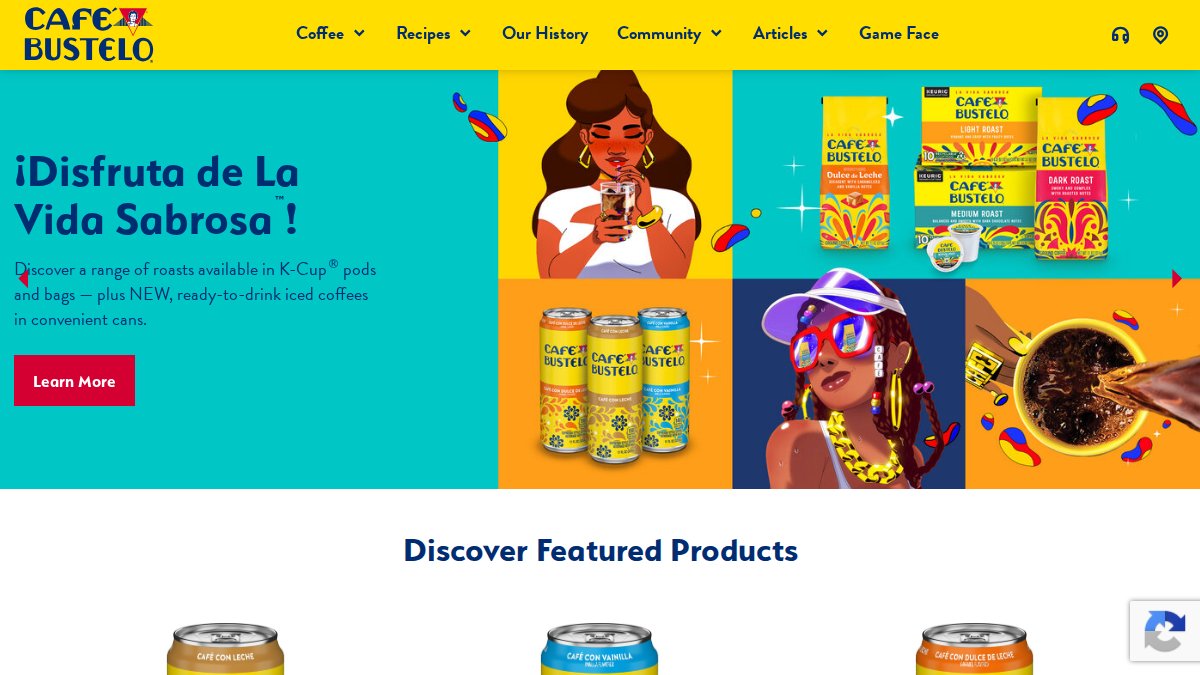
10. Cafe Bustelo
Cafe Bustelo is the honest budget pick. The very fine grind is purpose-built for Moka pots and espresso machines, and the bold, intense flavor punches well above its $5 price point. This is not a specialty-grade coffee, and it doesn't pretend to be. For everyday brewing on a tight budget, nothing else competes at this price.
Pros: Unbeatable value, perfect for Moka pot brewing Cons: Lacks the complexity of specialty-grade coffee
Quick Comparison: Best Coffee for Home Brewing at a Glance
| Brand | Starting Price | Best For | Roast Range | Certifications |
|---|---|---|---|---|
| Cuppari Coffee | Varies | All home brewers | Light to Dark | Freshness Guaranteed |
| Onyx Coffee Lab | ~$20/bag | Coffee enthusiasts | Light to Medium | Eco-friendly |
| Stumptown | ~$16/bag | Specialty upgrades | Light to Dark | Direct Trade |
| Coffee Bros. | ~$15/bag | Beginners | Light to Dark | None listed |
| La Colombe | ~$13/bag | Variety seekers | Medium-Light to Dark | Ethical sourcing |
| Kicking Horse | ~$14/bag | Eco-conscious brewers | Medium to Dark | Organic, Fair Trade |
| Peet's Coffee | ~$12/bag | Bold coffee lovers | Medium to Dark | None listed |
| Death Wish Coffee | ~$19/bag | High-caffeine needs | Dark | Organic, Fair Trade |
| Lavazza | ~$10/bag | Espresso drinkers | Medium to Dark | None listed |
| Cafe Bustelo | ~$5/bag | Budget brewers | Dark | None listed |
Best Coffee Grind Size for Different Brewing Methods
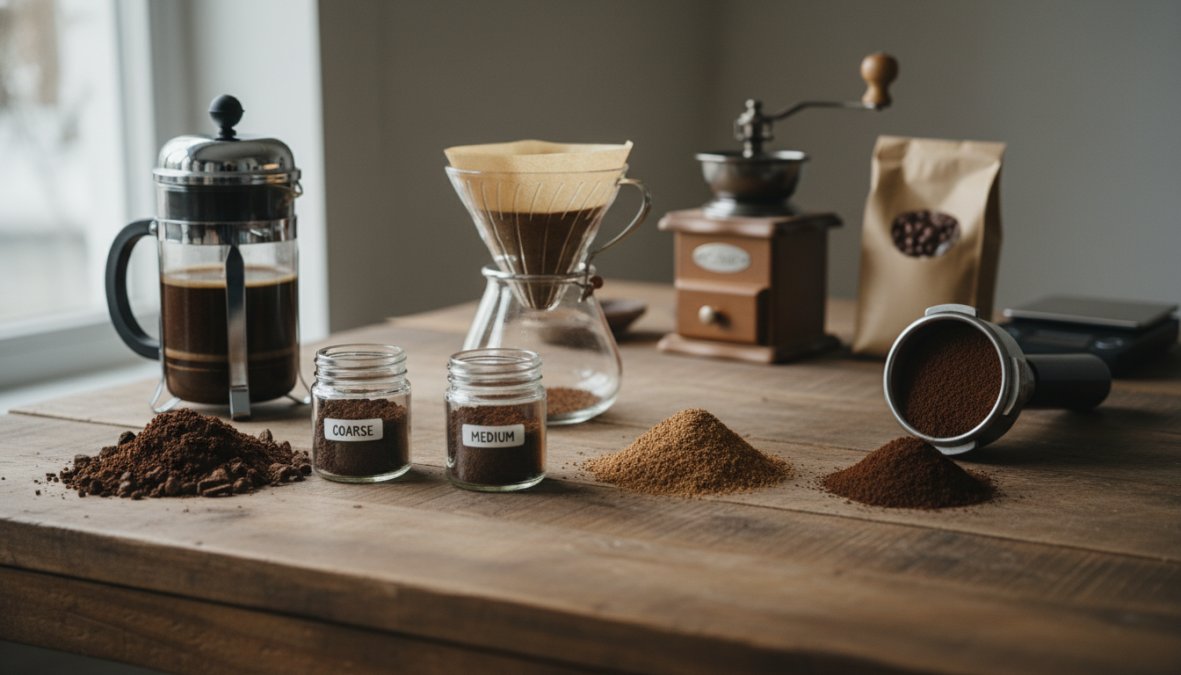
Grind size controls extraction rate, and extraction rate determines whether your coffee tastes balanced, bitter, or weak. Getting this wrong is the most common reason a good bag of beans produces a disappointing cup.
The core principle: coarser grinds slow extraction, finer grinds accelerate it. Each brewing method operates at a different pressure and contact time, which is why a one-size-fits-all grind produces inconsistent results across equipment.
Matching Grind to Equipment: French Press, Pour-Over, Drip, Espresso, and More
- French press: Coarse grind. The long brew time (4 minutes) and immersion method require large particles to prevent over-extraction and excessive sediment.
- Pour-over: Medium-fine grind. The controlled pour and filter paper reward a grind that allows steady, even extraction over 3 to 4 minutes.
- Drip coffee maker: Medium grind. Most drip machines are calibrated for this range, and it's the most forgiving setting for pre-ground coffee.
- Aeropress: Medium to fine, depending on brew time. Shorter brew times (1 minute) work with finer grinds; longer steep times need coarser particles.
- Espresso machine: Fine grind. High pressure forces water through tightly packed grounds in 25 to 30 seconds. Even a small grind adjustment changes the flavor dramatically.
- Moka pot: Fine to medium-fine. Similar to espresso in pressure dynamics, though slightly coarser than a dedicated espresso grind prevents over-extraction.
- Cold brew: Extra coarse. The 12 to 24-hour steep time at room temperature or refrigerator temperature requires the coarsest grind to avoid a bitter, over-extracted concentrate.
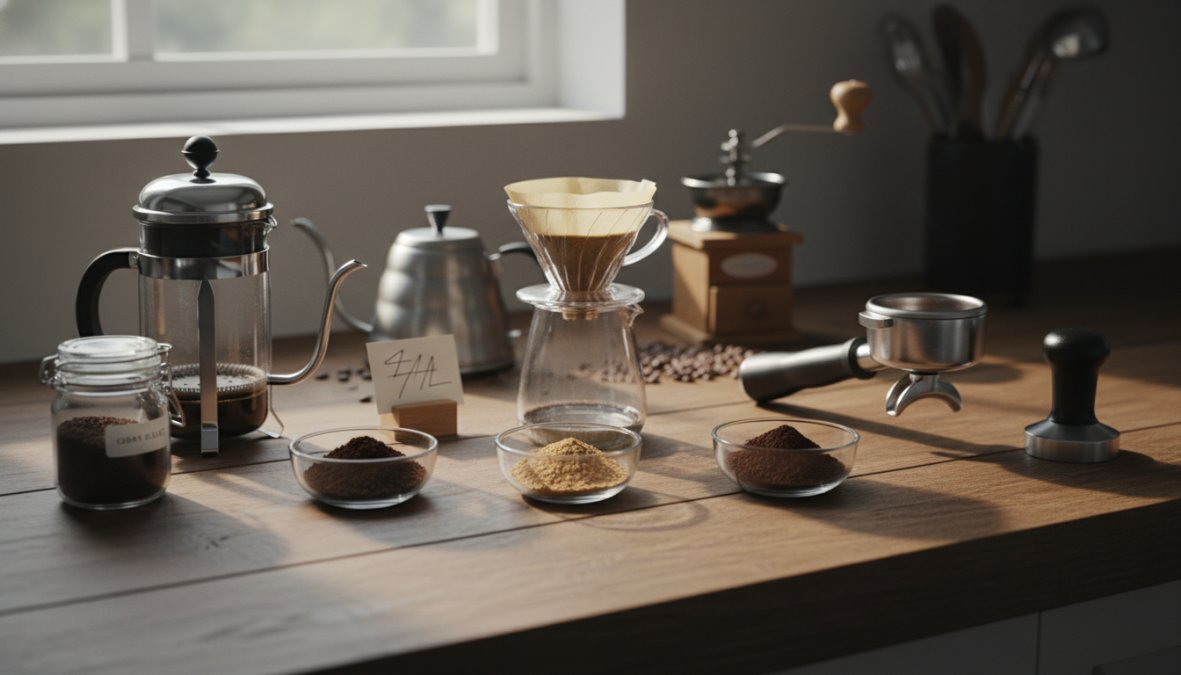
A burr grinder produces consistent particle sizes that produce even extraction. Blade grinders chop unevenly, creating a mix of fine powder and coarse chunks that extract at different rates simultaneously. If you're serious about home brewing, a burr grinder is the single most impactful equipment upgrade you can make.
Fresh vs Pre-Ground Coffee for Home Brewing: What Really Matters
The whole-bean-versus-pre-ground debate is usually presented as a simple quality hierarchy: whole bean wins, end of discussion. That framing is accurate but incomplete. Understanding why whole bean wins, and under exactly which conditions pre-ground is an acceptable trade-off, gives you a more useful decision framework than a blanket recommendation.
The Chemistry of Coffee Staling: What Actually Happens After Grinding
Whole roasted coffee beans are structurally protective. The bean's cellular matrix traps volatile aromatic compounds, the esters, aldehydes, and ketones responsible for the fruity, floral, and caramel notes you taste in a well-brewed cup, and slows their contact with oxygen. Grinding shatters that matrix entirely. The resulting particles have an exponentially larger surface area exposed to air, and oxidation begins immediately.
The degradation isn't gradual and linear. The most volatile aromatic compounds, the ones responsible for the brightest, most distinctive flavor notes, dissipate within the first 15 to 30 minutes after grinding. This is why the bloom step in pour-over brewing releases such a visible burst of CO2: freshly ground coffee is still actively off-gassing. By the time pre-ground coffee reaches your kitchen from a warehouse, a distribution center, and a retail shelf, that off-gassing is largely complete and the aromatics have followed.
What remains in stale pre-ground coffee is the less volatile flavor fraction: the bitter, woody, and flat notes that survive oxidation better than the delicate ones. This is why stale coffee doesn't just taste less complex, it tastes actively worse, not merely simpler.
The Degradation Timeline: When Does It Actually Matter?
Freshness loss in coffee follows a curve, not a cliff. Understanding the timeline helps you make smarter purchasing decisions:
- 0 to 7 days post-roast (whole bean): Peak CO2 off-gassing. Paradoxically, very freshly roasted beans can produce uneven extraction in pour-over because excess CO2 repels water. Many specialty roasters recommend a 5 to 10-day rest after roasting before brewing for optimal results.
- 7 to 21 days post-roast (whole bean, properly stored): The optimal brewing window for most specialty coffee. CO2 has stabilized, aromatic compounds are intact, and extraction is even and predictable.
- 21 to 42 days post-roast (whole bean, properly stored): Noticeable but gradual decline. Still significantly better than most retail pre-ground coffee, but the brightness and complexity of the first two weeks has faded.
- Beyond 42 days post-roast (whole bean): Stale by specialty standards. Still drinkable, but the flavor profile has flattened considerably.
- Pre-ground coffee: Begins degrading immediately after grinding. Vacuum-sealed pre-ground coffee in nitrogen-flushed packaging slows this process meaningfully, a nitrogen-flushed, vacuum-sealed bag can preserve acceptable quality for several weeks, but it cannot replicate the freshness of grinding immediately before brewing.
This timeline is why the roast date on a bag matters more than the best-by date. A best-by date of 12 months from roasting tells you nothing useful about when the coffee was at its best. A roast date tells you exactly where you are on the freshness curve.
Burr Grinder vs. Blade Grinder: The Equipment Gap That Undermines Fresh Beans
Buying whole beans and grinding them fresh only delivers the expected quality improvement if your grinder produces consistent particle sizes. This is where many home brewers invest in freshness but undermine it with the wrong equipment.
Blade grinders chop coffee randomly, producing a mixture of fine powder and coarse chunks in the same batch. When you brew that mixture, the fine particles over-extract (contributing bitterness) while the coarse chunks under-extract (contributing sourness and weakness) simultaneously. The result is a muddled cup that doesn't reflect the quality of the beans.
Burr grinders, whether flat burr or conical burr, crush beans between two abrasive surfaces set at a precise distance, producing particles of consistent size. Consistent particle size means consistent extraction rate, which means the flavor in your cup actually reflects the flavor potential of the beans.
For home brewers considering a burr grinder for the first time, entry-level hand grinders (manual burr grinders) in the $30 to $60 range produce results that outperform blade grinders costing twice as much. Electric burr grinders at the $100 to $150 range cover most home brewing methods adequately. This is the single equipment upgrade with the highest return on investment for home brewing quality.
When Pre-Ground Coffee Is the Right Call
Pre-ground coffee is not always the wrong choice. There are specific situations where it's the rational decision:
- You don't own a grinder and won't be buying one. Pre-ground coffee from a roaster who provides a roast date and uses nitrogen-flushed, vacuum-sealed packaging is meaningfully better than pre-ground coffee with no roast date from a warehouse shelf.
- You're brewing dark roast for a milk-based drink. The bold, bitter-sweet flavor profile of a dark roast is more durable than a light roast's delicate aromatics. A dark roast espresso blend used in a latte or cappuccino is far less affected by pre-grinding than a light roast pour-over.
- You're traveling or in a situation without grinding equipment. Convenience is a legitimate priority. Pre-ground coffee that still tastes good is better than no coffee.
- You're using a pod or capsule system. Sealed capsules that eliminate oxygen exposure, like Cuppari Coffee's sealed pod format, represent a different engineering solution to the freshness problem. The oxygen-free environment inside the capsule preserves aromatic compounds in a way that an open bag of pre-ground cannot.
The Practical Decision Framework
Use this to decide what to buy based on your actual situation:
| Your Situation | Best Choice |
|---|---|
| Own a burr grinder | Whole bean, roasted within 3 weeks, ground immediately before brewing |
| Own a blade grinder | Whole bean still beats pre-ground, but consider upgrading the grinder before the beans |
| No grinder, won't buy one | Pre-ground from a roaster with a visible roast date and sealed packaging |
| Brewing dark roast for espresso or milk drinks | Pre-ground is an acceptable trade-off; freshness loss is less perceptible |
| Brewing light roast pour-over | Whole bean + burr grinder is non-negotiable for the flavor profile to show up |
| Using a pod system | Sealed, oxygen-free capsules from a roasted-to-order source |
Specialty Coffee Association brewing standards and extraction guidelines
How to Store Coffee Beans to Maintain Freshness
Proper storage is the difference between a bag of beans that tastes great on day one and still delivers on day fourteen, versus one that goes flat by day five. The enemies of freshness are oxygen, moisture, heat, and light, in roughly that order of damage.
The rules that actually matter:
- Store beans in an airtight container, away from light. A ceramic or opaque canister with a one-way valve is ideal.
- Keep the container at room temperature. The refrigerator introduces moisture through condensation every time you open it. The freezer works for long-term storage of unopened bags only.
- Buy in quantities you'll use within two weeks of opening. Freshness degrades regardless of storage method once a bag is open.
- Never store beans near the stove, oven, or any heat source. Even ambient warmth accelerates oxidation.
What most guides miss is that the roast date matters more than the expiration date. Coffee doesn't go "bad" in the food safety sense, but it absolutely goes stale. Look for a roast date, not just a best-by date, and aim to brew within 2 to 4 weeks of roasting for peak flavor. This is exactly why roasted-to-order models produce a measurable quality advantage over retail shelf coffee.
Sustainability, Ethical Sourcing, and Brewing for Specific Needs
Most 'best coffee' guides treat sustainability as a badge-checking exercise and ignore dietary needs entirely. This section does both differently: it gives you a practical framework for evaluating certifications without oversimplifying them, and it addresses brewing adjustments that make coffee accessible for people with acid sensitivity, caffeine restrictions, or other physiological considerations, a gap almost no competitor covers.
Fair Trade, Organic, Direct Trade, and Single-Origin: What the Labels Actually Deliver
Certification language on coffee bags is genuinely useful, but only if you understand what each label does and does not guarantee.
Fair Trade Certified sets a minimum price floor above commodity market rates and requires an additional community development premium. The floor protects farmers during market downturns, a real and meaningful protection when commodity prices collapse, as they did during the 2018-2019 price crisis. What Fair Trade does not guarantee is cup quality. A commodity-grade bean grown at low altitude can carry Fair Trade certification. The certification is about economic conditions, not sensory outcomes.
USDA Organic Certified verifies that beans were grown without synthetic pesticides or fertilizers, confirmed through third-party auditing. Organic certification says nothing about flavor, altitude, processing method, or roast freshness. It does reflect farming practices associated with healthier soil biology and reduced chemical runoff into local watersheds, meaningful environmental outcomes even if they don't directly predict what's in your cup.
Direct Trade is not a standardized certification, it's a relationship model. Roasters like Stumptown and Onyx Coffee Lab use it to describe ongoing purchasing partnerships with specific farms or cooperatives, often at prices significantly above both commodity and Fair Trade floors. Because there's no third-party auditor, the quality of a direct trade relationship depends entirely on the roaster's transparency. The best direct trade roasters publish the farm name, the price paid per pound, and the harvest season on the bag or their website. If a roaster claims direct trade but provides none of that detail, treat the claim skeptically.
Single-Origin means the coffee comes from one defined source, a country, a region, a specific farm, or a single lot within a farm. It enables traceability and showcases terroir: the combination of altitude, soil, climate, and processing that gives a coffee its distinctive character. A washed Ethiopian Yirgacheffe and a natural-processed Guatemalan Huehuetenango are both single-origin, but they taste radically different because terroir and processing method shape the cup as much as roast level does.
The honest hierarchy for conscious consumers: Direct trade with published pricing > Fair Trade + Organic combined > Fair Trade alone > Organic alone > no certification. Kicking Horse Coffee's combination of Organic and Fair Trade certifications makes them the strongest certified option among widely available retail brands. For roasters with genuine direct trade relationships, Stumptown and Onyx Coffee Lab are the most transparent on this list about what they pay and where beans come from.
Brewing for Specific Dietary Needs: Low-Acid, Decaf, and High-Caffeine Options
This is the section most coffee guides skip entirely, which is a significant omission. A meaningful portion of home brewers aren't optimizing purely for flavor complexity, they're working around physiological constraints that make standard brewing advice incomplete or even counterproductive.
For acid-sensitive stomachs:
Coffee acidity is real and measurable, and it affects people differently. The two most effective strategies for reducing acid exposure don't require buying a specialty low-acid product, they require changing your brewing method.
Cold brew is the most effective acid-reduction technique available to home brewers. The extended extraction at low temperature (12 to 24 hours in the refrigerator) produces a concentrate with measurably lower acidity than hot-brewed coffee made from the identical beans. According to research published in scientific literature on coffee chemistry, cold brew's pH tends to run higher (less acidic) than hot brew from the same beans, with the difference most pronounced in lighter roasts. If you experience stomach discomfort from hot coffee but haven't tried cold brew, this is the first adjustment to make.
Dark roasts are the second option. Roasting breaks down chlorogenic acids, the primary contributors to coffee's perceived acidity, meaning a dark roast from any origin will be lower-acid than a light roast from the same beans. Lavazza's dark blends and Peet's Major Dickason's Blend are consistently lower-acid options available at most grocery stores. The trade-off is flavor complexity: the same roasting process that reduces acid also reduces the fruit and floral notes that make light roasts interesting.
A third, less commonly discussed option is the Moka pot. Its pressurized extraction produces a concentrated, low-volume brew that many acid-sensitive drinkers tolerate better than a full 12-ounce drip coffee, simply because the serving size limits total acid intake per cup.
For caffeine-restricted brewers:
Decaffeinated coffee has improved dramatically in quality over the past decade, but the decaffeination method matters as much as the bean quality. There are three primary methods in commercial use:
- Swiss Water Process: Uses only water and activated charcoal filters to remove caffeine. No chemical solvents. The process is certified organic-compatible and preserves more of the bean's original flavor compounds than solvent-based methods. Look for the Swiss Water Program logo on the bag, it's a licensed certification, not a marketing claim.
- CO2 Process (Supercritical CO2): Uses pressurized carbon dioxide to selectively extract caffeine while leaving flavor compounds largely intact. Considered the gold standard for flavor preservation but expensive to operate, so it's less common in mass-market decaf.
- Solvent-based methods (Methylene Chloride or Ethyl Acetate): The most common commercial methods. Regulatory bodies including the FDA consider residual solvent levels in finished coffee to be well within safe limits, but consumers who prefer to avoid chemical solvents entirely should look for Swiss Water or CO2 Process certification.
For home brewers who want decaf without sacrificing cup quality, look for single-origin Swiss Water Process decaf from specialty roasters. Several roasters on this list, including Stumptown, offer Swiss Water decaf options that perform well in pour-over and drip brewing.
For high-caffeine needs:
Death Wish Coffee is purpose-built for maximum caffeine and delivers on that promise through a combination of Robusta beans (which contain roughly double the caffeine of Arabica) and a dark roast profile that concentrates flavor intensity. For home brewers who want high caffeine without the bitterness of a pure Robusta blend, a medium-roast Arabica brewed at a stronger ratio (closer to 1:13 or 1:14 coffee to water by weight, rather than the standard 1:15 to 1:17) is a more nuanced alternative that still delivers elevated caffeine per cup.
Swiss Water Process certification and how it works
Troubleshooting Common Home Brewing Mistakes
Most bad cups of coffee trace back to one of five fixable problems. The good news is that none of them require new equipment.
Mistake 1: Using water that's too hot. Boiling water (100°C/212°F) over-extracts coffee, pulling bitter compounds into the cup. The target range for most brewing methods is 90°C to 96°C (195°F to 205°F). If you don't have a thermometer, let boiling water sit for 30 to 45 seconds before pouring.
Mistake 2: Skipping the bloom. For pour-over and Aeropress, a 30-second pre-infusion (pouring just enough water to wet the grounds) releases trapped CO2 from fresh beans. Skipping this step produces uneven extraction because CO2 repels water during the main pour. This step matters most with freshly roasted beans.
Mistake 3: Inconsistent water-to-coffee ratio. Eyeballing coffee grounds produces different results every time. A kitchen scale and a consistent ratio (try 1:16 as a starting point) eliminates one of the biggest variables in home brewing. TDS (total dissolved solids) meters are useful for advanced brewers who want to measure extraction precisely.
Mistake 4: Grinding too early. Grinding coffee and then waiting 20 minutes to brew wastes the freshness you paid for. Grind immediately before brewing, every time.
Mistake 5: Ignoring equipment cleanliness. Coffee oils go rancid and accumulate on grinders, carafes, and French press screens. A bitter, off-flavor that persists across different bags of beans is almost always a cleaning problem. Rinse equipment after every use and deep-clean weekly.
Conclusion
Selecting the best coffee for home brewing comes down to three variables working together: bean freshness, roast match to your brewing method, and grind precision. Most people get one of these right and wonder why their coffee still disappoints.
The simplest solution is to start with coffee that's fresh by design. Cuppari Coffee roasts only after an order is placed, ships the same day, and delivers with free U.S. shipping, removing the freshness variable entirely. Whether you're pulling espresso shots, running a pour-over, or filling a French press, the selection covers single-origin, blends, flavored options, and pods with sealed, oxygen-free capsules that protect quality until the moment you brew.
Add a burr grinder, dial in your water temperature, and use a consistent ratio. The cup you've been trying to replicate from your favorite café is closer than you think.
Get started with Cuppari Coffee and experience what roasted-to-order freshness actually tastes like in your own kitchen.
Frequently Asked Questions
What is the best type of coffee for home brewing?
The best coffee for home brewing depends on your preferred brewing method and flavor profile. Arabica beans are widely favored for their nuanced acidity, sweetness, and complex flavor notes, while Robusta adds body and a caffeine boost. For most home brewers, a high-quality single-origin or blend of 100% Arabica whole beans, ideally freshly roasted, will deliver the most satisfying results across methods like pour-over, French press, or drip coffee maker.
Should I buy whole bean or pre-ground coffee for home brewing?
Whole bean coffee is almost always the better choice for home brewing. Once coffee is ground, it begins losing volatile aromatic compounds rapidly, diminishing flavor within days. Whole beans stay fresh significantly longer when stored properly. If you invest in a burr grinder and grind just before brewing, you'll notice a marked improvement in extraction quality, body, and overall cup clarity compared to pre-ground options purchased from a grocery store.
How do I choose the right coffee grind size for my brewing method?
Matching grind size to your brewing method is critical for proper extraction. Use a coarse grind for French press and cold brew, a medium-coarse grind for drip coffee makers, a medium-fine grind for pour-over, a fine grind for Moka pot, and an extra-fine grind for espresso machines. Using the wrong grind size leads to over-extraction (bitter, harsh flavors) or under-extraction (sour, weak flavors). A quality burr grinder gives you the consistency needed to dial in each method.
How can I keep my home-brewed coffee beans fresh after opening?
To maintain freshness, store whole bean coffee in an airtight, opaque container at room temperature away from heat, light, and moisture. Avoid the refrigerator, temperature fluctuations cause condensation that degrades flavor. Buy smaller quantities more frequently, and choose roasters like Cuppari Coffee that roast to order and ship the same day, so beans arrive at peak freshness. Ideally, consume whole beans within two to four weeks of the roast date for the best flavor.
Does roast level affect home brewing results?
Yes, roast profile significantly impacts your brew. Light roasts preserve more of the bean's original flavor notes, often fruity or floral, and have higher acidity, making them ideal for pour-over or Aeropress. Medium roasts offer balance, with moderate acidity and body, suiting drip coffee makers well. Dark roasts are lower in acidity with bold, smoky, or chocolatey notes and work well in French press or Moka pot. Choosing the right roast for your method improves both extraction consistency and overall cup quality.
What are the best coffee subscription options for home brewers?
Several roasters offer subscription models that ensure you always have fresh beans on hand. Cuppari Coffee roasts to order and ships the same day, guaranteeing peak freshness. Stumptown and Onyx Coffee Lab offer flexible subscriptions starting around $16-$20 per bag with detailed flavor notes. La Colombe provides ethical sourcing and recyclable packaging on subscription. The key advantage of any subscription is consistent freshness, far superior to buying pre-ground grocery store coffee that may have sat on shelves for months.
This article was written using GrandRanker