

Table of Contents
- What Is Pour Over Coffee and Why Bean Choice Matters
-
The Best Coffee for Pour Over: Top Beans Compared
- 1. Cuppari Coffee - Freshest Roast-to-Order Option
- 2. Onyx Coffee Lab Geometry Blend - Best for Balanced Complexity
- 3. Counter Culture Big Trouble - Best for Beginners
- 4. Stumptown Holler Mountain - Best Organic Option
- 5. Blue Bottle Three Africas - Best Fruit-Forward Blend
- 6. Passenger Coffee Single-Origin - Best for Terroir Exploration
- 7. Sey Coffee Subscription - Best for Serious Coffee Nerds
- Light Roast vs Dark Roast for Pour Over: Which Wins?
- Single Origin vs Blend for Pour Over: How to Choose
- Best Grind Size for Pour Over and How to Calibrate by Bean
- Pour Over Coffee Ratio, Water Chemistry, and Key Brewing Variables
- How to Choose the Best Coffee for Pour Over: A Buyer's Framework
- Conclusion
Last Updated: May 23, 2026
Choosing the best coffee for pour over is one of those decisions that looks simple on the surface and turns complicated fast. At Cuppari Coffee, we've worked with thousands of home brewers who assume the dripper and kettle do all the work. They don't. The bean is the foundation. Get that right and everything else falls into place. Get it wrong and no amount of technique saves you.
Here's what most guides get wrong: they recommend the same handful of well-branded bags without explaining why certain coffees shine through a pour over and others fall flat. Below, we'll show you exactly how to match roast profile, origin, and grind size to your dripper, plus rank the top beans available in 2026 so you can stop guessing and start brewing.
One contrarian point worth making early: darker roasts are not automatically bad for pour over. They're just harder to dial in. The real issue is freshness. A stale light roast will produce a flat, papery cup that no Hario V60 can rescue. Freshness matters more than roast level for most home brewers.
What Is Pour Over Coffee and Why Bean Choice Matters
Pour over coffee is a manual brewing method where hot water is poured slowly and deliberately over ground coffee held in a filter-lined dripper, allowing gravity to pull the brew through into a vessel below. The process gives the brewer precise control over water temperature, pour rate, and bloom time, which makes it uniquely sensitive to bean quality.
Unlike espresso, which uses pressure to compensate for extraction inconsistencies, pour over has nowhere to hide. Every variable is exposed. A bean with poor development or stale aromatics will produce a cup that tastes thin, bitter, or muddled. A well-sourced, freshly roasted bean with good structure will produce extraordinary clarity and flavor complexity that no other brewing method matches.
The equipment matters too. A gooseneck kettle gives you control over pour speed and direction. Drippers like the Hario V60 or Kalita Wave influence flow rate and extraction. But none of that equipment compensates for a mediocre bean. According to Specialty Coffee Association's brewing standards documentation, extraction yield and total dissolved solids (TDS) are the two primary variables in cup quality, and both are directly influenced by the bean's roast development, freshness, and grind consistency.
The short version: pour over rewards good beans more than any other method. That's why bean selection deserves serious attention.
The Best Coffee for Pour Over: Top Beans Compared
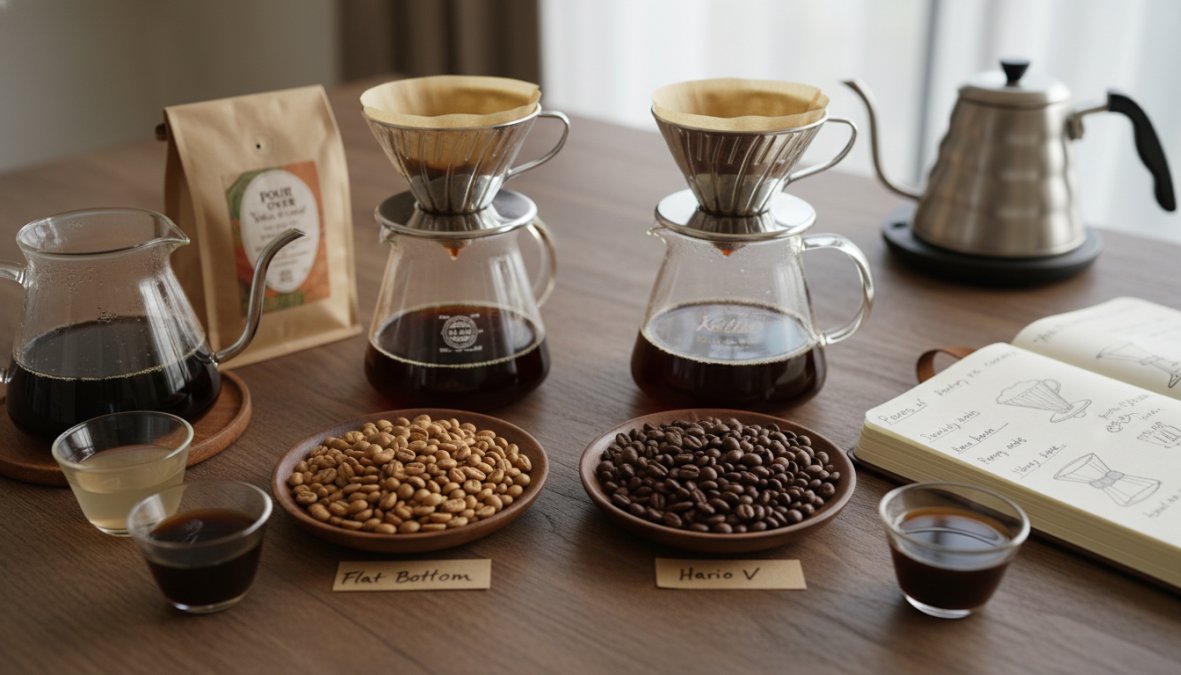
Finding the best coffee for pour over comes down to freshness, roast profile, and how well the bean's structure holds up through a slow, controlled extraction. The seven options below cover the full spectrum from beginner-friendly blends to single-origin lots for serious enthusiasts.
| Coffee | Roast | Best For | Starting Price |
|---|---|---|---|
| Cuppari Coffee | Varies | Freshness-first buyers | Free U.S. shipping |
| Onyx Geometry Blend | Light-Medium | Balanced complexity | $22 / 10oz |
| Counter Culture Big Trouble | Medium | Beginners | $18 / 12oz |
| Stumptown Holler Mountain | Medium-Full | Organic buyers | $16 / 12oz |
| Blue Bottle Three Africas | Light-Medium | Fruit-forward drinkers | $19 / 12oz |
| Passenger Single-Origin | Light | Terroir exploration | $20+ / bag |
| Sey Coffee Subscription | Ultra-Light | Serious coffee nerds | $20 / month |
1. Cuppari Coffee - Freshest Roast-to-Order Option
Freshness is the single biggest variable most coffee buyers ignore, and Cuppari Coffee has built its entire model around solving it. Every order is roasted only after it's placed and shipped the same day. That means the coffee arriving at your door has not been sitting in a warehouse, on a shelf, or in a distribution center losing aromatics by the hour.
For pour over specifically, this matters enormously. The bloom phase, where you saturate the grounds with a small amount of water and let CO2 escape before the main pour, only works properly with fresh coffee. Stale beans produce a flat bloom and a correspondingly flat cup. Fresh beans from Cuppari Coffee bloom actively, which signals good development and translates directly to clarity and flavor complexity in the finished brew.
The selection covers single-origin lots, blends, and flavored options, giving pour over brewers flexibility based on what they're after. Free shipping on all U.S. orders removes the friction that often pushes buyers toward grocery-store alternatives.
Pros: Roasted to order, ships same day, free U.S. shipping, wide variety including single-origin and blends Cons: Specific tasting notes vary by current offering
2. Onyx Coffee Lab Geometry Blend - Best for Balanced Complexity
Award-winning blends are common in specialty coffee marketing. Onyx Coffee Lab's Geometry Blend actually earns the description. A combination of washed Ethiopian and Colombian coffees, it produces tasting notes of berries, stone fruit, and Earl Grey, with the kind of clean finish that pour over extracts beautifully.
The light-medium roast profile sits in a sweet spot for filter brewing. Enough development to avoid grassy or cereal-like notes, but light enough to preserve the origin character that makes each component interesting. Extremely consistent and easy to dial in, which is a practical advantage when you're calibrating grind size across brew sessions.
Starting at $22 per 10oz bag, it's priced at the premium specialty tier. Worth it for the consistency.
Pros: Excellent clarity, easy to dial in, transparent sourcing Cons: Can read as too bright for drinkers who prefer traditional profiles
3. Counter Culture Big Trouble - Best for Beginners
Most beginner-friendly coffee recommendations are condescending. Big Trouble isn't. It's a medium-roast blend with caramel, nut, and chocolate notes that happens to be forgiving across many grind sizes and water temperatures. That forgiveness is genuinely useful when you're still calibrating your pour technique.
At $18 per 12oz bag, it's accessible without feeling like a compromise. Counter Culture is B Corp certified, which means the sustainability claims are audited rather than marketing copy. For someone new to pour over who wants a reliable daily driver, this is the honest recommendation.
Pros: Very forgiving to brew, widely available, consistently good Cons: Lacks the brightness and complexity of lighter single-origin options
4. Stumptown Holler Mountain - Best Organic Option
Stumptown's Holler Mountain is the rare organic blend that doesn't sacrifice cup quality for certification. Full-bodied with citrus, berry jam, and caramel notes, it brews with a creaminess that suits pour over well when you're using a medium-coarse grind and a slower pour rate.
At $16 per 12oz, it's the most accessible option on this list. The organic certification is meaningful, and the flavor profile bridges the gap between specialty brightness and the comfort notes that make coffee enjoyable every morning without requiring full concentration.
Pros: Approachable, crowd-pleasing, widely available Cons: Less complex than single-origin offerings at a similar price point
5. Blue Bottle Three Africas - Best Fruit-Forward Blend
Three Africas is a blend of Ethiopian and Ugandan coffees that leans hard into the fruity, jammy character African origins are known for, then balances it with a deep chocolatey sweetness that keeps it from tipping into polarizing territory. Tasting notes include blueberry, lemon, and chocolate.
For pour over, this blend rewards a slightly faster pour rate than you'd use with a washed Ethiopian single-origin. The blend structure means it's more forgiving than pure naturals while still delivering the fruit-forward brightness that makes African coffees so compelling. At $19 per 12oz, it's competitive.
Pros: Distinctive flavor, excellent for both hot and cold brewing Cons: Polarizing for drinkers who dislike fruit-forward profiles
6. Passenger Coffee Single-Origin - Best for Terroir Exploration
Passenger Coffee's single-origin offerings represent the kind of meticulous sourcing that turns a cup of coffee into a geography lesson. Clean, light-roast profiles with detailed farm and processing information for each lot. The clarity these beans produce through a Hario V60 or Kalita Wave is exceptional.
Starting at $20+ per bag, you're paying for transparency and quality. The rotating selection means you'll encounter different origins, processing methods, and flavor profiles across orders. That variety is the point. If you want to understand how terroir actually expresses itself in a cup, Passenger is one of the best places to start.
Pros: Exceptional quality and clarity, strong ethical sourcing Cons: Premium pricing, specific lots are not always available
7. Sey Coffee Subscription - Best for Serious Coffee Nerds
Sey Coffee operates on a Nordic-influenced philosophy: ultra-light roasts, seasonal single-origin lots, and a commitment to transparency that includes educational cards with every shipment explaining the bean's provenance, processing, and suggested brewing parameters. Starting at $20 per month for a subscription, it's the most educational option on this list.
The ultra-light roast profile means these beans are sensitive to water temperature and grind size. They reward precision. For serious home brewers who have already dialed in their technique and want to push further, Sey offers access to world-class beans with context that helps you actually understand what you're tasting.
Pros: World-class quality, excellent educational resources, exclusive limited releases Cons: Not suitable for drinkers who prefer consistent or darker profiles
Light Roast vs Dark Roast for Pour Over: Which Wins?
Light roast wins for pour over in most scenarios, but handing you a verdict without the mechanism behind it leaves you unable to adapt when the bag in front of you doesn't fit the template. Here is what is actually happening at each roast level, and exactly how to adjust your brew when you're working outside the ideal range.
What Roast Level Actually Changes in the Bean
During roasting, two chemical processes shape what ends up in your cup: the Maillard reaction and caramelization. In light roasts, these reactions are arrested early, preserving volatile aromatic compounds, the acids, esters, and aldehydes responsible for citrus, floral, and stone fruit notes. The bean's cellular structure remains relatively intact and dense, which means water needs more time, a finer grind, or higher temperature to fully extract those compounds.
As roast progresses toward medium and dark, those volatile aromatics burn off and are replaced by melanoidins, the compounds responsible for chocolate, caramel, and roasty bitterness. The bean's cell walls break down, making it more porous and easier to extract. This is why dark roasts extract faster and why a grind setting that works perfectly for a light roast will over-extract a dark roast in the same dripper.
Understanding this explains every dial-in decision you'll make.
Light Roast Pour Over: Where It Excels and Where It Fails
Light roasts are the natural match for pour over because the method's slow, clean extraction through a paper filter is designed to highlight exactly what light roasting preserves: origin character, acidity, and aromatic complexity. A washed Ethiopian light roast through a Hario V60 can produce jasmine, bergamot, and lemon curd notes with a clarity that no other brewing method replicates.
The failure mode for light roasts is under-extraction. Because the bean is dense and the soluble compounds are tightly bound, under-extracted light roasts taste sour, thin, or grassy, a common complaint from brewers who assume light roast means delicate and treat it accordingly. The fix is counterintuitive: grind finer than you expect, and use water at the higher end of the temperature range (94-96°C). Light roasts need the heat and surface area to open up.
Light roast dial-in parameters:
- Water temperature: 94-96°C
- Grind size: Medium to medium-fine (finer than you'd use for medium roast)
- Brew ratio: 1:15 to 1:16 (slightly stronger to compensate for harder extraction)
- Target brew time: 3:00-3:45 for a 300ml cup
- Bloom: 45-60 seconds with 2-3x the coffee weight in water; active bubbling confirms freshness and good CO2 release
Medium Roast Pour Over: The Practical Sweet Spot
Medium roasts occupy the most forgiving position for pour over. The bean has enough development to produce sweetness and body without losing the origin character that makes filter coffee interesting. Tasting notes shift from the sharp brightness of light roasts toward stone fruit, milk chocolate, and brown sugar, profiles that read as balanced to the widest range of drinkers.
From a technical standpoint, medium roasts are easier to dial in because they tolerate a wider range of grind sizes and temperatures without tipping into sourness or bitterness. This is why most beginner-friendly recommendations land here. The extraction window is simply wider.
Medium roast dial-in parameters:
- Water temperature: 92-94°C
- Grind size: Medium-coarse (coarse sea salt texture)
- Brew ratio: 1:15 to 1:17
- Target brew time: 3:00-3:30 for a 300ml cup
Dark Roast Pour Over: Not Impossible, Just Unforgiving
Dark roasts are not automatically bad for pour over, they are just poorly matched to the default parameters most guides recommend. The common failure is using the same temperature and grind size you'd use for a light roast, which over-extracts the already-porous dark roast bean and produces a bitter, ashy cup.
The adjustment is straightforward once you understand the mechanism. Lower water temperature slows extraction kinetics, reducing the rate at which bitter melanoidin compounds dissolve. A coarser grind reduces surface area and further slows extraction. Together, these changes pull the sweetness and body from a dark roast without the bitterness that gives filter-brewed dark roasts a bad reputation.
Oily dark roasts (beans with visible surface oil) present an additional challenge: the oils can clog paper filters and slow flow rate unpredictably. If you're committed to dark roasts in a pour over, a metal filter like the Able Kone allows oils to pass through, producing a heavier-bodied cup closer to what dark roast drinkers expect.
Dark roast dial-in parameters:
- Water temperature: 88-92°C (lower than you think)
- Grind size: Medium-coarse to coarse (one to two clicks coarser than your medium roast setting)
- Brew ratio: 1:15 to 1:16 (dark roasts extract more soluble material per gram, so you need less coffee or more water)
- Target brew time: 2:45-3:15 for a 300ml cup (faster drain is expected; if it's slower, go coarser)
- Skip the metal filter if you want clarity; use paper to strip oils and reduce heaviness
Processing Method Adds Another Layer
Roast level interacts with processing method in ways most guides ignore. A natural-processed light roast (where the coffee cherry dries around the bean before milling) behaves differently from a washed light roast at the same roast level. Naturals have more residual fruit sugars and soluble material, which means they extract faster and can tip into muddiness if you use the same grind you'd use for a washed coffee.
As a practical rule: when moving from washed to natural processing at the same roast level, coarsen your grind by one to two clicks and watch your brew time. If it's running long, you're over-extracting the sugars and the cup will taste jammy and heavy rather than clean and fruit-forward.
Single Origin vs Blend for Pour Over: How to Choose
The single origin vs blend question for pour over is really a question about what you want from the cup. Single-origin coffees highlight the specific character of one farm, region, or processing method. Blends are designed to deliver consistency and balance across a wider range of brewing conditions.
Pour over favors single-origin coffees because the method's clarity amplifies origin character. A washed Ethiopian through a V60 will produce distinctive jasmine, lemon, and bergamot notes that a blend would smooth over. That specificity is the point of single-origin brewing.
Blends make more sense when you want a reliable daily cup without the variability that comes with rotating single-origin lots. They're also more forgiving when your grind or pour technique isn't perfectly calibrated. For beginners, a well-designed blend like Onyx Geometry or Counter Culture Big Trouble is a smarter starting point than chasing a $30 single-origin lot you don't yet have the technique to extract properly.
The honest framework: use blends to build your pour over skills, then graduate to single-origin when you can consistently produce a clean, balanced cup.
Best Grind Size for Pour Over and How to Calibrate by Bean
Grind size for pour over sits in the medium to medium-coarse range for most drippers, but calibrating by bean type is where most home brewers leave significant quality on the table.
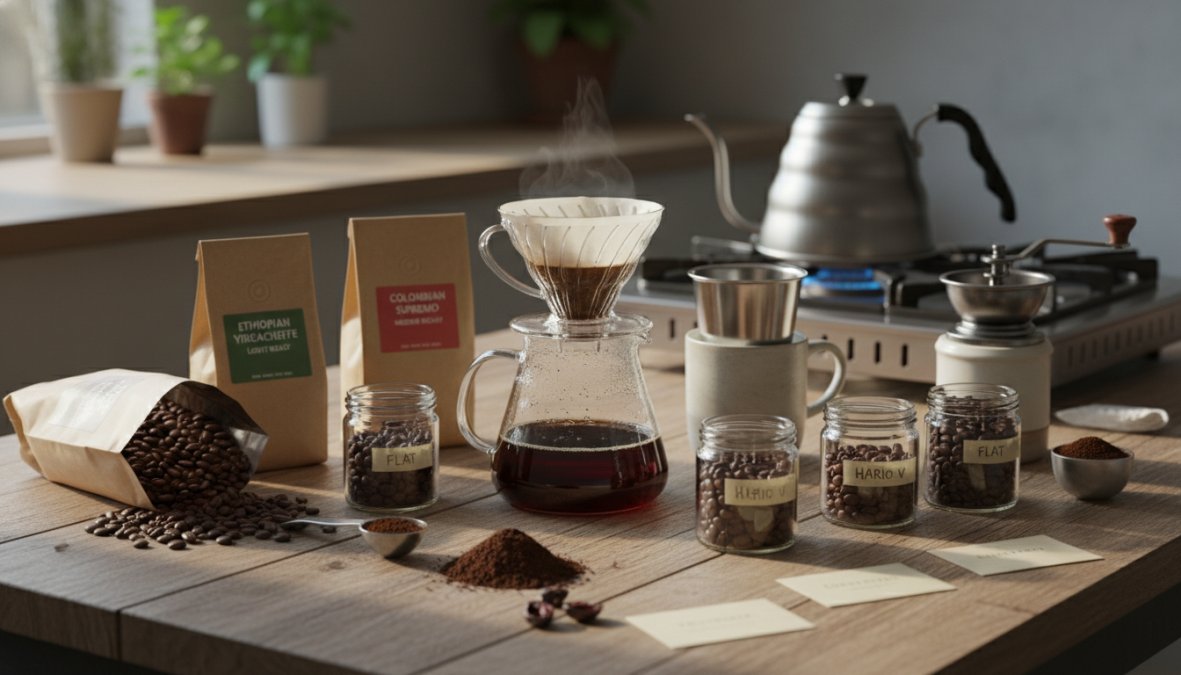
The general starting point is a grind that resembles coarse sea salt. From there, you adjust based on what the cup tells you. Under-extraction produces a sour, thin, or grassy cup. Over-extraction produces bitterness and astringency. Your target is a balanced cup with sweetness, acidity, and a clean finish.
Calibration by bean type:
- Light roast, washed process: Start medium-coarse. Light roasts are denser and require finer grinding or higher temperatures to extract fully. If the cup tastes sour or thin, go slightly finer.
- Light roast, natural or honey process: Start medium. Natural-processed beans have more soluble material and extract faster. A coarser grind prevents muddiness.
- Medium roast blend: Start medium-coarse. These are the most forgiving. Adjust based on brew time. Target 3:00 to 3:30 total brew time for a standard 300ml cup.
- Dark roast: Start coarser than you think you need. Dense, oily dark roast beans extract quickly. A coarser grind and lower temperature prevent bitterness.
Brew time is your diagnostic tool. If your pour over drains in under 2:30, go finer. If it takes more than 4 minutes, go coarser. A burr grinder is non-negotiable for consistent results. Blade grinders produce uneven particle sizes that make calibration impossible.
Pour Over Coffee Ratio, Water Chemistry, and Key Brewing Variables
The Standard Brew Ratio to Start With
The standard pour over coffee ratio is 1:15 to 1:17 by weight, meaning 1 gram of coffee for every 15 to 17 grams of water. For a 300ml cup, that's roughly 18-20 grams of coffee. Start at 1:16 and adjust based on taste preference. A stronger cup means moving toward 1:14. A lighter, more delicate cup means moving toward 1:17 or 1:18.
Weigh both your coffee and your water. Volume measurements are inconsistent. A digital scale is the single most impactful piece of equipment you can add to a pour over setup after a burr grinder.
How Water Chemistry Affects Extraction and Flavor (The Variable Most Guides Ignore)
Water chemistry is the most consistently overlooked variable in home pour over brewing, and it has a measurable impact on extraction quality that no amount of grind adjustment or technique refinement can compensate for. Most guides mention it briefly or skip it entirely. This section covers it in enough depth to actually change how your cup tastes.
Why water composition matters at a chemical level
Water is not a neutral solvent. Its mineral content directly determines which flavor compounds it extracts from coffee grounds and how efficiently it does so. Two minerals are primarily responsible for this: magnesium and calcium.
Magnesium ions are particularly effective at binding to the aromatic, acidic compounds that produce brightness, fruit notes, and floral character in light and medium roasts. Water with adequate magnesium tends to produce more vibrant, complex cups. Calcium ions contribute to extraction efficiency and body, but in high concentrations they can produce a harder, more muted flavor profile and are the primary driver of limescale buildup in your kettle.
Bicarbonate (measured as alkalinity or hardness) acts as a buffer that neutralizes acidity. High-bicarbonate water suppresses the bright acidity that makes Ethiopian and Kenyan coffees distinctive, flattening the cup and making it taste dull even when the beans are fresh and the technique is correct. This is one of the most common reasons a technically correct pour over tastes disappointing, the water is neutralizing the very compounds you're trying to extract.
What the numbers mean in practice
The Specialty Coffee Association's water quality guidelines recommend a total dissolved solids (TDS) reading between 75 and 250 parts per million, with a target around 150 ppm, and a pH between 6.5 and 7.5. These are not arbitrary numbers, they represent the range in which water extracts coffee compounds efficiently without introducing mineral flavors or suppressing acidity.
Below 50 ppm (very soft or distilled water), water lacks the mineral ions needed to bind to flavor compounds. The result is a flat, lifeless cup that tastes like hot brown water regardless of bean quality. Above 300 ppm (very hard water), excess minerals, particularly bicarbonates, begin to interfere with extraction and introduce chalky or metallic notes.
A basic TDS meter costs under $20 and gives you an immediate reading of your tap water. This single measurement tells you more about why your pour over tastes the way it does than most brewing guides cover in their entirety.
How to identify water problems by taste
Your cup's flavor profile is a reliable diagnostic for water chemistry issues:
- Flat, muted, or lifeless cup despite fresh beans and correct technique: Most likely a bicarbonate problem. High alkalinity is neutralizing acidity. Try filtered water or a mineral-adjusted water product.
- Thin cup with no sweetness or body: Possibly too-soft water lacking the minerals to extract efficiently. Distilled or reverse-osmosis water without remineralization produces this profile consistently.
- Harsh, chalky, or metallic finish: Excess calcium or magnesium. Your water is too hard. A carbon filter or water softener reduces this.
- Correct flavor profile at home, disappointing results when traveling: Almost always a water chemistry difference. Carrying a small bag of mineral packets when traveling with your pour over kit is not excessive, it's practical.
Practical solutions by water type
If your tap water is in the 75-200 ppm range with neutral pH: Use it filtered through a carbon filter (Brita-style) to remove chlorine and chloramines, which produce off-flavors at low concentrations. You likely don't need to do anything more involved.
If your tap water is very hard (above 250 ppm or visibly scaling your kettle): A carbon block filter reduces some hardness, but for serious improvement, consider a dedicated water filter pitcher with ion-exchange resin, or use a blend of filtered tap water and bottled spring water to dilute mineral concentration.
If your tap water is very soft or you're using reverse-osmosis water: Remineralize it. Products like Third Wave Water and Lotus Water offer mineral packets formulated specifically for coffee brewing, they add calibrated amounts of magnesium sulfate and calcium chloride to bring soft or RO water into the optimal range. This sounds like enthusiast-level obsession until you taste the difference a properly mineralized water makes with a high-quality light roast.
If you want to build your own brewing water: The starting point most practitioners use is a small amount of magnesium sulfate (Epsom salt, food grade) and calcium chloride dissolved in distilled water. The ratios vary by preference and origin, but the principle is consistent: magnesium for brightness and complexity, calcium for body and extraction efficiency, bicarbonate kept low to preserve acidity. This approach is well-documented in the specialty coffee community and gives you complete control over your water profile.
The interaction between water chemistry and bean origin
Water chemistry is not one-size-fits-all across bean origins. High-magnesium water amplifies the bright, acidic character of washed Ethiopian and Kenyan coffees, which is exactly what you want from those origins. The same water applied to a naturally processed Brazilian or a medium-roast Colombian can make the cup taste sharp or unbalanced, because those origins are designed to express sweetness and body rather than acidity.
A practical approach: use slightly harder water (closer to 150-175 ppm) with naturally processed and medium-roast coffees to support body and sweetness. Use softer, magnesium-forward water (closer to 100-125 ppm) with washed light roasts to amplify brightness without suppressing the delicate aromatics.
Bloom Phase: What It Tells You and How to Use It
The bloom is the 30-60 second pre-infusion phase where you saturate the grounds with a small amount of water (typically 2-3 times the weight of the coffee) before the main pour. Its practical purpose is to allow CO2 trapped in freshly roasted beans to escape before extraction begins. If CO2 is present during extraction, it creates an uneven barrier between water and coffee grounds, producing channeling and inconsistent extraction.
The bloom is also your most reliable freshness indicator. Fresh coffee (within 5-30 days of roast) blooms actively, the grounds swell and bubble visibly as CO2 releases. Stale coffee produces a flat, barely responsive bloom. If your bloom doesn't bubble, the beans have off-gassed already and the aromatics have dissipated with the CO2. No technique adjustment compensates for this. The solution is fresher coffee, not a longer bloom time.
For very fresh coffee (within the first 5-7 days of roast), an extended bloom of 45-60 seconds helps ensure CO2 has fully escaped before the main pour. Skipping this step with very fresh beans produces a gassy, uneven extraction that tastes hollow in the middle of the flavor profile.
How to Choose the Best Coffee for Pour Over: A Buyer's Framework
Selecting the best coffee for pour over doesn't require expertise in specialty coffee. It requires honest answers to four questions.
1. How fresh is it? Coffee is at its best between 5 and 30 days after roasting. Check the roast date, not the best-by date. A best-by date 12 months from now tells you nothing about when the coffee was roasted. Roast-to-order models like Cuppari Coffee remove this guesswork entirely.
2. What flavor profile do you want? African origins (Ethiopia, Kenya, Uganda) tend toward fruit, floral, and citrus notes. Central and South American origins (Colombia, Guatemala, Brazil) trend toward chocolate, nut, and caramel. If you're unsure, start with a Colombian or a blend. They're the most consistently approachable.
3. What's your skill level? Beginners benefit from medium-roast blends that tolerate technique variation. Experienced brewers can chase the complexity of ultra-light single-origin lots that require precise calibration.
4. What's your budget? Specialty coffee ranges from $16 to $30+ per bag. The quality difference between a $16 and $22 bag is real. The quality difference between a $22 and $40 bag is often marginal unless you're specifically chasing rare processing methods or micro-lot lots.
As documented in Coffee Quality Institute's grading and evaluation resources, specialty-grade coffee must score 80 points or above on a 100-point scale. Any coffee labeled "specialty" should meet this threshold. When in doubt, buy from roasters who publish their sourcing information.
Troubleshooting Common Pour Over Mistakes
The most common pour over mistakes are fixable once you know what to look for.
Sour or thin cup: Under-extraction. Grind finer, increase water temperature, or slow your pour rate to extend contact time.
Bitter or harsh cup: Over-extraction. Grind coarser, lower water temperature (especially with dark roasts), or speed up your pour.
Flat cup with no clarity: Almost always a freshness problem. Check your roast date. If the coffee is more than 6 weeks off roast, the aromatics have dissipated. No technique adjustment compensates for stale beans.
Uneven extraction, muddy flavors: Inconsistent grind size from a blade grinder, or an uneven pour pattern. Use a burr grinder and pour in slow, concentric circles starting from the center.
Bloom doesn't bubble: The coffee is stale. Fresh coffee releases CO2 actively during the bloom phase. A flat bloom is a reliable indicator that the beans have been sitting too long.
For a deeper look at extraction science, James Hoffmann's coffee brewing research and resources provides some of the most thorough publicly available explanations of how grind size, temperature, and ratio interact.
The hardest part of pour over brewing isn't technique. It's sourcing coffee that's fresh enough to reward the effort you're putting in. Stale beans are the most common reason a technically correct pour over tastes disappointing. Cuppari Coffee solves this by roasting every order only after it's placed and shipping the same day, so the coffee that arrives is at peak freshness from day one. With free shipping on all U.S. orders and a selection that covers single-origin lots and blends, it's the most practical starting point for anyone serious about their pour over. Add to cart and taste the difference that genuine freshness makes.
Frequently Asked Questions
What roast is best for pour over coffee?
Light to medium roasts are generally considered the best coffee for pour over brewing. Their higher acidity and nuanced flavor complexity, think citrus notes, stone fruit, and floral aromas, shine through the clean, hand-poured extraction process. Medium-bodied light roasts from single-origin sources are especially well-suited to drippers like the Hario V60 or Kalita Wave. Dark roasts can work but often produce a heavier, more bitter cup that masks the subtleties pour over is designed to highlight.
Does grind size matter for pour over coffee?
Yes, grind size is one of the most critical brewing variables for pour over. A medium-coarse grind is the standard starting point, but you should calibrate based on your specific beans. Lighter, denser beans often need a slightly finer grind to reach full extraction, while naturally processed or softer beans may call for coarser settings. If your cup tastes bitter and harsh, grind coarser. If it tastes weak or sour, grind finer. A quality burr grinder makes dialing in your best grind size for pour over far more consistent.
Should I use single origin or blends for pour over?
Both work well, but they serve different goals. Single-origin coffees are ideal for pour over when you want to explore distinct terroir, the unique flavors of a specific farm or region. Blends, on the other hand, offer consistency and balance, making them more forgiving for everyday brewing. If you're new to pour over, a well-crafted specialty blend like Counter Culture Big Trouble is a great entry point. Once you're comfortable with your technique, experimenting with single-origin lots reveals what pour over brewing does best.
What is the best coffee-to-water ratio for pour over?
The most widely recommended pour over coffee ratio is 1:15 to 1:17 (coffee to water by weight). A practical starting point is 20 grams of coffee to 300 grams of water. From there, adjust based on taste: a lower ratio (1:15) produces a stronger, more concentrated cup, while a higher ratio (1:17) yields a lighter, more delicate brew. Always use a digital scale for accuracy. Freshness also matters, freshly roasted beans require a proper bloom phase of 30-45 seconds to degas before the full pour.
How does water quality affect pour over coffee?
Water chemistry has a significant impact on extraction and final flavor in pour over brewing. Water that is too hard (high mineral content) can over-extract and make the cup taste harsh, while overly soft or distilled water under-extracts and produces a flat, lifeless cup. Aim for filtered water with a moderate mineral content, around 150 ppm TDS is a commonly cited sweet spot among specialty coffee brewers. Avoid tap water with strong chlorine flavors, as the clean cup clarity that pour over is known for depends heavily on neutral, balanced water.
This article was written using GrandRanker