

Table of Contents
-
Best Herbal Tea Blends for Immune Support: Top 10 Ranked
- 1. Pukka Herbs Elderberry & Echinacea - Best Overall
- 2. Traditional Medicinals Echinacea Plus - Best for Potency
- 3. Yogi Tea Echinacea Immune Support - Best for Respiratory Health
- 4. Celestial Seasonings TeaWell Immune Support - Best Value
- 5. The Republic of Tea Get Wellness - Best Premium Blend
- 6. Buddha Teas Divine Immunity Blend - Best Eco-Friendly
- 7. Numi Organic Immune Support - Best Flavor Balance
- 8. Twinings Superblends Immune Support - Best for Vitamin D
- 9. Harney & Sons Immunity Tea - Best for Tea Enthusiasts
- Key Immune Boosting Tea Ingredients to Look For
- How to Make Immune Support Tea: Brewing Science for Maximum Potency
- Herbal Tea for Cold and Flu Season: When & How to Use
- Safety, Contraindications & Drug Interactions
- How to Choose the Right Blend for Your Needs
- Conclusion: Building Your Immune Support Routine
- Frequently Asked Questions
Last Updated: July 4, 2026
When choosing best herbal tea blends for immune support, quality and efficacy matter. This guide ranks top herbal tea blends by immune-boosting ingredients, brewing science, and real-world effectiveness. Research from National Institutes of Health herbal medicine database confirms that many traditional immune-supporting herbs contain bioactive phytochemicals that support white blood cell activity. Water temperature and steeping time directly affect how many beneficial compounds reach your cup.
Best Herbal Tea Blends for Immune Support: Top 10 Ranked
1. Pukka Herbs Elderberry & Echinacea - Best Overall
Pukka Herbs Elderberry & Echinacea combines organic elderberry, echinacea root and leaf, blackcurrant, and orange for a naturally sweet, fruity profile. Elderberry provides antiviral support while echinacea activates white blood cell response. Fair Trade certification ensures ethical sourcing.
Price: $7.54 per box (20 sachets)
Best for: Daily immune maintenance
Key features:
- Certified organic and ethically sourced
- Naturally caffeine-free
- Pleasant berry-forward flavor
2. Traditional Medicinals Echinacea Plus - Best for Potency
Traditional Medicinals combines Echinacea purpurea and angustifolia, two species addressing immune function through different mechanisms. Purpurea stimulates immediate immune response, while angustifolia provides sustained support. Lemongrass and spearmint create a refreshing citrusy profile.
Price: $7.49 per box (16 sachets)
Best for: Active immune support during cold season
Key features:
- Dual echinacea species for broader effect
- B Corp certified
- Research-backed formula
3. Yogi Tea Echinacea Immune Support - Best for Respiratory Health
Yogi pairs echinacea with peppermint and licorice for respiratory comfort. Licorice root adds subtle sweetness and anti-inflammatory properties.
Price: $6.00-$8.00 per box
Best for: Simultaneous immune and respiratory support
Key features:
- Echinacea + peppermint + licorice combination
- Naturally caffeine-free and vegan
- Synergistic herb pairing
4. Celestial Seasonings TeaWell Immune Support - Best Value
Celestial Seasonings combines elderberry and echinacea with added Vitamin C and Zinc, micronutrients that directly support immune cell production. Eucalyptus provides respiratory benefit.
Price: $5.00-$7.00 per box
Best for: Budget-conscious consumers and families
Key features:
- Fortified with Vitamin C and Zinc
- Non-GMO and caffeine-free
- Widely available
5. The Republic of Tea Get Wellness - Best Premium Blend
The Republic of Tea positions Get Wellness at the premium end with red rooibos, echinacea, astragalus, and ashwagandha. Astragalus supports sustained immune balance rather than acute response. Ashwagandha adds cortisol-modulating properties, recognizing that stress suppresses immunity.
Price: $12.29 per tin (loose leaf)
Best for: Tea enthusiasts prioritizing adaptogens alongside immune support
Key features:
- Includes astragalus and ashwagandha adaptogens
- Red rooibos base for antioxidants
- Premium loose-leaf format
6. Buddha Teas Divine Immunity Blend - Best Eco-Friendly
Buddha Teas uses bleach-free and plastic-free tea bags. Divine Immunity combines elderberry, hyssop, rose hips (Vitamin C source), and astragalus root for sustained seasonal wellness.
Price: $7.95 per box
Best for: Environmentally conscious consumers
Key features:
- Plastic-free and bleach-free sachets
- Certified organic
- Includes hyssop for respiratory health
7. Numi Organic Immune Support - Best Flavor Balance
Numi achieves excellent flavor with elderberry, elderflower, ginger, rosehip, and thyme. Ginger adds anti-inflammatory compounds while thyme provides traditional respiratory support.
Price: $7.00-$9.00 per box
Best for: Flavor-first users and those new to herbal immune support
Key features:
- Elderberry, elderflower, ginger, rosehip, thyme
- Certified organic and non-GMO
- Compostable plant-based tea bags
8. Twinings Superblends Immune Support - Best for Vitamin D
Twinings combines elderberry, blackcurrant, raspberry, and echinacea, fortified with Vitamin D. This is the only major blend offering Vitamin D supplementation, significant because Vitamin D deficiency directly correlates with immune suppression, especially in winter.
Price: £3.79 per box (UK pricing)
Best for: People wanting added Vitamin D and fruit-forward flavor
Key features:
- Fortified with Vitamin D
- Fruit-forward flavor profile
- Naturally caffeine-free
9. Harney & Sons Immunity Tea - Best for Tea Enthusiasts
Harney & Sons brings master-blender expertise to immune support. Available in both loose leaf and sachet formats, they prioritize ingredient quality and antioxidant density.
Price: $8.00-$12.00 per tin
Best for: Tea connoisseurs wanting premium loose-leaf options
Key features:
- Master-blender quality and curation
- Available in loose leaf and sachet
- Multiple infusion capability
Key Immune Boosting Tea Ingredients to Look For
Understanding active ingredients transforms you from casual tea drinker to informed consumer. The best blends combine multiple ingredients working through different mechanisms: some activate white blood cells, others provide antiviral compounds, and others reduce inflammation that suppresses immunity.
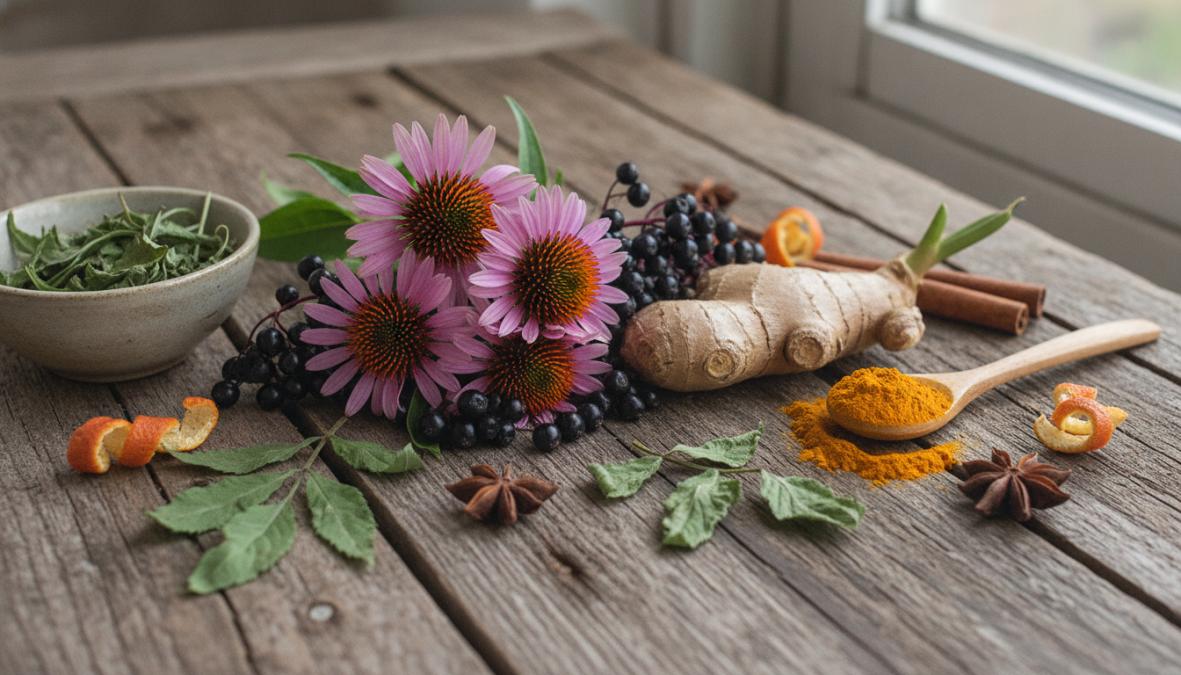
Echinacea: The White Blood Cell Activator
Echinacea contains polysaccharides and alkamides that directly stimulate white blood cell activity, particularly T-cells and macrophages. Research from University of Connecticut herbal medicine research suggests consistent echinacea use reduces cold incidence by 10-15% and duration by 1-2 days.
Echinacea works best as a preventative taken consistently for 2-3 months before cold season. Two species appear in quality blends: Echinacea purpurea acts more quickly but requires consistent dosing, while Echinacea angustifolia provides longer-lasting support but takes 2-3 weeks to build protective effect.
Effective dosing: 2-3 cups daily during prevention season, or 3-4 cups daily at first symptom onset for 7-10 days.
Elderberry: Antiviral Power for Cold & Flu Season
Elderberry contains anthocyanins, powerful antiviral compounds that prevent respiratory viruses from penetrating cell membranes. Unlike echinacea, which activates immune response, elderberry creates a physical barrier against viral infection. Studies show elderberry supplementation reduces both cold incidence and duration, with effects most pronounced in the first 48 hours of symptom onset.
In herbal tea for cold and flu season, elderberry should be the primary ingredient. Look for blends where elderberry appears first in the ingredient list.
Effective dosing: 1-2 cups daily during cold season for prevention, or 3-4 cups daily at symptom onset.
Ginger: Anti-Inflammatory Support
Ginger's gingerol compounds reduce inflammation throughout the respiratory and digestive systems. While less directly immune-boosting than echinacea or elderberry, ginger prevents the inflammatory cascade that amplifies cold symptoms. Fresh ginger root requires hot water (195°F+) to extract gingerols fully.
Turmeric, Astragalus & Adaptogens
Turmeric's curcumin is a potent anti-inflammatory but requires black pepper (piperine) for effective absorption. Astragalus supports immune balance rather than acute response. Adaptogens like ashwagandha modulate stress hormones that suppress immunity, chronic stress elevates cortisol, which directly inhibits T-cell production.
| Ingredient | Primary Action | Best Timing | Effective Dose |
|---|---|---|---|
| Echinacea | White blood cell activation | Prevention: 2-3 months before season | 2-3 cups daily |
| Elderberry | Antiviral barrier | Cold season or at symptom onset | 1-2 cups daily prevention, 3-4 acute |
| Ginger | Anti-inflammatory | Daily, any time | 1-2 cups daily |
| Astragalus | Immune balance | Daily for 8-12 weeks | 1-2 cups daily |
| Turmeric | Chronic inflammation reduction | Daily with black pepper | 1-2 cups daily |
How to Make Immune Support Tea: Brewing Science for Maximum Potency
Most people brew tea incorrectly, leaving 30-50% of beneficial compounds in the leaves. Water temperature, steeping duration, and extraction method directly determine how many phytochemicals reach your cup.
Water Temperature & Steeping Time
Temperature matters significantly. Delicate herbs like elderflower extract at 160-170°F, while strong roots like astragalus require 200-212°F. For mixed herbal blends, 195-200°F represents the optimal compromise, extracting echinacea's polysaccharides and ginger's gingerols without degrading delicate floral components.
Steeping duration depends on ingredient type:
- Leafy herbs (echinacea leaf, peppermint): 3-5 minutes
- Roots and bark (astragalus, ginger): 5-10 minutes
- Mixed blends: 5-7 minutes
Beyond 7-8 minutes, you extract tannins that create bitterness and can reduce mineral absorption.
Decoction vs. Infusion: Which Method Extracts More Phytochemicals
Infusion works for leafy herbs and flowers, pour hot water over the tea and let it steep. This method is fast (5-7 minutes) and preserves delicate compounds.
Decoction works for dense plant material, roots, and bark, simmer these materials directly in water for 10-20 minutes. For maximum potency, use a hybrid approach: decoct the roots for 10 minutes, then add leafy herbs and flowers and steep an additional 5 minutes. Decocted herbal preparations show 15-25% higher polysaccharide content than simple infusions.
DIY vs. Store-Bought: Cost Analysis & Bioavailability
Making your own immune tea blend from bulk herbs costs roughly $0.15-$0.25 per cup, compared to $0.30-$0.50 for quality commercial sachets. Over a season of daily drinking (90 cups), DIY saves $13-$32.
However, dried herbs lose potency over time. Commercial sachets are often fresher because they're packaged closer to harvest. For most users, commercial blends make sense because consistency matters more than marginal cost savings.
Herbal Tea for Cold and Flu Season: When & How to Use
Timing and dosing separate effective immune support from casual tea drinking.
Seasonal Wellness Timing: Prevention vs. Active Symptom Relief
Prevention strategy (August through March in northern climates):
- Start 4-6 weeks before cold season typically peaks
- Drink 1-2 cups daily consistently
- Focus on blends with astragalus and echinacea for sustained immune balance
Active symptom relief (at first sign of cold or flu):
- Increase to 3-4 cups daily for 7-10 days
- Switch to elderberry-forward blends for immediate antiviral effect
- Add ginger for anti-inflammatory support
Starting herbal tea within 24-48 hours of symptom onset produces measurable reduction in duration and severity.
Caffeine-Free Options for All-Day Wellness
All the blends in this guide are naturally caffeine-free, making them suitable for evening consumption without sleep disruption. Sleep quality directly affects immune function, poor sleep suppresses white blood cell production. For all-day consumption, rotate between different blends to avoid palate fatigue and maintain ingredient diversity.
Safety, Contraindications & Drug Interactions
Herbal teas are generally safe, but specific populations should exercise caution with certain immune-boosting herbs.
Who Should Avoid Certain Immune-Boosting Herbs
Echinacea should be avoided by people with:
- Autoimmune conditions (lupus, rheumatoid arthritis, multiple sclerosis), echinacea stimulates immune response, potentially worsening autoimmune flares
- Allergies to plants in the Asteraceae family (ragweed, chrysanthemums, daisies)
- Pregnancy or nursing
Elderberry may interact with diabetes medications and immunosuppressant drugs.
Astragalus should be avoided by people with autoimmune conditions or fever from acute infection.
Common Drug Interactions with Echinacea & Elderberry
Echinacea interacts with medications metabolized by the liver's CYP3A4 enzyme system, including statins, immunosuppressants, and some cancer medications. The interaction isn't dangerous but can reduce medication efficacy. Consult your doctor before starting regular echinacea consumption if you take these medications.
How to Choose the Right Blend for Your Needs
The "best" immune tea blend depends on your specific situation, flavor preferences, and wellness goals. Consistency matters more than theoretical optimization.
If flavor is your limiting factor, choose from Numi Organic (fruity-floral), Yogi Tea (minty), or Twinings Superblends (berry-forward). If potency is your priority, choose Traditional Medicinals Echinacea Plus or Pukka Herbs Elderberry & Echinacea. For maximum freshness, look for harvest dates on packaging. Herbs harvested within the current or previous calendar year are significantly more potent than older stock.
Scientific Evidence Levels: What Research Actually Supports
Strong evidence:
- Echinacea reduces cold duration by 1-2 days
- Elderberry reduces cold incidence and duration
- Ginger reduces inflammation
Moderate evidence:
- Astragalus supports immune function in people with chronic weakness
- Turmeric reduces inflammation
When evaluating blends, check which ingredients have strong evidence versus those included primarily for traditional use.
Conclusion: Building Your Immune Support Routine
Building an effective immune support routine requires consistency more than perfection. Start with a prevention-focused blend like Pukka Herbs Elderberry & Echinacea in August, drink 1-2 cups daily through March, and switch to a more potent blend like Traditional Medicinals at the first sign of cold symptoms. This two-tier approach addresses both prevention and acute response with the right blend for each situation.
Frequently Asked Questions
Which herbal tea is best for immune system support?
The best herbal tea blends for immune support contain echinacea, elderberry, or ginger as primary ingredients. Pukka Herbs Elderberry & Echinacea and Traditional Medicinals Echinacea Plus rank highest for potency and research backing. Choose based on flavor preference and whether you want added vitamins (Celestial Seasonings includes Vitamin C and Zinc). For premium options with adaptogens, The Republic of Tea Get Wellness combines echinacea, astragalus, and ashwagandha for comprehensive immune balance.
What are the best immune boosting tea ingredients to look for?
Key immune boosting tea ingredients include echinacea (activates white blood cell activity), elderberry (antiviral properties for cold and flu prevention), ginger (anti-inflammatory support), turmeric (inflammation reduction), and astragalus (adaptogenic immune support). Look for organic, ethically sourced blends that feature these phytochemicals. Caffeine-free options work best for all-day wellness routines. Higher-quality blends use both root and leaf forms of herbs to maximize bioavailability and antioxidant content.
How often should I drink immune-boosting herbal tea?
For seasonal wellness during cold and flu season, drink 1-3 cups daily of herbal tea blends containing echinacea or elderberry. During peak illness season (winter months), consistent daily consumption supports white blood cell activity better than sporadic use. For prevention, many herbalists recommend 1-2 cups daily. If you're actively fighting cold symptoms, increase to 3-4 cups daily. Avoid exceeding recommended amounts, as some herbs like echinacea are most effective when used cyclically rather than continuously.
Can I make my own immune-boosting tea at home?
Yes, DIY immune support tea is cost-effective and allows you to control ingredient quality. Basic recipes combine dried elderberries, echinacea root, ginger slices, and turmeric. Use a decoction method (simmering for 10-15 minutes) rather than simple infusion to maximize phytochemical extraction and bioavailability. Store-bought blends offer convenience and consistent potency, but homemade versions cost 50-70% less per serving. Ensure herbs are certified organic to avoid pesticides, and source from reputable suppliers for maximum immune-boosting effectiveness.
This article was written using GrandRanker