

Table of Contents
- What Makes the Best Light Roast Single Origin Coffees
- How to Brew Light Roast Coffee for Maximum Flavor
- Best Coffee Brewing Methods for Single Origin Beans
- Coffee Tasting Notes Explained: Citrus, Berry, and Floral
- Top Light Roast Single Origin Coffees to Buy Now
- Sustainability, Certifications, and Farm-to-Cup Transparency
- Subscription vs. One-Time Purchase: Which Model Fits You
- Conclusion: Finding Your Perfect Light Roast Single Origin
- Frequently Asked Questions
Last Updated: July 10, 2026
What Makes the Best Light Roast Single Origin Coffees
Light roasts preserve the bean's natural acidity and complexity, revealing terroir, the environmental factors that shape flavor. Single origin coffees come from a specific farm, region, or country, delivering authentic expression of their place. The quality gap between mediocre and excellent light roasts is enormous: poorly roasted light roasts taste sour and thin, while well-roasted ones taste clean, bright, and nuanced.
Why Single Origin Matters
Single origin coffee eliminates guesswork. You know exactly what you're getting: beans from one specific place, processed one specific way, roasted to one specific profile. This traceability lets you discover your preferences and notice shared characteristics across origins, Ethiopian coffees, for example, typically share bright acidity, floral notes, and tea-like body.
The best light roast single origins support better farming practices. Direct trade relationships between roasters and farmers mean better prices for growers and better quality beans for drinkers. According to Specialty Coffee Association sourcing standards, single origin purchases often come with documented information about the farm, altitude, harvest date, and processing method. Buying from roasters who ship fresh, like Cuppari Coffee does by roasting only after your order and shipping the same day, means you control exactly where your coffee sits in its aging curve.
Light Roast vs. Darker Profiles
Light roasts preserve more of the bean's origin character than medium or dark roasts. The longer a bean roasts, the more the roaster's decisions dominate the cup profile. Light roasts taste like their origin, bright, complex, alive, while dark roasts taste smoky and heavy with low acidity.
Light roasts demand precision: proper water temperature, correct grind size, and the right brewing method. Mistakes show immediately. The acidity in light roasts means brightness and liveliness, not sourness. Ethiopian light roasts have the highest acidity of any origin, which is why they're prized by specialty coffee enthusiasts.
How to Brew Light Roast Coffee for Maximum Flavor
Brewing light roast coffee correctly is essential. Light roasts have less forgiving brewing windows than darker roasts. Get the water temperature wrong by 5 degrees and the cup becomes thin or astringent. Use the wrong grind size and you'll either under-extract (weak, sour) or over-extract (bitter, muddy).
Use fresh water between 195-205°F, grind just before brewing, and use a 1:16 coffee-to-water ratio as your starting point.
Grind Size and Brewing Parameters
The grind size you choose determines how quickly water extracts flavor from the coffee. For pour over, aim for a medium-fine grind. For French press, use a coarse grind to prevent over-extraction during the four-minute steep. For espresso, grind fine enough that water takes 25-30 seconds to pull a 2-ounce shot.
A 1:16 ratio (one gram of coffee to sixteen grams of water) is the industry standard for filter brewing. If you prefer stronger coffee, try 1:15. If you like it lighter, go 1:17. Consistency matters more than the exact ratio.
Grind consistency is where most home brewers fail. A burr grinder, either flat or conical, produces uniform particles. Quality burr grinders cost between $40 and $150 and are the single best investment you can make for better coffee at home.
Water Temperature and Timing
Water temperature directly affects extraction speed. At 195°F, extraction is slow and the cup tastes sour. At 205°F, extraction is complete and balanced. At 210°F, extraction is too fast and the cup tastes bitter. The sweet spot for most light roasts is 200-202°F.
If you don't have a thermometer, boil water and let it cool for 30 seconds before pouring. Brew time varies by method: pour over takes 2.5-4 minutes, French press takes exactly 4 minutes, and espresso takes 25-30 seconds. Shorter brew times produce sour notes; longer brew times produce bitter ones.
Best Coffee Brewing Methods for Single Origin Beans
Different brewing methods reveal different aspects of a single origin's flavor.
Pour Over and Filter Methods
Pour over is the gold standard for tasting single origin light roasts. Methods like Chemex, Hario V60, and Melitta create a clean cup with bright acidity and clear flavor definition. The paper or metal filter removes oils and fine particles, leaving a transparent taste profile.
The Chemex is the most forgiving pour over for beginners, producing a consistently clean cup in about 4 minutes. The Hario V60 is faster and more responsive to technique, brewing 1-2 cups in 2.5-3 minutes but demanding more attention to pour rate. Automatic drip machines are convenient but often inconsistent, as most don't reach proper water temperature.
Espresso and Immersion Brewing
Espresso extracts flavor in 25-30 seconds using pressure and heat. A well-pulled shot from a light roast single origin tastes sweet and syrupy with visible crema on top. Entry-level espresso machines cost $200-400, and learning to pull consistent shots takes weeks of practice.
French press steeps coffee grounds in hot water for 4 minutes, then presses down a metal mesh filter. This method produces a full-bodied cup with more oils than filter methods. AeroPress combines immersion and pressure, brewing in 90 seconds with a cleaner cup than French press but fuller-bodied than pour over, and costs only $30-40.
Coffee Tasting Notes Explained: Citrus, Berry, and Floral
Coffee tasting notes aren't marketing fiction. They're real sensory experiences that trained palates can identify consistently.
How to Identify Flavor Profiles
Tasting coffee is a skill that improves with practice. Start by slurping, aerating the coffee across your palate. Pay attention to the first impression, the middle as it cools, and the finish.
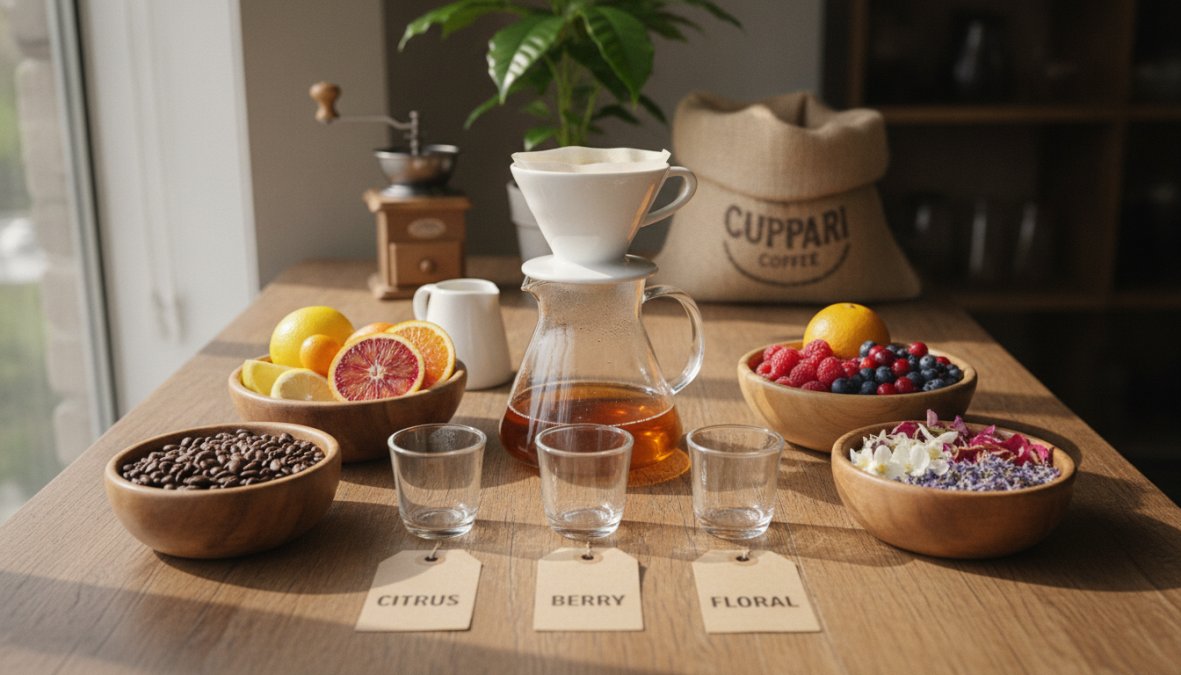
Citrus notes, lemon, grapefruit, orange, are bright and acidic, most prominent in light roasts from high-altitude origins. Berry notes, blueberry, raspberry, strawberry, are sweeter and more subtle, appearing in African coffees. Floral notes, jasmine, rose, hibiscus, are delicate and common in natural-process Ethiopian coffees. Toffee and caramel notes appear in coffees with lower acidity and higher sweetness, more common in Central and South American origins.
Regional Flavor Differences Across Africa and Latin America
Ethiopian coffees are the benchmark for bright, complex light roasts. Yirgacheffe region coffees taste floral and tea-like, while Sidamo coffees taste fruity and wine-like. Kenyan coffees share Ethiopia's bright character but taste like black currant and blueberry. Kenyan AA is considered among the world's finest coffees.
Central American coffees from Guatemala, Honduras, Costa Rica, and El Salvador taste balanced and approachable with moderate acidity and chocolate, nut, and fruit notes. Colombian and Peruvian coffees taste sweet and full-bodied with lower acidity and more prominent chocolate and caramel notes. Indonesian coffees from Sumatra taste earthy and herbal with low acidity.
Top Light Roast Single Origin Coffees to Buy Now
Ethiopian Single Origins: Bright, Floral, and Complex
Volcanica Coffee Ethiopian Yirgacheffe exemplifies what makes Ethiopian light roasts special, with jasmine, lemon, and bright fruit notes. Onyx Coffee Lab Ethiopia Bensa Shantawene represents the premium end with direct trade sourcing and peach, honey, and floral aromatics. Counter Culture Coffee Idido consistently delivers blueberry, citrus, and sweet tea notes. Passenger Coffee Ethiopia Worka Chelbessa focuses on washed-process beans that maximize clarity with stone fruit and floral aromatics. La Cabra Coffee Ethiopia Guji represents Scandinavian roasting traditions, extremely light, clean, and bright. PT's Coffee Ethiopia Yirgacheffe combines award-winning roasting with direct trade relationships.
Central American and Peruvian Light Roasts: Balanced and Sweet
Noble Coffee Roasting Peruvian Suyo is an organic single origin that tastes balanced and sweet with chocolate and fruit notes. If Ethiopian coffees taste too bright, Peruvian light roasts often feel more approachable. Stumptown Coffee Roasters Holler Mountain is a light-medium roast with caramel, citrus, and hazelnut notes and wide availability.
Specialty Micro-Roasters and Freshness-First Options
Boon Boona Coffee Dur Feres specializes in African coffees and supports African coffee producers directly. Cuppari Coffee offers a diverse selection of single origin light roasts, all roasted to order and shipped the same day, ensuring peak flavor. Small roasters in your local area often source exceptional beans and roast with care.
| Coffee | Origin | Flavor Notes | Best Brewing Method | Roast Level |
|---|---|---|---|---|
| Volcanica Yirgacheffe | Ethiopia | Jasmine, lemon, bright fruit | Pour over | Light |
| Onyx Bensa Shantawene | Ethiopia | Peach, honey, floral | Pour over | Light |
| Counter Culture Idido | Ethiopia | Blueberry, citrus, sweet tea | Pour over | Light |
| Passenger Worka Chelbessa | Ethiopia | Stone fruit, floral | Pour over | Light |
| Noble Peruvian Suyo | Peru | Chocolate, fruit | French press | Light |
| Stumptown Holler Mountain | Blend | Caramel, citrus, hazelnut | Any method | Light-medium |
Sustainability, Certifications, and Farm-to-Cup Transparency
Where your coffee comes from matters for both taste and the people who grew it. Light roast single origins from transparent sources taste better because farmers have incentive to produce quality beans. Direct trade relationships ensure higher prices for growers, encouraging investment in better farming practices.
Look for certifications that indicate quality and sustainability. Fair Trade certification ensures minimum prices and safe working conditions. Rainforest Alliance certification indicates environmental responsibility. According to Rainforest Alliance sustainable coffee standards, certified farms use practices that protect biodiversity, reduce water pollution, and improve worker welfare.
Farm-to-cup transparency means knowing the farm name, altitude, processing method, and harvest date. Freshness is the final sustainability factor. Buying from roasters who roast fresh and ship quickly means you taste the coffee at its best.
Subscription vs. One-Time Purchase: Which Model Fits You
Coffee subscription services deliver fresh beans automatically on a schedule you set, offering convenience and consistency with slight discounts. One-time purchases give you complete control and flexibility to explore different roasters without obligation.
The best choice depends on your coffee consumption and preferences. If you drink coffee daily and have found a roaster you love, a subscription makes sense. If you like exploring different roasters and origins, one-time purchases let you experiment freely.
Cuppari Coffee offers both options. The subscription model ensures fresh beans arrive regularly with free shipping. One-time purchases let you buy exactly what you want without commitment.
Conclusion: Finding Your Perfect Light Roast Single Origin
Choosing the best light roast single origin coffees is personal. The only way to find your preference is to taste widely and pay attention to what you enjoy.
Start with an Ethiopian light roast to experience brightness and complexity, then try a Central American or Peruvian coffee to understand sweetness and balance. Experiment with different brewing methods and keep notes on what you taste and like.
Cuppari Coffee's freshness guarantee, roasting beans only after your order is placed and shipping the same day, ensures that every coffee you buy arrives at peak flavor. The diverse selection of single origin light roasts means you can explore different origins without leaving your home. Free shipping on all U.S. orders removes the cost barrier to experimentation. Add to cart and discover your perfect light roast single origin.
Frequently Asked Questions
What makes a coffee 'single origin' and why does it matter for light roasts?
Single origin coffee comes from one specific country, region, or farm, allowing you to taste the unique terroir and flavor characteristics of that location. For light roasts, single origin beans are ideal because the light roast profile preserves the bean's natural acidity, floral notes, and regional flavor nuances that would be masked by darker roasting. This transparency makes single origin light roasts the preferred choice for specialty coffee enthusiasts seeking complexity and clarity.
How should I brew light roast single origin coffee to get the best flavor?
Light roast coffee benefits from precise brewing parameters. Use water between 195-205°F, a medium-fine grind size, and brew for 3-4 minutes depending on your method. Pour over and filter brewing methods work exceptionally well for light roasts because they highlight the delicate acidity and flavor notes. Avoid over-extraction by using fresh, cold-filtered water and measuring your coffee by weight. Freshly roasted beans, ideally used within 2-4 weeks of the roast date, will deliver the brightest, most vibrant cup.
What are the flavor differences between African and Central American light roasts?
African light roasts, particularly Ethiopian beans, are known for bright citrus, floral, and tea-like profiles with higher acidity and silky body. Central American and Peruvian light roasts tend toward more balanced, sweeter cups with notes of caramel, toffee, and fruit without the sharp acidity. African coffees showcase terroir and complexity, while Central American single origins offer approachability and smoothness. Your choice depends on whether you prefer vibrant, tea-forward profiles or rounded, sweetness-driven cups.
Why is freshness important when buying light roast single origin coffee?
Light roast coffee is particularly sensitive to staleness because its delicate flavor notes, citrus, floral, berry, fade quickly once the beans lose their oils and aromatics. Beans roasted and shipped the same day preserve maximum freshness and ensure you experience the roaster's intended flavor profile. Look for roasters who list the roast date on the bag and prioritize ordering from sources that roast to order. Storing beans in an airtight container away from light and heat will extend freshness for 3-4 weeks.
This article was written using GrandRanker