

Table of Contents
- Why Coffee Drinkers Look for Trade Coffee Alternatives
- How We Evaluated These Best Coffee Subscriptions
- Top Trade Coffee Alternatives for Freshly Roasted Coffee Beans Online
- Trade vs Bean Box Coffee Subscription: What Sets Them Apart
- Atlas vs Trade Coffee: A Side-by-Side Look
- Matching a Coffee Subscription to Your Brew Method
- Pricing, Shipping, and Subscription Flexibility Compared
- Conclusion
- Frequently Asked Questions
Last Updated: October 15, 2026
Why Coffee Drinkers Look for Trade Coffee Alternatives
Most coffee drinkers start hunting for best Trade coffee alternatives for one reason: freshness.
At Cuppari Coffee, we roast only after an order is placed and ship the same day, the single biggest lever on flavor.
Trade Coffee is a subscription marketplace connecting drinkers with independent roasters through a taste quiz.
That extra hop is the trade-off: matching gets you variety, but not a roast date close to your order date.
How We Evaluated These Best Coffee Subscriptions
We scored every option on four criteria weighted toward what changes the taste in your mug.
- Freshness and roast dates: Is the roast date printed, and how many days pass between roast and ship? This carries the most weight.
- Cost per bag: Total delivered price divided by ounces, not the sticker price alone.
- Flexibility: Can you pause, skip, or cancel without a phone call or a retention maze?
We did not score brand prestige. A famous name with a month-old roast date loses to a small roaster that ships the day it roasts.
Freshness and Roast Dates
Freshness is the whole game. Coffee peaks roughly three to seven days after roasting for most brew methods, then fades.
The practical test is whether a roaster prints the roast date on the bag. If the only date you can find is a "best by" stamp, you have no way to know how long the coffee sat in a warehouse. Specialty Coffee Association guidance on freshness and storage treats roast date as the reference point for peak flavor, which is why we weight it so heavily.
Cost Per Bag and Shipping
Cost per bag matters less than cost per delivered ounce. A $16 bag with $7 shipping and a 10-ounce fill is worse value than a $22 bag with free shipping and a 12-ounce fill.
Shipping policy swings the math more than most people expect. Cuppari Coffee ships free on all U.S. orders, so the price you see is the price you pay; services that add per-box shipping quietly raise your effective cost per cup.
Top Trade Coffee Alternatives for Freshly Roasted Coffee Beans Online
The strongest alternative to a matching marketplace is a roaster that handles its own fulfillment, removing the handoff where freshness usually dies.
Cuppari Coffee: Roasted and Shipped the Same Day
Cuppari Coffee roasts beans only after an order is placed and ships the same day, the shortest roast-to-doorstep path on this list.
The roster covers the ground most drinkers need:
- Brazil Santos ($21.99), a medium roast with smooth cocoa notes, easy drinking as a daily drip.
- Colombia ($21.99), medium roast with dried orange, berry, and chocolate.
- Ethiopia Natural ($21.99), a medium-light roast with milk chocolate, fruity, and caramel notes.
Free shipping applies to all U.S. orders, so per-bag price is the delivered price. The one honest limitation: we are a roaster, not a marketplace, so you will not get dozens of rotating outside roasteries, you get our roast, shipped fast.
Sample Packs for Trying Before Committing
Committing to a full bag you have never tasted is how people end up with unused coffee in the pantry. Sample packs solve that.
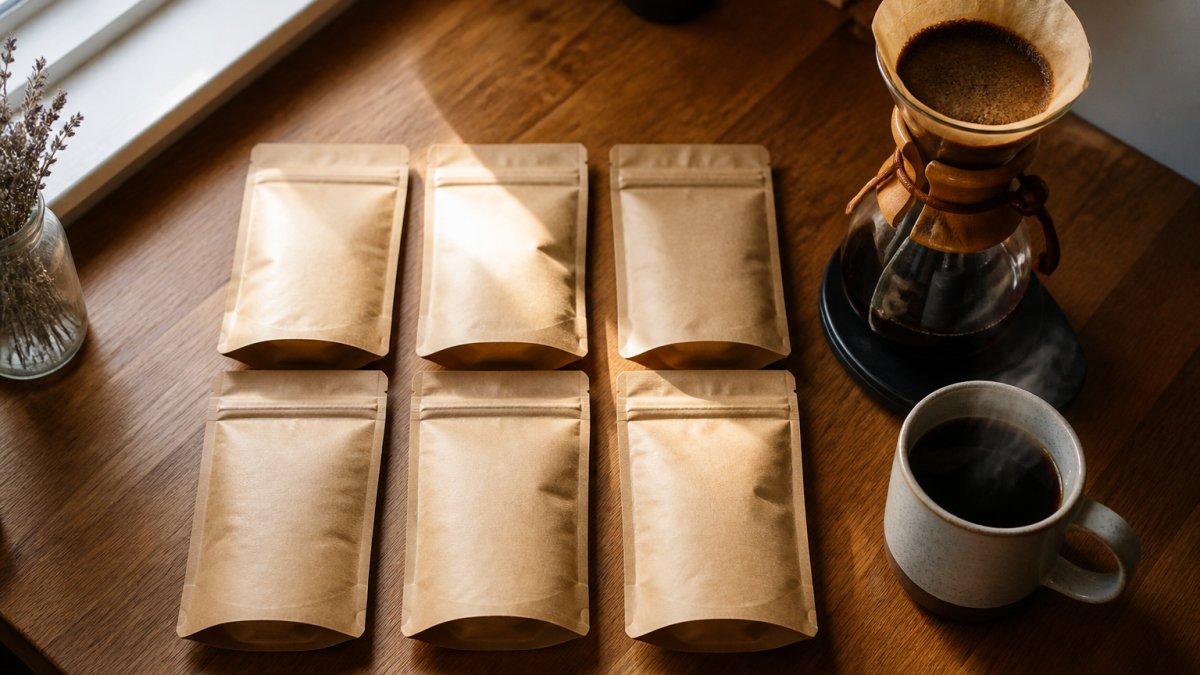
Cuppari Coffee sells two: the Best Sellers Sample Pack ($24.99) with six 2-ounce packs covering the 6Bean Blend, Cowboy Blend, Breakfast Blend, Peru, Mexico, and Bali, and the Single Origin Favorites Sample Pack ($24.99) with Brazil Santos, Colombia, Costa Rica, Ethiopia, Honduras, and Tanzania.
That is a genuinely useful middle step, and it answers the most common objection we hear: a subscription piling up coffee you never finish.
Trade vs Bean Box Coffee Subscription: What Sets Them Apart
The Trade vs Bean Box coffee subscription comparison comes down to who controls the roast and the bag size.
Both are discovery-first and good at variety, but neither roasts the coffee itself, so neither controls the roast date at the roastery end.
Here is the practical breakdown readers usually have to hunt for across three or four pages:
| Factor | Trade Coffee | Bean Box | Cuppari Coffee |
|---|---|---|---|
| Model | Matching marketplace | Curated sampler | Direct roaster |
| Typical bag size | 12 oz (varies by roaster) | Often 12 oz, sampler boxes smaller | 12 oz |
| Per-bag price range | Varies by roaster, commonly $15-$25 | Varies, commonly $18-$25 | $20.99-$24.99 |
| Shipping | Varies; some roasters include it, some add per-box | Varies by plan | Free on all U.S. orders |
| Minimum order | Varies by plan | Varies by plan | None |
| Roast date control | Via partner roasters | Via partner roasters | Roasted after order |
| Ship timing | Varies by roaster | Varies by roaster | Same day |
| Pause / skip | Plan-dependent | Plan-dependent | Order-by-order |
| Cancel | Plan-dependent, sometimes via retention flow | Plan-dependent | No commitment |
Two things stand out once the numbers are on the page.
Second, cancellation and pause terms are where matching services most often surprise people.
How to Read the Fine Print Before You Switch
Three questions separate a good replacement from a lateral move:
- Is the roast date printed on the bag, or only a best-by stamp? A best-by date tells you nothing about how long the coffee sat in a fulfillment center.
- Is shipping included in the advertised price, or added per box? Per-box shipping quietly raises your effective cost per cup, especially on smaller bags.
- Can you cancel in one step, or does it require a call or a retention offer? This is the single most common complaint in subscription reviews, and it is easy to verify before signing up.
Answer those three and the comparison stops being about brand and becomes about delivered cost and delivered freshness, what actually changes what lands in your cup.
Atlas vs Trade Coffee: A Side-by-Side Look
Atlas vs Trade Coffee is closer than most comparisons admit, because both are discovery platforms rather than roasters. Atlas leans toward a rotating global selection of single origins with a monthly country theme; Trade leans toward a broader roaster network with a quiz-driven match and more roaster variety per month.
| Criterion | Trade Coffee | Atlas Coffee Club | Cuppari Coffee |
|---|---|---|---|
| Model | Matching marketplace | Curated global rotation | Direct roaster |
| Roast date control | Via partner roasters | Via partner roasters | Roasted after order |
| Ship timing | Varies by roaster | Varies by roaster | Same day |
| Single origin depth | Broad | Strong, themed by country | Strong |
| Decaf option | Varies by roaster | Limited | Swiss Water Process |
| Espresso-focused option | Varies by roaster | Limited | 6Bean Blend (dark roast) |
| Shipping (U.S.) | Varies | Varies by plan | Free |
| Minimum order | Varies by plan | Varies by plan | None |
| Pause / skip | Plan-dependent | Plan-dependent | Order-by-order |
| Cancel | Plan-dependent | Plan-dependent | No commitment |
The pattern is consistent. Discovery platforms win on breadth. A direct roaster wins on the two things you can measure: days from roast to ship, and whether the price you see includes delivery.
Delivered Cost, Not Headline Price
The number that matters is cost per delivered ounce, not the sticker on the bag. A marketplace bag at $17 with $7 shipping and a 12-ounce fill works out to $2.00 per ounce; a direct-roast bag at $21.99 with free shipping and a 12-ounce fill works out to $1.83 per ounce. Over a year of one bag per month, that difference is real money, and invisible if you only compare headline prices.
Alternatives by Specific Need
Generic rankings treat every drinker the same. The better question is which service fits your actual use case:
- Decaf drinkers: Look for a Swiss Water Process option that is a real medium roast, not an afterthought. Cuppari's DECAF by Swiss Water Process ($21.99) is built as a standalone roast with caramel and citrus notes.
- Espresso drinkers: You want a darker roast or a blend that holds up under pressure. The 6Bean Blend in the Best Sellers Sample Pack is a dark roast house blend built for espresso.
- Budget-focused drinkers: Compare cost per delivered ounce across at least three services before committing. Sample packs are the cheapest way to test before buying full bags.
Availability and Delivery Coverage
Marketplace services route through partner roasteries, so delivery speed and coverage depend on which roaster fills your order. A direct roaster ships from its own production floor, so coverage and timing are consistent nationwide. Cuppari Coffee ships free on all U.S. orders, removing the per-box shipping variable that makes marketplace cost comparisons so hard to pin down.
Matching a Coffee Subscription to Your Brew Method
The best subscription stocks coffee built for how you actually brew. A great drip coffee can be a poor espresso, and vice versa.
Espresso and Cold Brew
Espresso rewards darker roasts and blends that hold up under pressure. The 6Bean Blend in the Best Sellers Sample Pack is a dark roast house blend built for espresso. For cold brew, the Cold Brew Coffee ($21.99) is a medium roast designed for a slow 16 to 24 hour steep, with dark chocolate and toffee notes that survive the long extraction.
Drip, Pour Over, and Decaf
Drip and pour over drinkers have the widest range; medium roasts like Brazil Santos and Colombia sit comfortably in both. For pour over, the Pour Over Coffee Maker with Filter ($46.99) uses a dual-layer stainless steel filter instead of paper, and the Hario V60 "Simply" Glass Pour Over Kit ($42.50) covers the classic setup. Decaf drinkers are not an afterthought: the Swiss Water Process Peru is a real medium roast with caramel and citrus, not a compromise.
Pricing, Shipping, and Subscription Flexibility Compared
Flexibility is where matching services and direct roasters diverge most, and the criterion buyers forget to check until they are stuck.
| Option | Entry Price | Shipping | Pause or Skip | Cancel |
|---|---|---|---|---|
| Cuppari Coffee | $20.99-$24.99 | Free (U.S.) | Order-by-order | No commitment |
| Sample pack route | $24.99 | Free (U.S.) | Not applicable | One-time purchase |
| Matching marketplaces | Varies | Varies | Varies by plan | Varies by plan |
Cuppari Coffee sells as a one-time purchase, which means there is nothing to pause and nothing to cancel. You order when you want coffee. For anyone who has ended a subscription with three unopened bags in the cupboard, that is the feature that matters most.
Conclusion
The real challenge with any coffee subscription is that freshness decays from the moment the roaster drops the beans, and every extra handoff between roastery and doorstep costs you days.
Cuppari Coffee removes that step. We roast beans only after an order is placed, ship the same day, and ship free on all U.S. orders, so what arrives is as close to the roaster as delivery allows.
Frequently Asked Questions
What are the best alternatives to Trade Coffee?
The best Trade coffee alternatives are roasters that publish roast dates, ship within a day of roasting, and let you pause or cancel without a fee. Cuppari Coffee roasts beans only after an order is placed and ships the same day, with free shipping on all U.S. orders. Sample packs start at $24.99, and single origin bags are $21.99, so you can test freshness before committing to a recurring plan.
Which is better, Atlas or Trade Coffee?
Atlas and Trade both lean on preference quizzes to match you with roasters, but they differ in focus: Atlas emphasizes small roaster discovery, while Trade carries a larger roster of national brands. Neither roasts to order in the way a direct roaster does. If same-day roasting matters more to you than roaster variety, a direct option like Cuppari Coffee, which roasts and ships the day you order, is worth comparing on freshness alone.
Can you buy freshly roasted coffee online without a subscription?
Yes. Several roasters sell one-time bags with no recurring commitment, which suits anyone who has ended up with unused coffee from a subscription before. Cuppari Coffee sells single bags such as Brazil Santos and Colombia for $21.99 each, plus sample packs at $24.99, all as one-time purchases. You get freshly roasted coffee beans online without a contract, and you can order again only when you actually need more.
What should I compare when choosing a coffee subscription?
Compare four things: the roast date policy, the per-bag price including shipping, how easily you can pause or cancel, and whether the roast level fits your brew method. A subscription that ships within 24 hours of roasting keeps coffee inside its best window, while a cheaper bag that sits in a warehouse for two weeks rarely tastes as good. Free shipping thresholds and minimum order sizes also change the real cost per cup.
Are coffee subscriptions worth it?
They are worth it if you drink coffee daily and want a steady supply of freshly roasted beans without reordering each time. The math works when the per-bag price beats your local shelf price after shipping, and when the delivery frequency matches how fast you actually brew. If you drink fewer than two cups a day, a one-time purchase or a sample pack is often the smarter starting point before locking into recurring deliveries.