

Table of Contents
- The Four Enemies of Coffee Freshness (And Why They Matter)
- The Best Way to Store Coffee Beans at Home: Core Principles
- Best Coffee Storage Containers: Materials, Features, and Top Picks
- Freezing Coffee Beans: When It Helps and When It Hurts
- How Long Do Coffee Beans Last? Shelf Life by Roast Level
- Signs of Stale Coffee Beans and How to Troubleshoot Flat Flavor
- The Best Way to Store Coffee Beans: Buying Habits That Protect Freshness
- Conclusion
Last Updated: May 27, 2026
The best way to store coffee beans is simpler than most guides make it sound, yet the majority of home brewers are unknowingly killing their coffee before they ever grind a bean. This guide from Cuppari Coffee breaks down exactly what goes wrong, what container to buy, and how to extend the shelf life of every roast you bring home. Below, we'll show you the precise protocols for short-term and long-term storage, which container materials actually protect flavor, and how roast level changes everything.
Here's what most guides get wrong: they treat storage as an afterthought. The real problem is that coffee freshness begins degrading the moment beans are exposed to air, and the window between peak flavor and flat, stale coffee is narrower than most people expect. Whole bean coffee stored correctly can stay vibrant for two to four weeks after roasting. Stored incorrectly, it can go stale in days.
The Four Enemies of Coffee Freshness (And Why They Matter)
Coffee freshness has four primary enemies: oxygen, moisture, heat, and light. Understanding each one is the foundation for every storage decision you'll make.
Oxidation and Air Exposure
Oxidation is the chemical process by which oxygen reacts with the aromatic compounds in roasted coffee, breaking down the volatile molecules responsible for flavor and aroma. Once roasted beans are exposed to open air, oxidation begins immediately and cannot be reversed. This is why airtight storage is the single most important factor in preserving coffee quality.
Freshly roasted beans also release carbon dioxide through a process called degassing. This is actually a sign of freshness. For the first 24 to 72 hours after roasting, beans off-gas CO2 actively, which is why quality retail packaging uses a one-way valve: it lets CO2 escape without allowing oxygen back in. If you seal beans in an airtight container too soon after roasting, that trapped CO2 can affect extraction. Most third-wave roasters recommend waiting 24 hours before sealing freshly roasted beans in a vacuum container.
Moisture, Heat, and Light Exposure
Coffee beans are hygroscopic, meaning they actively absorb moisture from the surrounding environment. Even small amounts of ambient moisture accelerate staling, dull the flavor profile, and can introduce off-notes that taste musty or flat. This is the primary reason storing coffee near a stove, dishwasher, or sink is a poor choice regardless of the container.
Heat accelerates every chemical reaction that degrades coffee, including oxidation and the breakdown of aromatic oils. Direct sunlight compounds the problem by adding both heat and UV light exposure, which degrades chlorogenic acids and other flavor-active compounds in the bean. Opaque containers stored in a cool location away from direct sunlight address all three of these threats simultaneously.
The Best Way to Store Coffee Beans at Home: Core Principles
The best way to store coffee beans at home is to keep whole beans in an opaque, airtight container at room temperature, away from heat, light, and moisture, and to grind only what you need immediately before brewing. This single principle covers the majority of freshness protection for everyday home use.
Why the Original Retail Bag Is Not Enough Long-Term
The retail packaging from most specialty roasters is actually well-designed for short-term storage. Bags with one-way valves, foil lining, and resealable closures protect beans adequately for the first week or so. The problem is that most retail bags are not truly airtight once opened. Each time you roll the bag down and clip it, you're reintroducing some oxygen.
For beans you'll use within five to seven days, the original bag is fine. For anything longer, transferring to a dedicated airtight canister is the better approach. The bag also offers no protection against temperature swings or light exposure if left on a countertop.
Whole Bean vs. Pre-Ground: Why You Should Wait to Grind
Pre-ground coffee has dramatically more surface area exposed to air than whole beans, which means it oxidizes and loses aroma far faster. The flavor difference between coffee ground 30 minutes before brewing versus coffee ground fresh is noticeable to most palates.
The practical rule: grind immediately before brewing, whether you're making a pourover, French press, or espresso. Grind size matters for extraction, and freshly ground coffee gives you full control over both variables. If you must grind in advance, store pre-ground coffee in the same airtight conditions as whole beans, but expect a shorter shelf life of three to five days before noticeable flavor loss.
Best Coffee Storage Containers: Materials, Features, and Top Picks
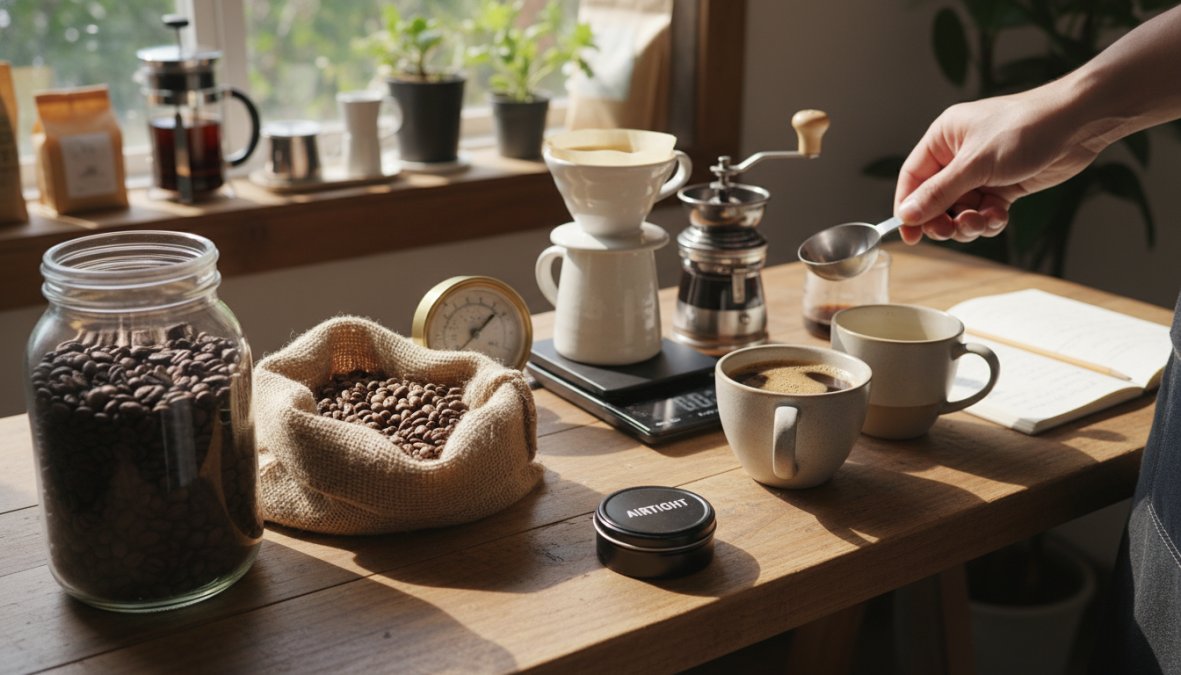
Choosing the right container is where most coffee drinkers either get it right or waste money on something that doesn't actually help. Most buying guides stop at "get an airtight canister" without explaining why one material outperforms another. The key features to evaluate are UV protection, seal integrity over time, chemical inertness with coffee oils, and whether the container handles CO2 degassing. Below is a material-by-material breakdown followed by specific product picks.
Material Analysis: What Your Container Is Actually Doing
Stainless Steel Stainless steel is the strongest all-around performer for everyday coffee storage. Its key advantages are total opacity (zero UV transmission), non-porous surface (does not absorb coffee oils or ambient odors), and structural durability that maintains a consistent seal geometry over years of use. The lid gasket, typically silicone, is the weakest point in any stainless canister; a degraded gasket allows oxygen ingress even when the lid feels snug. Inspect and replace gaskets annually on heavily used canisters.
One trade-off: stainless steel conducts heat more readily than ceramic or glass, which matters if you store your canister near a heat source. On a cool countertop away from the stove, this is a non-issue.
Ceramic Ceramic canisters offer complete UV blocking and are chemically inert, they will not interact with coffee oils regardless of roast level. The material is also a mild thermal insulator, meaning it buffers minor ambient temperature swings better than stainless steel. The practical limitation is seal quality: most ceramic canisters use a cork or rubber stopper rather than a precision-machined lid, which makes achieving a truly airtight seal less consistent than stainless or vacuum-seal designs. Ceramic is a strong choice for short-term storage (under one week) where aesthetics and countertop temperature buffering matter, but it is not the best option if you need a reliable long-term airtight seal.
Glass (Clear vs. Opaque/Dark) Clear glass is chemically inert and easy to clean, but it provides zero UV protection. UV light degrades chlorogenic acids and volatile aromatic compounds in roasted coffee, accelerating flavor loss even through a sealed lid. A clear glass canister left on a sunny countertop can produce measurably stale-tasting coffee within days. If you use clear glass, it must live inside a cabinet. Dark or amber glass solves the UV problem while retaining the chemical inertness and easy-clean benefits of glass, but dark glass canisters with precision airtight lids are less common and typically more expensive than stainless equivalents. Borosilicate glass (used in the Fellow Atmos glass version) is more thermally stable than standard glass and resists cracking from temperature changes.
Plastic (BPA-Free) Food-safe, BPA-free plastic is the lightest and most portable option. The material concern with plastic is not chemical safety (modern food-grade plastics are inert at room temperature) but porosity over time: plastic is microscopically more permeable than stainless or glass, meaning oxygen can slowly migrate through the walls of a plastic container over months of use. For short-term storage of two weeks or less, this is negligible. For long-term storage, stainless or glass is preferable. Plastic also has a tendency to absorb odors from strongly flavored coffees over time, which can affect subsequent batches.
| Material | UV Protection | Seal Integrity | Odor Absorption | Heat Conduction | Best Use Case |
|---|---|---|---|---|---|
| Stainless Steel | Complete | High (gasket-dependent) | None | Moderate | Daily use, all roast levels |
| Ceramic | Complete | Moderate (stopper-dependent) | None | Low (insulating) | Short-term, aesthetic priority |
| Dark/Opaque Glass | Complete | High (lid-dependent) | None | Low | Daily use, easy cleaning |
| Clear Glass | None | High (lid-dependent) | None | Low | Cabinet storage only |
| BPA-Free Plastic | Varies (opaque only) | Moderate (degrades over time) | Low-moderate | Low | Portability, short-term |
Seal Mechanisms: Passive Airtight vs. Active Vacuum
Beyond material, the seal mechanism determines how much oxygen remains in contact with your beans after you close the lid.
Passive airtight seals (silicone gasket, clasp, or plunger) minimize oxygen exchange but do not remove the air already inside the container when you close it. Every time you open the canister, a small volume of fresh oxygen enters. For beans consumed within two weeks, this is acceptable.
Active vacuum seals remove oxygen from the headspace above the beans, reducing the partial pressure of oxygen in contact with the coffee. The Fellow Atmos Vacuum Canister ($39.95) uses a twist-pump lid to evacuate air; a green indicator ring confirms the vacuum is held. The Planetary Design Airscape ($37.50) uses a patented inner plunger that physically displaces air before the outer lid seals, with a two-way valve that allows CO2 to escape while blocking oxygen. For beans you want to hold at peak flavor for three to four weeks, active vacuum is meaningfully better than passive sealing.
CO2 Valves: Why They Matter and When They Don't
Freshly roasted beans off-gas CO2 for 24 to 72 hours after roasting. A one-way CO2 valve allows this gas to escape without letting oxygen back in. Without a valve, CO2 builds up inside a sealed container and can affect extraction (over-gassed coffee resists even saturation during brewing). Most quality stainless canisters include a CO2 valve; the Fellow Atmos does not, relying instead on its vacuum mechanism to manage pressure.
If your beans are more than 72 hours post-roast when you transfer them, the CO2 valve is less critical, most active degassing has already occurred. For beans transferred within the first day or two of roasting, a CO2 valve is important.
Product Picks by Use Case
Best for daily use (all roast levels): Planetary Design Airscape ($37.50), stainless steel, active air displacement, two-way CO2 valve, durable plunger mechanism with replaceable parts.
Best vacuum seal: Fellow Atmos Vacuum Canister ($39.95), available in stainless or borosilicate glass, twist-pump lid with visual vacuum indicator. Choose the stainless version for countertop use; the glass version for cabinet storage where UV is not a concern.
Best budget pick: Coffee Gator Stainless Steel Canister ($16.50), one-way CO2 valve, airtight clasp seal, integrated roast-date calendar wheel, includes measuring scoop. Covers all core protection needs at entry-level price.
Best for portability: Tightpac Coffeevac ($16.50), NSF-certified BPA-free plastic, one-button vacuum press, lightweight. Best for travel or office use where short-term storage (under two weeks) is the priority.
Best ceramic option: Airscape Ceramic ($40-$45 depending on size), same plunger mechanism as the stainless version in a ceramic body, combining the thermal buffering of ceramic with the active air-displacement seal that most ceramic canisters lack.
Freezing Coffee Beans: When It Helps and When It Hurts
Freezing coffee beans is one of the most debated topics in home brewing, and the conventional advice is often oversimplified. The short answer: freezing works well for long-term storage but introduces real risks for everyday use.
The core problem with freezing is condensation. Coffee is hygroscopic. When frozen beans are removed from the freezer and exposed to room temperature air, moisture condenses on the cold surface of the beans. That moisture accelerates staling and can introduce off-flavors. Repeated freeze-thaw cycles compound this damage significantly.
Short-Term vs. Long-Term Freezer Storage Protocols
Short-term storage (under two weeks): Don't freeze. Keep beans in an airtight container at room temperature. The freezer adds no meaningful benefit for beans you'll use within two weeks, and the condensation risk outweighs any preservation advantage.
Long-term storage (over one month): Freezing is genuinely effective when done correctly. The protocol matters:
- Divide beans into single-use portions before freezing. Use vacuum-sealed bags or airtight freezer-safe containers sized for one brew session.
- Remove only the portion you need and let it come to full room temperature before opening the bag or container.
- Never return partially thawed beans to the freezer.
- Label each portion with the roast date to manage rotation.
According to the Specialty Coffee Association's green coffee storage guidelines, moisture control is the most critical variable in long-term coffee preservation. The same principle applies to roasted beans in home freezers: seal tightly, portion carefully, and thaw completely before opening.
Freezer burn is a real risk if beans are stored in permeable packaging. Use vacuum-sealed bags or containers rated for freezer use, not standard resealable bags.
How Long Do Coffee Beans Last? Shelf Life by Roast Level
How long coffee beans last depends on storage conditions, whether they're whole bean or pre-ground, and the roast level. Whole beans stored in an airtight container at room temperature are generally at peak flavor for two to four weeks after the roast date. Pre-ground coffee degrades faster, typically within one to two weeks under the same conditions.
The roast date matters far more than the expiration date printed on most retail bags. Many commercial bags list a "best by" date 12 months out, which reflects safety, not flavor quality. For specialty coffee, the practical flavor window is much shorter.
Light Roasts vs. Dark Roasts: Does Roast Level Change Storage Needs?
Roast level meaningfully changes how coffee ages, and this is an angle most general storage guides skip entirely.
Light roasts are denser and retain more moisture from the green bean. They also contain higher concentrations of volatile aromatic compounds that contribute to their bright, complex flavor profiles. These compounds are more sensitive to oxidation, which means light roasts can taste noticeably different after just 10 to 14 days of open-air storage. Light roasts benefit most from vacuum-seal containers and careful temperature control.
Dark roasts have been roasted longer, which drives off more moisture and breaks down more cell structure. The oils characteristic of dark roasts migrate to the surface of the bean, making them more visibly glossy. These surface oils are directly exposed to oxygen and oxidize relatively quickly, often producing a rancid or flat taste within two weeks of opening. Dark roasts should be stored in an airtight container and consumed within 10 to 14 days of opening for best results.
Medium roasts fall between these extremes and generally offer the most forgiving storage window of two to three weeks.
As documented in the National Coffee Association's coffee freshness and storage resource, proper storage conditions are the primary factor determining how long roasted coffee retains its intended flavor profile.
Signs of Stale Coffee Beans and How to Troubleshoot Flat Flavor
Stale coffee beans produce a flat, dull, or papery cup with little aroma and a lifeless finish. Most guides tell you to "trust your nose" and move on. That advice is incomplete. Aroma alone is an unreliable diagnostic because different roast levels smell different at peak freshness, and some staling mechanisms produce off-notes that are easy to misattribute to brewing error. This section gives you a structured, roast-aware framework for diagnosing staleness, including an objective test you can run before you brew.
The Bloom Test: An Objective Freshness Indicator
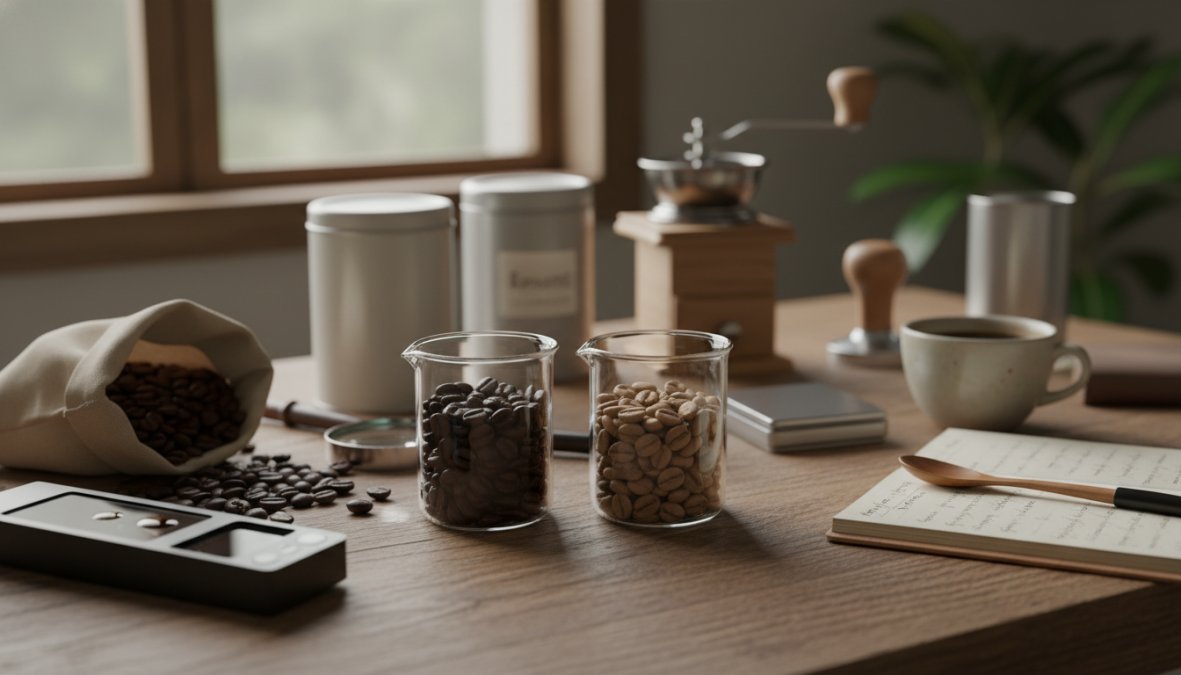
The single most reliable objective test for coffee freshness is the bloom, and it works for any brew method that uses a pour of hot water before the main brew, pourover, Aeropress, French press, or drip with a bloom pause.
When hot water contacts freshly roasted coffee grounds, the residual CO2 trapped inside the bean rapidly escapes, causing the grounds to visibly bubble, swell, and dome upward. This is called the bloom or pre-infusion. A vigorous bloom, grounds rising noticeably and bubbling for 30 to 45 seconds, indicates meaningful CO2 content and, by extension, a relatively fresh roast. A weak or absent bloom, where the grounds barely move and water pools on the surface immediately, indicates that CO2 has already off-gassed, which is a reliable sign the beans are past their peak.
The bloom test is more diagnostic than smell alone because:
- CO2 loss is a direct chemical marker of oxidation progress, not a subjective sensory judgment
- It works even for roasts that naturally have a subtler aroma (some light roasts smell less intense than dark roasts at peak freshness, which can mislead a nose-only assessment)
- It gives you a result before you commit to a full brew
Roast-Level-Specific Staleness Signatures
Staleness does not look or taste the same across roast levels. Diagnosing the problem correctly requires knowing what to look for based on what you're brewing.
Light roast staleness: Light roasts are dense and retain more volatile aromatic compounds, the bright, fruity, or floral notes that define their character. These compounds are highly sensitive to oxidation. When a light roast goes stale, the first thing you lose is top-note brightness: the cup tastes flat and one-dimensional rather than complex. The finish shortens noticeably. Visually, stale light roast beans may appear slightly faded or dusty rather than vibrant. Because light roasts don't have surface oils, the visual cue is subtler than with dark roasts, the bloom test and taste are more reliable diagnostics.
A stale light roast is often mistaken for a brewing problem (under-extraction, wrong grind size) because the symptoms, flat flavor, thin body, no brightness, overlap with extraction errors. Before adjusting your grind or ratio, check the roast date.
Dark roast staleness: Dark roasts are more porous and oily. The oils that migrate to the bean surface during roasting are directly exposed to oxygen and oxidize relatively quickly. The visual signature of a stale dark roast is distinctive: the glossy, wet-looking surface oils dry out and disappear, leaving the bean looking matte or chalky. Fresh dark roast beans should look visibly oily; if they look dry, the surface lipids have oxidized.
The flavor signature of a stale dark roast is a harsh, flat bitterness without the caramel, chocolate, or smoky complexity of a fresh cup. Some stale dark roasts develop a rancid or cardboard-like note from lipid oxidation, this is a more advanced stage of staleness and is unmistakable once you know what to look for.
Medium roast staleness: Medium roasts fall between these extremes. The first sign is usually a loss of sweetness and mid-palate complexity, leaving a cup that tastes generically "coffee-flavored" without distinguishing character. The bloom test is particularly useful here because medium roasts don't have the dramatic visual oil cues of dark roasts or the pronounced aromatic sensitivity of light roasts.
Structured Troubleshooting: Isolating the Real Cause
Flat flavor in the cup has multiple possible causes. Work through this sequence before concluding the beans are stale:
Step 1, Check the roast date. If it has been more than four weeks since roasting (or more than two weeks for a light roast), staleness is the most likely culprit. No brewing adjustment will fix oxidized coffee.
Step 2, Run the bloom test. If the bloom is weak or absent on beans within the expected freshness window, your container seal may have failed. A lid that feels secure can still allow oxygen ingress if the gasket is degraded. Press firmly on the lid: a truly airtight seal will offer slight resistance. If the lid depresses easily with no resistance, air is getting in.
Step 3, Check your grind timing. Pre-ground coffee loses aromatic compounds within hours of grinding. If you ground more than 30 minutes before brewing, the flat flavor may be grind staleness rather than bean staleness. Switch to grinding immediately before brewing and retest.
Step 4, Check for moisture contamination. If beans smell musty, earthy, or off in a way that is distinct from simply smelling "not fresh," moisture may have entered the container. This can happen from storing near a dishwasher, sink, or in a humid climate without adequate sealing. Moisture-damaged beans are not salvageable, the off-notes will persist regardless of brew method.
Step 5, Rule out brewing variables last. Only after confirming bean freshness, seal integrity, and grind timing should you adjust grind size, water temperature, or brew ratio. A common mistake is spending time dialing in a recipe when the beans themselves are the problem.
Quick Reference: Staleness Diagnostic Checklist
- Roast date more than 4 weeks ago (2 weeks for light roast)? → Beans are past peak, replace
- Bloom test shows no visible CO2 activity? → Beans are significantly degassed; check roast date and container seal
- Dark roast beans look matte or chalky rather than oily? → Surface lipids have oxidized; replace
- Cup tastes flat but beans are within roast window? → Check container seal integrity and grind timing
- Musty or off-note aroma (not just "not fresh")? → Moisture contamination; replace beans and inspect storage environment
- Flat flavor only after switching to a new bag? → New bag may have been sitting in retail inventory; check roast date on purchase
The bloom test and roast-level visual checks together give you a faster, more accurate diagnosis than smell alone, and they work before you've committed to a full brew, saving both beans and time.
The Best Way to Store Coffee Beans: Buying Habits That Protect Freshness
The best way to store coffee beans starts before you even open the bag. Buying habits are the most underrated factor in long-term coffee quality, and they're where most home brewers leave the most improvement on the table.
Buy smaller batches more frequently. A 12-ounce bag consumed within two weeks will always taste better than a 2-pound bag that sits for six weeks. Match your purchase size to your actual consumption rate.
Check the roast date, not the expiration date. A bag roasted four weeks ago that expires in eight months is already past its flavor peak. Look for beans roasted within the last one to two weeks, especially for light and medium roasts.
Avoid buying pre-ground unless you'll use it within a week. The flavor loss from pre-grinding is significant enough that even modestly fresh whole beans, ground just before brewing, will outperform pre-ground coffee of the same origin and roast.
This is where Cuppari Coffee solves a problem that most retailers ignore: beans are roasted only after an order is placed and shipped the same day, which means you receive coffee at the start of its freshness window rather than somewhere in the middle. Free shipping on all U.S. orders removes the friction of ordering frequently in small batches, which is exactly the buying habit that produces the best cup.
According to the Specialty Coffee Association's research on consumer coffee freshness, the gap between roast date and consumer use is one of the largest controllable variables in home brewing quality. Buying from roasters who ship fresh addresses this gap directly.
For pourover and French press brewing in particular, where the flavor nuances of the bean are most exposed, freshness at the point of purchase matters more than any storage method. No container, however well designed, can restore freshness that was lost before the bag reached your door.
The practical storage checklist for most home brewers:
- Transfer beans to an opaque, airtight canister within a week of opening the retail bag
- Store the canister in a cool, dark location away from the stove and direct sunlight
- Grind whole beans immediately before each brew session
- Check the roast date before purchasing and aim for beans roasted within the last two weeks
- For long-term storage over one month, portion beans into vacuum-sealed bags and freeze
- Never store beans in the refrigerator (ambient moisture and odor absorption are significant risks)
- Replace CO2 valve inserts on canisters annually or when the seal feels loose
The refrigerator deserves a specific note: it's one of the worst places to store coffee beans. The temperature cycling every time the door opens, combined with ambient moisture and the presence of food odors, creates conditions that actively degrade flavor. This is a case where the popular instinct to "keep it cold" works against you. Room temperature in a sealed, opaque container is the correct answer for everyday storage.
For further reading on the chemistry of coffee freshness, the Coffee Quality Institute's resources on roasted coffee preservation provide a thorough grounding in the science behind oxidation and degassing.
Keeping great coffee fresh requires solving two problems at once: controlling the environment after the bag is opened, and starting with beans that are actually fresh when they arrive. Cuppari Coffee roasts every order only after it's placed and ships the same day, so you receive beans at peak freshness rather than weeks into their shelf life. Combined with free shipping on all U.S. orders and a full selection of single origin, blends, and flavored coffees, it's the most direct way to protect your investment in good storage. Add to cart and taste the difference that roast-to-order freshness makes.
Frequently Asked Questions
Should you store coffee beans in the fridge or freezer?
The refrigerator is generally a poor choice for storing coffee beans. Coffee is hygroscopic, meaning it readily absorbs ambient moisture and odors, both of which are plentiful in a fridge. The freezer can work for long-term storage if beans are vacuum-sealed in airtight, portioned bags and never thawed and refrozen. For everyday use, a cool, dark pantry in an airtight container at room temperature is the best way to store coffee beans.
What is the best container for storing coffee beans?
The best coffee storage containers are opaque, airtight, and ideally feature a one-way valve that lets carbon dioxide from degassing escape without letting oxygen in. Stainless steel canisters like the Coffee Gator or Planetary Design Airscape are reliable mid-range options. For maximum freshness, vacuum-seal canisters like the Fellow Atmos actively remove oxygen. Avoid clear glass or plastic containers placed on open countertops, as light exposure accelerates flavor loss.
How long do coffee beans stay fresh?
Whole bean coffee is generally at peak flavor within 2-4 weeks of the roast date when stored properly in an airtight container away from heat and light. After that, flavor and aroma gradually decline but beans remain safe to drink for up to 6-9 months. Pre-ground coffee loses freshness much faster, often within days, because grinding dramatically increases surface area exposed to oxidation. Always check the roast date, not just the expiration date, for the freshest cup.
Can you store coffee beans in the original bag?
You can store coffee beans in the original retail bag short-term, especially if it includes a one-way valve for degassing. However, most retail packaging is not resealable in a truly airtight way after opening. Once you break the seal, transferring beans to a dedicated airtight container is the better approach. Third-wave roasters often use high-quality bags with valves, but even these are best used as temporary storage rather than a long-term solution.
Does light affect coffee bean freshness?
Yes, light exposure, especially direct sunlight and UV light, accelerates the degradation of coffee's volatile aromatic compounds, leading to a flat, stale flavor profile. This is why opaque containers are strongly preferred over clear glass jars like mason jars placed on open countertops. If you do use a clear container, store it inside a dark cabinet or pantry to block light. Opaque stainless steel canisters offer the best built-in protection against both light and moisture.
What are the four enemies of coffee freshness?
The four main enemies of coffee freshness are air (oxygen causes oxidation), moisture (coffee is hygroscopic and absorbs water vapor), heat (accelerates chemical breakdown), and light (UV exposure degrades aromatic compounds). Protecting your whole bean coffee from all four simultaneously is the core principle behind proper storage. An opaque, airtight container with a one-way valve, kept in a cool, dark location away from your stove or windowsill, addresses all four threats at once.
This article was written using GrandRanker