

Table of Contents
- Why Buy Single Origin Coffee Online (And What to Expect)
- Single Origin vs Blend Coffee: Which Should You Buy?
- Shop by Region: Coffee Growing Regions and Their Flavor Profiles
- How to Choose Single Origin Coffee: Roast Profiles, Tasting Notes, and Brewing Method Matching
- Fair Trade, Organic, and Direct Trade: Understanding Certifications Before You Buy
- Best Coffee Subscription Services for Single Origin Beans
- Where to Buy Single Origin Coffee Online: Top Roasters Compared
- Conclusion: Start With Freshness, Let the Origin Do the Rest
Last Updated: May 15, 2026
Specialty coffee has never been more accessible, yet most people still end up with stale, generic beans that taste like cardboard. If you want to buy single origin coffee online and actually get something worth drinking, the sourcing, roasting date, and origin region matter far more than the brand name on the bag. This guide from Cuppari Coffee breaks down exactly what to look for, which regions produce which flavor profiles, and how to match your beans to your brewing method. Below, we'll show you exactly how to shop smarter, avoid the most common mistakes, and get genuinely fresh coffee delivered to your door.
Here's what most guides get wrong: they treat single origin coffee as a premium novelty rather than a practical, repeatable way to drink better coffee every day. Single origin coffee is coffee sourced from one specific farm, cooperative, or defined region within a single country, allowing the unique terroir of that location to express itself in the cup without being masked by blending. That distinction changes how you shop, how you brew, and what you taste.
Why Buy Single Origin Coffee Online (And What to Expect)
Buying single origin coffee online gives you access to a far wider range of origins, roast profiles, and small-batch roasters than any local grocery shelf can offer. The real advantage is freshness combined with variety: specialty coffee roasters who sell direct-to-consumer roast in small batches and ship quickly, which means you receive beans days after roasting rather than months.
What 'Single Origin' Actually Means
Single origin coffee is coffee traceable to one specific geographic source, whether that's a single farm, a named cooperative, or a defined micro-region within one country. This traceability is what makes tasting notes meaningful. When a roaster says an Ethiopian coffee tastes like blueberry and jasmine, that's not marketing language. Those flavor compounds develop in the bean because of altitude, soil composition, and processing method specific to that farm.
The contrast with blends is important. A blend combines beans from multiple origins to create a consistent, balanced cup year-round. Single origin coffees change with the harvest season, which is part of the appeal for coffee enthusiasts who want to taste something distinct rather than something consistent.
How Online Roasters Guarantee Freshness
The freshness problem is the biggest reason to buy from specialty online roasters rather than retail shelves. Grocery store coffee can sit in a warehouse for six months before it reaches you. Online specialty roasters, including Cuppari Coffee, roast only after an order is placed and ship the same day, meaning the beans arrive at peak flavor rather than past it. Cuppari Coffee seals its coffee in capsules with no oxygen inside, which extends freshness significantly beyond what a standard valve bag offers.
According to the Specialty Coffee Association's guidance on coffee freshness, ground coffee begins losing volatile aromatics within minutes of grinding, and whole bean coffee starts to stale meaningfully within two to four weeks of roasting. Buying roast-to-order eliminates most of that window.
Single Origin vs Blend Coffee: Which Should You Buy?
The answer depends on what you want from your cup, not which one is objectively better. But the real question most guides skip is: which one matches how you actually brew? That distinction changes the recommendation entirely.
The Core Trade-Off, Without the Marketing Spin
Single origin coffees are traceable to one place and one harvest. That traceability means the flavor in your cup reflects a specific set of conditions, altitude, soil, processing method, rainfall that season, rather than a roaster's formula. The upside is distinctiveness and the ability to taste what terroir actually means. The downside is variability: the same Ethiopian farm will produce a slightly different cup from one harvest year to the next, and a single origin that worked perfectly in your V60 last spring may need a dial-in adjustment when the new crop arrives.
Blends are engineered for repeatability. A skilled roaster combines beans from multiple origins to hit a consistent flavor target across seasons, compensating for harvest variation by adjusting the blend ratios. The upside is that your espresso tastes the same in January as it does in July. The downside is that the individual character of any one origin is deliberately softened to serve the blend's overall profile.
Neither approach is superior. They solve different problems.
The Brewing Method Decision Tree
This is the angle most single origin guides miss entirely, and it is the most practical framework for making a purchase decision.
If you brew pour over (V60, Chemex, Kalita Wave): Choose single origin. Pour over is a clarity-first method, the clean, filtered extraction highlights acidity, floral notes, and the subtle fruit characteristics that make single origin coffees interesting. A blend flattens those edges by design. Light to medium roast Ethiopian, Kenyan, or Colombian single origins perform best here because the method amplifies exactly what those origins do well.
If you pull espresso daily: This is where the recommendation flips for most people. Espresso extracts under pressure in 25-30 seconds, and that intensity rewards sweetness and body over delicate acidity. A well-constructed blend is engineered to hit a consistent extraction window. Single origin espresso is possible, medium roast Colombian or Brazilian single origins are the most forgiving, but expect to re-dial your grind and dose when the harvest changes. Experienced home baristas who enjoy that process will find single origin espresso rewarding. Beginners who want a reliable morning shot will find a quality blend less frustrating.
If you brew French press: Full immersion brewing produces a heavy, textured cup that suits medium to dark roast beans with natural body. Sumatra and Brazil are the classic choices here. Single origin works well in French press, but the method's inherent heaviness means the delicate floral notes of a light roast Ethiopian will be partially masked. If you want to taste the full range of what an Ethiopian coffee offers, French press is not the ideal vehicle.
If you brew cold brew: Cold brew's long steep time (12-24 hours) and cold water extract differently than hot methods, less acidity, more sweetness, heavier body. Single origin coffees with natural sweetness and chocolate notes, like Brazilian or Guatemalan beans at medium roast, translate well. Very light roast African coffees can taste thin and underdeveloped in cold brew because the cold water struggles to extract their higher-acidity compounds fully.
If you add milk or cream: Dairy compresses perceived acidity and mutes delicate flavor notes. A light roast Ethiopian that tastes like blueberry and jasmine black will taste like mild coffee with milk. If you drink your coffee with dairy, a medium to dark roast single origin, or a well-constructed blend, will hold up better. This is not a reason to avoid single origin; it is a reason to choose an origin and roast level that was built for the way you actually drink.
A Practical Decision Framework
| Your Situation | Best Choice | Why |
|---|---|---|
| Pour over, black coffee | Single origin, light-medium roast | Method highlights origin character |
| Daily espresso, want consistency | Quality blend | Engineered for repeatable extraction |
| Daily espresso, enjoy dialing in | Single origin, medium roast | Rewarding but requires adjustment each harvest |
| French press, with milk | Single origin, medium-dark roast | Body holds up; dairy masks delicate notes anyway |
| Cold brew | Single origin, medium roast, natural sweetness | Cold extraction suits chocolate and caramel notes |
| Exploring coffee for the first time | Single origin sampler pack | Fastest way to understand regional differences |
| Buying for an office or group | Blend | Consistent, crowd-pleasing, no seasonal variation |
When a Blend Is the Right Answer
A common mistake is assuming single origin means better. A well-constructed blend from a skilled roaster will outperform a poorly sourced single origin every time. Blends also make sense when you are buying for multiple people with different preferences, when you want a coffee that works across multiple brewing methods without adjustment, or when you are pulling high-volume espresso and cannot afford the time to re-dial every new harvest. The goal is a great cup, not a label.
Shop by Region: Coffee Growing Regions and Their Flavor Profiles
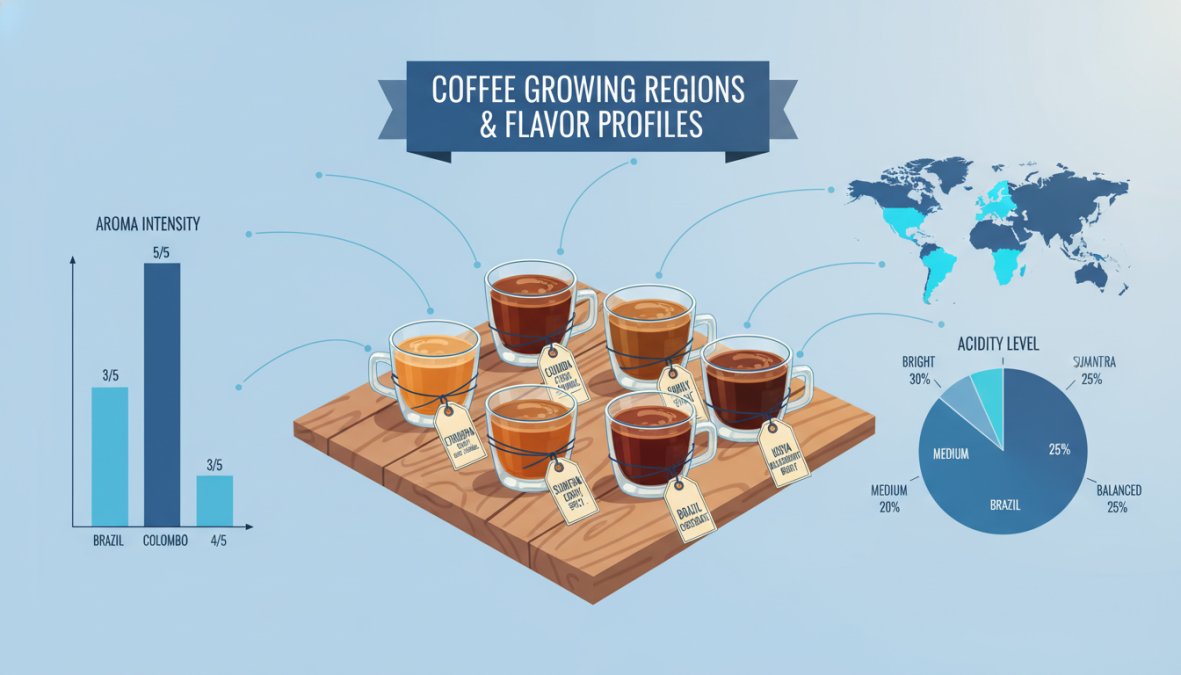
The coffee belt spans roughly 25 degrees north and south of the equator, and the flavor differences between regions are dramatic enough that understanding them is the single most useful skill you can develop as a coffee buyer.
Ethiopia: Bright, Floral, and Fruity
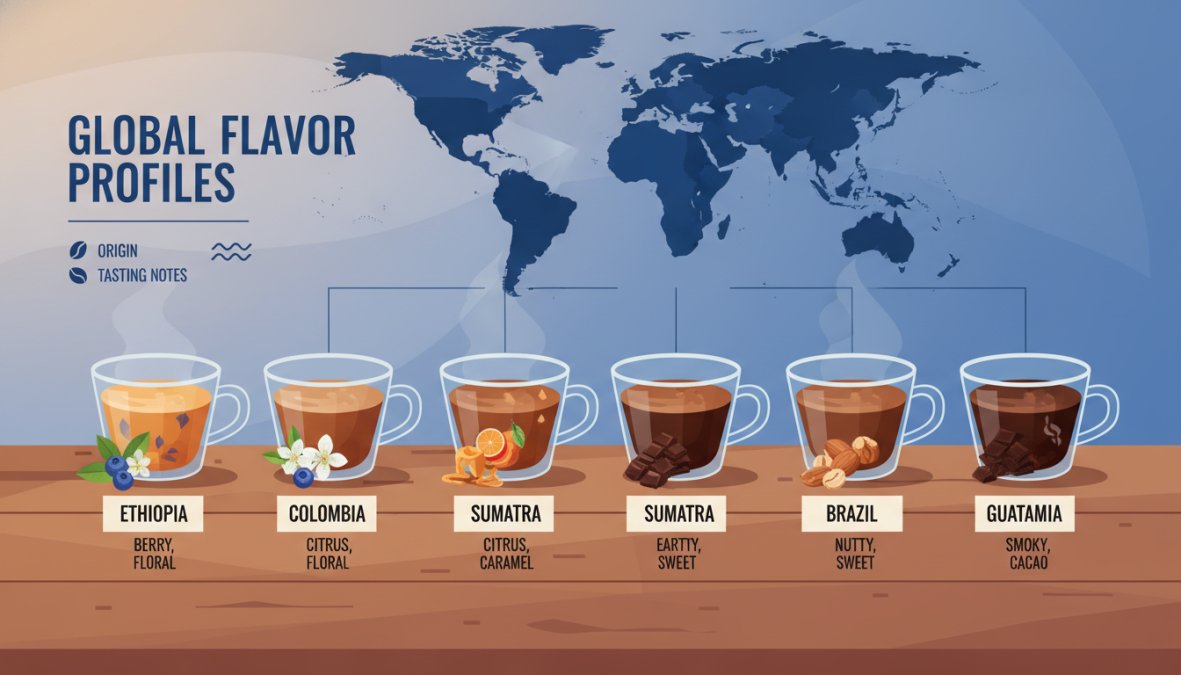
Ethiopia is where coffee originated, and its beans taste like it. Ethiopian coffees, particularly from the Yirgacheffe and Sidama regions, are known for their intense floral aroma, bright acidity, and fruit-forward flavor profiles. Blueberry, jasmine, bergamot, and stone fruit are common tasting notes. Natural-processed Ethiopian coffees tend toward intense berry and wine-like flavors, while washed-process beans show cleaner citrus and floral characteristics.
These are best suited to light roast profiles and delicate brewing methods. Roasting an Ethiopian coffee dark destroys most of what makes it interesting.
Colombia and Guatemala: Balanced and Approachable
Colombia produces some of the most approachable single origin coffees available. The country's varied altitude and climate create beans with medium body, mild acidity, and flavor profiles that lean toward caramel, red fruit, and chocolate. Colombian coffees are forgiving across roast levels and brewing methods, which makes them an excellent starting point for anyone new to single origin exploration.
Guatemalan coffees, particularly from the Antigua and Huehuetenango regions, share some of that balance but add a distinctive brightness and complexity. Expect notes of brown sugar, citrus zest, and dark chocolate. According to the Coffee Quality Institute's origin profiles, Guatemala's high-altitude growing conditions produce beans with exceptional density, which translates to more complex flavor development during roasting.
Sumatra and Costa Rica: Bold Body and Earthy Depth
Sumatra produces some of the most distinctive coffees in the world, and they're not for everyone. Wet-hulled processing gives Sumatran beans a heavy body, low acidity, and earthy, herbal flavor profiles that include cedar, tobacco, dark chocolate, and mushroom. These coffees are exceptional in dark roast profiles and hold up beautifully to milk and cream.
Costa Rican coffees sit between the brightness of African beans and the body of Indonesian ones. They tend toward clean, sweet profiles with notes of honey, tropical fruit, and mild citrus. Costa Rica is one of the few origins that produces high-quality micro-lot coffees at scale, making it a reliable choice for specialty buyers.
How to Choose Single Origin Coffee: Roast Profiles, Tasting Notes, and Brewing Method Matching
This is the part most guides skip entirely, and it's where most people go wrong when they buy single origin coffee online.
Light, Medium, and Dark Roast: What Changes and Why It Matters
Roast level is not just about intensity. It fundamentally changes what flavors survive from the green bean into your cup.
Light roast preserves the most origin-specific characteristics. Higher acidity, more complex and unusual tasting notes, lighter body. Best for coffees from Ethiopia, Kenya, and high-altitude Latin American origins where the terroir is the point.
Medium roast balances origin character with roast development. Acidity softens, body increases, and sweeter, more caramel-like flavors emerge. This is the most versatile roast level and works across most brewing methods. Colombian and Guatemalan beans shine here.
Dark roast emphasizes roast character over origin character. You taste the roasting process more than the farm. Bitterness increases, acidity drops, and smoky or chocolatey notes dominate. Sumatran and Brazilian beans are built for this.
Match Your Bean to Your Brew: Pour Over, Espresso, and French Press
Brewing method matching is the angle that most single origin guides completely ignore, and it matters enormously.
Pour over (Chemex, V60, Kalita): This method highlights clarity and acidity. Light to medium roast Ethiopian, Kenyan, or Colombian beans perform best. The clean extraction reveals floral and fruit notes that other methods muddy.
Espresso: Needs beans with enough body and sweetness to hold up under pressure. Medium to dark roast Colombian, Guatemalan, or Brazilian single origins work well. Avoid very light roast African beans unless you're an experienced barista who enjoys dialing in challenging extractions.
French press: Full immersion brewing produces a heavy, textured cup. This method suits medium to dark roast beans with natural body, like Sumatra or Brazil. The coarser grind size required also means more forgiving extraction.
Grind size matters as much as origin. A correct grind for pour over is completely wrong for French press. If your coffee tastes bitter or sour and you haven't changed anything else, grind size is usually the culprit.
Fair Trade, Organic, and Direct Trade: Understanding Certifications Before You Buy
Certifications are not all equal, and the gap between what a label promises and what it actually delivers for farmers is wider than most coffee marketing suggests. Understanding that gap is the fastest way to shop with real confidence rather than label confidence.
The Three Certifications, Honestly Evaluated
Fair Trade sets a floor price that cooperatives receive per pound of green coffee, regardless of where commodity markets move. That floor protects farmers from the worst commodity crashes, and the social premium paid on top of the minimum price funds cooperative-level projects like schools, clinics, and processing infrastructure. What Fair Trade does not guarantee is cup quality, roaster transparency, or individual farmer income, it operates at the cooperative level, so how the premium is distributed internally varies by organization.
Organic certification (USDA or equivalent) verifies that no synthetic pesticides or fertilizers were used during production. For buyers who prioritize clean agricultural practices or environmental sustainability, this matters. It is worth noting that many small farms at high altitude grow coffee in ways that would qualify as organic but cannot afford the certification process. The absence of an organic label does not automatically mean conventional farming practices were used.
Direct trade is not a third-party certification at all, it is a sourcing relationship model where a roaster buys directly from a farm or cooperative, bypassing the commodity chain. Because there is no governing body, the term is self-reported and unverifiable without additional disclosure. A roaster claiming direct trade relationships should be able to name the farm, the farmer, the price paid per pound, and the length of the relationship. If they cannot, the claim is marketing language.
What Farm-Level Transparency Actually Looks Like
The content gap that almost no coffee retailer fills is showing buyers what transparency looks like in practice, not just claiming it exists. Here is what to look for when evaluating a roaster's sourcing claims:
Minimum disclosure (baseline):
- Country and named region of origin
- Processing method (washed, natural, honey)
- Harvest season or crop year
- Certification status with a verifiable certifying body
Strong disclosure (above average):
- Named farm or cooperative
- Altitude of growing area in meters above sea level
- Variety of coffee plant (e.g., Heirloom, Bourbon, Gesha)
- Roaster's stated relationship length with the producer
Exceptional disclosure (rare, worth seeking out):
- Price paid per pound to the farmer or cooperative, stated explicitly
- Comparison of that price to the Fair Trade floor and the commodity market price at time of purchase
- Named importer or direct sourcing documentation
- Multi-year purchasing commitments that give farmers planning security
Counter Culture Coffee publishes annual transparency reports that include the price paid for every coffee they source, compared against Fair Trade minimums and commodity benchmarks. That level of disclosure is rare in the industry and sets a useful standard for what accountability actually looks like.
The Honest Trade-Off Matrix
| Certification | Protects Farmers From | Does Not Guarantee | Best For Buyers Who... |
|---|---|---|---|
| Fair Trade | Commodity price crashes | Quality, individual farmer income | Want a verified baseline floor |
| Organic | Synthetic input exposure | Sourcing ethics, farmer pay | Prioritize environmental practices |
| Direct Trade (disclosed) | Middleman margin loss | Anything, without supporting data | Are willing to research the roaster |
| No certification | Nothing formal | Nothing formal | Trust roaster transparency over labels |
The honest take: a roaster who publishes the price they paid per pound, names the farm, and has bought from the same producer for three or more consecutive years is doing more for that farmer than a Fair Trade label alone, because long-term purchasing commitments are what allow farmers to invest in quality improvements. But certified organic matters if clean agriculture is your priority, and Fair Trade is still meaningful for cooperatives in volatile markets where the floor price prevents genuine hardship.
As documented in the Fair Trade USA standards overview, Fair Trade certification requires a social premium paid on top of the minimum price, which cooperatives use for community development projects. That is real impact. It is also not the ceiling of what ethical sourcing can look like.
Best Coffee Subscription Services for Single Origin Beans
A coffee subscription is the most practical way to explore single origin coffees consistently without thinking about reordering.
The best subscription for you depends on whether you want curation, variety, or control.
| Service | Starting Price | Best For | Key Strength |
|---|---|---|---|
| Cuppari Coffee | Free US shipping | Fresh-first buyers | Roast-to-order, same-day shipping |
| Trade Coffee | From $16/bag | Beginners | AI-matched flavor recommendations |
| Atlas Coffee Club | From $7 (intro) | Origin explorers | Monthly global rotation with education |
| Counter Culture | Varies by origin | Ethical buyers | Transparent direct trade sourcing |
| Wonderstate Coffee | From $12.50/bag | Organic buyers | Certified organic, direct trade |
| Podium Coffee Club | Varies | Connoisseurs | Award-winning roasters only |
Cuppari Coffee is the strongest choice for buyers who prioritize freshness above everything else. Every order is roasted after it's placed and shipped the same day, with free shipping on all U.S. orders. The sealed capsule format with no oxygen inside means the coffee arrives and stays fresh longer than standard valve-bag subscriptions.
Trade Coffee suits beginners who want expert guidance. The AI-driven quiz matches your flavor preferences to beans from over 50 independent roasters. Quality varies depending on the specific roaster assigned, but the discovery experience is genuinely useful.
Atlas Coffee Club is the best choice for people who want to treat coffee as a form of travel. Each month delivers a single origin from a different country, along with postcards and tasting notes. It's educational and fun, though it prioritizes variety over roaster selection.
Podium Coffee Club is for serious enthusiasts who want competition-grade beans. Every roaster featured has placed in a major U.S. coffee competition. Expect premium pricing to match.
Where to Buy Single Origin Coffee Online: Top Roasters Compared
The roaster you choose matters as much as the origin. Here's how to evaluate your options when you're ready to buy single origin coffee online.
Look for these signals of a quality roaster:
- Roast date on every bag (not "best by" date, which tells you nothing useful)
- Specific origin information: farm name, region, processing method, altitude
- Transparent sourcing: who they bought from and what they paid
- Roast-to-order or small-batch roasting: not roasting weeks in advance for inventory
- Grind options: whole bean is always best, but grind options matter for accessibility
Koffee Kult offers small-batch specialty-grade single origins starting from $24/bag, with detailed flavor notes and origins including Tanzania, Sumatra, and Ethiopia. Radio Roasters lets you filter by region, processing method, and flavor profile, with multiple bag sizes including 2lb and 5lb options for high-volume buyers. Equator Coffees brings a 30-year track record and flexible grind options starting from $18.50/bag.
The thing nobody tells you about buying specialty coffee online is that roast date transparency is the fastest way to filter out mediocre roasters. Any roaster who won't tell you when the coffee was roasted has something to hide.
According to the Specialty Coffee Association's research on consumer trends, demand for traceable, ethically sourced specialty coffee has grown consistently over the past decade, with younger consumers in particular prioritizing origin transparency and sustainability credentials over brand recognition.
Frequently Asked Questions
What is the difference between single origin and blend coffee?
Single origin coffee comes from one specific country, region, farm, or cooperative, which lets the unique terroir and processing method define the flavor. A blend combines beans from multiple origins to create a consistent, balanced taste year-round. Single origin coffees tend to have more distinct, complex tasting notes, like bright acidity from Ethiopia or earthy body from Sumatra, while blends are engineered for reliability and often work well as espresso.
Does buying coffee online ensure it is fresher than buying from a store?
It can be significantly fresher, especially when you buy single origin coffee online from a roaster that uses a roast-to-order model. Cuppari Coffee, for example, roasts beans only after an order is placed and ships the same day. Retail store coffee often sits on shelves for weeks or months after roasting. Buying direct from a specialty roaster online shortens the time between roast and your first brew, which directly impacts aroma, flavor, and body.
How do I choose the best single origin coffee for my taste?
Start by identifying your preferred flavor profile, fruity and bright, chocolatey and smooth, or bold and earthy. Then match that to a region: Ethiopia and Kenya for floral and fruity notes, Colombia or Guatemala for balanced medium roasts, and Sumatra or Costa Rica for heavier body. Next, consider your brewing method, light roasts shine in a pour over while darker roasts hold up well in a French press or espresso. Tasting notes on product pages are your best guide.
What should I look for when buying specialty coffee online?
Look for a roast date rather than a best-by date, fresher is always better. Check whether the roaster uses direct trade or fair trade sourcing, which signals both quality and ethical standards. Review the tasting notes and roast profile to match your brewing method and flavor preferences. For single origin specifically, look for micro-lot or cooperative sourcing details, which indicate traceability. Free shipping, flexible subscription options, and whole bean availability are practical bonuses worth comparing.
Are coffee subscription services worth it for single origin coffee?
Yes, especially if you want consistent access to freshly roasted, ethically sourced beans without reordering manually. Subscription services like those offered by Cuppari Coffee and others let you set a delivery cadence that matches your consumption rate. Many subscriptions also rotate origins, which is a great way to explore different regions and roast profiles. Look for subscriptions that allow you to customize roast level, grind size, and bag size to get the most value.
Most people settle for stale, anonymous coffee because sourcing something better feels complicated. It isn't. Cuppari Coffee roasts every order fresh, ships the same day with free U.S. delivery, and seals beans in oxygen-free capsules so what arrives at your door is genuinely at peak flavor. Add to cart and taste the difference that roast date actually makes.
This article was written using GrandRanker