

Table of Contents
- Why Coffee Direct to Consumer Brands Beat the Grocery Aisle
- Free Shipping Thresholds Compared: Which D2C Roasters Deliver for Less
-
Top 10 Coffee Direct to Consumer Brands Ranked for 2026
- 1. Cuppari Coffee - Best for Same-Day Roast and Free Shipping
- 2. Trade Coffee - Best for Exploring Independent Roasters
- 3. Atlas Coffee Club - Best for Single-Origin Discovery
- 4. Blue Bottle Coffee - Best for Premium Consistency
- 5. Death Wish Coffee - Best for High-Caffeine Dark Roasts
- 6. MistoBox - Best for Personalized Curation
- 7. Onyx Coffee Lab - Best for Specialty Micro-Lots
- 8. Bean Box - Best for Pacific Northwest Craft Coffee
- 9. Stumptown Coffee Roasters - Best for Reliable Craft Blends
- 10. Driftaway Coffee - Best for Beginners Finding Their Flavor Profile
- Best Coffee Subscription Services: Key Features to Look For
- Coffee Subscription Benefits That Go Beyond Convenience
- Brewing Method Compatibility Guide: Matching Your Beans to Your Brewer
- How to Choose a Coffee Subscription That Fits Your Lifestyle
- Conclusion
Last Updated: May 17, 2026
Grocery store coffee is a compromise most people make out of habit, not preference. Coffee direct to consumer brands have fundamentally changed that equation, and Cuppari Coffee sits at the center of this shift: roasting beans only after your order is placed and shipping the same day. The result is coffee that arrives days, not months, after roasting. Below, we rank the top 10 D2C coffee brands for 2026, compare free shipping thresholds, and show you exactly how to match your beans to your brewing setup.
Here's what most buying guides get wrong: they treat free shipping as a bonus feature rather than a signal of a brand's commitment to the customer relationship. The brands that offer it unconditionally tend to be the ones most confident in their product.
Why Coffee Direct to Consumer Brands Beat the Grocery Aisle
Supermarket coffee has a dirty secret. By the time a bag reaches the shelf, the beans inside may have been roasted weeks or months earlier. Oxidation has already done its damage. The flavor profile you paid for is largely gone.
Direct-to-consumer coffee brands solve this by collapsing the supply chain. There is no distributor, no regional warehouse, no retail shelf. Beans go from the roastery to your door, often within 48-72 hours of roasting. The difference in cup quality is not subtle.
According to Specialty Coffee Association's industry research, freshness is the single greatest predictor of perceived coffee quality among home brewers. Beans consumed within two weeks of their roast date consistently score higher on flavor intensity and aroma than beans consumed later.
Freshness Guarantee vs. Roast Date: What Actually Matters
A freshness guarantee is a brand's promise that coffee will taste fresh when it arrives. A roast date is a verifiable timestamp that tells you exactly when the beans were processed.
These two things are not the same, and the difference matters more than most buyers realize.
Many brands advertise "freshness guaranteed" without disclosing their roast date. That language is marketing, not a commitment. A roast date printed on the bag is a commitment. Cuppari Coffee takes this further: every order is roasted after it is placed, making the roast date and the order date essentially identical. That is the gold standard.
Free Shipping Thresholds Compared: Which D2C Roasters Deliver for Less
Free shipping thresholds vary widely across coffee direct to consumer brands, and the gap between "free with any order" and "free over $75" is significant for regular buyers. Most buying guides list brands without doing the math. This section does the math.
The table below consolidates the actual conditions under which each major D2C roaster ships for free, the approximate entry-level bag price, and what a buyer realistically spends per month to qualify, or avoid qualifying, for free shipping.
| Brand | Free Shipping Condition | Approx. Bag Price | Monthly Spend to Qualify | Notes |
|---|---|---|---|---|
| Cuppari Coffee | Free on all U.S. orders | Varies by product | $0 minimum | No subscription required |
| Trade Coffee | Subscription orders only | ~$16-$22/bag | Subscription required | One-time purchases may incur fees |
| Atlas Coffee Club | Included in subscription | ~$9-$16/bag | Subscription required | Introductory offers as low as ~$7 |
| Blue Bottle Coffee | Subscription orders only | ~$17-$22/bag | Subscription required | One-time orders carry a shipping fee |
| Bean Box | Subscribers only | ~$19-$24/bag | Subscription required | 12 oz bags; store credit accrues |
| Death Wish Coffee | Threshold-based or promotional | ~$15-$20/bag | Varies by promotion | Check current threshold before ordering |
| Stumptown Coffee Roasters | Threshold-based | ~$16-$20/bag | Varies by order size | Threshold fluctuates; confirm at checkout |
| Onyx Coffee Lab | Threshold-based | ~$18-$28/bag | Varies by order size | Premium micro-lots push average order higher |
| MistoBox | Plan-dependent | ~$16-$24/bag | Plan-dependent | Basic vs. Deluxe tiers have different terms |
| Driftaway Coffee | Included in subscription | ~$16/bag | Subscription required | 8 oz bags; smaller than industry standard |
What the Pattern Actually Tells You
Nine of the ten brands above either require a subscription or a minimum spend to unlock free shipping. That is not a coincidence. Subscription gating serves a business purpose: it locks in recurring revenue and justifies the logistics cost. For the brand, it is rational. For the buyer who wants to try a single bag before committing, it is a real friction point.
The practical consequence: if you order one bag per month from a threshold-based brand and that bag costs $18, you may pay $5-$8 in shipping on top, adding 28-44% to your effective per-bag cost. Over a year, that is $60-$96 in shipping fees on coffee you could have received free elsewhere.
The 'Comparison of Free Shipping Thresholds' Gap Competitors Miss
Most review sites treat free shipping as a binary yes/no feature. The more useful frame is total delivered cost per ounce of coffee. A brand charging $19 for a 12 oz bag with free shipping delivers coffee at roughly $1.58/oz. A brand charging $15 for a 10 oz bag plus $6 shipping delivers coffee at $2.10/oz, 33% more expensive despite the lower sticker price.
For buyers ordering two or more bags per month, unconditional free shipping compounds into meaningful savings. For occasional buyers, one bag every six to eight weeks, the subscription requirement at most brands means either over-ordering to hit a threshold or paying shipping on a smaller order. Neither outcome is ideal.
Cuppari Coffee is the structural outlier here: no minimum, no subscription gate, no promotional condition. For buyers who want to order on their own schedule without optimizing around a threshold, that policy removes a real decision tax.
Top 10 Coffee Direct to Consumer Brands Ranked for 2026
The following rankings weigh roast freshness, shipping policy, variety, and overall value. Each brand was evaluated on what it actually delivers, not just what it promises.
1. Cuppari Coffee - Best for Same-Day Roast and Free Shipping
Cuppari Coffee is the top pick for 2026 because it eliminates the most common failure point in online coffee retail: the gap between roasting and delivery. Every order triggers a fresh roast, and beans ship the same day. No other brand on this list makes both of those guarantees simultaneously.
The selection covers single origin, blends, flavored options, and coffee pods, plus a range of teas. The sealed capsule design keeps oxygen out, which extends freshness after the bag is opened. The improved filter in the pods absorbs more grounds, producing a cleaner, livelier cup.
Free shipping on all U.S. orders means the retail price you see is the price you pay.
Best for: Anyone who wants the freshest possible coffee without committing to a subscription or hitting a spending threshold.
Pros:
- Roast-to-order with same-day shipping
- Free shipping on all U.S. orders, no minimum
- Wide selection including pods, whole bean, and flavored options
One honest limitation: International shipping timelines will vary, so buyers outside the U.S. should check delivery estimates before ordering.
2. Trade Coffee - Best for Exploring Independent Roasters
Trade Coffee connects subscribers with over 55 independent roasters across the U.S., offering access to more than 450 unique coffees. A taste quiz at signup matches your flavor preferences to specific bags, which takes some of the guesswork out of discovery.
Subscriptions start at around $16 per bag. The variety is genuinely impressive, though the sheer number of options can feel overwhelming for buyers who simply want a reliable weekly coffee.
Best for: Enthusiasts who want to explore the full range of American specialty coffee roasting.
3. Atlas Coffee Club - Best for Single-Origin Discovery
Atlas ships a different single-origin coffee each month, sourced from one of more than 50 countries. Each shipment includes tasting notes, origin history, and a postcard from the producing region. It is part coffee subscription, part geography lesson.
Introductory offers start at around $7. Direct trade practices mean farmers receive above-market rates, which matters for buyers who care about supply chain ethics. The limitation is control: you choose a roast level, but not the specific bean.
Best for: Adventurous drinkers who want to learn about coffee origins and global coffee cultures.
4. Blue Bottle Coffee - Best for Premium Consistency
Blue Bottle ships within 48 hours of roasting, covering espresso roast, cold brew, blends, and decaf options. The packaging and presentation are polished, and the quality is consistently high across their lineup. Sustainable and transparent sourcing practices are well-documented.
The trade-off is price. Blue Bottle sits at the higher end of the D2C market, which is worth it for buyers who prioritize a premium, reliable experience over discovery.
Best for: Those who want a consistent, high-end specialty coffee experience delivered on a schedule.
5. Death Wish Coffee - Best for High-Caffeine Dark Roasts
Death Wish Coffee carries USDA Organic and Fair Trade Certified credentials, which is notable for a brand built around bold, high-caffeine blends. Available in whole bean, ground, and single-serve pods, it covers most brewing setups. Subscription options allow for recurring delivery at a discount.
The flavor profile is dark, intense, and consistent. If you prefer light or nuanced roasts, this is not your brand.
Best for: Coffee drinkers who prioritize strength and high caffeine content above all else.
6. MistoBox - Best for Personalized Curation
MistoBox assigns a personal coffee curator to guide your selections from a pool of over 600 coffees across 60+ roasters. The Basic and Deluxe tiers offer different levels of access. Alexa integration is a nice touch for smart home users.
Bags start at around $16. Shipping costs can apply depending on your plan, which puts it at a disadvantage compared to brands with unconditional free shipping.
Best for: Users who want expert guidance rather than making their own selections.
7. Onyx Coffee Lab - Best for Specialty Micro-Lots
Onyx is an award-winning roastery with a reputation for transparency and complex flavor profiles. Their direct trade sourcing is detailed and verifiable, and the educational resources for home baristas are among the best in the industry. Limited micro-lots sell out quickly, so timing matters.
Premium pricing reflects the quality of the sourcing and the craft involved. This is a brand for specialty coffee aficionados who want to know exactly where their beans came from and why they taste the way they do.
Best for: Specialty coffee enthusiasts who value origin transparency and flavor complexity.
8. Bean Box - Best for Pacific Northwest Craft Coffee
Bean Box curates small-batch roasters from Seattle and the surrounding Pacific Northwest region. Subscribers receive 12 oz bags, which is larger than the industry standard, and earn store credit on every order. Free shipping is included for subscribers.
The geographic focus is both the appeal and the limitation. If Pacific Northwest craft coffee is your scene, Bean Box delivers well. If you want global variety, look elsewhere.
Best for: Buyers who want to support independent Seattle-area roasters.
9. Stumptown Coffee Roasters - Best for Reliable Craft Blends
Stumptown offers multiple subscription paths: Roaster's Choice, Blend Shuffle, and Favorite on Repeat. The whole bean focus maximizes freshness, and direct trade relationships with farmers are a core part of their sourcing story. Seasonal single-origin offerings rotate throughout the year.
The one practical note: you need a grinder. Stumptown's whole bean focus means ground coffee options are limited, which is a real consideration for buyers without grinding equipment.
Best for: Fans of established craft coffee who want a flexible, reliable subscription from a respected roaster.
10. Driftaway Coffee - Best for Beginners Finding Their Flavor Profile
Driftaway starts new subscribers with a tasting kit covering five distinct coffee profiles. Your ongoing subscription is then calibrated to what you actually liked. Virtual coffee tastings add an interactive layer that most competitors skip entirely.
Bags are 8 oz, smaller than most competitors. Starting at around $16 per bag, the value proposition is strongest for beginners who need the guided discovery experience rather than buyers who already know what they want.
Best for: New coffee subscribers who want a structured, educational introduction to specialty coffee.
Best Coffee Subscription Services: Key Features to Look For
The best coffee subscription services share a few non-negotiable qualities: fresh-roasted beans, transparent sourcing, and delivery flexibility. Everything else is preference. According to National Coffee Association's annual coffee trends report, subscription coffee consumption has grown steadily among specialty coffee buyers, driven largely by the convenience and freshness advantages over retail.
Grind Options, Roast Levels, and Delivery Frequency
A subscription that doesn't match your brewing setup is a subscription you'll cancel. Before committing, check whether the brand offers:
- Whole bean for maximum freshness (requires a grinder)
- Pre-ground options calibrated to specific brew methods (drip, espresso, French press, pour-over)
- Roast levels from light through dark, with clear flavor descriptions
- Delivery frequency ranging from weekly to monthly, with the ability to pause or skip
Most brands on this list cover all four. Where they differ is in how granular the grind options get. Onyx and Blue Bottle offer detailed guidance on grind settings for specific brewers, which is genuinely useful for home baristas dialing in a new setup.
Organic, Fair Trade Certified, and Sustainability Credentials
Certifications matter, but they tell an incomplete story. Fair Trade Certified ensures farmers receive minimum price guarantees. USDA Organic certification covers growing practices. Rainforest Alliance and Bird Friendly certifications address environmental impact.
Direct trade, which several brands on this list practice, often goes further than any certification by establishing direct relationships with specific farms. The limitation is verifiability: certifications are audited by third parties, while direct trade claims require you to trust the brand's transparency.
Death Wish Coffee holds both USDA Organic and Fair Trade Certified status. Atlas Coffee Club and Stumptown practice direct trade. Onyx Coffee Lab publishes detailed sourcing information for each lot.
Coffee Subscription Benefits That Go Beyond Convenience
Most buyers sign up for a coffee subscription because it is easier than remembering to reorder. That is a fine reason. But the actual benefits run deeper, and two of them are almost never discussed honestly in buying guides: the freshness compounding effect and the environmental calculus of D2C versus retail distribution.
The Freshness Compounding Effect
Subscriptions do something that one-off purchases cannot: they align your delivery cadence with your consumption rate, which means you are consistently brewing from a recently roasted bag rather than a stale one you have been working through for three weeks.
Here is why that matters mechanically. Freshly roasted coffee releases CO2 through a process called degassing, which continues for several days after roasting. During this window, roughly days 4 through 14 post-roast for most roast levels, the bean is at peak flavor expression. Brewing too early (within 24-48 hours of roasting) can produce a hollow, underdeveloped cup because CO2 interferes with extraction. Brewing too late means the volatile aromatic compounds that carry flavor have dissipated.
A well-calibrated subscription keeps you inside that window consistently. A poorly calibrated one, or a one-off purchase from a brand that batch-roasts in advance, means you are often brewing outside it without knowing.
Shipping Sustainability Impact: Why D2C Is the Greener Choice
This is the angle almost no coffee buying guide covers, and it is worth understanding before assuming that home delivery is environmentally costly.
Conventional retail coffee moves through a multi-stage supply chain: origin country to importer, importer to regional distribution center, distribution center to retail warehouse, warehouse to individual store. Each leg adds transport emissions, refrigeration or climate-controlled storage in some cases, and packaging layers designed to survive handling at each transfer point.
D2C shipping consolidates that into a single leg: roastery to customer door. The reduction in intermediate handling also means less secondary packaging, no outer cartons designed for pallet stacking, no shrink wrap for retail display units.
The environmental advantage is not automatic, however. It depends on two variables: last-mile delivery method and packaging choices.
Last-mile delivery is where D2C shipping can lose its environmental edge. A single delivery truck serving 80 stops on an optimized route has a very different per-package footprint than a van making 12 stops in a suburban area. Brands shipping through major carriers on consolidated routes generally perform better here than those using expedited or dedicated delivery services.
Packaging choices either compound or undercut the supply chain advantage. Brands using minimal kraft paper bags with one-way degassing valves and recyclable outer mailers are extending the sustainability benefit. Brands shipping coffee in elaborate gift boxes with tissue paper, plastic inserts, and non-recyclable foam padding are partially offsetting it, regardless of what their sustainability page says.
| Packaging Feature | Environmental Impact | Freshness Impact |
|---|---|---|
| One-way degassing valve | Neutral | Positive, allows CO2 release without oxygen ingress |
| Resealable zipper closure | Positive, reduces waste from secondary storage bags | Positive |
| Kraft paper outer bag | Positive, compostable in most municipal systems | Neutral |
| Foil-lined inner bag | Mixed, extends shelf life but not widely recyclable | Strongly positive |
| Excessive gift packaging | Negative | Neutral |
| Non-resealable bag | Negative, forces immediate transfer to secondary container | Negative |
The Feedback Loop Subscriptions Create
Subscriptions also create a structured feedback loop that one-off purchases do not. When a bag is not working for you, too acidic, too flat, wrong roast level for your brewer, a subscription gives you a natural correction point: the next delivery. Most brands allow you to rate bags, adjust roast preferences, or switch origins between shipments.
This iterative process accelerates palate development in a way that grocery store purchasing cannot. Grocery store coffee offers the same SKUs week after week. A D2C subscription, particularly one with a curation model like Trade Coffee or MistoBox, exposes you to a wider range of origins, processing methods, and roast profiles over a six-month period than most buyers would encounter in years of retail purchasing.
The practical upshot: the buyers who get the most value from coffee subscriptions are not necessarily those who drink the most coffee. They are the ones who use the subscription as a structured way to learn what they actually like, and then dial in a recurring order around that preference.
Brewing Method Compatibility Guide: Matching Your Beans to Your Brewer
The wrong grind for your brewer wastes good coffee. This is one of the most common mistakes new specialty coffee buyers make, and it is entirely avoidable.
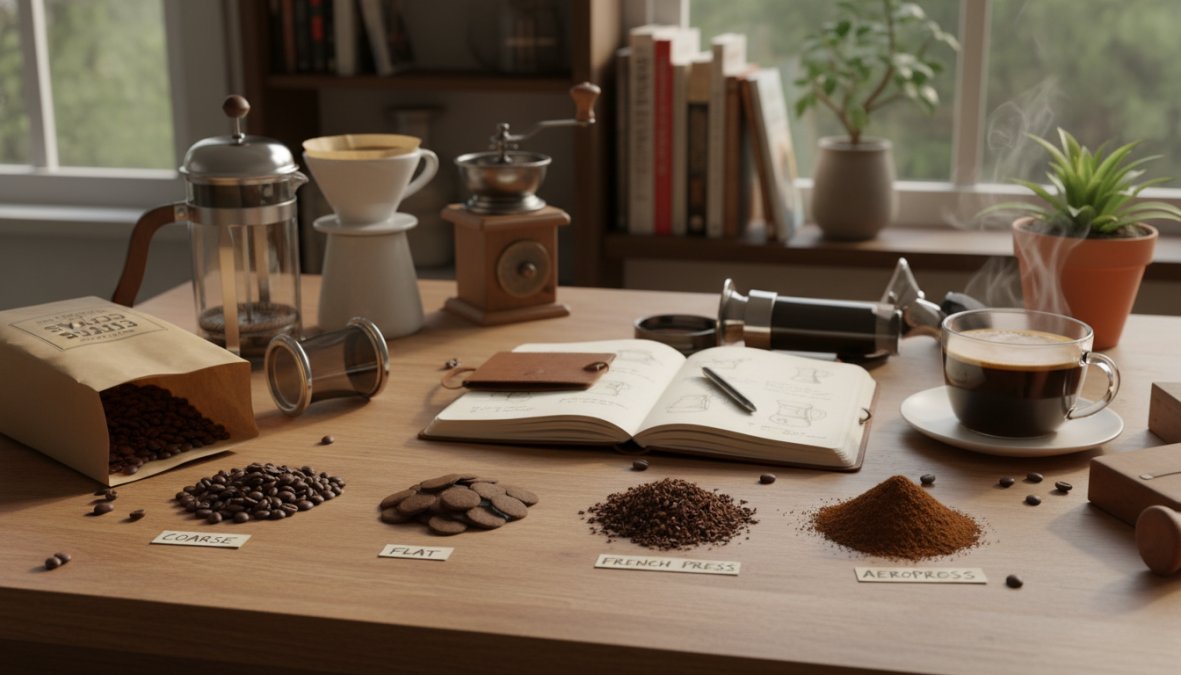
Here is how to match your beans to your setup:
| Brewing Method | Grind Size | Roast Level | Bean Type |
|---|---|---|---|
| Espresso | Extra fine | Medium to dark | Single origin or blend |
| Pour-over | Medium-fine | Light to medium | Single origin |
| French press | Coarse | Medium to dark | Blend or single origin |
| AeroPress | Medium | Any | Versatile |
| Cold brew | Extra coarse | Medium to dark | Blend |
| Drip machine | Medium | Medium | Blend |
A few observations worth noting. Light roasts are more soluble than dark roasts, which means they extract faster. If you are pulling espresso with a light roast, you will likely need to adjust your grind finer and your shot time shorter than standard parameters suggest. Swiss water decaf behaves similarly to its caffeinated equivalent in most brew methods, so decaf drinkers do not need to change their approach.
Single-origin coffees tend to shine brightest in methods that highlight clarity: pour-over, AeroPress, and espresso. Craft blends are engineered to perform consistently across methods, making them the safer choice if you brew multiple ways.
How to Choose a Coffee Subscription That Fits Your Lifestyle
Choosing among coffee direct to consumer brands comes down to three honest questions. How important is freshness to you? How much variety do you want? And what is your tolerance for commitment?
If freshness is the priority, same-day roast-to-ship is the only standard worth accepting. If variety and discovery matter more, a marketplace model like Trade Coffee or MistoBox gives you access to dozens of roasters. If you are new to specialty coffee, a guided experience like Driftaway helps you build preferences before locking into a specific style.
A practical checklist before you subscribe:
- Does the brand publish roast dates on every bag?
- Is free shipping unconditional, or tied to a subscription or minimum?
- Can you pause or skip deliveries without canceling?
- Are grind options available for your specific brew method?
- Does the brand carry certifications (organic, fair trade, Rainforest Alliance) that align with your values?
- Is there a trial option or introductory offer before a full commitment?
The brands that pass all six criteria without caveats are a short list. Most require trade-offs. Knowing which trade-offs matter to you makes the decision straightforward.
As noted in Consumer Reports' guide to coffee subscription services, buyers who evaluate subscriptions against specific personal criteria report significantly higher satisfaction than those who choose based on brand recognition alone. The right subscription is the one built around how you actually drink coffee, not the one with the best marketing.
Frequently Asked Questions
Is coffee from direct to consumer brands fresher than grocery store coffee?
Yes, in most cases. Coffee direct to consumer brands like Cuppari Coffee roast beans only after an order is placed and ship the same day, meaning your coffee can arrive within days of roasting. Grocery store coffee, by contrast, typically sits in warehouses and on shelves for weeks or months before purchase. Checking the roast date on any bag is the most reliable way to gauge freshness, regardless of where you buy.
What are the real benefits of a coffee subscription service?
Coffee subscription benefits go beyond just convenience. Subscribers typically receive freshly roasted beans on a regular delivery frequency they control, often at a discounted retail price compared to one-time purchases. Many services also offer auto-ship flexibility, access to exclusive single-origin or seasonal craft blends, and the ability to customize grind options. Some brands like Bean Box even offer store credit on every order, adding long-term value for regular coffee drinkers.
How do I choose the right coffee subscription for my needs?
Start by identifying your priorities: freshness, variety, price, or brewing method compatibility. If freshness is paramount, choose a roast-to-order brand with a clear roast date policy. If you want exploration, services like Trade Coffee or Atlas Coffee Club offer access to hundreds of single-origin and specialty options. Consider your grinder, whole bean subscriptions require one. Also compare free shipping thresholds, as some brands like Cuppari Coffee offer free shipping on all U.S. orders with no minimum purchase required.
Which D2C coffee brands offer free shipping with no minimum order?
Among the top coffee direct to consumer brands, Cuppari Coffee stands out by offering free shipping on all U.S. orders with no minimum purchase threshold. Other brands may require a subscription enrollment or a minimum spend, typically ranging from $25 to $50, before free shipping applies. Always check the shipping policy page before ordering, as free shipping thresholds and carrier options like USPS Priority or UPS Ground can vary significantly between roasters.
Are direct to consumer coffee brands more sustainable than retail alternatives?
They can be, for several reasons. D2C coffee roasteries often maintain direct trade relationships with farmers, paying above-market prices and supporting fair trade certified and organic coffee practices. Shipping directly from the coffee roastery also eliminates multiple distribution stops, potentially reducing the overall carbon footprint. Brands with certifications like Rainforest Alliance or Bird Friendly signal additional environmental commitments. However, individual shipping of small orders does generate packaging waste, so bulk bag ordering can be a greener choice when available.
Choosing among dozens of coffee direct to consumer brands takes time most coffee drinkers do not want to spend. Cuppari Coffee removes the guesswork: beans are roasted only after your order is placed, shipped the same day, and delivered with free shipping on all U.S. orders. The sealed capsule design and improved filter system mean the freshness you paid for survives all the way to your cup. Add to cart and taste the difference a same-day roast makes.
This article was written using GrandRanker