

Table of Contents
- What Makes a Coffee Bean Ideal for Cold Brew
- Light vs Dark Roast for Cold Brew: Which Wins?
- Cold Brew Coffee Grind Size: The Coarse Grind Rule
- How Long to Steep Cold Brew for Best Flavor
- Single Origin vs Blends: Which Beans for Cold Brew?
- Flavor Profiles and Low-Acidity Benefits of Cold Brew
- Troubleshooting Bitter or Sour Cold Brew
- How to Choose the Right Beans: A Quick Comparison
- Frequently Asked Questions
Last Updated: September 15, 2026
What Makes a Coffee Bean Ideal for Cold Brew
Cold brew coffee is a brewing method that extracts flavor from coffee grounds using cold or room-temperature water over an extended steeping period, typically 12 to 24 hours (Worth the Wait: How Cold Brew Differs from Chilled Hot Brew | 25, Issue 22). The best cold brew coffee beans best type depends on three factors: freshness, roast level, and how the bean was processed. This guide from Cuppari Coffee breaks down exactly what to look for so your next batch tastes smooth, sweet, and never bitter.
Most guides tell you to grab any dark roast and call it a day. That advice is incomplete. Cold water extracts differently than hot water, pulling fewer acids and more of the sugars and aromatic compounds that define a coffee's flavor profile. According to Specialty Coffee Association brewing standards, water temperature directly controls which compounds dissolve into your cup. Cold water simply cannot pull the same harsh, bitter notes that boiling water does, which is why cold brew tastes smoother by default.
But "smoother by default" does not mean every bean works. A stale, low-density bean will produce a flat, lifeless concentrate no matter how long you steep it.
Why Freshness and Roast Date Matter More Than Origin
Freshness beats origin every time. A mediocre bean roasted three days ago will out-perform a prized single origin roasted six months ago, because roasted coffee begins losing aromatic compounds almost immediately through oxidation.
What most guides miss is that "best by" dates tell you nothing. You want the roast date printed on the bag. Coffee hits its peak flavor window roughly 3 to 14 days after roasting for most brewing methods, and cold brew sits comfortably in that range. Beans older than four weeks taste muted regardless of how you brew them.
This is exactly why Cuppari Coffee roasts beans only after an order is placed and ships the same day. You are not buying coffee that sat in a warehouse. You are buying coffee that was green yesterday.
Light vs Dark Roast for Cold Brew: Which Wins?
Medium and medium-dark roasts win for cold brew. They carry enough caramelized sugar and chocolatey undertones to survive a long, cold steep, while still holding onto the fruity or floral notes that a dark roast burns away.
Here is the trade-off most people get wrong:
- Light roast: Bright, fruity, higher acidity. Cold water mutes these delicate notes, so light roasts often taste thin and tea-like in cold brew.
- Medium roast: Balanced sweetness, cocoa and nutty flavors. The sweet spot for most cold brew drinkers.
- Dark roast: Bold, smoky, low acidity. Great for a full-bodied concentrate, but easy to over-extract into bitterness.
Medium Roast: The Balanced Middle Ground
Medium roast is the safest starting point for anyone new to cold brew. It delivers a smooth finish without the sharp edges of a light roast or the heaviness of a dark roast. The Cuppari Coffee Cold Brew Coffee blend is built for exactly this: medium roast with chocolate, toffee, and floral tones that hold up beautifully over ice or in a nitro pour.
If you want a single origin instead, the Honduras medium-dark brings caramel, spice, and brown sugar to the cup. Both sit at $21.99 with free shipping on all U.S. orders.
Cold Brew Coffee Grind Size: The Coarse Grind Rule
The correct cold brew coffee grind size is coarse, roughly the texture of raw sugar or sea salt. Coarse grounds slow the extraction rate, which prevents the bitterness and sediment that fine grounds cause during a long steep.
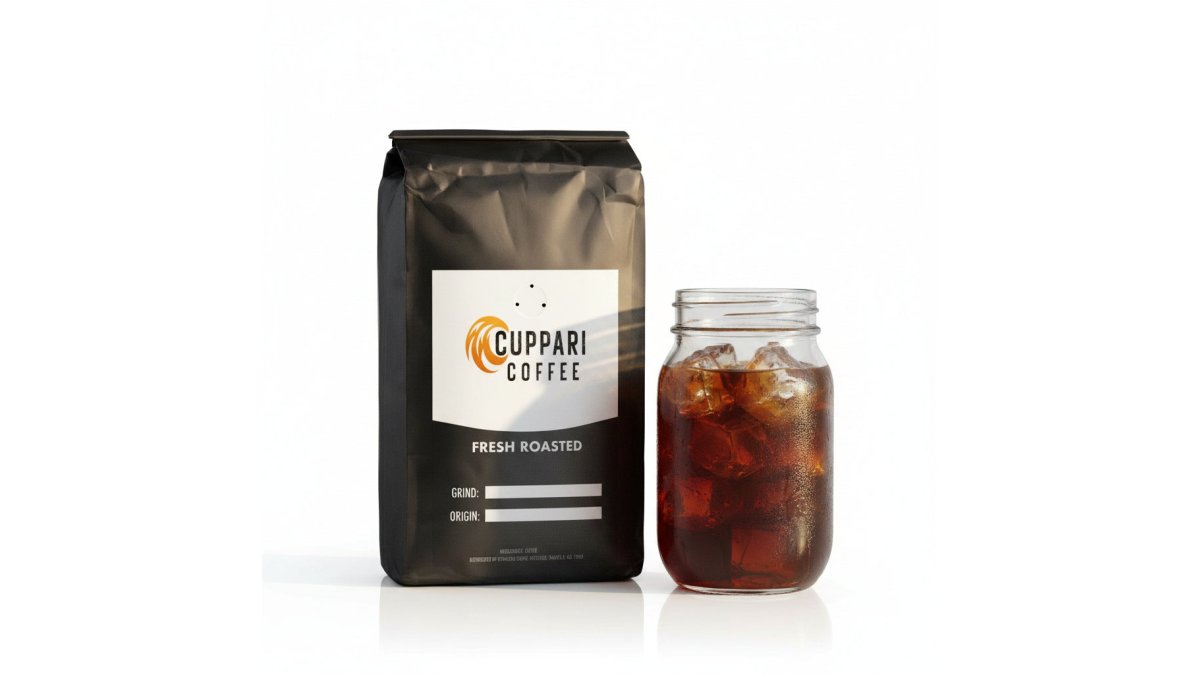
Why does grind size matter so much? Surface area controls how fast water pulls compounds out of the bean. Fine grounds expose more surface, so cold water over-extracts them even at low temperatures, leaving you with a harsh, muddy concentrate. Coarse grounds expose less surface, giving you a clean, sweet result.
A common mistake is using pre-ground coffee meant for drip machines. Those grounds are too fine for immersion methods. Grind fresh, right before brewing, and aim for consistency. An uneven grind means uneven extraction, and you will taste it.
How Long to Steep Cold Brew for Best Flavor
Steep cold brew for 12 to 18 hours at room temperature, or 18 to 24 hours in the refrigerator. Shorter steeps produce a lighter, brighter concentrate; longer steeps push toward a heavier, more full-bodied cup.
The USDA food safety guidance on perishable food handling is worth keeping in mind if you steep at room temperature, since coffee grounds sit in water for many hours. Refrigerator steeping is the safer, slower route and gives you more control over the final flavor.
A simple rule: taste at 12 hours, then every 2 hours after. When the concentrate tastes sweet and rounded rather than sharp, it is done. Strain it, and store it in a sealed container.
Single Origin vs Blends: Which Beans for Cold Brew?
Single origin beans give you flavor clarity and a specific tasting note; blends give you balance and consistency. Neither is objectively better. It depends on whether you want a distinctive cup or a dependable daily concentrate.
Single origin coffees trace to one region, one farm, or one cooperative. That means the flavor profile reflects the soil, altitude, and processing method of that place. The Cuppari Coffee Sumatra, for instance, comes from the Aceh region and delivers dark chocolate, dried fruit, and an earthy, syrupy body that cold water extraction handles exceptionally well.
Blends combine beans from multiple origins to hit a target flavor. The Cuppari Coffee 6 Bean Blend is a dark roast house blend built for consistency, and the Italian Roast is the darkest option in the lineup, a slow-roasted Arabica and Robusta blend.
Cuppari Coffee Picks for Cold Brew
| Bean | Roast Level | Tasting Notes | Best For |
|---|---|---|---|
| Cold Brew Coffee | Medium | Chocolate, toffee, floral | Straight cold brew or nitro |
| Bali Blue | Medium Dark | Dark chocolate, molasses, brown sugar | Rich, sweet concentrate |
| Honduras | Medium-Dark | Caramel, spice, brown sugar | Smooth daily cold brew |
| Sumatra | Medium | Dark chocolate, dried fruit, earthy | Full-bodied, low-acidity cups |
| 6 Bean Blend | Dark | Bold, house blend | Espresso and strong cold brew |
| French Roast | Dark | Smoky, Central American blend | Bold, low-acid concentrate |
| Italian Roast | Darkest | Intense, slow-roasted | Maximum strength concentrate |
Every option above is $21.99, roasted after you order, and shipped the same day.
Flavor Profiles and Low-Acidity Benefits of Cold Brew
Cold brew coffee is naturally lower in acidity than hot-brewed coffee because cold water extracts fewer of the acids that heat pulls out. That low acidity is the main reason cold brew appeals to people who find regular coffee harsh on their stomach.
The flavor profiles you get depend heavily on the bean. Chocolatey undertones come from darker roasts and beans grown at higher altitudes. Nutty and caramel notes show up in medium roasts from Central America. Fruity and floral notes live in lighter roasts and certain African and Indonesian origins.
Bean density matters here too. Beans grown at higher altitude are denser, and denser beans tend to have more concentrated sugars and a more complex flavor. The Cuppari Coffee Bali Blue comes from smallholder farms at 1,200 to 1,600 meters, which is part of why it tastes so rich.
Processing methods also shape flavor. Washed process coffees, like the Honduras, taste cleaner and brighter because the fruit is removed before drying.
Troubleshooting Bitter or Sour Cold Brew
How to Choose the Right Beans: A Quick Comparison
Frequently Asked Questions
Is light or dark roast better for cold brew?
Dark roast often works better for cold brew because its lower acidity and deeper chocolatey, caramel notes come through clearly during cold water extraction. Light roasts can taste sour or grassy if steeped too long because their bright, fruity acids extract differently at low temperatures. That said, medium roasts offer a balanced middle ground. For a smooth, full-bodied cup, start with a medium-dark or dark roast like Cuppari's Cold Brew Coffee blend.
Does the grind size matter for cold brew coffee?
Grind size is critical. Cold brew requires a coarse grind, similar to sea salt or raw sugar, because cold water extracts slowly. A fine grind will over-extract, creating bitterness and a muddy texture that's hard to filter. A too-coarse grind under-extracts, leaving you with weak, watery coffee. Aim for consistency across all particles; a burr grinder produces the most even coarse grind for cold brew.
Can you use any coffee beans for cold brew?
Technically yes, but the best results come from beans roasted for cold extraction. Freshly roasted beans, ideally within 3-7 days of the roast date, produce the most flavorful cold brew because they still contain aromatic compounds that cold water can pull out. Stale or old beans taste flat. Single origin beans like Sumatra or Bali Blue offer distinct tasting notes, while blends provide consistency. Cuppari roasts and ships the same day for peak freshness.
Why is freshly roasted coffee better for cold brew?
Freshly roasted coffee retains more aromatic compounds and oils that cold water extracts over 12-18 hours. Beans roasted weeks or months ago have already oxidized, losing sweetness and gaining stale, cardboard-like flavors. For cold brew, the 3-7 day post-roast window is ideal: the beans have degassed enough to avoid excessive foam but still hold peak flavor. Cuppari Coffee roasts only after you order and ships the same day, so your beans arrive in that sweet spot.