

Table of Contents
- Why Fair Trade Organic Coffee Bean Subscriptions Beat Grocery Aisle Bags
- Fair Trade Organic Coffee Bean Subscriptions Compared: Pricing and Value
- Organic vs Conventional Coffee Beans: What the Certification Changes
- How to Store Coffee Beans for Maximum Freshness After Delivery
- Coffee Subscription Frequency Guide: Matching Delivery to Your Brew Routine
- Direct Trade vs Fair Trade: Reading Beyond the Label
- Frequently Asked Questions
Last Updated: September 11, 2026
Why Fair Trade Organic Coffee Bean Subscriptions Beat Grocery Aisle Bags
Grocery store coffee is built for shelf life, not flavor: the bag may have been roasted months before you open it, and by the time it hits your grinder, the oils that carry aroma have faded. Fair trade organic coffee bean subscriptions solve this by shipping freshly roasted beans to your door within days of roasting.
This guide breaks down what the certifications mean, and how to store and brew your beans so nothing goes to waste.
The freshness gap is the whole argument. According to guidance from the National Coffee Association, coffee is at its peak flavor within a short window after roasting and declines steadily afterward. A grocery bag with a "best by" date tells you nothing about when the beans were roasted. A subscription that roasts to order tells you everything.
The Freshness Gap: Roast Date vs. Shelf Date
Roast date is the day the beans were roasted; shelf date is a manufacturer's estimate of how long the product stays sellable, completely different things.
Most supermarket bags print only a "best by" date, which can be a year out, that tells you the coffee is safe, not fresh. A roaster that ships to order, like Cuppari Coffee, roasts only after an order is placed and ships the same day, so your bag is days old, not months.
A common mistake is assuming a vacuum-sealed bag stays fresh indefinitely. Once roasted, coffee releases carbon dioxide and loses volatile aromatics; sealing slows the decline but doesn't stop it.
What Fair Trade and Organic Certification Actually Guarantee
Fair Trade certification guarantees producers receive a minimum price and a social premium for community projects. USDA organic certification guarantees the coffee was grown without prohibited synthetic pesticides and fertilizers.
These are separate claims: Fair Trade addresses supply-chain economics, organic addresses how the crop was grown. A bag can carry one without the other, so "fair trade organic" means both standards were met.
The USDA Agricultural Marketing Service organic standards define what organic certification requires for imported coffee. For the trade side, Fair Trade Certified's producer standards outline the pricing and premium structure. Neither label, on its own, tells you anything about roast freshness. That's a separate question, and it's the one subscriptions exist to answer.
Fair Trade Organic Coffee Bean Subscriptions Compared: Pricing and Value
The best fair trade organic coffee bean subscriptions balance roast freshness, delivery flexibility, and price per ounce.
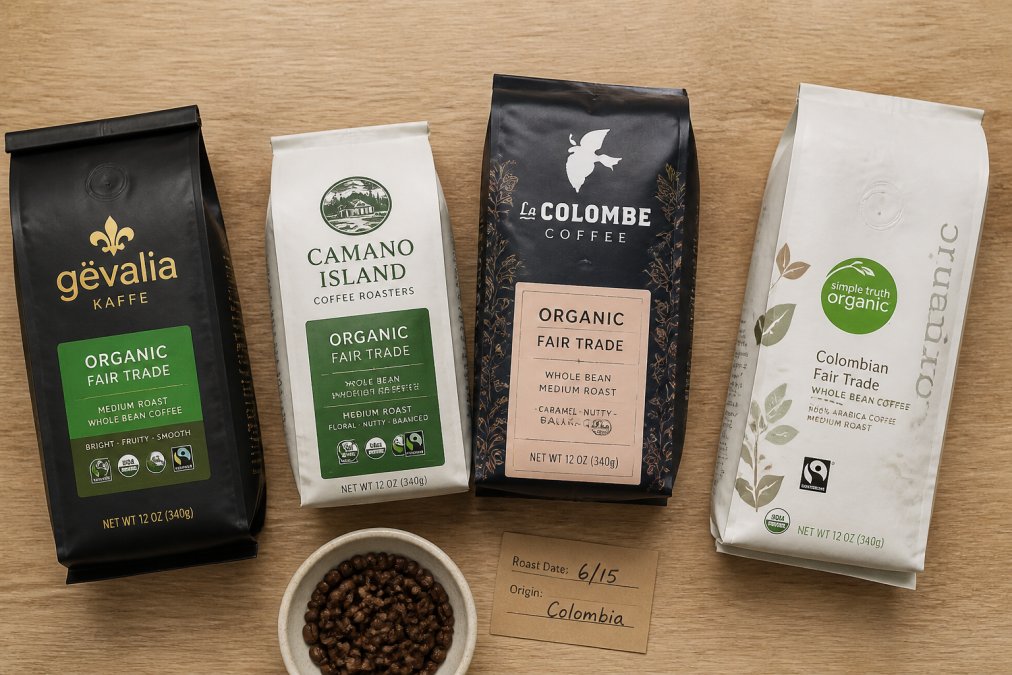
| Subscription | Starting Price | Best For | Free Shipping |
|---|---|---|---|
| Cuppari Coffee | Visit site for current pricing | Freshness-first buyers | Yes, all U.S. orders |
| Equator Coffees Curated | $20.00 | Single-roaster loyalty | Varies |
| Purity Coffee | Contact for pricing | Health-focused drinkers | Varies |
| Grounds for Change | Contact for pricing | Exploring origins | Yes, included |
| Verena Street | $16.00 | Everyday value | Varies |
| Omar Coffee Estate | $11.15 | Lowest entry price | Varies |
Cuppari Coffee
Cuppari Coffee controls the time between roast and delivery. Beans are roasted only after an order is placed and ship the same day, a meaningful difference from roasters who batch-roast weekly.
The lineup covers single origin, blends, flavored coffee, and pods, with free shipping on all U.S. orders. The trade-off: plan ahead rather than grabbing a bag on the way home.
Equator Coffees Curated Subscription
Purity Coffee Subscription
Grounds for Change Coffee of the Month
Verena Street Fair Trade Subscription
Omar Coffee Organic Fair Trade Estate Subscription
Organic vs Conventional Coffee Beans: What the Certification Changes
The practical difference between organic and conventional coffee beans comes down to production rules, not flavor guarantees. Organic certification prohibits certain synthetic pesticides and fertilizers; conventional coffee can be grown with them, subject to regulatory limits.
Certification doesn't guarantee a better cup: a poorly roasted organic bean tastes worse than a well-roasted conventional one. Buy organic for the growing practices, and judge the roaster on freshness and roasting skill.
"Non-GMO" and "bird-friendly" are also separate claims from organic, bird-friendly relates to shade-grown practices that preserve habitat. None substitute for a roast date.
How to Store Coffee Beans for Maximum Freshness After Delivery
Most storage advice assumes one bag. A subscription changes the math: you may receive two, three, or four bags at once, and the last won't be opened for weeks. That's a logistics problem, not a jar problem.
The enemies are the same three, oxygen, moisture, and heat, but the strategy must account for time. Here's how to handle a shipment so the final bag tastes nearly as good as the first.
The Freshness Clock Starts at Roast, Not Delivery
Coffee releases carbon dioxide for several days after roasting, then loses the volatile compounds that carry aroma. A one-way valve bag lets CO2 escape without letting oxygen in, which is why the original bag often outperforms a decorative jar. Most roasters target roughly two to four weeks post-roast for peak drinking; keep unopened bags from aging faster than they need to.
Stagger Your Openings
If a shipment arrives with multiple bags, resist opening all of them to compare, every broken seal lets oxygen in and accelerates the clock. Open one bag at a time, leave the rest sealed in their original valve bags, and label each with its roast date so you open the oldest first.
Freeze What You Won't Open Within Two Weeks
For bags you won't touch for two weeks or more, freezing is a legitimate tool, not the villain it's made out to be. The rules:
- Freeze whole bean only, never ground
- Use an airtight, opaque container or the original valve bag with the air pressed out
- Freeze in portions you'll finish in about a week, so you thaw once, not repeatedly
- Thaw sealed at room temperature before opening, to prevent condensation on the beans
- Don't refreeze
The mistake is pulling a bag out, scooping, and putting it back, that cycle introduces moisture every time. Portioning solves it.
What to Skip
- The fridge. It's humid, and coffee is hygroscopic, it pulls moisture and odors from whatever's nearby.
- Clear countertop jars. Light degrades oils. If you want beans on display, keep a small amount out and store the rest sealed.
- Grinding ahead. Ground coffee stales in days, not weeks. Grind per brew.
- Bulk buying beyond your cadence. A great price per ounce is worthless if the last bag is six weeks old when you open it.
A Simple Rotation System
- On delivery, write the roast date on each bag if it isn't printed.
- Move the oldest unopened bag to the front.
- Open only one bag at a time.
- Freeze anything you won't open within two weeks, portioned for a week at a time.
- Adjust your next delivery interval based on how much you actually finished.
That last step is the feedback loop most subscribers never close. If an unopened bag is routinely sitting around when the next shipment lands, your cadence is too fast, and no storage trick fixes a timing problem.
Coffee Subscription Frequency Guide: Matching Delivery to Your Brew Routine
"How often should I get coffee delivered?" determines whether a subscription feels like a convenience or a pile of aging bags. The answer is arithmetic: start with how many cups you drink, convert to grams, and work backward to bag size and interval.
The Math Most People Skip
A standard dose for a brewed cup is roughly 10 grams of coffee per 6 ounces of water. Espresso pulls about 18 to 20 grams per double shot. A 12-ounce bag holds about 340 grams. That means:
- One 6-oz drip cup per day: ~10 g/day → a 12-oz bag lasts about 34 days
- Two 6-oz cups per day: ~20 g/day → a 12-oz bag lasts about 17 days
- One 16-oz mug per day: ~27 g/day → a 12-oz bag lasts about 12 to 13 days
- One double espresso per day: ~18 g/day → a 12-oz bag lasts about 19 days
- Two double espressos per day: ~36 g/day → a 12-oz bag lasts about 9 to 10 days
Those numbers assume no waste. Dialing in espresso, purging a grinder, or dumping a bad shot adds grams fast, espresso drinkers typically burn through beans 20 to 30 percent faster than the raw math suggests.
Match the Interval to the Freshness Window
The tension: you want each bag to arrive fresh but finish it before it fades. If peak flavor sits in the first two to four weeks post-roast, your interval should land inside that window.
A practical rule: set your interval to the days a bag lasts, minus a few days of buffer. If a 12-oz bag lasts 17 days, a two-week cadence keeps you in fresh coffee without a backlog; if it lasts 34 days, monthly is closer, but check whether the roaster ships to order or batch-roasts, since a monthly bag from a batch roaster may already be a week old on arrival.
How Brew Method Changes the Math
Different methods extract differently, affecting both dose and how a roast performs:
- Pour-over and drip: medium roasts are forgiving and consistent; dose is easy to control, so your bag lasts predictably.
- Espresso: darker roasts pull more consistently on most home machines, and you'll use more grams per cup. If espresso is your daily driver, size up your bag or shorten your interval.
- Cold brew: uses a high coffee-to-water ratio, often 1:4 to 1:8 by weight for concentrate, so a single batch can consume 100 grams or more. Plan on larger bags or a faster cadence; lighter roasts taste thin in cold brew, while medium and dark hold up better.
- French press: coarse grind, full immersion, similar dose to drip but often a larger cup. Medium roasts work well.
If you brew more than one way, weight your plan toward your most-used method and treat the others as occasional.
Sizing Your Plan by Household
- Solo, one cup a day: 12-oz bag every 3 to 4 weeks
- Solo, two cups a day: 12-oz bag every 2 weeks, or a 2-lb bag monthly
- Two people, two cups each: two 12-oz bags every 2 weeks
- Weekend-only brewing: 12-oz bag every 4 to 6 weeks
- Espresso household: size up one bag tier or shorten the interval by about a week
Use the First Two Cycles to Calibrate
Don't lock in an untested cadence. Most services let you pause, skip, or change frequency, so start with a longer interval than you think you need. After the second delivery, check how many days the bag actually lasted and whether unopened bags were sitting around when the new one arrived. If so, stretch the interval; if you ran out and bought grocery coffee to bridge the gap, tighten it.
The goal isn't the cheapest per-ounce price, it's finishing every bag while it's still near peak. A subscription that delivers more coffee than you can drink fresh is just an expensive pantry.
Direct Trade vs Fair Trade: Reading Beyond the Label
Direct trade and Fair Trade are not the same thing. Fair Trade is a third-party certification with defined pricing and premium requirements. Direct trade is a looser term roasters use for buying straight from producers, often at above-market prices, but without a universal certifying body.
Neither is automatically "better." Fair Trade offers verifiable standards and independent auditing; direct trade can allow closer roaster-farm relationships, but the terms depend entirely on the roaster's transparency. When a bag says "direct trade" with no certification, judge it by whether the roaster publishes where the beans came from and what they paid.
Supply chain transparency separates serious roasters from marketing. Look for named farms, regions, or cooperatives rather than vague origin claims.
Frequently Asked Questions
Which fair trade organic coffee bean subscription is the best?
There is no single best option because it depends on what you value most. If freshness is the priority, Cuppari Coffee roasts only after you order and ships the same day. If you want health-focused testing, Purity Coffee screens beans for mold and mycotoxins. If budget matters most, Omar Coffee offers estate-grown fair trade organic beans at a lower monthly rate. Compare roast dates, bag sizes, and delivery flexibility before committing.
What does Fair Trade certification actually guarantee for coffee farmers?
Fair Trade certification sets a minimum price floor for coffee and adds a community development premium paid on top of that price. It also requires cooperatives to meet labor and environmental standards. For shoppers, the label signals that small-scale farmers received a baseline payment regardless of market swings. It does not guarantee a specific roast profile or flavor, so you still need to check tasting notes and roast date separately.
How do I determine the right frequency for a coffee bean subscription?
Start with how much you actually brew. A typical 12-ounce bag yields about 16 to 20 cups depending on your ratio. If you drink two cups a day, that is roughly one bag per week. Most services let you choose every one, two, or four weeks. Pick a slower cadence first, then adjust once you see how fast you go through a bag. Pausing or skipping is easier than catching up on surplus.
How can I tell if a coffee subscription is truly organic?
Look for the USDA Organic seal on the bag or the product page, not just the word organic in marketing copy. USDA certification requires third-party inspection of growing and processing conditions. Some roasters, like Purity Coffee, go further and publish contaminant testing results. If a subscription claims organic without the seal or a certifying body listed, treat that claim with caution and ask the roaster directly.
Choosing a fair trade organic coffee bean subscription comes down to trusting that your beans are fresh when they arrive, not just ethically sourced. Cuppari Coffee roasts only after you order and ships the same day, with free shipping on all U.S. orders, single origin and blend options, and sealed pods that keep oxygen out. If freshness is the reason you're switching, get started with Cuppari Coffee and taste what a genuinely fresh roast delivers.