

Table of Contents
- Why Flavored Coffee Beans Fresh Roast Quality Matters
- Natural vs Artificial Coffee Flavoring: What You Need to Know
- Shop Flavored Coffee Beans by Flavor Profile and Roast Level
- Best Brewing Methods for Flavored Coffee
- How to Store Flavored Coffee Beans for Maximum Freshness
- Cleaning Your Coffee Grinder After Flavored Beans
- Whole Bean vs Ground, Subscriptions, and Shipping Policies
- Conclusion
Last Updated: May 14, 2026
Choosing flavored coffee beans fresh roast quality is the single biggest factor separating a genuinely satisfying cup from one that tastes artificial, flat, or stale. At Cuppari Coffee, we roast every order to order and ship the same day, which means the beans arriving at your door haven't been sitting in a warehouse for weeks. Below, this guide covers everything from the science of degassing to brewing techniques, storage, and how to choose the right flavor profile for your taste preferences. The part most guides skip entirely is ingredient transparency, and that's where we start.
Why Flavored Coffee Beans Fresh Roast Quality Matters
Freshness is not a marketing term. It's a chemical reality that directly affects how your coffee tastes.
Roasted coffee beans begin releasing carbon dioxide immediately after leaving the roaster, a process called degassing. During this window, the bean's volatile aromatic compounds are most active. Flavor infusion applied to freshly roasted beans bonds more effectively with the bean's open cellular structure, which is why a fresh roast carries flavor notes more cleanly into the cup than a bean roasted weeks prior.
The practical implication: flavored coffee beans that have been sitting on a retail shelf for 30, 60, or 90 days deliver a noticeably duller aroma and a thinner mouthfeel. The specialty coffee community has documented this extensively, and according to the Specialty Coffee Association's research on coffee freshness, roasted coffee begins losing its peak aromatic profile within days of roasting if not properly sealed.
A common mistake is assuming all bagged coffee is equally fresh. Roast dates tell the real story. If a bag doesn't list a roast date, that's a signal worth paying attention to.
The Degassing Window: Why Freshness Changes Everything
The degassing window for flavored coffee beans typically spans 24-72 hours post-roast for optimal brewing. During this period, CO2 escaping the bean can actually interfere with extraction if you brew too early, which is why a brief rest period of 12-24 hours is often recommended before your first brew.
Here's the part that changes how you think about freshness: flavored beans have a narrower optimal window than unflavored beans. The flavor compounds applied during the infusion process are more volatile than the bean's natural oils. This means a fresh roast flavored bean brewed at day two or three will deliver noticeably more vivid notes than the same bean brewed at day 30.
Natural vs Artificial Coffee Flavoring: What You Need to Know
Most buyers don't realize how much the flavoring method affects the final cup, and the industry does a poor job of making this clear.
Natural coffee flavorings are derived from real food sources: vanilla extract from vanilla beans, hazelnut oil from actual hazelnuts, caramel from heated sugars. Artificial flavorings are synthesized compounds designed to mimic these profiles. Both are applied as a coating or spray to the roasted bean surface, but the similarity ends there.
Natural flavorings tend to produce a more complex, layered aftertaste that integrates with the bean's own flavor notes. Artificial flavorings often deliver a sharper, more one-dimensional hit up front that fades quickly. For medium roast arabica beans, where the base flavor is already nuanced, natural flavoring complements rather than overwhelms.
Ingredient Transparency and What to Look for on the Label
Ingredient transparency in flavored coffee is genuinely poor across the industry. Many roasters list only "natural and artificial flavors" without specifying the source compounds, allergen potential, or whether the flavoring is kosher-certified.
What to look for on any flavored coffee label:
- Roast date: Not a "best by" date. An actual roast date.
- Flavoring type: "Natural flavors" vs. "artificial flavors" vs. both.
- Bean origin: Single-origin arabica beans carry more distinct base notes that interact with flavoring differently than commodity blends.
- Kosher certification: Relevant for some buyers and a general quality signal.
- Caffeine content: Flavoring does not affect caffeine, but some buyers assume flavored = decaf.
According to the FDA's guidelines on natural flavor labeling, "natural flavor" is a defined regulatory term that still covers a broad range of derived compounds. Reading labels critically matters more than trusting marketing language.
Shop Flavored Coffee Beans by Flavor Profile and Roast Level
The best way to approach a flavored coffee selection is to start with roast level, then layer in flavor profile. Roast level determines the bean's body, acidity, and base notes. Flavor profile determines the aromatic direction. But there is a third variable most guides ignore entirely: what you plan to eat or drink alongside the coffee, and what time of day you are brewing it. Matching flavor profile to context is the difference between a cup that feels intentional and one that just tastes like flavored coffee.
 arabica beans spilling out beside them, warm natural light casting soft shadows](https://cdn.grandranker.com/articles/flavored-coffee-beans-fresh-roast-the-complete-buyers-guide-content-1-1778722194.jpg)
Light and Medium Roast Flavored Beans
Light and medium roast flavored beans are where the most interesting combinations live. The bean's natural brightness and acidity are preserved at these roast levels, which means fruity or floral flavoring notes can complement rather than fight the base profile.
Common flavor pairings that work well at medium roast:
- Vanilla: rounds out the natural sweetness of Central American arabica; pairs well with buttery pastries, shortbread, or a plain croissant at morning
- Hazelnut: pairs with the nutty undertones already present in Brazilian beans; works alongside granola, almond biscotti, or a mid-morning snack
- Caramel: amplifies the natural caramel notes that develop during medium roasting; best alongside salted caramel desserts or as an afternoon pick-me-up without food
- Cinnamon or spice blends: add warmth without overpowering the bean's acidity; pair naturally with apple-based pastries or oatmeal in the morning
For drip or pour-over brewing, medium roast flavored beans are the most forgiving and broadly appealing. The gourmet small-batch approach, where roasters apply flavoring to single-origin beans rather than commodity blends, produces the most complex results because the base bean already carries distinct terroir notes that interact with the flavoring rather than simply carrying it.
Bold Body and Dark Roast Options
Dark roast flavored coffee occupies a different sensory territory. The roasting process itself creates bold body, low acidity, and deep chocolate or smoky base notes. Applied flavoring at this roast level needs to be assertive to register above the bean's natural intensity.
Flavors that perform best on dark roast:
- Chocolate or mocha profiles: the roast's natural bitterness and the cocoa notes reinforce each other; pair with dark chocolate, tiramisu, or a post-dinner dessert
- Toasted coconut: the sweetness cuts through the roast's depth without competing; works well as an afternoon or early evening cup
- Amaretto or almond: the nuttiness echoes the roast's own low-acidity sweetness; pairs with marzipan, almond cake, or biscotti
- Peppermint: assertive enough to register on a dark base; best as a seasonal evening cup, particularly effective as a dessert substitute
The mouthfeel of a dark roast flavored bean is noticeably heavier than its light or medium counterparts. If you are brewing with a French press or espresso machine, dark roast flavored beans deliver a more satisfying cup than they would through a paper filter, which strips some of the oils responsible for that bold body.
A Practical Flavor Pairing Guide by Time of Day
This is the angle most flavored coffee guides skip entirely. Flavor perception changes across the day because your palate is influenced by what you have already eaten, your caffeine baseline, and even ambient temperature. Matching your flavored coffee to the time of day is not a gimmick, it is a practical way to get more out of every cup.
| Time of Day | Recommended Flavor Profile | Roast Level | Why It Works |
|---|---|---|---|
| Early morning (before food) | Vanilla, cinnamon, light citrus | Light to medium | Gentle sweetness eases into the day without overwhelming an empty palate |
| Morning with breakfast | Hazelnut, caramel, maple | Medium | Complements savory and sweet breakfast foods without clashing |
| Mid-morning (second cup) | Chocolate, mocha, toasted nut | Medium to dark | Richer profiles satisfy when the novelty of the first cup has worn off |
| Afternoon | Coconut, caramel, spice blends | Medium to dark | Sweeter, heavier profiles work as a mild dessert substitute |
| Evening (if drinking decaf) | Peppermint, amaretto, chocolate | Dark | Bold flavors hold up in decaf, which has a slightly thinner body than caffeinated |
Seasonal Blends, New Arrivals, and Best Sellers
Seasonal flavors represent some of the most creative work in the specialty coffee space. Pumpkin spice, peppermint mocha, and eggnog blends are the obvious examples, but the more interesting seasonal releases tend to reflect regional harvest profiles: a summer citrus blend built around a light Ethiopian arabica, or a winter spice blend on a dark Guatemalan base.
Best sellers in flavored coffee consistently cluster around familiar, approachable profiles, vanilla, hazelnut, and caramel, because they are the lowest-risk entry points for buyers who are new to flavored coffee. New arrivals are worth watching if you have worked through the classics, as small-batch roasteries release limited seasonal blends that will not appear on a standard menu and often sell out before most buyers notice them.
The practical move is to use best sellers as your baseline and treat new arrivals as experiments. Order a 6-ounce or 12-ounce bag of a new arrival alongside your usual order so you are not committed to a full quantity of something untested.
Best Brewing Methods for Flavored Coffee
The brewing method you choose for flavored coffee matters more than most guides acknowledge.
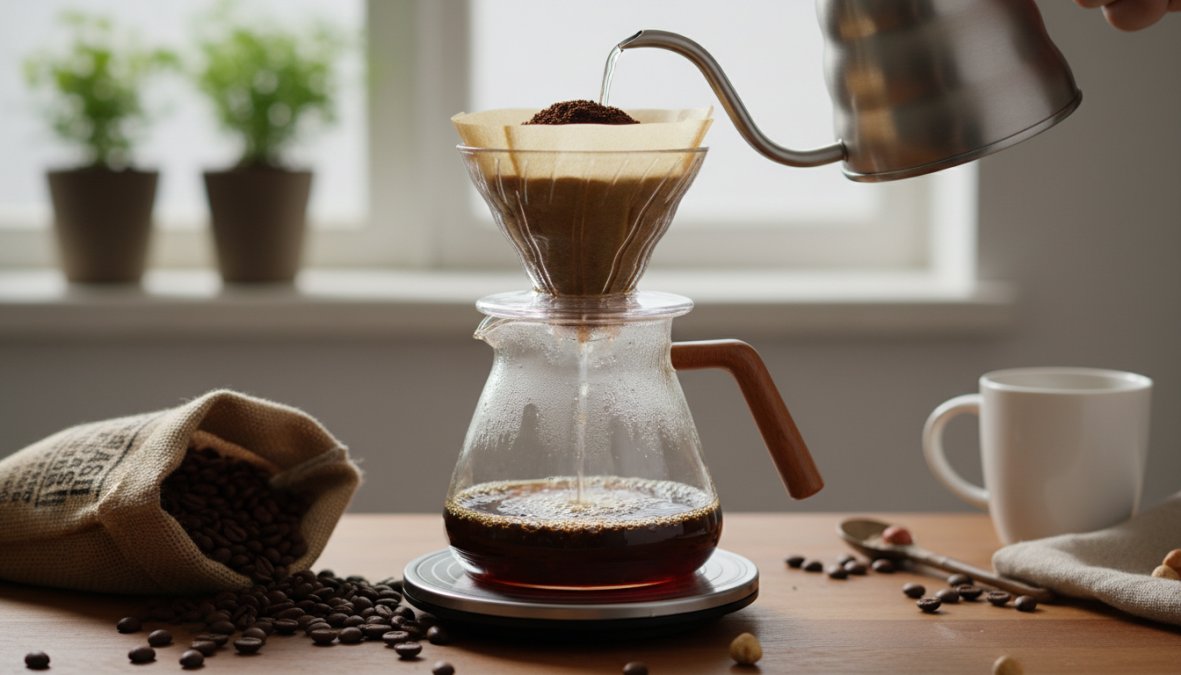
Flavored coffee beans carry volatile aromatic compounds on the bean's surface. Brewing methods that use paper filters (drip, pour-over, Chemex) will absorb some of these surface oils, which slightly mutes the flavoring intensity but produces a cleaner cup. Immersion methods like French press and cold brew preserve more of the surface oils, producing a more aromatic, flavor-forward result.
Recommended brewing approaches by flavor intensity goal:
| Method | Flavor Intensity | Body | Best For |
|---|---|---|---|
| French Press | High | Full | Bold, dark roast flavors |
| Cold Brew | Medium-High | Full | Sweet, dessert-style profiles |
| Pour-Over | Medium | Light-Medium | Delicate, floral, or fruity notes |
| Drip Machine | Medium | Medium | Everyday drinking, broad profiles |
| Espresso | High | Full | Chocolate, caramel, nut profiles |
Water temperature also plays a role. Flavored beans extract their applied compounds at slightly lower temperatures than unflavored beans. Brewing at 195°F rather than 205°F reduces the risk of over-extracting the flavoring, which can produce a bitter or chemical aftertaste.
Flavor Pairing Guide: Matching Brewing Style to Flavor Notes
The real difference between a good cup of flavored coffee and a great one often comes down to matching the brewing method to the specific flavor note, not just the roast level.
Vanilla and caramel profiles shine brightest in cold brew. The extended extraction time (12-24 hours at room temperature) draws out sweetness while minimizing bitterness, and the result tastes closer to a dessert beverage than a standard coffee. Hazelnut and chocolate profiles work best in a French press or espresso, where the full-body extraction amplifies the richness. Fruit-forward or floral profiles, like citrus or hibiscus blends, are best served through a pour-over, where the cleaner extraction lets the lighter notes come through without muddiness.
How to Store Flavored Coffee Beans for Maximum Freshness
Improper storage is the most common reason flavored coffee disappoints. The flavoring compounds on the bean's surface are more susceptible to oxidation, moisture, and light than the bean's natural oils, which means the storage rules that apply to regular coffee apply even more strictly here.
The core storage principles for flavored coffee beans:
- Airtight container: Oxygen is the primary enemy. A valve-sealed bag or airtight ceramic canister prevents oxidation.
- Room temperature: The refrigerator introduces moisture and absorbs odors into the bean. Store at room temperature, away from the stove or direct sunlight.
- Avoid freezing whole bags: Freezing is acceptable only if you portion the beans into single-use amounts before freezing. Repeated freeze-thaw cycles degrade both the bean and the applied flavoring.
- Buy in smaller quantities: A 12-ounce bag consumed within 10-14 days will always outperform a 2-pound bag consumed over six weeks.
Shelf life for properly stored flavored coffee beans is roughly 2-3 weeks from roast date at peak flavor, and up to 4-6 weeks before the experience becomes noticeably flat. This is shorter than unflavored beans because the surface flavoring compounds degrade faster than the bean's internal oils.
According to the National Coffee Association's coffee storage guidance, the primary storage enemies for all roasted coffee are oxygen, moisture, heat, and light, in that order of impact.
Cleaning Your Coffee Grinder After Flavored Beans
This is the section most buyers skip, and it causes real problems.
Flavored coffee beans leave residue in your grinder's burrs and grinding chamber. This residue contains the flavor compounds applied to the bean surface, and those compounds will transfer to your next grind. If you switch from a hazelnut flavored bean to a single-origin Ethiopian, your Ethiopian will taste like hazelnut for the first several grinds.
The cleaning process for flavored beans is straightforward but requires consistency:
- Run a small amount (10-15 grams) of unflavored beans through the grinder after finishing a flavored batch. Discard the output.
- Use a dry brush to sweep the grinding chamber and burrs after each flavored grind session.
- For deeper cleaning, grinder cleaning tablets (rice-based or commercial products) absorb oils and residue more effectively than dry brushing alone.
- Clean the grounds bin and chute with a dry cloth. Avoid water on burrs, which causes rust in metal burr sets.
A common mistake is assuming that a quick brush is sufficient after grinding strongly flavored beans. Vanilla and coconut in particular leave persistent residue that dry brushing alone won't fully remove. The cleaning tablet approach every 2-3 uses is the more reliable solution.
Whole Bean vs Ground, Subscriptions, and Shipping Policies
These three decisions, bean form, delivery cadence, and shipping expectations, are where most buyers make the choices that determine whether their flavored coffee experience is consistently good or inconsistently disappointing. Each deserves a direct answer rather than a general recommendation.
Whole Bean vs. Drip Ground: The Freshness Math
The whole bean versus drip ground decision has a straightforward answer for flavored coffee specifically: whole bean wins on freshness by a wider margin than it does for unflavored coffee, and the reason is surface area.
When a flavored bean is ground, the applied flavor compounds, which are concentrated on the bean's outer surface, are suddenly distributed across thousands of tiny particles. Each of those particles has exposed surface area that is now in direct contact with oxygen. Oxidation of flavor compounds is what produces the flat, chemical, or artificial aftertaste that gives flavored coffee a bad reputation. A whole bean keeps those compounds protected inside a much smaller total surface area until the moment you grind.
The practical difference in shelf life after opening:
- Whole bean flavored coffee: peak flavor window of 10-14 days after opening the bag, with acceptable quality extending to roughly 3 weeks if stored correctly
- Drip ground flavored coffee: peak flavor window of 5-7 days after opening, with noticeable degradation beginning around day 10
If you own a burr grinder, even an entry-level hand grinder, choose whole bean every time. If you do not own a grinder, drip ground is a perfectly acceptable choice provided you consume the bag within one week of opening and store it in an airtight container between uses. Blade grinders are not recommended for flavored beans because the heat generated by the blade accelerates oxidation of the surface flavor compounds during the grind itself.
Grind Size and Flavored Coffee: One Adjustment Worth Making
Most guides do not mention this: flavored coffee benefits from a slightly coarser grind than you would use for the same roast level in an unflavored bean. The flavor compounds on the surface extract faster than the bean's internal compounds, so a coarser grind slows the overall extraction rate and prevents the flavoring from over-extracting ahead of the bean's natural oils. Over-extraction of the surface flavoring is the primary cause of the bitter or chemical aftertaste that some people associate with flavored coffee.
As a starting point, if you normally grind at a medium setting for drip, try one step coarser when switching to a flavored bean of the same roast level. Adjust from there based on taste.
Subscription and Auto-Delivery Benefits
A subscription model is the most practical structural solution to the freshness problem for flavored coffee. The core issue is that freshness degrades on a fixed timeline regardless of how carefully you store the beans. Buying a large quantity at once and stretching it over two months guarantees a declining experience. A subscription calibrated to your actual consumption rate means every bag arrives close to its roast date.
The benefits of a flavored coffee subscription:
- Consistent freshness: beans arrive within days of roasting rather than weeks, which is the single highest-impact variable in cup quality
- Cost savings: most roasters offer a meaningful discount on subscription orders compared to one-time purchases
- No reordering friction: running out of coffee and substituting with a retail shelf bag is the most common way specialty coffee drinkers accidentally drink stale coffee
- Flexibility: reputable subscription programs allow you to pause, skip, or swap flavors without penalty, which matters when seasonal blends rotate in and out
The key variable is calibrating delivery frequency to your actual consumption rate. A household consuming one 12-ounce bag per week needs weekly delivery. A household consuming one bag per month needs monthly. Getting this wrong in either direction creates waste from over-ordering or forces you to stretch stale beans from under-ordering.
A useful calibration method: track how many days it takes you to finish your current bag. If it takes more than 14 days, you are buying more than you can consume at peak freshness. Adjust your subscription quantity or frequency accordingly.
Gift Cards, Gifting Options, and Free U.S. Shipping
Flavored coffee makes a genuinely strong gift because it is approachable for non-coffee-enthusiasts and interesting enough for specialty coffee drinkers. The challenge with gifting flavored coffee is flavor preference: what you enjoy may not match what the recipient expects. Gift cards solve this problem entirely by letting the recipient choose their own profile, roast level, and bean form.
For gifting a specific product rather than a gift card, whole bean is the better choice over drip ground for two reasons. First, it signals intentionality, whole bean coffee communicates that the giver thought about the gift rather than grabbing the most convenient option. Second, it stays fresh longer during transit and in the recipient's home before they open it, which matters if the gift is being shipped or held before a birthday or holiday.
Cuppari Coffee offers free shipping on all U.S. orders, which removes the economic friction that makes small, frequent orders feel impractical. Because every order is roasted after placement and shipped the same day, a gift order arrives as fresh as a personal order. The sealed packaging with a one-way degassing valve keeps oxygen out through transit, so the recipient experiences the same quality as if they had picked it up directly from the roastery.
For recipients who are new to specialty coffee, a medium roast vanilla or hazelnut whole bean is the most universally safe choice. For recipients who already drink specialty coffee, a seasonal or single-origin flavored bean is a more interesting gift that they are unlikely to have already tried.
Frequently Asked Questions
How are flavored coffee beans made?
Flavored coffee beans are typically coated with flavoring compounds, either natural or artificial, shortly after roasting, while the beans are still slightly warm. This allows the oils and flavor agents to bond to the bean's porous surface. Natural flavorings come from real food sources like vanilla extract or hazelnut oil, while artificial versions use synthesized compounds. The best results come from applying flavor infusion to freshly roasted small-batch arabica beans, preserving both aroma and mouthfeel.
What is the best roast level for flavored coffee beans?
Medium roast is generally considered the ideal roast level for flavored coffee beans. A medium roast preserves the bean's natural sweetness and body without the heavy char notes of a dark roast, which can overpower delicate flavor additions like vanilla or caramel. Light roasts can work well for fruity or floral flavor profiles. If you prefer a bolder body with flavoring, a medium-dark roast strikes a strong balance between rich aroma and distinct flavor notes.
How long do flavored coffee beans stay fresh, and how should I store them?
Fresh roasted flavored coffee beans are generally at peak quality within 2 to 4 weeks of the roast date. To maximize shelf life, store whole bean coffee in an airtight container away from direct sunlight, heat, and moisture. Avoid the refrigerator, as condensation can degrade flavor. A cool, dark pantry is ideal. Because flavored beans carry additional oils from the flavoring process, they can go stale slightly faster than unflavored beans, making freshness-guaranteed roasting and quick shipping especially important.
Do flavored coffee beans damage coffee grinders?
Flavored coffee beans can leave oily residue inside your grinder over time, which may affect the grind quality and transfer flavor to your next batch. After grinding flavored beans, run a small amount of plain unflavored beans through the grinder to purge residue, then wipe the burrs and hopper with a dry cloth. For deeper cleaning, use a grinder cleaning tablet or brush. Cleaning your coffee grinder after flavored beans regularly helps preserve both grinder performance and flavor integrity.
Does flavored coffee contain sugar or calories?
Most flavored coffee beans do not contain added sugar. The flavor is typically derived from flavoring oils or extracts applied to the bean surface, not from sweeteners. This means a straight cup of flavored coffee brewed from quality beans is generally calorie-free, just like regular black coffee. However, it is worth checking ingredient transparency on the label, as some lower-quality products may include additives. Always review the ingredient list if you follow a specific dietary plan or have sensitivities.
What is the difference between natural and artificial coffee flavorings?
Natural coffee flavorings are derived from real food or plant sources, for example, real vanilla bean extract or roasted hazelnut oil. Artificial flavorings are chemically synthesized to mimic those same tastes. In practice, both can produce excellent aroma and flavor notes, but natural flavorings are often preferred by specialty coffee drinkers who prioritize ingredient transparency and a cleaner aftertaste. When shopping for flavored coffee beans fresh roast, look for brands that clearly disclose their flavoring process and sourcing on the packaging.
This article was written using GrandRanker