

Table of Contents
- What Makes Coffee Fresh
- Coffee Roast Date Importance Explained
- How to Store Coffee Beans for Freshness
- How to Tell If Coffee Is Stale
- Best Online Coffee Subscription Services
- What Separates Truly Fresh Coffee from Grocery Store Options
- Conclusion
Last Updated: August 9, 2026
What Makes Coffee Fresh
Coffee begins losing peak flavor the moment roasting ends. Within the first week, beans release carbon dioxide through degassing, a natural process essential to flavor development. A bag roasted three days ago tastes dramatically different from one roasted three weeks ago, even if stored identically.
What separates truly fresh coffee from stale beans is one critical factor: the roast date on the bag. Unlike expiration dates, which indicate safety, roast dates tell you when the coffee was actually at its best.
The Role of Roast Dates in Freshness
A roast date tells you exactly when beans transitioned from green (unroasted) to brown (roasted). From that point forward, the clock starts ticking on flavor quality. The roast date is more useful than any "best by" label because it gives you objective information about how old the coffee actually is.
Cuppari Coffee understands this principle so thoroughly that every order is roasted only after you place it and shipped the same day. This guarantees the shortest possible time between roasting and your cup. Most specialty roasters roast in batches days or weeks in advance, then ship when they have orders. Made-to-order roasting eliminates the waiting period entirely.
Understanding Degassing and Peak Flavor
Degassing is the process where roasted coffee beans release trapped carbon dioxide. This happens most intensely during the first 24-48 hours after roasting. Peak flavor typically arrives around day 3-7 after roasting, when enough gas has escaped for proper extraction but the beans haven't yet begun oxidizing and losing their bright, complex flavors.
After two weeks, oxidation accelerates. The oils in the beans begin breaking down, and flavor becomes muted and flat. By four weeks, most nuanced character is gone. Understanding this timeline explains why fresh coffee costs more and tastes better, it's chemistry, not marketing.
Coffee Roast Date Importance Explained
The coffee roast date importance cannot be overstated when you're serious about flavor. Every day that passes after roasting, the coffee degrades slightly. This is inevitable.
Roast Date vs. Best By Date
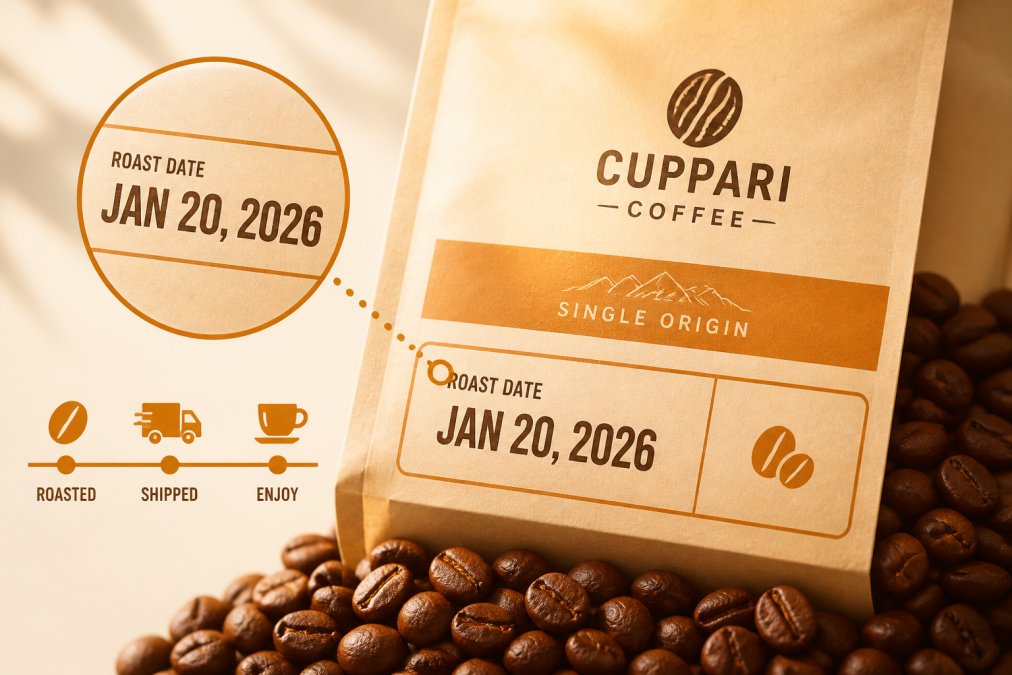
A roast date tells you when the coffee was roasted. A best by date tells you when the manufacturer thinks you should stop drinking it. These are completely different pieces of information.
Best by dates are conservative estimates designed to protect the brand legally. A coffee marked "best by December 2026" might have been roasted in August 2026. Roast dates are factual, they're the actual date the beans went into the roaster. Once you know the roast date, you can make your own judgment about freshness.
When shopping, ignore the best by date entirely and focus on the roast date. If two bags have the same best by date but different roast dates, the one roasted more recently is always the better choice.
The 3-7 Day Sweet Spot
The 3-7 day window after roasting is when specialty coffee tastes best. Days 1-2 have too much gas remaining, making extraction inconsistent. Days 3-7 are ideal: degassing has slowed enough for proper water extraction, but oxidation hasn't yet accelerated significantly. You taste what the roaster intended, bright, balanced acidity with full body and clean finish.
Days 8-14 show accelerating oxidation and fading complexity. Days 15+ taste flat and one-dimensional. This timeline assumes proper storage; exposure to air, heat, or light speeds up oxidation dramatically.
How to Store Coffee Beans for Freshness
How to store coffee beans for freshness is the second most important factor after the roast date itself. The enemies are air, light, heat, and moisture.
Airtight Containers and One-Way Valves
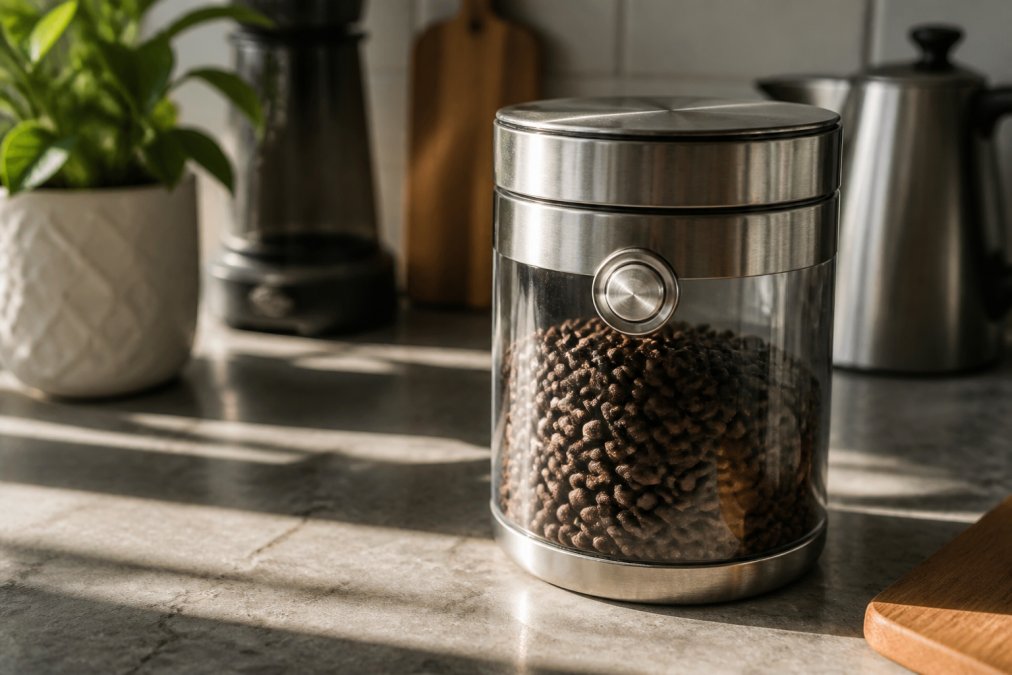
An airtight container is non-negotiable. Oxygen causes oxidation. A simple ziplock bag is better than nothing, but it's not ideal. A proper airtight container should be opaque and seal completely. Stainless steel is better than plastic because it doesn't absorb odors or flavors.
One-way valves let carbon dioxide escape without letting oxygen in. This is useful during the first few days after roasting when degassing is most active. Some coffee canisters, for example, include a patented plunger lid that actively removes oxygen, extending freshness longer than a standard airtight container.
Temperature and Light Protection
Heat accelerates oxidation. Coffee stored in a warm kitchen degrades faster than coffee stored in a cool pantry. Ideally, store beans between 60-70°F. A cool, dark pantry is perfect. The refrigerator is not ideal because temperature fluctuations and moisture can cause condensation inside the container.
Light, especially direct sunlight, speeds up degradation. This is why quality coffee comes in opaque bags. Never store coffee above the stove or near any heat source. The best storage location is a cool, dark pantry or cabinet.
How to Tell If Coffee Is Stale
How to tell if coffee is stale requires paying attention to several sensory clues. Stale coffee doesn't taste dangerous, it just tastes boring and flat.
Visual and Aroma Indicators
Fresh coffee beans have a rich, complex aroma. Stale beans smell muted or even slightly musty. Visually, fresh beans have a slight sheen from the oils in the bean, especially in darker roasts. Stale beans look dull and dry. If beans have visible mold, discoloration, or any off-smell, discard them.
Taste and Extraction Clues
The most reliable indicator is how the coffee tastes and brews. Fresh coffee extracts evenly with a vigorous bloom. Stale coffee blooms weakly and tastes flat and one-dimensional, lacking acidity and body. If the coffee tastes significantly less interesting than the first cup from that bag, it's staling.
Best Online Coffee Subscription Services
Best online coffee subscription services vary based on what you prioritize: speed of delivery, variety, education, or consistency. The key differentiator is how quickly beans reach you after roasting.
Same-Day Roast and Ship Model
The fastest model roasts coffee after receiving your order and ships it the same day. Cuppari Coffee operates on this model, every order is roasted only after you place it and shipped the same day. This eliminates the typical delay where roasters batch-roast and then ship orders days later, delivering coffee at peak freshness within 3-5 days post-roast.
Blue Bottle Coffee Subscription delivers coffee within 24-48 hours of roasting, and Atlas Coffee Club sources from different origins each month with tasting notes and origin information. Freshness is good but not as guaranteed as same-day roast models.
Subscription Flexibility vs. One-Time Purchases
Most subscription services require a commitment on a regular schedule. One-time purchases give you complete control but often cost more per bag than subscription pricing.
The best choice depends on your consumption rate. If you drink coffee daily and go through a bag every two weeks, a subscription makes sense economically. If you drink sporadically, one-time purchases are smarter. Cuppari Coffee offers both options, with free shipping applying to both.
What Separates Truly Fresh Coffee from Grocery Store Options
What separates truly fresh coffee from grocery store options is the entire supply chain. Grocery store coffee, even specialty brands, sits in distribution warehouses and on shelves for weeks or months. By the time you buy it, it's already past peak flavor.
Small Batch Roasting and Direct Trade
Small batch roasting means the roaster prepares smaller quantities more frequently, allowing them to roast to order or roast just before shipping. Direct trade means the roaster sources beans directly from farmers, cutting out middlemen and often translating to higher quality beans and more transparency.
Grocery store coffee comes from commodity supply chains. Beans are roasted weeks in advance, then distributed through multiple warehouses before reaching stores. The flavor difference is significant, a direct trade, small batch coffee roasted days ago tastes brighter, more complex, and more interesting than a commodity coffee roasted weeks ago.
Whole Bean vs. Ground: The Freshness Difference
Whole beans stay fresh longer than ground coffee because grinding increases surface area, which accelerates oxidation. Ground coffee exposed to air begins degrading within minutes. Within hours, significant flavor loss occurs.
If you buy ground coffee, even if roasted recently, you're starting at a disadvantage. Grind beans yourself immediately before brewing for maximum freshness. Whole bean coffee, stored properly, maintains peak flavor for 2-3 weeks post-roast. Ground coffee, even stored perfectly, begins noticeably degrading within days.
This is why serious coffee drinkers always buy whole beans. Cuppari Coffee ships whole beans by default, with coffee pods available for convenience. The pods use sealed capsules with no oxygen inside, which preserves freshness similarly to whole beans in an airtight container.
| Freshness Factor | Whole Beans (Proper Storage) | Ground Coffee (Proper Storage) | Grocery Store (Typical) |
|---|---|---|---|
| Peak flavor window | 2-3 weeks post-roast | 3-7 days post-grind | Often already past peak |
| Oxidation rate | Slow | Fast | Very fast |
| Requires equipment | Grinder | None | None |
| Best for flavor | Espresso, pour-over, French press | Drip machines | Convenience only |
Frequently Asked Questions
How long does coffee stay fresh after the roast date?
Coffee reaches peak flavor 3-7 days after roasting, once degassing is complete. Whole beans stay fresh for 2-4 weeks in an airtight container, though flavor gradually declines. Ground coffee loses freshness within days. Freezing can extend shelf life to several months, but flavor quality diminishes over time. The roast date matters more than any 'best by' date printed on the bag.
What is the difference between 'best by' dates and 'roasted on' dates?
The roast date tells you exactly when the beans were roasted and is the most reliable freshness indicator. A 'best by' date is a manufacturer estimate, often vague and sometimes printed months after roasting. For the freshest coffee, prioritize the roast date. Coffee is best consumed within 2-4 weeks of roasting, regardless of what a 'best by' label claims. Always ask for or check the actual roast date before purchasing.
Should I buy whole bean or ground coffee for maximum freshness?
Whole beans stay fresh significantly longer than pre-ground coffee. Grinding increases surface area, causing rapid oxidation and flavor loss within hours. For maximum freshness, buy whole beans and grind just before brewing. If you must buy ground coffee, use it within a few days. This is why specialty roasters emphasize whole bean sales and why freshness-focused subscriptions deliver beans rather than grounds.
How can you tell if coffee beans are actually fresh?
Fresh beans have a vibrant aroma and visible oils on the surface (especially a few days post-roast). Stale beans smell flat or musty. When brewed, fresh coffee produces a rich crema (for espresso) and fuller body with balanced acidity. Stale coffee tastes thin, bitter, or muted. Check the roast date on the bag first, if it's older than 4 weeks, the beans are past peak, regardless of appearance.
The freshest coffee you can buy comes down to one principle: the shorter the time between roasting and your cup, the better the coffee tastes. Cuppari Coffee delivers on this by roasting only after you order and shipping the same day, guaranteeing you receive coffee at peak freshness with free shipping on all U.S. orders. This eliminates the weeks-long delay of traditional retail and ensures you experience the full complexity and brightness that specialty coffee offers.
This article was written using GrandRanker