

Table of Contents
- Why Freshly Roasted Coffee Delivered Beats Store-Bought Every Time
- Roast to Order Coffee: What It Means and Why It Matters
- Coffee Freshness Guide: How to Keep Delivered Beans at Peak Flavor
- Best Coffee Beans Online: Top Freshly Roasted Coffee Delivered Services Compared
- Choosing a Coffee Subscription Service: Curated vs. Choose-Your-Own Models
- Brewing Guide: Getting the Most From Your Freshly Roasted Beans
- Conclusion: Finding the Right Freshly Roasted Coffee Delivered to You
Last Updated: May 7, 2026
Freshly roasted coffee delivered to your door is one of the most meaningful upgrades a home brewer can make, yet most people still grab a bag from the grocery store shelf without checking the roast date. At Cuppari Coffee, we roast every order the same day it ships, which means the coffee reaching your doorstep is genuinely fresh, not weeks-old inventory sitting in a warehouse. The difference in flavor is not subtle. Below, we break down exactly why freshness matters, how to evaluate the best services, and how to get the most out of every bag you receive.
Here's what most guides get wrong: they focus on origin stories and flavor notes, but skip the single most important variable in your cup. Freshness is not a marketing claim. It is chemistry.
Why Freshly Roasted Coffee Delivered Beats Store-Bought Every Time
Store-bought coffee has a dirty secret. Most bags on retail shelves were roasted weeks, sometimes months, before you picked them up. Roasters ship to distributors, distributors ship to retailers, retailers stock shelves, and then the bag sits. By the time you open it, the volatile aromatic compounds responsible for brightness, sweetness, and complexity have already dissipated.
Freshly roasted coffee delivered directly from the roaster collapses that supply chain entirely. You get beans days after the roast, not months.
The Science Behind Coffee Freshness and Flavor
Coffee freshness is determined by the rate at which CO2 and aromatic compounds escape the bean after roasting. During roasting, beans absorb heat and undergo a chemical transformation that produces hundreds of flavor compounds. Immediately after roasting, the beans begin off-gassing CO2, a process that continues for days. This is why freshly roasted bags have one-way valves.
The problem is that oxygen is the enemy. Once CO2 dissipates, oxygen fills the void and oxidation begins. Oxidized coffee tastes flat, papery, and stale. According to the Specialty Coffee Association's research on coffee freshness, ground coffee begins to lose peak flavor within hours of grinding, and whole beans degrade significantly within two to four weeks of roasting if not properly sealed.
Specialty coffee, particularly single origin arabica beans, is most sensitive to this degradation because its flavor complexity depends on delicate volatile compounds that stale beans simply cannot deliver.
What the Roast Date Actually Tells You
The roast date is the single most useful piece of information on any coffee bag. A best-by date tells you almost nothing. A roast date tells you everything.
A roast date is the calendar date on which the green coffee beans were processed in the roasting drum. For espresso, most roasters recommend a resting period of seven to fourteen days post-roast before brewing, as the CO2 can cause over-extraction. For pour-over and filter methods, four to fourteen days post-roast is the sweet spot.
Roast to Order Coffee: What It Means and Why It Matters
Roast to order coffee is a fulfillment model in which beans are not roasted until a customer places an order, eliminating pre-roasted inventory and guaranteeing maximum freshness at the point of delivery. This is the opposite of the traditional retail model, where roasters produce large batches and hope they sell before quality degrades.
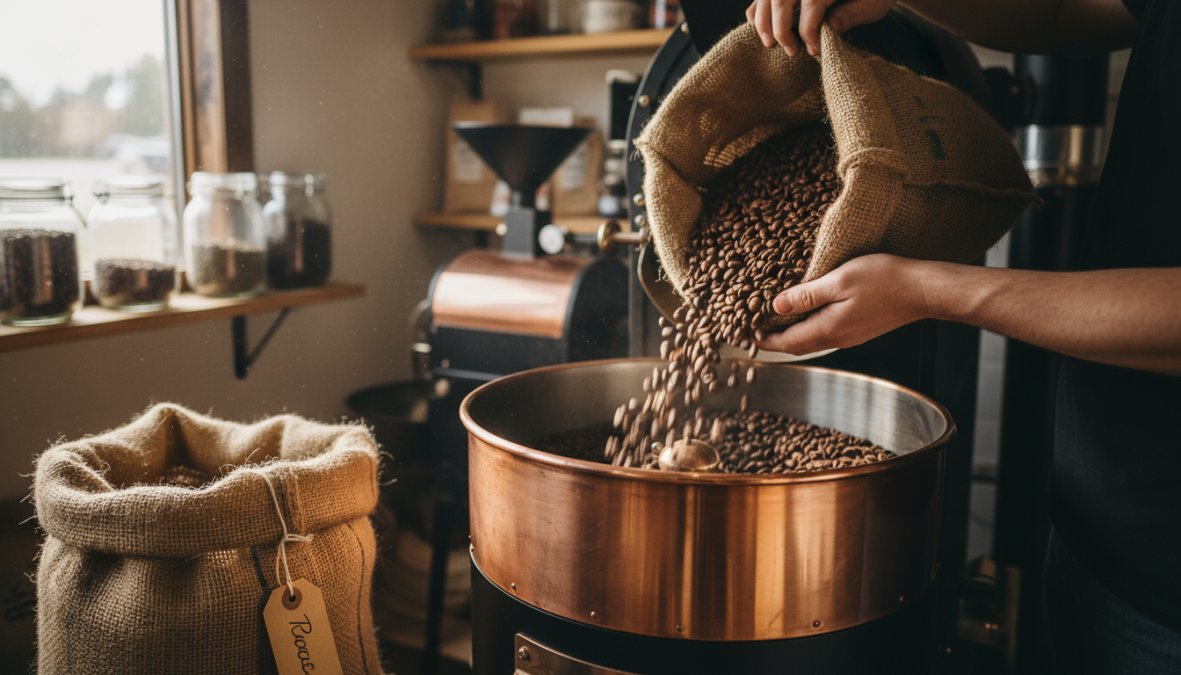
The practical difference is significant. A roast-to-order service like Cuppari Coffee roasts and ships every order the same day, meaning your beans arrive at their freshest possible window. Compare that to a retail bag that may have sat in a distribution center for thirty days before it ever reached the store shelf.
For specialty coffee, where flavor profiles are defined by terroir, processing method, and roast level, this freshness gap is the difference between tasting what the roaster intended and tasting a shadow of it. Light roast single origin coffees are especially vulnerable. Their brightness and fruit-forward notes are the first casualty of staleness.
The roast-to-order model also benefits the roaster. Smaller batch sizes mean more precise roasting, better quality control, and the ability to offer a wider rotating selection of beans without the risk of large unsold inventory. That is good for the customer too, since it means more variety and more seasonal offerings.
Coffee Freshness Guide: How to Keep Delivered Beans at Peak Flavor
Getting freshly roasted coffee delivered is only half the equation. What you do after the bag arrives determines how long that freshness lasts.
Storage Tips After Your Coffee Arrives
The enemies of fresh coffee are oxygen, moisture, heat, and light. Store whole beans in an airtight container, away from direct sunlight, at room temperature. A cool pantry or cupboard works well. The refrigerator is a common mistake: condensation introduces moisture every time you open the container, and coffee absorbs surrounding odors readily.
Practical storage rules:
- Keep beans in their original bag if it has a one-way valve and resealable closure
- Transfer to an opaque, airtight canister if the original bag does not reseal properly
- Buy in quantities you will use within two to three weeks for peak flavor
- Grind only what you need immediately before brewing
For coffee pods, the sealed capsule design removes the storage challenge entirely. Cuppari Coffee's pods use sealed capsules with no oxygen inside, which preserves freshness without requiring any special storage conditions on your end.
Troubleshooting Common Issues With Delivered Coffee
Coffee tastes flat or papery: The beans are likely stale, either from sitting in transit too long or improper storage. Check the roast date. If it is more than four weeks old, the window has passed.
Coffee tastes sour or underdeveloped: This is often a sign that freshly roasted beans were brewed too soon, particularly for espresso. Rest the beans for at least seven days post-roast before pulling shots.
Grind is inconsistent: Delivered ground coffee is convenient but degrades faster than whole beans. If you ordered pre-ground, use it within a week. Invest in a burr grinder for whole beans if consistency matters to you.
Bag arrived without a roast date: Contact the seller. A reputable roaster always dates their bags. No date is a red flag.
Best Coffee Beans Online: Top Freshly Roasted Coffee Delivered Services Compared
The market for freshly roasted coffee delivered online has expanded considerably. Here is a direct comparison of the leading services in 2026.
| Service | Roast Model | Free Shipping | Subscription Option | Best For |
|---|---|---|---|---|
| Cuppari Coffee | Roast-to-order, same-day ship | Yes (U.S.) | Yes | Freshness-first buyers |
| Trade Coffee | Pre-roasted, curated match | No | Yes | Personalized discovery |
| Coffee by the Roast | Small-batch, rotating | No | Yes | Variety seekers |
| Craft Coffee | Curated specialty selections | No | Yes | Specialty exploration |
| Rook Coffee | Local roaster, regional delivery | No | Yes | East Coast buyers |
Cuppari Coffee: Roasted and Shipped the Same Day
Cuppari Coffee is the top pick for anyone who prioritizes verified freshness above all else. The model is straightforward: no order is roasted in advance, every bag ships the same day it is roasted, and free shipping applies to all U.S. orders. That combination is rare.
The product range covers single origin, blends, flavored coffees, and convenient coffee pods, alongside a selection of teas. The pod lineup is worth noting specifically: sealed capsules with no oxygen inside mean the freshness advantage extends to pod-format brewing, which most competitors cannot match. The improved filter design in Cuppari Coffee's capsules also absorbs more grounds, producing a cleaner, livelier cup than standard espresso capsules.
For buyers who want premium freshly roasted coffee delivered without calculating shipping costs or minimum orders, Cuppari Coffee is the practical first choice.
Best for: Home brewers and coffee enthusiasts who want guaranteed freshness, whole beans or pods, and the convenience of free U.S. shipping.
Trade Coffee: Personalized Matching for Every Palate
Trade Coffee operates a personalized matching model. After completing a flavor profile quiz, their coffee sommelier algorithm matches you with roasters and beans suited to your preferences. The selection spans hundreds of roasters and covers light roast, medium roast, dark roast, single origin, and blends.
The trade-off is that Trade does not roast to order. Beans are sourced from partner roasters, which means freshness depends on the individual roaster's practices and Trade's inventory management. Delivery frequency is customizable, which helps, but you have less direct control over the roast date.
Best for: Buyers who want curated discovery across many roasters and are willing to trade some freshness certainty for variety and personalization.
Coffee by the Roast: Small-Batch Focus
Coffee by the Roast emphasizes small-batch roasting and rotating seasonal offerings. The selection skews toward specialty single origin and limited micro-lot coffees, with an emphasis on transparency around farm-to-cup sourcing and sustainability practices.
What most reviews miss about small-batch services is that "small-batch" does not automatically mean "fresh." Verify the roast date policy before subscribing. The best small-batch roasters will date every bag clearly.
Best for: Specialty coffee enthusiasts who prioritize rare and rotating single origin selections.
Craft Coffee: Curated Specialty Selections
Craft Coffee focuses on curated specialty selections, sourcing from established roasters and presenting them in a subscription format. The appeal is editorial curation: someone else does the research on quality and you receive a vetted selection.
The model works well for buyers who are still exploring their flavor profile preferences and want guidance. It works less well for buyers who already know exactly what they want, since you surrender some control over origin and roast level.
Best for: Coffee explorers building their palate across different roast profiles and origins.
Rook Coffee and Peet's: Premium Local Roasters With Delivery
Rook Coffee is a regional roaster with a strong following in the northeastern United States. Their delivery service extends their local reputation online, and the quality is consistently high. The limitation is geographic focus: shipping times to the West Coast may affect freshness.
Peet's occupies a different tier. As a large-scale roaster with wide distribution, Peet's offers convenience and brand familiarity, but the freshness model is closer to retail than roast-to-order. For buyers who prioritize freshly roasted coffee delivered at its peak, Peet's is a step down from the roast-to-order services listed above.
Best for: Rook suits East Coast buyers who value regional character. Peet's suits buyers who prioritize convenience and brand reliability over maximum freshness.
Choosing a Coffee Subscription Service: Curated vs. Choose-Your-Own Models
The coffee subscription service market splits into two primary models, and choosing the wrong one is a common source of dissatisfaction.
Curated subscriptions make selections for you based on a flavor profile or editorial judgment. They are best for buyers who enjoy discovery and do not have strong preferences yet. The risk is receiving beans that do not match your taste, particularly if your profile quiz answers are vague.
Choose-your-own subscriptions let you select specific origins, roast levels, and blends. They require more engagement but produce more consistent satisfaction. Buyers who already know they prefer a washed Ethiopian light roast or a natural Brazilian medium roast should always choose this model.
Key Factors: Delivery Frequency, Roast Profiles, and Member Perks
Delivery frequency is one of the most underrated variables in a subscription. Receiving too much coffee means beans go stale before you finish them. Receiving too little means running out and buying grocery store coffee to fill the gap. Most services offer weekly, bi-weekly, or monthly delivery. Start with bi-weekly and adjust based on your consumption rate.
Roast profiles to evaluate:
- Light roast: Bright, acidic, fruit-forward. Best for pour-over and filter methods.
- Medium roast: Balanced, versatile. Works across most brew methods.
- Dark roast: Bold, low acidity, chocolate and smoke notes. Best for espresso and cold brew.
- Decaf: Look for Swiss Water Process decaf for the cleanest flavor.
Member perks vary widely. Discounts on additional orders, early access to new origins, and free shipping are the most valuable. Evaluate these against the base price before committing.
According to the National Coffee Association's annual consumer trends report, subscription coffee consumption has grown consistently among home brewers who prioritize quality, reflecting a broader shift toward specialty coffee culture in domestic settings.
Brewing Guide: Getting the Most From Your Freshly Roasted Beans
Freshly roasted beans demand better brewing technique than stale beans, because the flavors are actually there to extract. Sloppy technique with stale coffee hides behind flatness. With fresh beans, every variable matters.
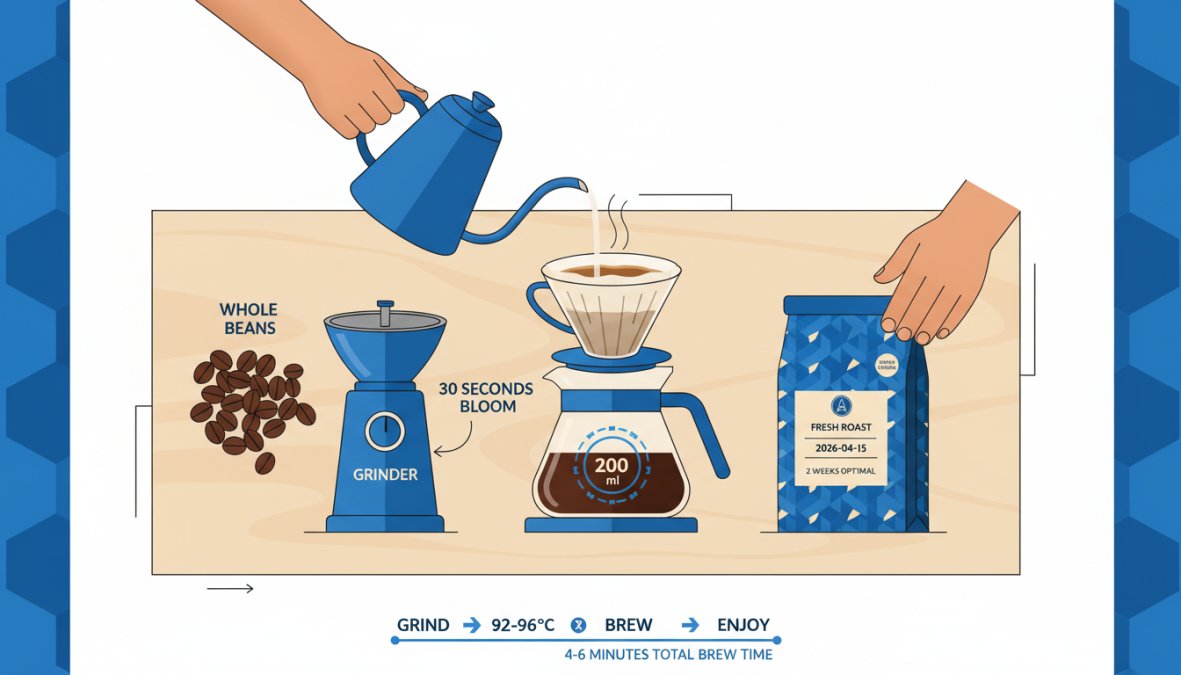
Water temperature: 195-205°F (90-96°C) for most brew methods. Boiling water over-extracts and burns delicate light roast compounds.
Grind size: Match grind size to your brew method. Coarse for French press and cold brew, medium for drip and pour-over, fine for espresso. A burr grinder produces consistent particle size. Blade grinders do not.
Bloom step for pour-over: Pour a small amount of water (twice the weight of your grounds) over the bed and wait thirty seconds. This releases CO2 from freshly roasted beans and allows even extraction. Skip this step and you will under-extract the center of the bed.
Ratio: Start with a 1:15 ratio of coffee to water by weight (e.g., 20g coffee to 300g water) and adjust to taste.
Rest period reminder: For espresso specifically, freshly roasted arabica beans benefit from a seven to fourteen day rest post-roast. Brewing espresso on day two will produce a sour, gassy shot regardless of your technique.
A common mistake with freshly roasted coffee is assuming that fresher always means better for every brew method immediately. The rest period is real. Work with it, not against it.
For cold brew, coarsely ground beans steeped for twelve to eighteen hours in cold water produce a smooth, low-acid concentrate. Freshly roasted beans make a noticeably brighter cold brew than stale beans, with more clarity and sweetness in the final cup.
As documented in the Specialty Coffee Association's brewing standards guide, water quality is also a significant variable: filtered water with moderate mineral content (around 150 ppm total dissolved solids) produces the most balanced extraction across brew methods.
Frequently Asked Questions
What does 'freshly roasted' coffee actually mean?
Freshly roasted coffee refers to beans that have been roasted recently, ideally within days of your order, rather than sitting in a warehouse or on a store shelf for weeks or months. The roast date on the bag tells you when the beans were roasted. For the best flavor, most specialty coffee experts suggest brewing within two to four weeks of the roast date. Services like roast-to-order brands roast only after you place your order, maximizing freshness on arrival.
How long does freshly roasted coffee stay fresh after delivery?
Once delivered, whole beans stored in a sealed, airtight container away from heat, light, and moisture typically stay at peak flavor for two to four weeks. Ground coffee loses freshness faster, often within a week. Coffee pods and espresso capsules sealed with no oxygen inside can extend shelf life significantly. For the best cup, grind whole beans just before brewing and avoid refrigerating or freezing unless you're storing a large quantity long-term.
Is a coffee subscription service worth it compared to buying one-off bags?
A coffee subscription service is worth it if you drink coffee regularly and value consistent freshness. Subscriptions typically offer benefits like customizable delivery frequency, member discounts, access to single origin and seasonal blends, and sometimes free shipping. The key advantage is never running out of fresh beans. If you prefer variety and control, choose-your-own models let you select roast level, light roast, medium roast, or dark roast, and flavor profile each cycle, making it more flexible than a standard grocery purchase.
What should I look for when choosing the best coffee beans online?
When shopping for the best coffee beans online, prioritize roasters that display the roast date clearly and ship within one to two days of roasting. Look for transparency around origin, single origin beans offer distinct flavor profiles, while blends provide consistency. Check whether the roaster offers whole beans and ground coffee options, arabica beans sourcing details, and sustainability practices like farm-to-cup sourcing. Customer reviews, available roast profiles, and whether the service offers a gift subscription option are also useful signals of quality.
Can I get freshly roasted organic or specialty coffee delivered?
Yes. Many roast-to-order services and coffee subscription platforms offer organic coffee and specialty coffee options, including single origin beans from specific farms or regions. When browsing online sellers, filter for certifications like USDA Organic or Fair Trade, and look for detailed flavor profile notes and farm sourcing information. Specialty coffee typically scores 80 or above on a standardized quality scale, signaling premium quality. Options range from light roast pour-over beans to dark roast espresso blends and even decaf or cold brew varieties.
Getting freshly roasted coffee delivered consistently is harder than it sounds when you factor in roast dates, shipping windows, and storage conditions. Cuppari Coffee solves the core problem by roasting every order on the day it ships, offering free U.S. shipping, and covering the full range from single origin whole beans to sealed oxygen-free coffee pods. Add to cart and taste the difference that genuine freshness makes in your daily cup.
This article was written using GrandRanker