

Table of Contents
- Why Freshly Roasted Coffee with Free Shipping Is Worth Seeking Out
- Free Shipping Thresholds Compared: Which Roasters Offer the Best Deal
-
Top Roasters Offering Freshly Roasted Coffee with Free Shipping
- Cuppari Coffee: Roasted and Shipped Same Day, Always Free
- Seven Coffee Roasters: No Minimum, No Exceptions
- Craft Coffee: Budget-Friendly Subscription with Free US Shipping
- Bald Guy Brew: Free Shipping on Bulk Bags with Q-Grader Curation
- Intelligentsia, Stumptown, and Blue Bottle: Premium Roasters with Conditions
- Coffee Bean Roast Dates Explained: Freshness Guarantee vs. Roast Date
- Best Coffee Subscription Services for Free Shipping and Roast Quality
- Brewing Method Compatibility Guide: Matching Your Grind to Your Cup
- How to Store Coffee Beans for Freshness After Delivery
- Shipping Sustainability: What Your Coffee Delivery Really Costs the Planet
- Conclusion: Getting the Freshest Coffee Delivered Free Starts Here
Last Updated: May 16, 2026
Getting freshly roasted coffee free shipping delivered to your door sounds simple, but the difference between roasters is enormous. At Cuppari Coffee, we roast every order the same day it's placed and ship it immediately, with free shipping on all U.S. orders and no minimum purchase required. Most roasters either charge for shipping, require a subscription, or set a dollar threshold before waiving fees. This guide cuts through the noise and shows you exactly which roasters offer the best deal, how their shipping policies actually work, and what "freshness" really means once you understand roast dates.
Here's what most guides get wrong: they treat free shipping as a bonus feature. It's actually a signal. Roasters that offer unconditional free shipping tend to operate with higher volume and tighter logistics, which usually means fresher beans arriving faster.
Below, we cover the top roasters, compare their free shipping thresholds side by side, explain the freshness guarantee vs. roast date distinction that most buyers miss, and give you a brewing method compatibility guide so you know exactly what grind to order.
Why Freshly Roasted Coffee with Free Shipping Is Worth Seeking Out
Specialty coffee loses a significant portion of its flavor complexity within two weeks of roasting if stored improperly. Most grocery store coffee sits in warehouses and on shelves for months before it reaches your cup. The shift to buying freshly roasted coffee online solves that problem, but only if the roaster ships quickly and doesn't charge you enough in delivery fees to negate the value.
The roast-to-order model is the gold standard. A roaster that roasts your beans only after you place the order guarantees you receive coffee at peak freshness, typically within one to three days of roasting. Combined with free shipping, this model removes every barrier between you and an exceptional cup.
According to Specialty Coffee Association's research on coffee freshness, degassing and oxidation begin immediately after roasting, which is why the window between roast date and brew date matters so much. Beans that arrive one week post-roast taste dramatically different from beans that arrive four weeks post-roast.
The practical implication: when you're comparing roasters, the shipping policy and the roast model are equally important. Free shipping on a bag roasted three weeks ago is no bargain.
Free Shipping Thresholds Compared: Which Roasters Offer the Best Deal
Shipping thresholds vary widely across the specialty coffee market, and the differences are more significant than most buyers realize.
| Roaster | Free Shipping Condition | Roast Model | Subscription Required? |
|---|---|---|---|
| Cuppari Coffee | Always free, all U.S. orders | Roast-to-order, same day | No |
| Seven Coffee Roasters | Always free, no minimum | Roasted to order weekdays | No |
| Craft Coffee | Always free, U.S. only | Roasted to order | Subscription only |
| Counter Culture | Orders over $30 | Small-lot, fresh | No |
| Blue Bottle | $40 minimum (one-time) | Roasted to order | Subscription: always free |
| Stumptown | $45 minimum (one-time) | Roasted daily | Subscription: always free |
| Intelligentsia | $49 minimum (one-time) | Roasted to order | Subscription: always free |
| Bald Guy Brew | 5lb bulk bags only | Next business day | No |
No-Minimum Free Shipping Options
Only a handful of roasters offer genuinely unconditional free shipping: Cuppari Coffee, Seven Coffee Roasters, and Craft Coffee (on subscriptions). Every other roaster on this list attaches a condition, whether that's a dollar threshold or a subscription commitment.
For buyers who want to try a single bag before committing, no-minimum options are the clear winner. You're not forced to spend $40 to avoid a $7 shipping fee.
Subscription vs. One-Time Order Shipping Policies
The pattern across premium roasters is consistent: subscriptions get free shipping, one-time orders do not (or require a minimum spend). Intelligentsia, Stumptown, and Blue Bottle all follow this model. It's a reasonable business decision, but it creates friction for new customers.
The smarter approach, if you're not ready to subscribe, is to choose roasters that don't penalize you for flexibility. Cuppari Coffee and Seven Coffee Roasters ship free regardless of whether you're a first-time buyer or a long-term customer.
Top Roasters Offering Freshly Roasted Coffee with Free Shipping
The roasters below were selected based on three criteria: roast freshness, shipping policy, and product quality. They represent the best options across different buyer profiles, from budget-conscious subscribers to bulk buyers who want ethically sourced single origin beans.
Cuppari Coffee: Roasted and Shipped Same Day, Always Free
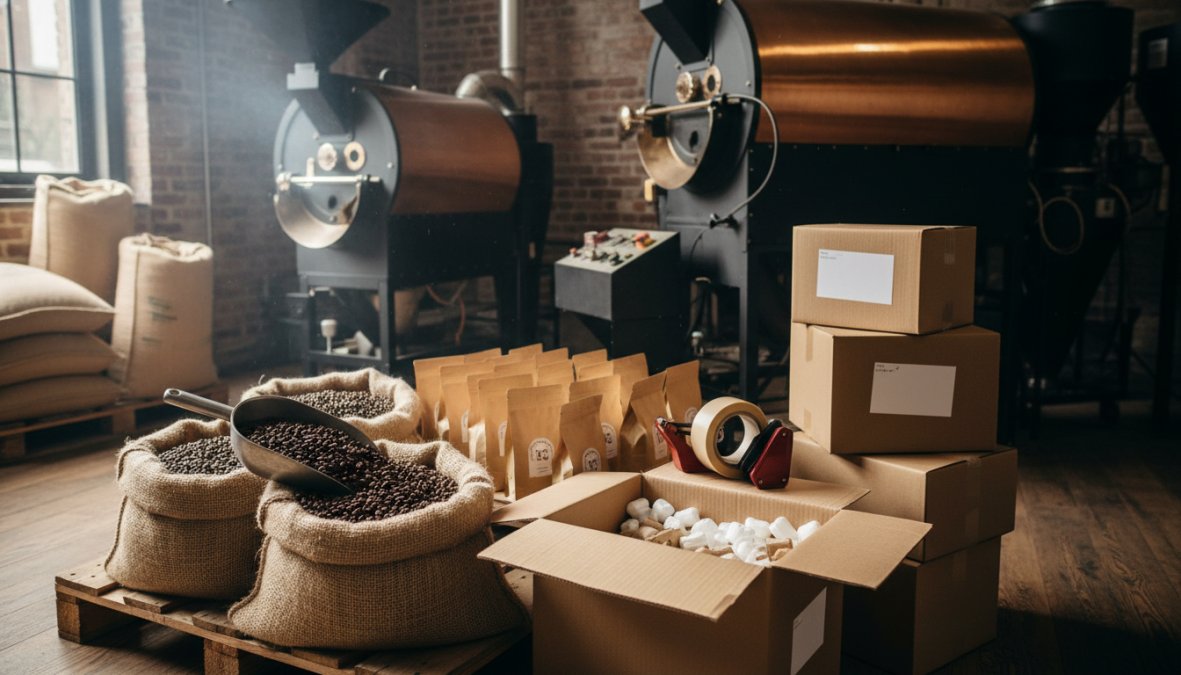
Cuppari Coffee is the top pick for buyers who want guaranteed freshness without any conditions attached. Every order is roasted only after it's placed, then shipped the same day, with free shipping on all U.S. orders and no purchase minimum.
The selection covers single origin coffees, craft blends, flavored varieties, and coffee pods, alongside teas. The coffee pods use sealed capsules with no oxygen inside, which extends freshness beyond what an open bag can offer. The improved filter design in the capsules also absorbs more grounds, producing a cleaner, livelier cup.
What most reviews miss about Cuppari Coffee is the combination of same-day roast-and-ship with no-minimum free shipping. Most roasters offer one or the other. Cuppari offers both, which makes it the most accessible entry point into genuinely fresh specialty coffee.
Best for: Coffee drinkers who want roast-to-order freshness delivered free without subscribing or hitting a spending threshold.
Seven Coffee Roasters: No Minimum, No Exceptions
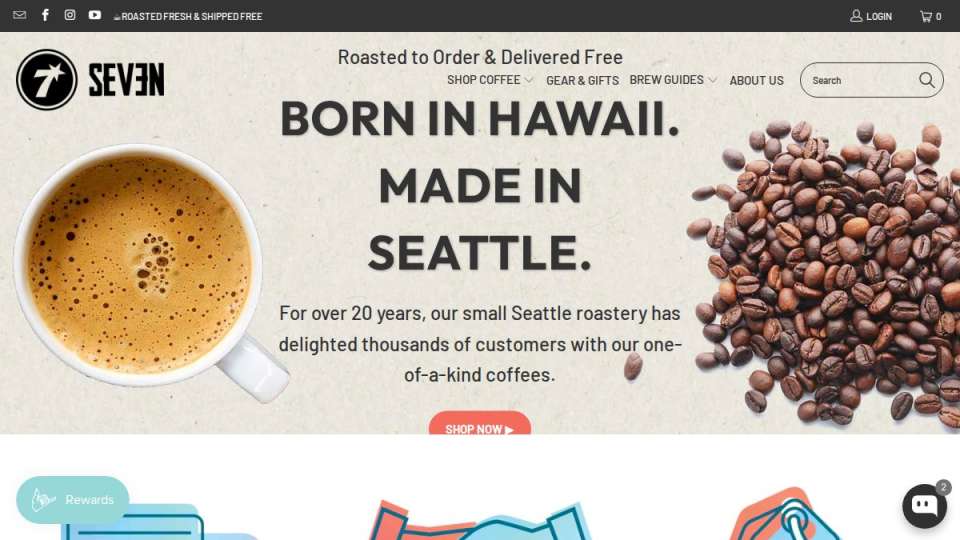
Seven Coffee Roasters is a Seattle-based roaster that roasts to order on weekdays and ships via USPS Priority or UPS Ground. Free shipping applies to all domestic orders with no minimum purchase required.
The selection includes a range of blends and single-origin coffees. The roasting process is straightforward and consistent, and the no-minimum free shipping policy makes Seven a strong alternative for buyers who want flexibility without the brand recognition of national chains.
Craft Coffee: Budget-Friendly Subscription with Free US Shipping
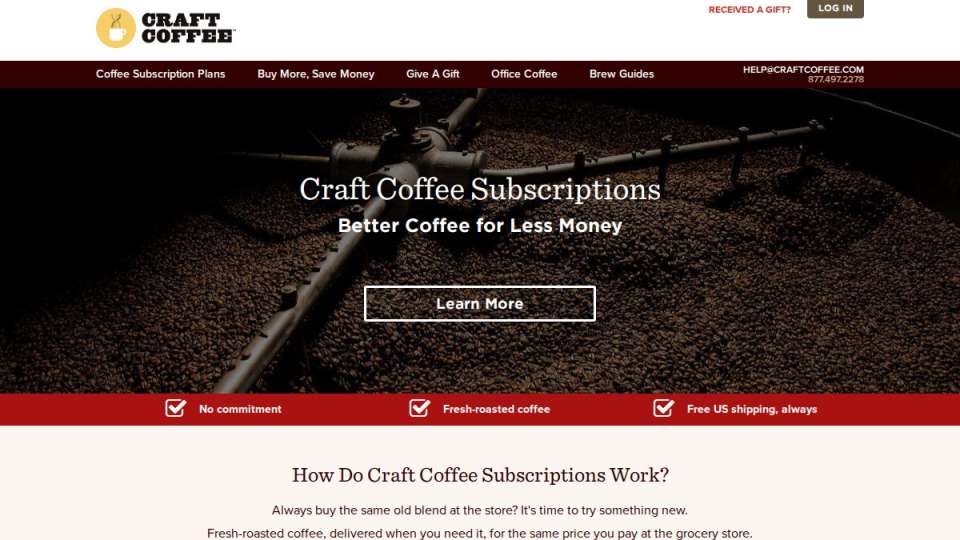
Craft Coffee positions itself as the specialty coffee upgrade from grocery store brands. Bags start from $9.49, making it one of the most competitively priced roast-to-order options available. Shipping is always free in the U.S., but the model is subscription-based with no commitment required.
The trade-off is selection depth. Craft Coffee focuses on flagship blends rather than specialty microlots, so adventurous coffee drinkers may find the range limiting. For buyers who want consistent quality at a low retail price, it's a strong option.
Bald Guy Brew: Free Shipping on Bulk Bags with Q-Grader Curation
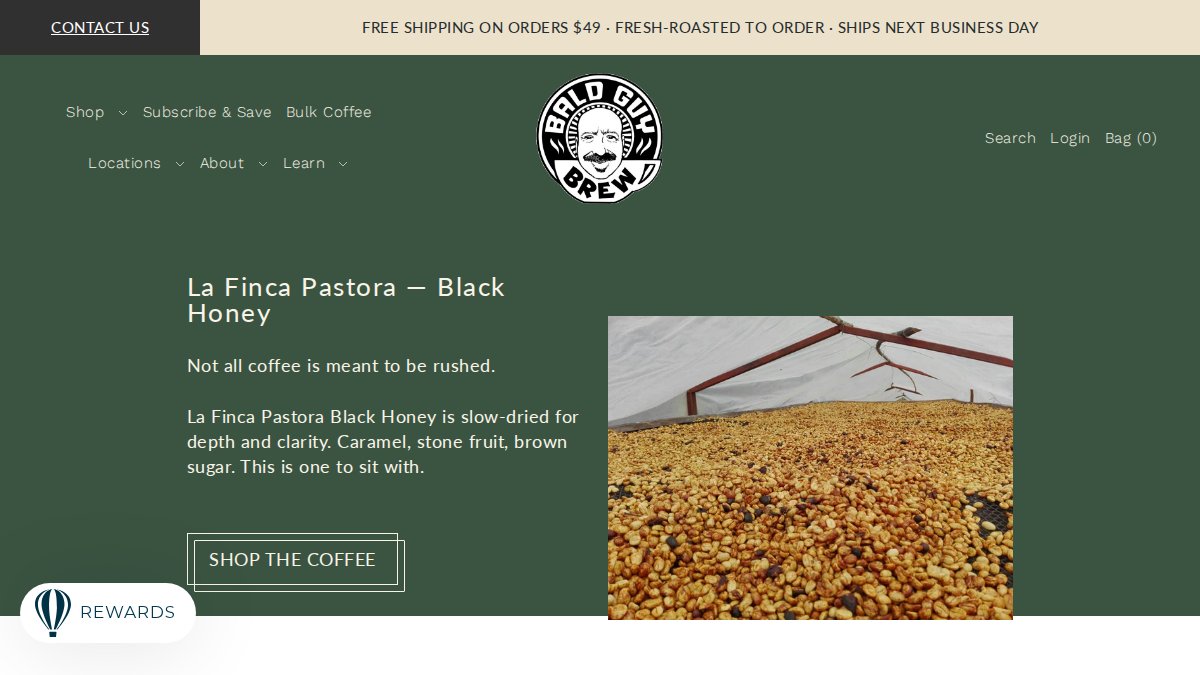
Bald Guy Brew is a small-batch roaster with a specific niche: bulk buyers who want ethically sourced coffee curated by a Q-Grader (a certified coffee quality evaluator). Free shipping applies to 5lb bulk bags, and the roaster ships the next business day after roasting.
Certifications include Fair Trade, Rainforest Alliance, and Bird Friendly, which matters for buyers who prioritize ethical sourcing alongside flavor profile. The direct owner contact for customer support is a genuine differentiator for a small roastery.
The limitation is clear: free shipping is tied to bulk orders. If you're buying a single 12oz bag, you'll pay for shipping. For households that go through a pound or more per week, the 5lb bulk bag with free shipping is excellent value.
Intelligentsia, Stumptown, and Blue Bottle: Premium Roasters with Conditions
These three roasters represent the premium tier of the specialty coffee market. All three roast to order and maintain strong quality control. The catch is the free shipping threshold on one-time orders: Intelligentsia requires $49, Stumptown requires $45, and Blue Bottle requires $40.
Subscribers at all three get free shipping on every delivery, plus perks like early access to exclusive releases and subscriber-only discounts. If you're committed to one roaster and plan to order regularly, the subscription model makes financial sense. For occasional buyers, the thresholds are a real friction point.
Coffee Bean Roast Dates Explained: Freshness Guarantee vs. Roast Date
A roast date is the specific date on which your coffee beans were roasted, printed on the bag. A freshness guarantee is a promise from the roaster that the coffee will taste fresh when it arrives, which is a different and weaker claim.
Here's where it gets interesting. A roaster can guarantee freshness while shipping coffee roasted five days ago. That's still fresh by most standards, but it's not the same as coffee roasted and shipped the same day you ordered it. The distinction matters because CO2 degassing (the process by which freshly roasted beans release gas) affects both flavor extraction and brew consistency.
According to research on coffee degassing and extraction published by the Coffee Science Foundation, beans roasted within 48 hours of brewing can produce inconsistent espresso extractions because excess CO2 interferes with water penetration. The ideal window for most brewing methods is three to fourteen days post-roast.
This means same-day roast-and-ship isn't always superior to roasting two or three days before shipping. The roast date tells you when the beans were roasted. The freshness guarantee tells you the roaster stands behind the quality on arrival. Both matter, but neither alone is sufficient.
What to look for: A roast date printed on the bag, plus a shipping timeline that puts the beans in your hands within the optimal brew window for your preferred method.
Best Coffee Subscription Services for Free Shipping and Roast Quality
Subscription coffee has become the default recommendation for getting free shipping from premium roasters, but the terms vary so widely that 'subscribe and save' can mean anything from a locked-in annual commitment to a fully pausable, skip-anytime arrangement. The table below consolidates the key variables so you can compare at a glance before committing.
| Roaster | Subscription Free Shipping | One-Time Free Shipping | Min. Spend (One-Time) | Skip / Pause? | Roast Model |
|---|---|---|---|---|---|
| Cuppari Coffee | Always free | Always free | None | N/A (no sub required) | Same-day roast-to-order |
| Atlas Coffee Club | Always free (U.S.) | Not offered | , | Yes | Roasted to order |
| Trade Coffee | Free on prepaid & 2lb+ | Not offered | , | Yes | Partner roasters, varies |
| Blue Bottle | Always free | $40 minimum | $40 | Yes | Roasted to order |
| Stumptown | Always free | $45 minimum | $45 | Yes | Roasted daily |
| Intelligentsia | Always free | $49 minimum | $49 | Yes | Roasted to order |
| Craft Coffee | Always free | Not offered | , | Yes | Roasted to order |
| Counter Culture | Always free | $30 minimum | $30 | Yes | Small-lot, fresh |
What the Table Actually Tells You
The most important column is the one-time free shipping threshold. If you're a new buyer who wants to try a roaster before subscribing, the threshold is the real cost of entry. Intelligentsia's $49 minimum means a first-time buyer who wants a single $18 bag will pay a shipping fee on top, effectively raising the per-bag cost by $5 to $8 depending on the carrier rate. Counter Culture's $30 threshold is the most accessible among the premium tier, and Cuppari Coffee eliminates the threshold entirely.
The skip/pause column matters more than most buyers realize. A subscription that can't be paused is a liability the moment you travel, go on vacation, or simply overbuy. All of the roasters listed above allow pausing or skipping, but the process varies. Blue Bottle and Stumptown allow changes up to 24 hours before the next scheduled ship date. Trade Coffee allows changes up to 48 hours before. Missing that window means an unwanted shipment, and a bag of coffee you'll need to store.
Atlas Coffee Club: Best for Exploratory Drinkers
Atlas Coffee Club sources single-origin coffees from more than 50 countries and ships with free U.S. delivery on all subscriptions. Each bag arrives with a tasting card, a postcard from the origin country, and brewing recommendations specific to that coffee. For buyers who want to learn about coffee geography and flavor alongside their morning routine, this is the most educational option on the list.
The limitation is volume flexibility. Atlas ships on a two-week or four-week cadence only. High-consumption households, two or more daily drinkers, may find the four-week bag depleted before the next shipment arrives. The workaround is ordering a larger bag size (12oz vs. the standard 8oz), which Atlas offers at checkout.
Trade Coffee: Best for Personalized Matching Across Roasters
Trade Coffee doesn't roast its own beans. Instead, it acts as a matchmaking layer across dozens of independent roasters, using a taste preference quiz to pair you with a specific coffee from a specific roaster. The first-match replacement guarantee removes the risk of a bad fit: if the algorithm gets it wrong, Trade will send a replacement bag free of charge.
Free shipping applies to prepaid subscriptions and to any order of 2lb bags or larger. Single-bag, non-prepaid orders carry a shipping fee, which is the one meaningful friction point for buyers who want to try the service without committing upfront. The prepaid option (typically a three-month commitment) unlocks free shipping immediately and usually comes with a per-bag discount.
The trade-off with Trade Coffee is consistency. Because you're drawing from multiple roasters, the roast date, bag size, and freshness window vary by shipment. Some partner roasters ship within 24 hours of roasting; others ship on a weekly batch schedule. Trade discloses roast dates on each product page, so you can filter for roasters with the tightest roast-to-ship window if freshness is your priority.
Delivery Frequency and Auto-Ship Options to Consider
Delivery frequency is the most underrated factor in subscription satisfaction. Order too infrequently and your beans go stale before you finish the bag. Order too often and you're drowning in coffee.
A practical starting point: a standard 12oz bag of whole bean coffee lasts one person approximately two weeks with daily brewing at roughly two cups per day. A two-person household will go through that bag in about one week. Adjust from there based on your actual consumption before locking in a cadence.
Most roasters offer every-one, two, or four-week delivery options. The one-week cadence is rarely necessary unless you're a very high-volume household or running a small office. Starting at two weeks and adjusting after the first two shipments is the lowest-risk approach.
Brewing Method Compatibility Guide: Matching Your Grind to Your Cup
Your grind setting determines how well your brewing method extracts flavor from freshly roasted beans, but grind size is only half the equation. The roast profile of the bean itself changes how extraction behaves, which means the same grind setting on a light roast and a dark roast will produce dramatically different results. Most online coffee guides give you a grind chart and stop there. This section goes further: it connects specific roast profiles (including the types offered by the roasters covered in this article) to the brewing methods where they perform best, so you can order the right product for your setup rather than guessing.
The Roast Profile and Extraction Relationship
Dark roasts are more porous and soluble than light roasts. The extended heat of a dark roast breaks down the cell structure of the bean, making it easier for water to extract flavor compounds quickly. Light roasts are denser and require more contact time or finer grinding to achieve the same extraction yield.
This has a direct practical implication: if you brew with a method that has a short contact time (espresso, AeroPress on a fast press), a light roast will often taste sour or underdeveloped unless you compensate with a finer grind or a longer steep. Conversely, a dark roast in a French press, which has a long contact time, can easily over-extract into bitterness if you use too fine a grind.
Roast Profile to Brewing Method: The Full Compatibility Map
| Brewing Method | Contact Time | Ideal Grind Size | Best Roast Profile | Why It Works |
|---|---|---|---|---|
| Espresso | 25-30 seconds | Extra fine | Medium-dark to dark | Short contact time needs high solubility; dark roasts extract efficiently under pressure |
| AeroPress (inverted, long steep) | 2-4 minutes | Medium-fine | Light to medium | Extended steep compensates for light roast density; produces clarity without bitterness |
| AeroPress (standard, fast press) | 60-90 seconds | Fine | Medium | Faster press benefits from medium solubility and balanced extraction |
| Pour over (V60, Chemex) | 3-4 minutes | Medium-fine | Light to medium | Slow, controlled flow highlights the nuanced fruit and floral notes in light roasts |
| Drip machine (flat-bottom basket) | 4-6 minutes | Medium | Medium | Consistent contact time suits medium roasts; avoids the bitterness risk of dark roasts at this grind |
| French press | 4 minutes | Coarse | Medium to dark | Long immersion with coarse grind prevents over-extraction; dark roasts add body without turning bitter |
| Cold brew (12-24 hour steep) | 12-24 hours | Extra coarse | Medium-dark | Extended cold extraction needs coarse grind to prevent over-extraction; medium-dark adds chocolate and caramel notes |
| Moka pot | 4-5 minutes | Fine (not extra fine) | Medium-dark | Pressurized extraction similar to espresso but slower; medium-dark avoids the metallic edge that light roasts can produce under pressure |
Matching Roasters to Your Brewing Method
This is the step most guides skip. Here's how to apply the table above to the specific roasters covered in this article:
If you brew espresso or use a Moka pot: Look for medium-dark to dark roasts. Cuppari Coffee's craft blends and Intelligentsia's Black Cat Classic Espresso are designed specifically for pressure-based extraction. Stumptown's Hair Bender blend is another well-known option engineered for espresso consistency across varying grind settings.
If you brew pour over (V60, Chemex, Kalita Wave): Light to medium roasts from single-origin sources perform best. Atlas Coffee Club's rotating single-origin selection is well-suited here, the tasting cards that accompany each shipment include origin-specific brewing recommendations. Trade Coffee's matching algorithm can filter specifically for pour-over-optimized roasts if you indicate your brewing method in the preference quiz.
If you use a French press or cold brew: Medium-dark roasts from roasters like Bald Guy Brew (which offers 5lb bulk bags with free shipping) are practical and cost-effective. The higher volume of a French press or cold brew batch makes bulk ordering economical, and medium-dark roasts are forgiving of the slight grind inconsistency that comes with home burr grinders at coarse settings.
If you use a standard drip machine: Medium roasts from any of the roasters in this article will work well. Craft Coffee's flagship blends are specifically calibrated for drip brewing and represent the most budget-accessible entry point at prices starting around $9.49 per bag.
Whole Bean vs. Pre-Ground: The Freshness Trade-Off
If you have a burr grinder at home, always order whole bean. Grinding immediately before brewing preserves the volatile aromatic compounds, the esters, aldehydes, and ketones responsible for the fruity, floral, and nutty notes in specialty coffee, that begin dissipating within minutes of grinding. A bag of pre-ground coffee, even if roasted yesterday, will taste noticeably flatter than whole beans ground at brew time.
If you don't have a grinder, pre-ground is still far superior to grocery store coffee, provided the roast date is recent. Most roasters that offer ground coffee let you select your grind at checkout. Use the table above to select the correct grind for your brewing method. The most common mistake is ordering a medium grind for espresso (produces weak, watery shots) or an extra-fine grind for French press (produces muddy, over-extracted, bitter results).
Swiss water process decaf deserves a specific note here. The Swiss water process removes caffeine using water and a carbon filter rather than chemical solvents, which preserves more of the original flavor profile. For decaf drinkers, the same roast-profile-to-brewing-method logic applies: a Swiss water decaf light roast will still behave like a light roast in extraction, requiring finer grinding or longer contact time than a Swiss water decaf dark roast. Look for the Swiss Water Program certification logo on the bag, it's the clearest quality marker separating specialty decaf from commodity decaf.
According to the Specialty Coffee Association's brewing standards guide, water temperature between 195°F and 205°F is optimal for most brewing methods, and grind consistency matters as much as grind size, which is why burr grinders outperform blade grinders for specialty coffee. A blade grinder produces uneven particle sizes that extract at different rates simultaneously, creating a cup that is simultaneously over-extracted (bitter) and under-extracted (sour) in the same brew.
How to Store Coffee Beans for Freshness After Delivery
Proper storage extends the usable life of freshly roasted beans by one to two weeks beyond what poor storage allows. The four enemies of coffee freshness are oxygen, moisture, heat, and light.
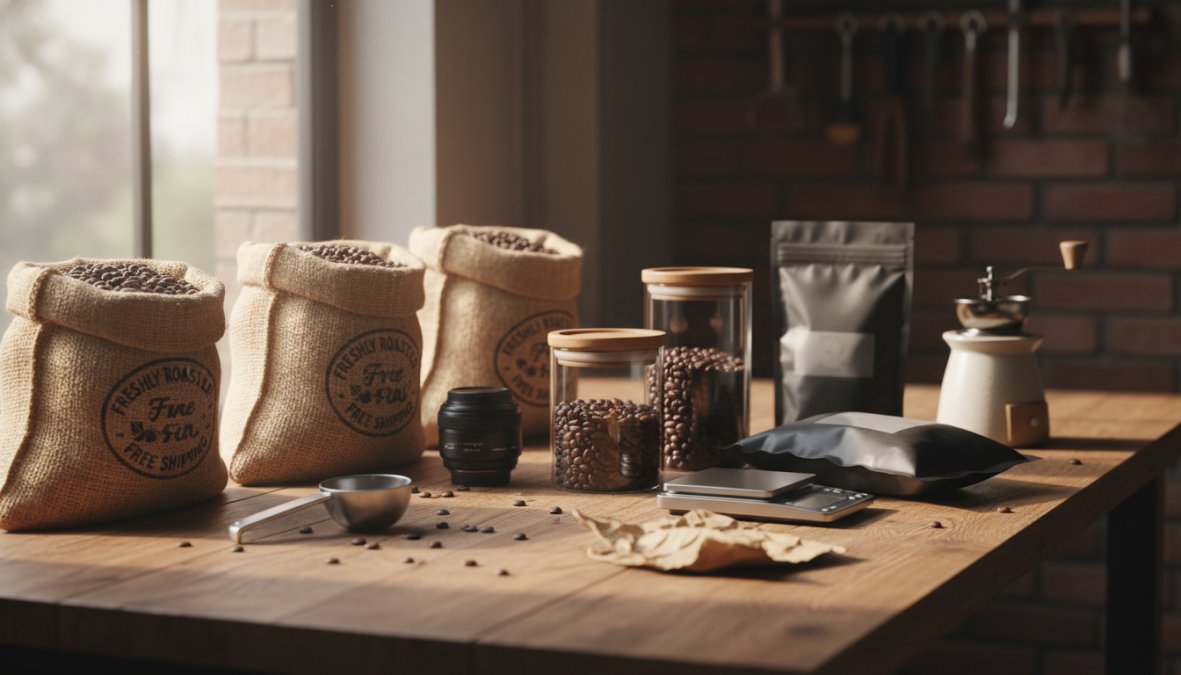
Store beans in an airtight container, away from direct sunlight, at room temperature. A ceramic or stainless steel canister with a one-way valve is ideal: it lets CO2 escape without letting oxygen in. Avoid glass containers on countertops near windows.
The refrigerator is a common mistake. Coffee beans absorb odors and moisture from the refrigerator environment, which degrades flavor faster than room-temperature storage. The freezer is acceptable for long-term storage of sealed, unopened bags, but once you open a bag, keep it at room temperature and use it within two to three weeks.
Practical checklist for post-delivery storage:
- Transfer beans to an airtight container immediately after opening
- Store away from the stove, oven, or any heat source
- Keep out of direct sunlight
- Do not refrigerate open bags
- Grind only what you need immediately before brewing
- Use within two to three weeks of opening for peak flavor
Shipping Sustainability: What Your Coffee Delivery Really Costs the Planet
The environmental cost of coffee delivery is a topic most roasters prefer to avoid. Every shipment involves packaging materials, fuel, and logistics infrastructure. For buyers who care about sustainability alongside freshness, it's worth understanding what roasters are doing to offset this impact.
Bald Guy Brew's certifications (Rainforest Alliance, Bird Friendly, Fair Trade) address the sourcing side of sustainability but don't directly address shipping emissions. Counter Culture Coffee publishes detailed sustainability reports that cover both sourcing and operational impact, making it one of the more transparent roasters on environmental metrics.
The most meaningful thing a buyer can do is consolidate orders. Ordering a 5lb bulk bag every six weeks generates significantly fewer shipping emissions than ordering a 12oz bag every two weeks, even if the total coffee consumed is the same. Roasters like Bald Guy Brew make this easy with bulk bag free shipping.
Packaging matters too. Look for roasters using recyclable or compostable bags rather than multi-layer foil pouches that go straight to landfill. As documented in the Specialty Coffee Association's sustainability resources, the coffee industry is actively developing more sustainable packaging standards, but adoption varies widely by roaster.
Finding genuinely fresh coffee delivered free is harder than it should be, because most roasters attach conditions that undermine the value. Cuppari Coffee removes every barrier: beans are roasted only after your order is placed, shipped the same day, and delivered with free shipping on all U.S. orders, with no minimum spend and no subscription required. The sealed capsule line keeps beans at peak freshness longer, and the selection spans single origin, blends, flavored coffees, and pods. Add to cart and get the freshest coffee delivered straight to your doorstep.
Frequently Asked Questions
Does freshly roasted coffee really taste better than store-bought?
Freshly roasted coffee tastes noticeably better because it retains volatile aromatic compounds that degrade over time. Coffee purchased from a grocery store may have been roasted weeks or months before you open it. When a roastery ships same-day after roasting, as Cuppari Coffee does, you receive beans at their flavor peak. The difference shows up as brighter acidity, more complex flavor profiles, and a fuller aroma compared to stale pre-packaged coffee.
How long does freshly roasted coffee stay fresh after delivery?
Freshly roasted whole bean coffee typically stays at peak quality for two to four weeks after the roast date when stored properly in an airtight container away from light and heat. Ground coffee degrades faster, usually within one to two weeks. Sealed capsules with no oxygen inside, like those offered by Cuppari Coffee, can extend shelf life significantly. Always check the roast date on your bag and aim to brew within the recommended window for the best cup.
Do coffee subscriptions usually offer free shipping?
Many of the best coffee subscription services include free shipping as a core benefit. Roasters like Intelligentsia, Stumptown, Blue Bottle, and Atlas Coffee Club all offer free shipping on subscription orders. For one-time purchases, free shipping thresholds typically range from $30 to $49. Cuppari Coffee stands out by offering free shipping on all U.S. orders with no minimum purchase required, making it one of the most straightforward free-shipping policies among online roasters.
What is the best way to store freshly roasted coffee beans for freshness?
Store freshly roasted coffee beans in an airtight, opaque container at room temperature away from direct sunlight, heat, and moisture. Avoid the refrigerator, condensation damages beans. A dedicated coffee canister with a one-way valve is ideal because it lets CO2 escape without letting oxygen in. Buy in smaller quantities aligned with your brewing frequency, and grind only what you need immediately before brewing to preserve the full flavor profile of your freshly roasted coffee.
Is it worth buying freshly roasted coffee online instead of at a local store?
Buying freshly roasted coffee online is often worth it, especially when free shipping is included. Online roasters using a roast-to-order model ship beans within hours of roasting, which is nearly impossible to match at a retail store where coffee may sit on shelves for weeks. You also gain access to a wider selection, single origin, craft blends, swiss water decaf, espresso roast, and more, at competitive retail prices, often with subscription discounts and flexible delivery frequency options.
This article was written using GrandRanker