

Table of Contents
- Freshly Roasted Coffee vs Grocery Store: What's the Actual Difference
- Why Grocery Store Coffee Is Often Stale
- The Coffee Roast Date Importance: Why It Matters More Than You Think
- How to Store Coffee Beans Fresh: Protecting Your Investment
- Signs of Stale Coffee Beans: What to Look For
- Flavor Profile Differences: Freshly Roasted vs Mass-Produced
- Cost Analysis: Price Per Cup and True Value
- Comparison Table: Freshly Roasted vs Grocery Store Coffee
- Frequently Asked Questions
Last Updated: August 17, 2026
Freshly Roasted Coffee vs Grocery Store: What's the Actual Difference
The difference between freshly roasted coffee and grocery store coffee comes down to one thing: time. Freshly roasted beans start degrading the moment they cool, losing flavor compounds and aromatic oils at an accelerating rate. By the time grocery store coffee reaches your kitchen, weeks or months have passed since roasting. You're not buying coffee, you're buying the ghost of what it once was.
This matters because coffee is a perishable product. The bloom effect that creates that rich crema in your cup, the nuanced flavor notes you paid for, the aroma that makes mornings better, all of it depends on freshness. At Cuppari Coffee, we've built our entire model around this single principle: roasting only after you order and shipping the same day. It's not a marketing gimmick. It's the difference between a good cup and a great one.
Here's what separates the two approaches, why it matters, and how to tell if what you're drinking is actually fresh.
Why Grocery Store Coffee Is Often Stale
Grocery store coffee sits. That's the brutal truth. A bag of beans on a supermarket shelf has likely been roasted weeks or even months before you pick it up. The roaster ships to a distributor, who ships to the warehouse, who ships to the store. Each step takes time.
Once coffee is roasted, degassing begins immediately. The beans release carbon dioxide for the first 3-7 days after roasting, this is the window when coffee tastes its best. After that window closes, oxidation accelerates. The oils that carry flavor compounds begin breaking down. The acidity flattens. The complexity disappears. What remains is a flat, bitter, one-dimensional cup.
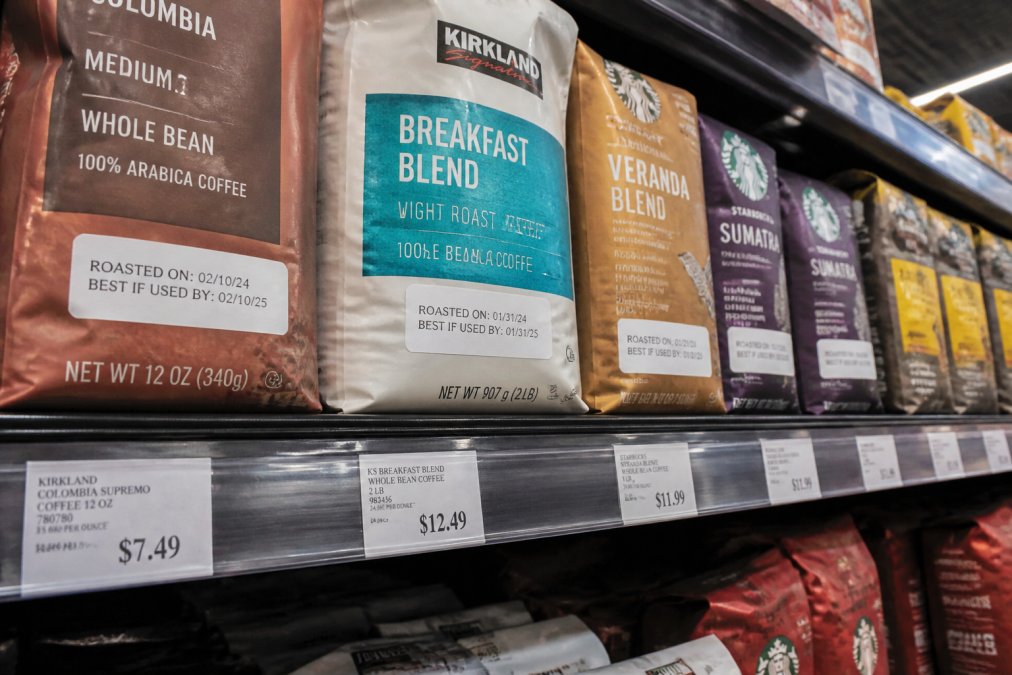
Mass-produced grocery store coffee relies on long shelf stability. Roasters use darker roasts because they mask oxidation better. They use commodity beans from lower-quality sources because the flavor degradation won't matter as much. They package in standard bags with one-way valves that let gas escape but don't seal the coffee from oxygen. It's a system designed for logistics, not for the person drinking it.
The result: coffee that tastes bitter, thin, or stale. Consumers often blame their brewing method or their grinder. They blame the beans they chose. They don't realize the real problem is that the product spent two months traveling through a supply chain before it reached them.
The Coffee Roast Date Importance: Why It Matters More Than You Think
Your roast date is the single most important piece of information on a bag of coffee. Not the origin, not the roast level, not the price. The roast date tells you whether you're buying fresh coffee or stale coffee.
Coffee peaks between 3 and 7 days after roasting. This is when degassing is complete and oxidation hasn't yet accelerated. The flavor is brightest, the aroma is strongest, and the bloom effect is most pronounced. If you're buying coffee with a roast date from last week, you're in the sweet spot. If the roast date is three weeks old, you're drinking past-prime coffee.
Most grocery store coffee doesn't even print the roast date. They print a "best by" date instead, which is typically 6-12 months out. That's meaningless. A bag of coffee isn't "best" at month six. It's acceptable at month six. It's mediocre at month three. It's stale at month two.
Specialty roasters and direct-to-consumer brands like Cuppari Coffee print the actual roast date because it's a selling point. It proves the coffee is fresh. When you see a roast date from yesterday or today, you know you're getting coffee at its peak.
This is why subscription services and roast-to-order models have become popular among serious coffee drinkers. They guarantee freshness by controlling the timeline. Cuppari Coffee takes this further: every order is roasted after you place it and shipped the same day. You're guaranteed to receive coffee that's 1-2 days old, still in the active degassing window, at peak flavor.
How to Store Coffee Beans Fresh: Protecting Your Investment
Once you have fresh coffee, storage determines how long it stays fresh. Most people store their beans wrong, which accelerates oxidation and wastes the money they spent on quality coffee.
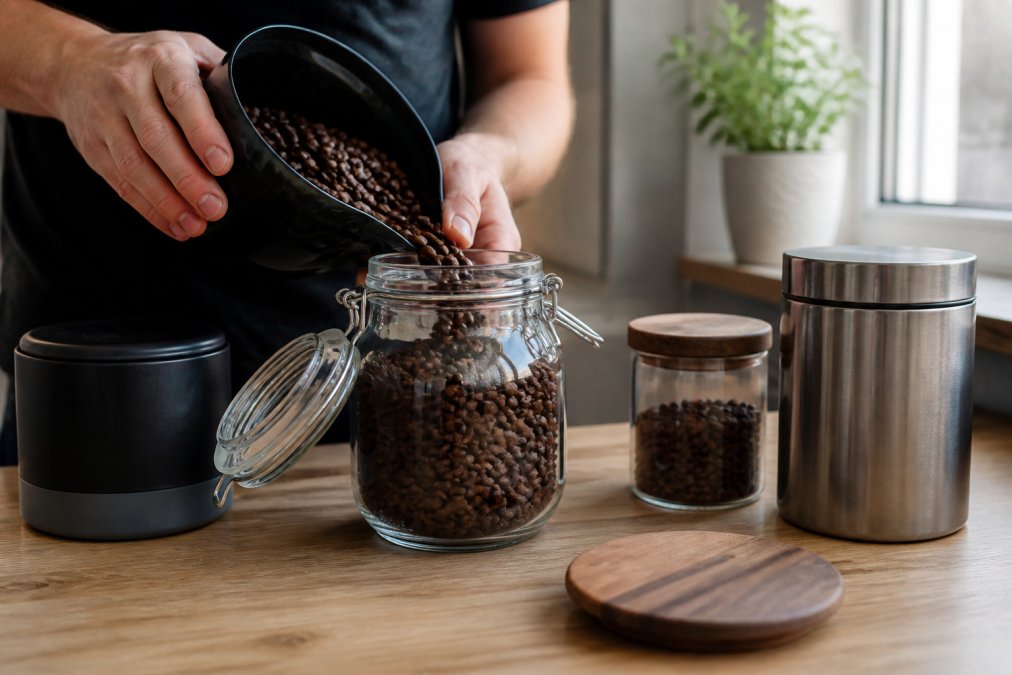
The enemies of coffee freshness are air, light, heat, and moisture. Oxygen causes oxidation. Light degrades the oils. Heat accelerates all chemical reactions. Moisture creates mold and sourness. Your storage method needs to address all four.
An airtight container is non-negotiable. A sealed bag with a one-way valve works temporarily, but once you open it, you're fighting oxidation every time you grab a handful of beans. A glass or opaque ceramic container with an airtight seal keeps oxygen out. Vacuum-sealed containers are even better if you want to extend freshness beyond a few weeks.
Store your coffee in a cool, dark place. Not the freezer, the temperature swings when you open it create condensation, which introduces moisture. Not above the stove or in direct sunlight. A pantry, cabinet, or closet works perfectly. Room temperature, away from heat sources, is ideal.
Buy coffee in quantities you'll use within 2-3 weeks. Whole beans stay fresh longer than ground coffee because grinding increases surface area and accelerates oxidation. If you grind ahead of time, use the coffee within a few days. If you grind as you brew, you'll get noticeably better flavor.
Signs of Stale Coffee Beans: What to Look For
Stale coffee doesn't always announce itself with a bad smell. Sometimes it just tastes flat. Learning to recognize the signs of stale beans helps you avoid wasting money on mediocre coffee.
Fresh coffee beans have a strong, pleasant aroma. Open a bag of fresh beans and you should smell chocolate, fruit, nuts, or flowers depending on the origin. Stale beans smell muted or dull. If you can barely smell anything when you open the bag, the coffee is past its prime.
The color of the beans is another clue. Fresh beans have a rich, uniform color with visible oils on the surface. Stale beans look dry and dull. The oils have oxidized and broken down, leaving the bean looking lifeless. This is especially noticeable with light roasts, which show more visible oil.
The taste is the ultimate test. Fresh coffee has complexity and brightness. You taste multiple flavor notes. The finish is clean. Stale coffee tastes one-dimensional, bitter, or flat. The finish is harsh or muddy. If your coffee tastes like burnt rubber or dirt, it's stale.
Crema is a reliable indicator in espresso. Fresh coffee produces thick, golden crema that lasts. Stale coffee produces thin, pale crema that disappears quickly. If you're an espresso drinker, this is the fastest way to spot a problem.
Flavor Profile Differences: Freshly Roasted vs Mass-Produced
The flavor difference between fresh and stale coffee is dramatic once you know what to listen for. This is where the real value of freshness shows up.
Fresh coffee has brightness and complexity. A single-origin coffee from Ethiopia might taste like blueberry and jasmine. A Colombian coffee might taste like chocolate and orange. These flavor notes exist because the coffee is fresh enough to preserve the delicate compounds that create them. The acidity is clean and pleasant, not sour. The body is full but balanced.
Mass-produced grocery store coffee tastes flat. The flavor notes are muted or absent. You taste roast, not origin. The coffee tastes bitter because the roaster used a darker roast to mask oxidation. The acidity is either absent or sharp and unpleasant. The body is thin. It's designed to be inoffensive, which means it's also designed to be forgettable.
This is why cupping, the professional tasting method used by roasters and importers, is so revealing. When you cup fresh coffee against stale coffee side by side, the difference is undeniable. The fresh coffee has layers of flavor. The stale coffee tastes like burnt cardboard.
The difference becomes even more obvious when you compare freshly roasted specialty coffee to grocery store brands. A freshly roasted single-origin coffee from Cuppari Coffee or a similar roaster will taste like a completely different product than a bag of mass-produced beans. The origin shines through. The roaster's skill is evident. You taste what the coffee is supposed to taste like.
Cost Analysis: Price Per Cup and True Value
Freshly roasted coffee costs more per pound than grocery store coffee. This is the objection most people raise first. But the cost analysis gets more interesting when you account for freshness and flavor.
A bag of grocery store coffee costs less upfront. A typical bag might be $8-12 for 12 ounces. Freshly roasted specialty coffee typically costs more per pound. But here's where the math changes: you use less fresh coffee to get the same satisfaction.
Fresh coffee extracts better. The bloom is more pronounced. The extraction is cleaner. This means you get more flavor from the same amount of beans. A cup of fresh coffee tastes richer and more complex than a cup of stale coffee, even if you use the same brewing method and the same ratio of coffee to water.
You also enjoy the coffee more, which means you're more likely to drink it. Grocery store coffee that tastes mediocre sits in your cabinet. Fresh coffee that tastes great gets consumed. There's no waste because you actually want to drink it.
The true cost comparison is price per satisfying cup, not price per pound. When you factor in extraction efficiency, enjoyment, and the fact that you'll actually finish the bag instead of letting it go stale in your cabinet, freshly roasted coffee is often cheaper than grocery store coffee on a per-cup basis.
Subscription services like Cuppari Coffee add another advantage: consistency. You're not guessing whether the bag you picked up today is fresh or has been sitting for weeks. You know exactly when it was roasted. You know it arrived within days of roasting. You pay for certainty, and that certainty is worth something.
Comparison Table: Freshly Roasted vs Grocery Store Coffee
| Factor | Freshly Roasted | Grocery Store |
|---|---|---|
| Typical Roast Age | 1-7 days | 2-8 weeks |
| Flavor Profile | Complex, bright, origin-specific | Flat, one-dimensional, roast-forward |
| Aroma | Strong, pleasant, nuanced | Muted or absent |
| Price Per Pound | Higher | Lower |
| Price Per Satisfying Cup | Lower (better extraction) | Higher (more waste) |
| Shelf Life | 2-3 weeks optimal | 6-12 months acceptable |
| Roast Date Transparency | Always printed | Rarely printed |
| Oxidation Level | Minimal | Advanced |
| Crema Quality (espresso) | Thick, golden, lasting | Thin, pale, quick to fade |
| Sourcing | Often single-origin, traceable | Commodity blends |
The choice between freshly roasted coffee and grocery store coffee comes down to whether you care about taste. If you're drinking coffee for caffeine, grocery store coffee works fine. It's cheap and convenient. But if you're drinking coffee because you enjoy it, freshly roasted coffee is the only option. The flavor difference is real, and it's significant.
Cuppari Coffee delivers freshly roasted beans directly to your door, roasted after you order and shipped the same day. Every order arrives at peak freshness, still in the active degassing window when flavor is brightest. With free shipping on all U.S. orders and a diverse selection of single origins, blends, and flavored coffees, you get the freshness guarantee that grocery store coffee can never match. Add to cart and experience what fresh coffee actually tastes like.
Frequently Asked Questions
Is freshly roasted coffee actually better than store-bought?
Yes. Freshly roasted coffee contains significantly more volatile flavor compounds and aromatic oils that degrade over time. Store-bought coffee from grocery shelves is typically 3-6 months old, meaning much of its complexity has already oxidized away. The bloom effect, when water causes carbon dioxide to release during brewing, is more pronounced in fresh beans, resulting in better extraction and noticeably brighter, more complex flavor notes. Most coffee professionals recommend brewing within 2-4 weeks of the roast date for optimal results.
How long do coffee beans stay fresh after roasting?
Coffee begins degassing immediately after roasting and reaches peak flavor between 3-7 days post-roast. Beans remain drinkable for about 2-4 weeks if stored properly in an airtight container away from light and heat. After 4 weeks, oxidation accelerates and flavor degradation becomes noticeable. The roast date is critical, always check the bag for this information rather than relying on a vague 'best by' date, which often extends far longer than the coffee actually tastes good.
What is the 15-15-15 rule for coffee?
The 15-15-15 rule refers to optimal coffee freshness windows: brew within 15 days of roasting for peak flavor, store beans at 15°C (59°F) or cooler, and consume within 15 days of opening the bag. While not universally strict, this guideline reflects when most coffee drinkers notice the most significant quality decline. For best results, aim to use your beans within the first 2-4 weeks and store them in a cool, dark place in sealed, valve-packaged bags that prevent oxygen infiltration.
How can you tell if coffee beans are truly fresh?
Check for these signs of freshness: a visible roast date on the package (not just a 'best by' date), beans that are less than 30 days old, a strong, pleasant aroma when you open the bag, and a glossy or slightly oily appearance on darker roasts. Stale beans smell flat or cardboard-like and lack aroma. When brewed, fresh coffee produces a rich bloom with visible bubbling; stale coffee shows minimal bloom. If the bag lacks a roast date, assume it's been sitting on a shelf for months and choose something else.
This article was written using GrandRanker