

Last Updated: October 29, 2026
Quick Summary
Natural coffee flavorings are extracts, oils and spice-derived compounds that change a cup's taste without sugar syrups, and their origin does not determine their nutrition. The meaningful health differences come from sugar content, carriers and how much you add. Cinnamon and vanilla have more modest evidence than headlines suggest.
- Flavored beans are typically flavored after roasting, so the coffee's own character stays intact.
- Check the ingredient list for sugar, corn syrup or cream bases if you want a lean cup.
- Start with one pump of syrup instead of two and taste before adding more.
- If you manage blood sugar or take prescription medication, talk with a doctor or pharmacist before adding cinnamon.
- Start with one flavor at a time to avoid masking the coffee entirely.
Table of Contents
- What Natural Coffee Flavorings Are and How They Are Made
- Natural Flavors Versus Artificial Flavors in Your Cup
- Flavored Coffee Beans Versus Coffee Syrup: Nutrition Compared
- Health Benefits of Cinnamon and Vanilla in Coffee: What the Evidence Shows
- Healthy Ways to Flavor Coffee Without Sugar
- Low-Sugar Coffee Flavorings and Their Calorie Counts
- Allergies, Medication Interactions and Who Should Be Careful
- Choosing Your Next Flavored Bag at Cuppari Coffee
- Frequently Asked Questions
What Natural Coffee Flavorings Are and How They Are Made
Natural coffee flavorings are extracts, oils and spice-derived compounds added to coffee to change its taste without relying on sugar syrups. Flavored beans are typically flavored after roasting, so the coffee's own character stays intact underneath.
Here is the part most buyers miss: a flavor's origin tells you nothing about its nutrition. A natural hazelnut oil and a lab-made hazelnut compound may both add negligible calories to a cup. The meaningful differences show up in sugar content, carriers and how much you actually add.
Natural Flavors Versus Artificial Flavors in Your Cup
The distinction between natural and artificial flavors is mostly about sourcing and processing, not about what your body does with them. Both are present at very low concentrations in a typical cup, so the practical health question is less about the label and more about the total sugar and additives around it.
We recommend checking the ingredient list on any flavored product. Look for sugar, corn syrup or cream bases if your goal is to keep the cup lean, and treat "natural flavoring" as a description of origin only.
Flavored Coffee Beans Versus Coffee Syrup: Nutrition Compared
Flavored beans and coffee syrups deliver flavor very differently, and that difference drives the nutrition gap. Coffee syrups, by contrast, are typically sugar-based, and a standard pump can add a meaningful amount of sugar and calories to a single cup.
Here is a realistic side-by-side for one 12-ounce cup:
Check the label on any syrup or creamer you buy, since the sugar and calorie content varies by brand.
When you compare two options at the store, check three things on the label: the serving size, the grams of added sugar per serving, and whether the first ingredients are sugar, corn syrup, or a cream base. A "one-pump" serving and a full cup can differ sharply, and a product labeled "natural flavor" can still be mostly sugar.
Here is a realistic side-by-side for one 12-ounce cup, as the article describes.
| Option | Sugar content | Flavor source |
|---|---|---|
| Flavored beans | Negligible sugar added | Flavor applied after roasting |
| Coffee syrup | Sugar-based, meaningful per pump | Sugar-based syrup |
| One pump of syrup | Less sugar than a full serving | Adjust gradually |
Health Benefits of Cinnamon and Vanilla in Coffee: What the Evidence Shows
Cinnamon and vanilla are the two flavorings most often promoted for health, and the evidence for them is more modest than the headlines suggest. The key distinction most articles skip is between eating a spice or extract in a study and adding a small amount to a mug of coffee.
Cinnamon.
Vanilla. Vanilla is valued primarily for taste.
What this means for your cup. If you are managing blood sugar or taking prescription medication, talk with a doctor or pharmacist before adding cinnamon to your routine.
Healthy Ways to Flavor Coffee Without Sugar
Most people can flavor coffee without sugar using a few simple methods, and you can start with what you already have in the kitchen.
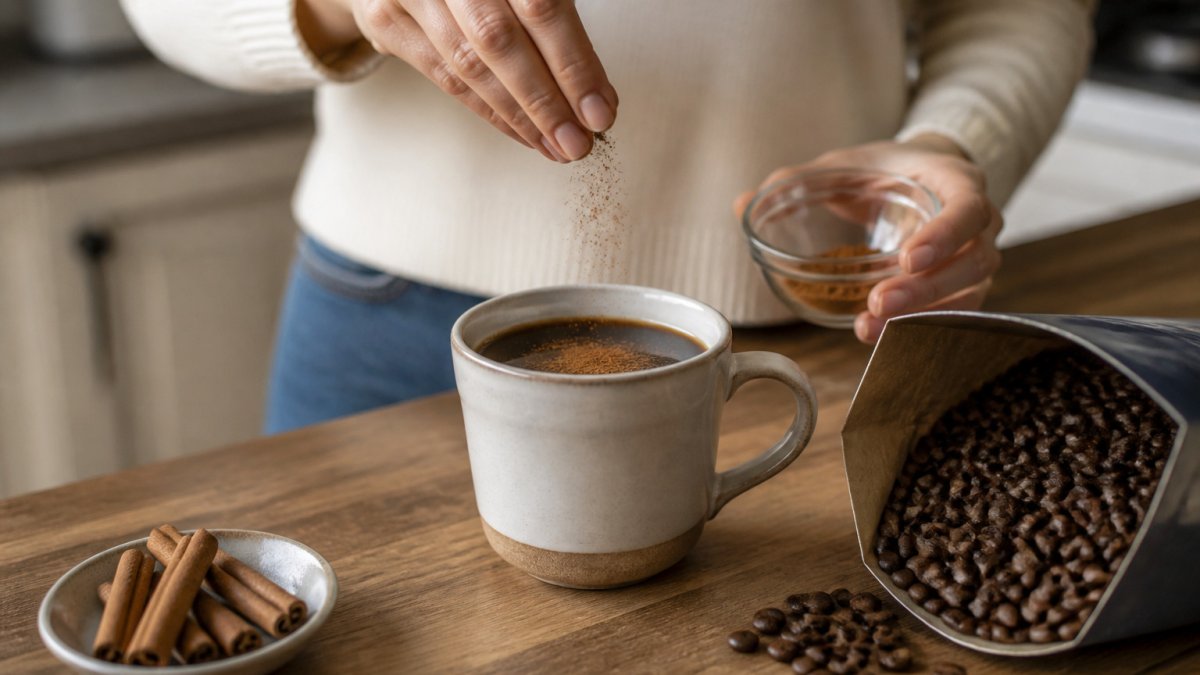
- Dust in ground cinnamon directly onto the grounds before brewing, or stir a quarter teaspoon into the cup.
- Add a drop of pure vanilla extract to the cup after brewing, not to the pot.
- Buy flavored beans such as Caramel, French Vanilla or Hazelnut from our collection.
- Try a Mexican Chocolate blend for a cinnamon-and-chocolate profile.
A common mistake is adding several flavorings at once and masking the coffee entirely. Start with one flavor and adjust gradually.
Low-Sugar Coffee Flavorings and Their Calorie Counts
Because product formulas change, verify the nutrition panel on any flavoring you buy rather than relying on a general figure. When you compare two options, check the serving size as well, since a "one-pump" serving and a full cup can differ sharply.
Allergies, Medication Interactions and Who Should Be Careful
Anyone with a nut allergy, or a known sensitivity to cinnamon or vanilla, should read labels closely before trying a flavored blend. If you take prescription medication or manage a condition, check with a doctor or pharmacist before adding flavorings to your daily routine.
Choosing Your Next Flavored Bag at Cuppari Coffee
If you want flavor without the sugar, our flavored coffees are built for exactly that. Our Hazelnut, Caramel, French Vanilla and Mexican Chocolate blends each cost $21.99 and are labeled with natural flavoring. Browse the full flavored collection to find your next bag, and if you are not sure where to start, our Cinnabun option is a good cinnamon-forward pick.
Frequently Asked Questions
Are natural coffee flavorings healthier than artificial flavorings?
Natural and artificial flavorings are both added in very small amounts, so the health difference is usually small. Natural flavorings are derived from plant or animal sources, while artificial flavorings are made in a lab. Neither adds meaningful nutrition, and the bigger health factor is usually added sugar or cream in the drink. Check the label for sugar content and for the words 'natural flavor' or 'artificial flavor' to see how each product is flavored.
Do natural coffee flavorings add calories or sugar to coffee?
Flavoring oils and extracts typically add close to zero calories at the amounts used. Syrups are different: many contain added sugar, and a single pump can add several grams of sugar. Always compare the nutrition panel when you can.
What are the healthiest ways to flavor coffee without sugar?
Cinnamon, a splash of vanilla extract, and cocoa powder are common ways to add flavor without sugar. Flavored beans, such as our Mexican Chocolate or French Vanilla, add flavor to your cup. Brewing with less milk and choosing unsweetened milk also cuts sugar.
Can cinnamon or vanilla add health benefits to coffee?
These flavorings add taste to coffee, but they should not be viewed as a treatment for any health condition.
Ready to taste the difference that fresh roasting makes? Choose your flavor, add it to your cart, and we will roast and ship it the same day, with free shipping on all U.S. orders.
