

Table of Contents
- Why Home Espresso Machine Cleaning Tips Matter
- What You'll Need: Essential Espresso Machine Cleaning Tools
- Step-by-Step Daily Cleaning Routine
- How to Descale Your Espresso Machine Properly
- How Often to Backflush Your Espresso Machine
- How to Clean Espresso Machine Steam Wand Effectively
- Common Mistakes to Avoid When Cleaning Your Machine
- Advanced Home Espresso Machine Cleaning Tips
- Frequently Asked Questions
Home Espresso Machine Cleaning Tips: A Complete Guide
Last Updated: June 29, 2026
Keeping your home espresso machine clean directly impacts the quality of every shot you pull. Neglected machines produce bitter, stale-tasting espresso and fail prematurely. Scale buildup, coffee oil residue, and milk proteins create barriers between water and your grounds, resulting in uneven extraction and compromised flavor. This guide covers daily routines, descaling procedures, backflushing techniques, and advanced cleaning methods that keep your machine running smoothly and your espresso tasting exceptional.
Why Home Espresso Machine Cleaning Tips Matter
Your espresso machine is an investment that deserves protection. Without consistent cleaning, mineral deposits accumulate inside the boiler and group head, restricting water flow and forcing your machine to work harder. This stress accelerates wear on internal components and eventually leads to expensive repairs.
Coffee oils oxidize and turn rancid when left on shower screens, portafilters, and baskets. Even a thin film of dried milk protein on the steam wand creates bitter, burnt flavors. The good news is that preventing these issues requires minimal effort. Spending five minutes on daily cleaning prevents the need for hours of deep cleaning later.
What You'll Need: Essential Espresso Machine Cleaning Tools
Gather the right supplies before starting any cleaning routine. Using proper tools prevents damage and makes cleaning efficient enough that you'll actually stick with it.
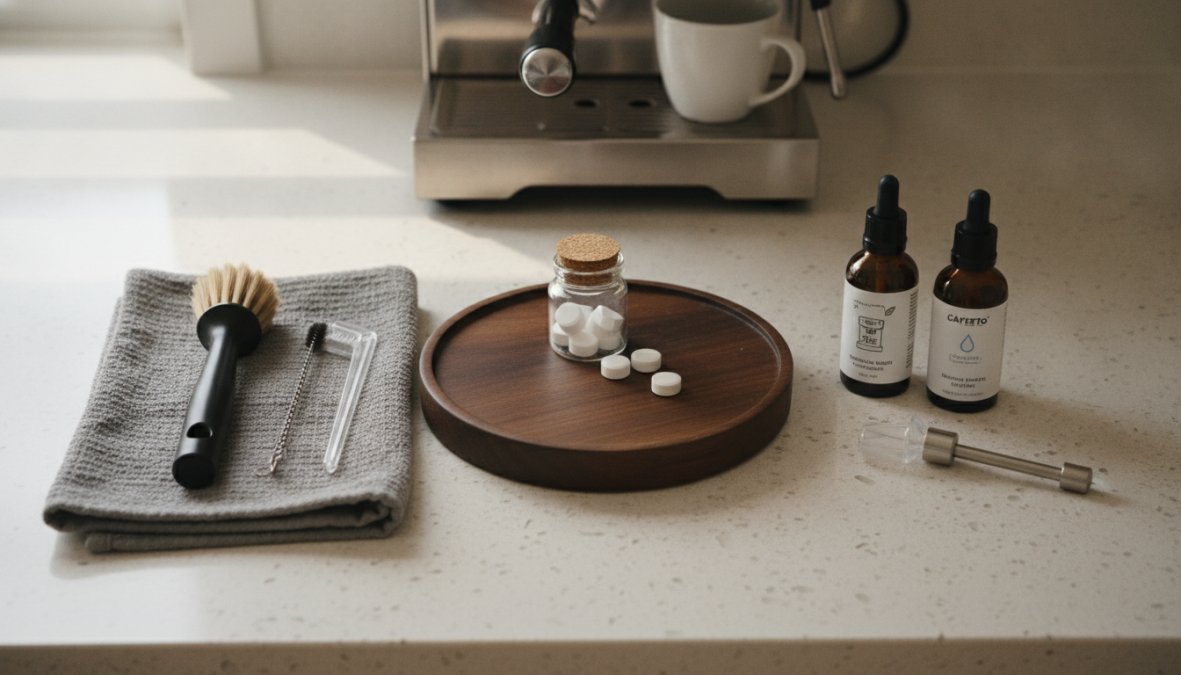
Daily Cleaning Supplies
You need only three items for your daily routine: a brass brush (never steel, it scratches), a microfiber cloth or dedicated espresso towel, and distilled water. A blind basket, a portafilter basket with no holes, is invaluable for backflushing practice. If yours didn't come with one, they cost under $15.
Deep Cleaning Equipment
Descaling solution removes mineral buildup that daily cleaning can't touch. Brands like Cafiza or Durgol work well; check your machine's manual for preferred products. Never use vinegar, it damages internal seals.
A cleaning tablet (compressed cleaning powder) removes coffee oils from the group head and shower screen more effectively than water alone. A pack of 10 tablets costs around $8 and lasts months. For steam wands, a small pipe cleaner set helps clear blocked ports.
Step-by-Step Daily Cleaning Routine
A five-minute daily routine prevents the buildup that makes deep cleaning necessary.
1. Purge the group head (30 seconds) Run water through the group head with no portafilter attached. This flushes out loose grounds and heats the group for even extraction.
2. Backflush with water (1 minute) Insert the blind basket into your portafilter. Lock it into the group head and press the pump button for one second, then release. Repeat 5-10 times. This is the most important step in your daily routine.
3. Clean the shower screen (1 minute) Use your brass brush to gently scrub the shower screen in circular motions. Wipe away loose grounds with a damp cloth.
4. Wipe the portafilter and basket (2 minutes) Use a damp microfiber cloth to remove all visible coffee residue. Dry everything with a clean cloth to prevent water spots.
5. Clean the steam wand immediately (1 minute) Wipe the wand with a damp cloth immediately after steaming, then purge steam for 2-3 seconds to clear any milk inside the tip.
How to Descale Your Espresso Machine Properly
Descaling removes mineral deposits that accumulate inside the boiler and group head, problems that daily cleaning cannot address.
Step 1: Check your machine's manual Different machines have different descaling procedures. Always follow your manufacturer's instructions first.
Step 2: Fill the water tank with descaling solution Mix descaling solution according to package directions. Never use vinegar or homemade solutions; they damage internal seals and void warranties.
Step 3: Run solution through the group head Lock an empty portafilter into the group head and run the solution through for 10 seconds, then stop for 10 seconds. Repeat this cycle for 5 minutes.
Step 4: Run solution through the steam wand Place the steam wand over a cup and activate steam for 30 seconds.
Step 5: Let the solution sit Turn off your machine and let the descaling solution sit inside for 20 minutes.
Step 6: Repeat the cycle Run the solution through the group head and steam wand again using the same 10-second on, 10-second off pattern for another 5 minutes.
Step 7: Rinse thoroughly Empty the water tank and refill with fresh distilled water. Run water through the group head and steam wand for a full minute. Repeat this rinse cycle three times to remove all descaling solution.
Descaling Frequency and Signs Your Machine Needs It
How often you descale depends on your water hardness. In soft water areas, descaling every 3-4 months is sufficient. In hard water regions, monthly descaling may be necessary. Signs your machine needs descaling include slower water flow, longer brew times, and sputtering from the steam wand.
How Often to Backflush Your Espresso Machine
Backflush with water after every single shot. This takes 30 seconds and prevents oils from accumulating in the group head. Once weekly, backflush with a cleaning tablet instead of water. After using a cleaning tablet, always backflush with water 10-15 times to rinse away all cleaning powder.
Backflushing vs. Descaling: Key Differences
Backflushing removes coffee oils and loose residue from the group head daily in seconds. Descaling removes mineral deposits from inside the boiler and internal plumbing monthly or quarterly in 30 minutes. You can't skip either one. Backflushing keeps the group head clean; descaling keeps the boiler healthy.
How to Clean Espresso Machine Steam Wand Effectively
Milk proteins harden quickly. A neglected steam wand produces sour, burnt-tasting milk and eventually clogs completely.
Immediate cleaning (right after steaming): Wipe the outside of the wand with a damp cloth immediately after steaming. Then purge steam for 2-3 seconds with no cloth, forcing milk out of the internal tip. Wipe again. This 20-second process prevents 99% of steam wand problems.
Daily deep clean: Once per day, soak the steam wand tip in hot water for 2 minutes. Use a small pipe cleaner to gently clear the internal port. Purge steam to expel water. Wipe dry.
Weekly intensive clean: Remove the steam wand tip if your machine allows it. Soak it in hot water mixed with cleaning tablet solution for 10 minutes. Use a fine pipe cleaner to clear the port completely. Rinse thoroughly and reattach.
Preventing Milk Buildup and Corrosion
Never leave milk residue on the wand for more than a few minutes. Use distilled water for purging and cleaning, not tap water. Tap water minerals combine with milk proteins and create stubborn deposits. If the wand develops a dull, pitted appearance, corrosion is beginning. Prevention through immediate wiping and purging is the only real solution.
Common Mistakes to Avoid When Cleaning Your Machine
Using steel wool or steel brushes. Steel scratches stainless steel and creates pits where bacteria accumulate. Always use brass brushes or soft cloths.
Backflushing with the shower screen installed. Check your manual. Forcing water backward through a screen can damage internal seals.
Descaling too frequently. Over-descaling damages internal seals and gaskets. Follow your machine's manual and water hardness level.
Using vinegar as a descaling solution. Vinegar corrodes internal components and affects espresso for weeks. Always use commercial descaling solution.
Leaving water in the group head overnight. Stagnant water breeds bacteria and mineral deposits. Run water through and empty the machine completely before storing.
Ignoring the shower screen. When clogged with coffee oils, it creates uneven extraction and bitter shots. Backflush daily and clean weekly with a brush.
Forgetting to clean the basket. Coffee residue builds up inside and affects every shot. Wipe the interior after each use and soak weekly in cleaning tablet solution.
Advanced Home Espresso Machine Cleaning Tips
Deep Cleaning the Portafilter and Basket
Monthly, soak both in hot water mixed with cleaning tablet solution for 15 minutes. Use a small brush to scrub the interior of the basket, paying special attention to the walls where oils accumulate. Inspect the portafilter spout for cracks or damage, which create uneven water flow and poor extraction.
Cleaning the Group Head and Shower Screen
Remove the shower screen if your machine allows it. Soak it in hot water with cleaning tablet solution for 10 minutes. Use a soft brush to remove buildup from the underside. Inspect the group head gasket, the rubber seal that holds the portafilter in place. If it looks cracked or compressed, it needs replacement. Worn gaskets allow water to leak around the portafilter and compromise extraction pressure.
Use a group head cleaning brush to scrub the interior walls. Insert the brush and rotate it gently to remove oils. Backflush with water 10 times to clear away loosened debris. Check the dispersion screen inside the group head for damage. If bent or cracked, water will bypass your grounds and create weak shots.
Keeping your espresso machine clean is the foundation of great home espresso. Daily maintenance takes minutes but prevents the buildup that leads to poor-tasting shots and expensive repairs. Pair your cleaning routine with premium, freshly roasted coffee and experience the difference that both cleanliness and quality beans deliver to every shot.
| Cleaning Task | Frequency | Time Required | Impact |
|---|---|---|---|
| Backflush with water | After every shot | 30 seconds | Removes coffee oils |
| Wipe steam wand | Immediately after use | 20 seconds | Prevents milk buildup |
| Daily group head cleaning | Once daily | 2 minutes | Maintains extraction |
| Backflush with cleaning tablet | Once weekly | 1 minute | Removes stubborn oils |
| Deep clean basket and portafilter | Once monthly | 15 minutes | Extends equipment life |
| Descale machine | Monthly to quarterly | 30 minutes | Removes mineral deposits |
| Clean shower screen thoroughly | Once monthly | 5 minutes | Ensures even water distribution |
Frequently Asked Questions
How often should you clean your home espresso machine?
Daily cleaning is essential after every use, purge the group head, backflush the portafilter, and wipe the steam wand immediately. Deep cleaning through backflushing should happen 2-3 times per week, while full descaling is typically needed every 1-3 months depending on water hardness. Following these home espresso machine cleaning tips prevents oil buildup and mineral deposits that degrade espresso quality.
What is the difference between backflushing and descaling?
Backflushing uses water pressure to force out coffee oils and residue from the group head and portafilter, it's a quick maintenance step done 2-3 times weekly. Descaling uses chemical solutions to dissolve mineral buildup inside the machine's internal passages and boiler. Both are essential parts of home espresso machine cleaning tips, but they serve different purposes: backflushing removes coffee oils, while descaling removes mineral scale.
Can I use vinegar to clean my espresso machine?
While vinegar is acidic and can dissolve mineral deposits, it's not recommended for espresso machines because vinegar residue can damage internal components and affect espresso flavor. Instead, use espresso machine-specific descaling solutions formulated to be safe for your machine's materials. These specialized cleaners are part of proper home espresso machine cleaning tips and protect your investment while delivering superior results compared to household vinegar.
How do I know if my espresso machine needs descaling?
Signs include slower water flow, longer extraction times, reduced pressure, or visible mineral buildup on the shower screen. Some machines have descaling indicator lights. Water hardness affects frequency, hard water requires more frequent descaling. If you're using freshly roasted beans from quality sources like Cuppari Coffee and still experiencing poor extraction, descaling may be necessary. Regular descaling is a critical home espresso machine cleaning tip that maintains consistent espresso quality.
External Sources Referenced:
[EXTERNAL_LINK: Specialty Coffee Association guidelines for espresso machine maintenance | sca.coffee]
[EXTERNAL_LINK: Water hardness testing and mineral content analysis for coffee preparation | waterqualityassociation.org]
[EXTERNAL_LINK: Espresso equipment care and maintenance best practices | coffeegeek.com]
This article was written using GrandRanker