

Table of Contents
- How Long Does Coffee Stay Fresh? Shelf Life by Type
- Whole Bean vs Ground Coffee Freshness: What's the Real Difference?
- What Makes Coffee Go Stale? The Science of Flavor Degradation
- Signs of Stale Coffee You Should Never Ignore
- How to Store Coffee Beans to Maximize Freshness
- Freezing Coffee Beans: Does It Actually Work?
- How Long Does Coffee Stay Fresh After Roasting? Why the Roast Date Matters
- Conclusion
Last Updated: June 7, 2026
Most coffee drinkers have stared at a bag of beans on the counter and wondered whether it's still worth brewing. Knowing how long does coffee stay fresh is not trivial: the difference between peak-flavor coffee and a flat, bitter cup comes down to days, not weeks. At Cuppari Coffee, we roast every order the same day it's placed and ship immediately, precisely because freshness degrades faster than most guides admit. Below, we'll cover shelf life by coffee type, the science behind flavor degradation, proper storage, and angles most articles skip, including freezing, roast-level differences, and pod-specific degradation.
Here's what most guides get wrong: they treat "best by" dates as meaningful freshness indicators. They're not. A bag dated 12 months out tells you almost nothing about when the coffee was actually roasted.
How Long Does Coffee Stay Fresh? Shelf Life by Type
Coffee freshness is the preservation of volatile aromatic compounds, soluble flavor molecules, and CO2 that together produce a vibrant cup. Once those elements degrade through oxidation, moisture exposure, or off-gassing, the coffee is stale regardless of whether it's technically safe to drink.
| Coffee Type | Peak Freshness Window | Acceptable Range | Key Threat |
|---|---|---|---|
| Whole beans (sealed) | 2-4 weeks post-roast | Up to 6 months | Oxidation |
| Ground coffee (sealed) | 1-2 weeks post-grind | Up to 3 months | Oxidation + moisture |
| Brewed coffee (room temp) | Under 30 minutes | Up to 4 hours | Oxidation + bacteria |
| Cold brew (refrigerated) | 7-10 days | Up to 14 days | Microbial growth |
| Coffee pods/capsules | 12-24 months sealed | Per manufacturer date | Seal integrity |
Whole Bean Coffee Shelf Life
Whole beans stay fresh for roughly 2 to 4 weeks after the roast date when stored properly in an airtight container at room temperature. After that, oxidation steadily strips away aroma and complexity, though the coffee remains drinkable for several months. The roast date, not the best-by date, is the number that actually matters.
Ground Coffee Shelf Life
Grinding increases surface area by roughly a thousandfold, exposing far more of the coffee's interior to oxygen. Ground coffee hits peak flavor within minutes and degrades noticeably within 1 to 2 weeks, even sealed. Pre-ground coffee from a store may already be weeks old before it reaches your grinder. Grind only what you need, immediately before brewing.
Brewed Coffee and Cold Brew Shelf Life
Brewed coffee is best consumed within 30 minutes. Left at room temperature, oxidation and bacterial activity make it flat and sour within hours. Cold brew, never exposed to heat, is more shelf-stable: stored airtight in the refrigerator, it stays fresh for 7 to 14 days before taking on a musty, over-extracted quality.
Whole Bean vs Ground Coffee Freshness: What's the Real Difference?
A whole bean is a sealed unit, its oils, aromatic compounds, and CO2 are locked inside a dense cellular structure that acts as a natural barrier against oxygen and moisture. The moment you grind it, that barrier disappears.
Ground coffee has an exponentially larger surface area exposed to air, and oxidation accelerates immediately. This is why pre-ground grocery store coffee often tastes flat even when technically "fresh": by the time it reaches your cup, it may have been ground weeks or months ago.
The practical implication is clear: whole beans give you a 2 to 4 week peak window; ground coffee gives you days.
What Makes Coffee Go Stale? The Science of Flavor Degradation
Staleness is the cumulative result of several chemical processes happening simultaneously, each stripping away a different dimension of flavor.
Oxidation and Moisture
Oxidation is the primary driver of coffee flavor degradation. Oxygen reacts with aromatic compounds and oils in roasted coffee, breaking them down into compounds that taste flat, papery, or rancid, and accelerates in the presence of heat, light, and moisture. Water molecules further speed oxidation reactions and can trigger hydrolysis, breaking down flavor compounds into less pleasant forms. This is why storing coffee near a stove, dishwasher, or sink is one of the worst things you can do. According to the National Coffee Association's coffee storage guidance, coffee should be stored away from heat, light, and moisture in an opaque, airtight container.
UV light is a separate threat: light-catalyzed oxidation degrades coffee oils faster than darkness-stored beans, which is why quality roasters use opaque or foil-lined bags.
Degassing and CO2 Release
Roasting produces significant CO2 inside the bean, which creates positive pressure in sealed bags that slows oxygen infiltration and causes the "bloom" when hot water hits fresh grounds. The problem is that CO2 dissipates over 2 to 4 weeks post-roast. Once it's gone, oxygen infiltrates more easily and oxidation accelerates, which is why vacuum-sealed and nitrogen-flushed packaging extends shelf life.
The counterintuitive part: coffee within the first 24 to 48 hours of roasting can produce uneven extraction because CO2 escapes so rapidly it interferes with water contact. Most specialty roasters recommend a 3 to 7 day rest before brewing espresso.
How Roast Level Affects Shelf Life
Darker roasts degrade faster than light roasts. High-heat roasting drives the bean's natural oils to the surface, where they're directly exposed to oxygen, visible as the oily sheen on dark roast beans. Light roasts retain oils internally and hold flavor complexity longer. If you prefer dark roasts, plan to use them within 1 to 2 weeks of opening. The 2 to 4 week peak window still applies across all roast levels.
Signs of Stale Coffee You Should Never Ignore
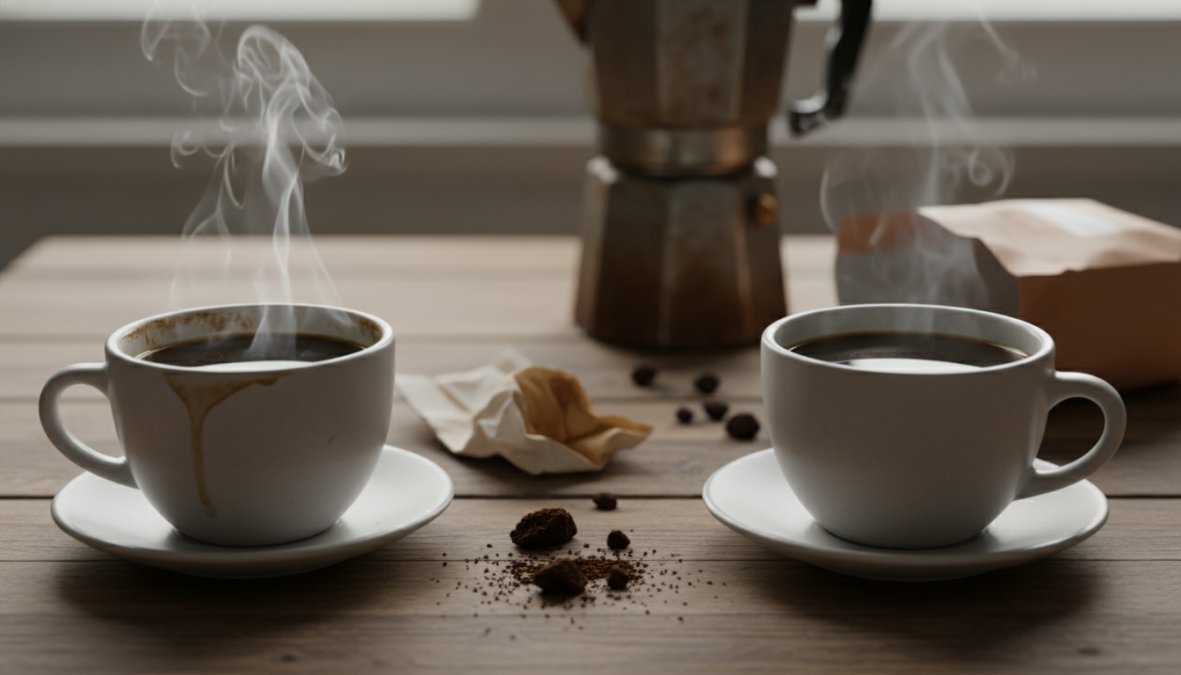
Stale coffee announces itself clearly if you know what to look for. The key signs, in order of how early they appear:
- Loss of aroma: Fresh coffee smells intensely of its roast character. Stale coffee smells faint, musty, or like cardboard, the earliest and most reliable indicator.
- No bloom during brewing: If hot water hits grounds and nothing happens, the CO2 is gone and the coffee is stale.
- Flat or bitter taste: Oxidized coffee loses sweetness and brightness, leaving dull bitterness or a sour, papery aftertaste.
- Oily residue on dark roast beans: Rancid oils smell waxy or unpleasant, indicating the fats have oxidized.
- Visual dullness: Stale beans look faded, dusty, or uniformly matte even on roast levels that should show surface sheen.
How to Store Coffee Beans to Maximize Freshness
Proper coffee storage requires ignoring some deeply embedded habits. The refrigerator is not your friend here. Neither is the decorative glass jar on your counter.
- Use an opaque, airtight container. Ceramic or stainless steel with airtight seals are ideal. Clear glass exposes beans to light-catalyzed oxidation.
- Store at room temperature, away from heat sources. Avoid areas near your stove, oven, or dishwasher. A cool, dark cabinet is correct.
- Buy in smaller quantities. Purchasing only what you'll use within 2 to 3 weeks is more effective than any container or technique.
- Keep the original bag if it has a one-way valve. These valves let CO2 escape without letting oxygen in, functional, not decorative.
- Never store in the refrigerator for daily use. The fridge introduces moisture and absorbs food odors. Every time you open a cold container in a warm kitchen, condensation forms on the beans.
Coffee Pod and Capsule Storage: What Competitors Miss
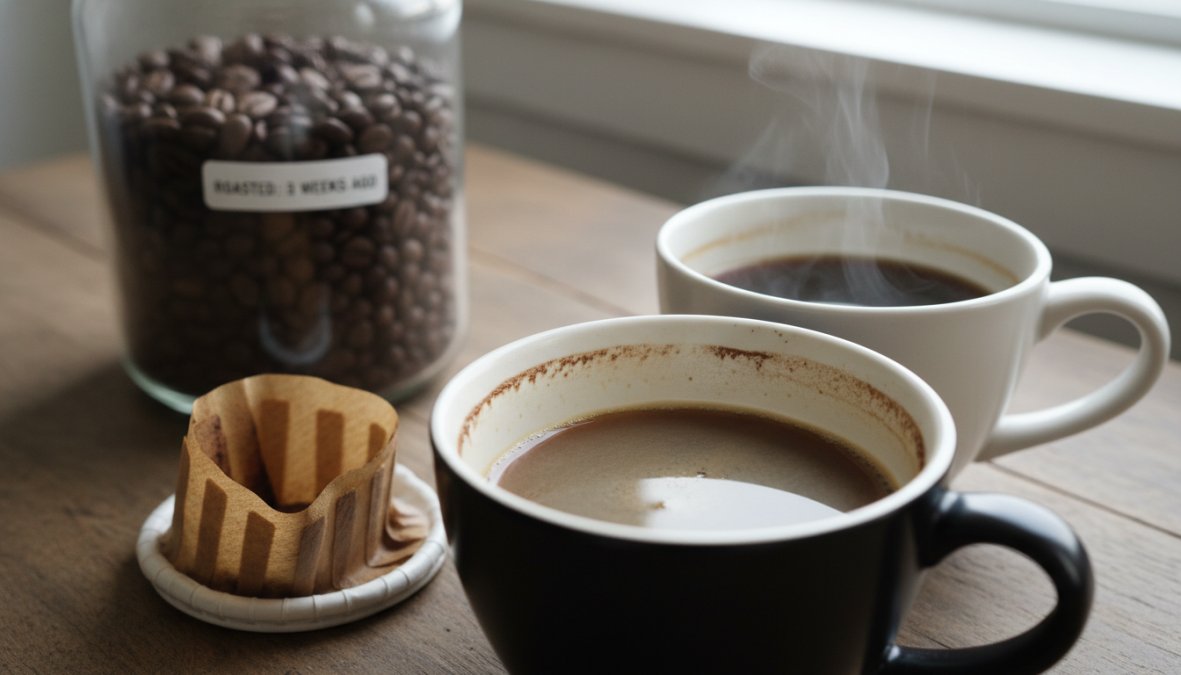
Sealed capsules contain no oxygen, they're nitrogen-flushed during manufacturing, which halts oxidation almost entirely. This is why Cuppari Coffee's capsules maintain freshness for 12 to 24 months when sealed, with an improved filter design that absorbs more grounds for a cleaner, livelier cup.
The critical variable is seal integrity. A damaged pod degrades as fast as open ground coffee. Store pods at room temperature, away from direct sunlight, and never stack them in ways that stress the seal. Once punctured, use immediately.
According to food science research on modified atmosphere packaging, nitrogen-flushed packaging can extend the shelf life of oxidation-sensitive foods by 3 to 5 times compared to air-packed alternatives, which translates directly to the 12 to 24 month windows manufacturers cite.
Freezing Coffee Beans: Does It Actually Work?
The conventional wisdom, "don't freeze coffee", is outdated. Freezing works, but only under specific conditions. The enemy is not cold temperatures; it's moisture and temperature cycling.
- Single-freeze protocol: Portion beans into airtight, freezer-safe bags before freezing. Remove a portion, let it come fully to room temperature before opening the bag (this prevents condensation), and never refreeze what's left.
- Never freeze and thaw repeatedly. Each cycle introduces condensation, accelerating oxidation and introducing off-flavors within days.
- Vacuum-sealed bags are best. Standard zip-lock bags allow air infiltration over weeks. Vacuum-sealed bags can preserve frozen beans for 2 to 3 months with minimal quality loss.
The specialty coffee community, including guidance from the Specialty Coffee Association's research on coffee storage, has increasingly accepted freezing as a legitimate preservation method when done correctly.
How Long Does Coffee Stay Fresh After Roasting? Why the Roast Date Matters
The roast date is the single most important piece of information on any bag of specialty coffee, more important than origin, variety, or processing method. Here's the timeline specialty roasters and baristas actually use:
- Days 1-3 post-roast: High CO2 activity, uneven extraction. Best to rest, especially for espresso.
- Days 4-14 post-roast: Peak flavor window for most brewing methods. Aroma is at maximum intensity.
- Days 15-30 post-roast: Noticeable but gradual flavor decline. Still good, especially for filter brewing.
- Days 30-60 post-roast: Significant degradation. Acceptable for casual drinking, but complexity is largely gone.
- Beyond 60 days post-roast: Stale by any meaningful definition, though still food-safe.
This is why Cuppari Coffee roasts only after an order is placed and ships the same day: by the time the bag reaches your door, you're at day 2 or 3 post-roast, entering the peak flavor window rather than exiting it. Most grocery store coffee, by contrast, may be 60 to 90 days post-roast before it even reaches the shelf, which is also why buying in bulk from a warehouse retailer is a false economy. The savings per pound are real, but you're paying for coffee that's already past its peak, or will be before you finish it.
Frequently Asked Questions
Does coffee actually expire or go bad?
Coffee rarely becomes unsafe to drink, it's a food safety non-issue in most cases. However, it absolutely goes bad in terms of quality. Oxidation, moisture, and UV light break down the aromatic compounds and oils that give coffee its flavor and aroma. What you're left with is a flat, bitter, or cardboard-tasting brew. For peak flavor, whole beans should be used within 2-4 weeks of the roast date, and ground coffee within 1-2 weeks.
How can you tell if coffee beans are stale?
The clearest signs of stale coffee include a faded or absent aroma when you open the bag, a flat or bitter taste in the cup, and oily beans that have gone rancid. Fresh whole beans should smell vibrant and complex. Ground coffee loses its aroma even faster. If your coffee smells like cardboard or nothing at all, it's past its peak. Checking the roast date on the bag is the most reliable way to gauge freshness before brewing.
Should you store coffee in the fridge or freezer?
The refrigerator is generally a poor choice for storing coffee beans, it introduces moisture and absorbs odors, both of which accelerate flavor degradation. Freezing coffee beans can work if done correctly: use a vacuum-sealed or airtight container, freeze in single-use portions, and never refreeze thawed beans. For everyday use, an airtight container stored at room temperature away from heat, moisture, and UV light is the best storage method for maintaining freshness.
Does vacuum-sealed coffee stay fresh longer?
Yes, vacuum-sealed or nitrogen-flushed packaging significantly extends coffee's shelf life by removing the oxygen that drives oxidation. Commercially sealed whole beans can stay shelf-stable for months unopened. However, once the seal is broken, the clock starts ticking regardless of how it was packaged. For the freshest experience, look for coffee roasted to order and shipped the same day, so the roast date aligns with when you actually open and brew it.
How long does ground coffee stay fresh after opening?
Once opened, ground coffee typically stays fresh for about 1-2 weeks when stored in an airtight container at room temperature. Ground coffee has far more surface area exposed to oxygen than whole beans, which dramatically speeds up flavor degradation. Pre-ground coffee purchased from a store may have already lost significant freshness before you even open it. Grinding whole beans fresh immediately before brewing is the most effective way to preserve peak flavor and aroma.
What is the best way to store coffee to keep it fresh?
Store coffee beans in an opaque, airtight container at room temperature, away from heat sources, moisture, and UV light. Avoid the fridge. Grind only what you need immediately before brewing. If you buy in bulk, portion beans into vacuum-sealed bags before freezing, and only thaw what you'll use within the next week or two. Starting with freshly roasted beans (ideally roasted to order) gives you the longest possible window of peak flavor from day one.
Coffee freshness degrades faster than most people realize, and the gap between a bag roasted yesterday and one roasted two months ago is not subtle. If you want coffee that arrives at peak flavor, the supply chain matters as much as the storage method. Cuppari Coffee roasts every order fresh, ships the same day, and offers free shipping on all U.S. orders, so the coffee reaching your door is days off the roaster, not months. Add to cart and taste the difference that a genuine roast date makes.
This article was written using GrandRanker