

Table of Contents
- Why Coffee Beans Need to Rest After Roasting
- Understanding the Coffee Degassing Process
- Optimal Coffee Resting Time by Roast Level
- How to Store Coffee Beans Fresh During Rest
- Signs Your Coffee Beans Are Ready to Brew
- Resting Time Adjustments by Brewing Method
- Common Mistakes to Avoid During the Resting Phase
- Conclusion
Last Updated: August 23, 2026
Why Coffee Beans Need to Rest After Roasting
Fresh roasted coffee beans contain trapped gases that must escape before you can extract full flavor potential. This resting period, called the degassing phase, is essential for developing the complex flavors and aromas that make premium coffee worth the wait.
The roasting process heats beans to 350-450°F, causing starches to convert to sugars, proteins to break down into amino acids, and oils to migrate to the surface (peer-reviewed research). These reactions create carbon dioxide as a byproduct, which gets trapped within the bean's cell structure and needs time to dissipate. At Cuppari Coffee, we understand that timing this degassing process correctly makes the difference between a flat, sour cup and one with balanced body and clarity.
Brewing with beans that haven't finished degassing creates extraction problems. Excess CO2 interferes with water's ability to penetrate the bean and dissolve the soluble compounds you want in your cup. The result tastes either too sour or too bitter. The roast date matters more than the expiration date, it tells you exactly when the degassing process began and guides your brewing decisions.
Understanding the Coffee Degassing Process
Degassing is the natural release of carbon dioxide and other volatile compounds from roasted coffee beans over time. Heat transforms the green bean's structure during roasting, creating gas pockets throughout. These pockets contain CO2 produced during roasting plus gases already present in the bean's cell structure that expand under heat.
Degassing follows a predictable curve: rapid release in the first 24-48 hours, then gradual decline over the following days. A freshly roasted bean might release 50% of its CO2 in the first day, another 30% over days 2-4, and the remaining 20% over the next week (peer-reviewed research). Temperature and humidity affect the rate, but the timeline remains relatively consistent across different roast profiles.
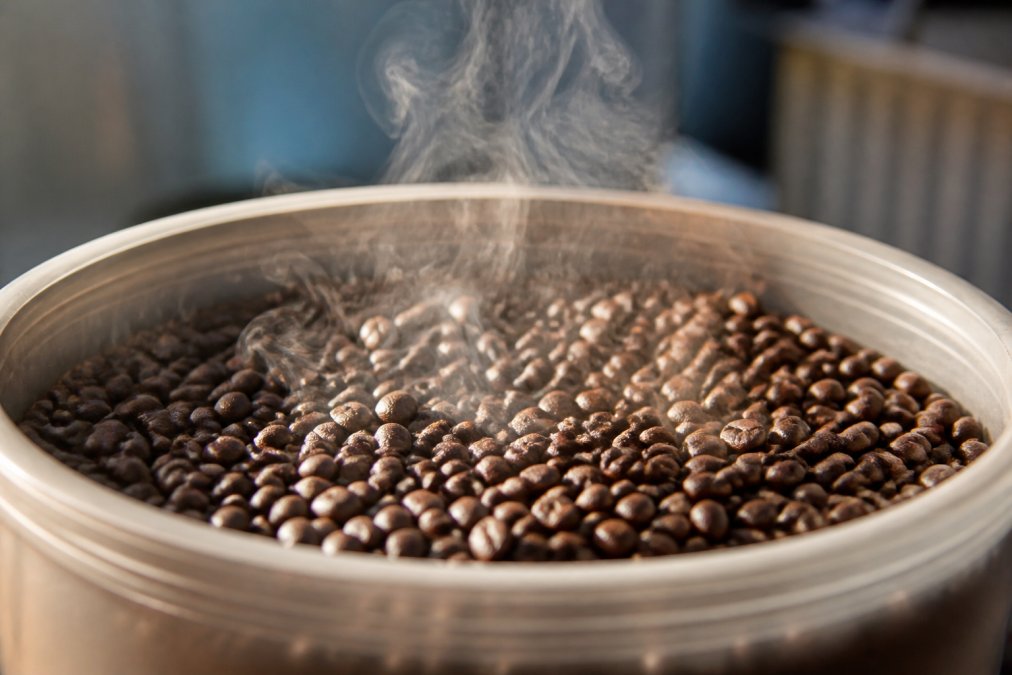
Understanding this timeline explains why different brewing methods require different resting periods. Espresso machines are extremely sensitive to excess CO2, the gas creates pressure that forces water through too quickly, resulting in sour, underextracted shots. Filter coffee is more forgiving because gravity pulls water through more slowly, but excess CO2 still disrupts the bloom phase where initial flavor extraction begins.
How CO2 Release Affects Flavor
CO2 is acidic and forms carbonic acid when it contacts water. During the bloom phase (the first 30-45 seconds when water first contacts grounds), this carbonic acid helps break down the bean's surface and begin extraction. But too much CO2 creates over-acidity that overwhelms other flavor notes.
As CO2 escapes, the bean's cell structure becomes more porous and receptive to water. Flavor compounds that create sweetness, body, and complexity become more accessible, while harsh, sour, and grassy notes diminish. Coffee that's rested properly tastes noticeably smoother than coffee brewed immediately after roasting.
The acidity profile shifts measurably as degassing progresses. Freshly roasted beans emphasize bright, citric acids. After 3-5 days, those acids mellow and sweeter notes emerge. By day 7-10, the coffee develops fuller body and more complex flavor development.
Optimal Coffee Resting Time by Roast Level
The ideal resting period depends primarily on roast darkness. Lighter roasts require longer degassing time than darker roasts because they contain more CO2 trapped in a denser cell structure. Darker roasts have already lost some cellular integrity during longer roasting, so gases escape more readily.
Light Roasts
Light roasts should rest for 5-7 days after roasting before reaching peak flavor. Light roasts are removed from heat at the end of first crack (the audible popping sound as moisture escapes and cell walls fracture). This shorter roasting time means beans retain a denser structure and trap more CO2 throughout their cell walls.
Brewing light roast coffee before day 5 results in sour, sharp flavors because trapped CO2 interferes with proper extraction. By day 5-7, enough CO2 has escaped that the bean's delicate flavor notes, often citrus, floral, or fruit-forward characteristics, become accessible. These beans typically peak around day 7-10 and maintain quality through day 14-21 with proper storage.
Medium Roasts
Medium roasts need 3-5 days of rest before they're ready to brew. The roasting process extends slightly longer than light roasts, allowing more CO2 to escape during roasting itself. The bean's cell structure is slightly less dense, so remaining gases dissipate faster.
Medium roasts hit their flavor sweet spot around day 4-5 and maintain excellent quality through day 10-14. These beans offer the balance that appeals to most coffee drinkers, enough acidity to taste bright, enough body to feel substantial, and enough complexity to be interesting.
Dark Roasts
Dark roasts can be brewed as early as 2-3 days after roasting, though they continue improving through day 5-7. Dark roasts spend the longest time in the roaster, sometimes extending into or past second crack. This extended heat exposure causes significant CO2 release during roasting itself, so less remains trapped when the beans cool.
Dark roasts taste best around day 5-7 and remain flavorful through day 10-14. These beans develop deeper, heavier flavors, chocolate, nuts, caramel, sometimes smoky notes. At Cuppari Coffee, we recognize that dark roasts deliver solid flavor even at day 2, but waiting until day 5-7 produces noticeably better body and smoothness.
How to Store Coffee Beans Fresh During Rest
Proper storage during the resting phase preserves the degassing process and prevents premature oxidation.
Container and Seal Requirements
Store resting coffee beans in an airtight container with a one-way valve (sca.coffee). The one-way valve is critical, it allows CO2 to escape without letting oxygen back in. A standard airtight container without a valve will build up pressure as gases accumulate, which can slow the degassing process. A container with a regular two-way seal lets oxygen in, which accelerates staling.
The best containers are opaque, airtight, and equipped with a one-way degassing valve. Many specialty coffee bags include these valves built in. Avoid clear glass jars, which expose beans to light, and containers that let air exchange freely.
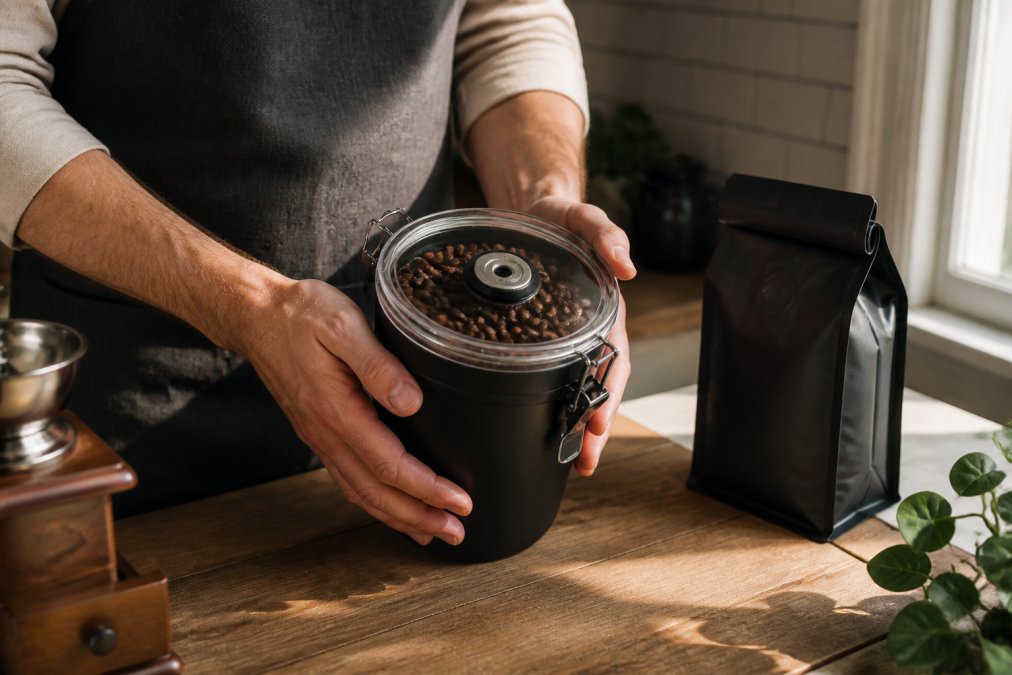
Keep the container sealed except when removing beans for brewing. Each opening introduces oxygen and lets CO2 escape, disrupting the degassing timeline. Store only what you'll use within 2-3 weeks in your main container.
Temperature and Light Control
Store coffee beans at room temperature (around 65-75°F) in a dark location. Heat accelerates both degassing and staling, so avoid warm kitchens or areas near appliances. Light triggers oxidation and breaks down flavor compounds, so keep beans away from windows and bright countertops.
A pantry, cabinet, or dark cupboard is ideal. Room temperature storage in a dark location is simpler and equally effective for beans you'll use within 3-4 weeks.
Signs Your Coffee Beans Are Ready to Brew
You can tell when coffee beans have finished degassing by observing their behavior during brewing and their aroma. The most reliable indicator is how they behave during the bloom phase.
Beans still actively degassing will produce vigorous bubbling and foaming during the bloom. Water will seem to resist wetting the grounds fully, and you might see gas escaping as visible bubbles.
Beans that have finished degassing will bloom more gently. Water will wet the grounds evenly, and the bloom will produce steady, moderate foam rather than aggressive bubbling. The grounds will smell noticeably sweeter and more complex than they did days earlier.
You can also assess readiness by smell. If the aroma smells bright, clean, and inviting with notes of chocolate, fruit, nuts, or flowers, the beans are likely ready. If the smell is still sharp, slightly sour, or one-dimensional, they need another day or two.
The most practical approach is to brew a small test batch using your preferred brewing method and evaluate the taste. If the coffee tastes sour or harsh, wait another day or two. If it tastes balanced with good body and complexity, you've hit the sweet spot.
Resting Time Adjustments by Brewing Method
Different brewing methods extract coffee at different rates, affecting how sensitive they are to residual CO2.
Espresso machines force hot water through grounds under 9+ bars of pressure in 25-30 seconds. Excess CO2 creates additional pressure that forces water through too quickly, resulting in sour, underextracted shots. Espresso beans should rest for at least 5-7 days, even if they're dark roasts.
Pour-over methods (Chemex, V60, Melitta) use gravity to pull water through grounds over 3-4 minutes. These are moderately sensitive to CO2. Beans can be brewed at the lower end of their resting window and still produce good results, though waiting until day 5-7 improves clarity and balance.
French press and other immersion methods submerge grounds in hot water for 4+ minutes. These are the most forgiving because the long contact time and lower pressure allow proper extraction even with some residual CO2. French press coffee can be brewed as early as day 2-3 and still taste decent, though day 4-5 is noticeably better.
Cold brew is a special case. The long steeping time (12-24 hours) and cool temperature mean CO2 dissipates very slowly. Cold brew can be brewed successfully with beans only 2-3 days old because the extended contact time compensates for excess gas. However, cold brew made with properly rested beans (day 5+) produces noticeably smoother, sweeter results.
Common Mistakes to Avoid During the Resting Phase
The most common mistake is brewing too early. Coffee drinkers who receive freshly roasted beans often can't wait and brew immediately, expecting peak flavor. They taste sourness or sharpness and blame the roaster, not realizing the beans simply haven't finished degassing.
Another frequent error is storing beans in the wrong container. Clear glass jars, open bowls, or containers without one-way valves all compromise the resting process. Light degrades flavor compounds. Oxygen accelerates staling. Using the right container, opaque, airtight, with a one-way valve, makes a measurable difference.
Storing beans in the refrigerator or freezer during the resting phase is problematic. Temperature fluctuation creates condensation, which introduces moisture into the beans and disrupts the degassing process.
Opening the storage container repeatedly disrupts the degassing timeline. Each opening lets oxygen in and CO2 out. Store beans in a sealed container and only open it when ready to grind and brew.
Grinding beans before the resting period is complete is another mistake. Grinding dramatically increases surface area, which accelerates both degassing and oxidation. Grind beans only immediately before brewing.
Waiting too long is less common but worth mentioning. After 3-4 weeks, even properly stored beans begin to stale noticeably. The peak flavor window for most roasts is days 5-14 after roasting.
The difference between mediocre coffee and excellent coffee often comes down to one simple decision: waiting. Those 3-5 days of resting aren't wasted time, they're when beans transform from freshly roasted to actually ready to brew. Understanding why coffee beans rest, how long they need, and how to store them properly turns every cup into something worth the wait.
When you order from Cuppari Coffee, you're getting beans roasted the day your order ships. This means you control exactly when the resting period begins. You can brew at the optimal point for your brewing method and taste preferences. The combination of guaranteed freshness and the resting timeline gives you access to flavors that most coffee drinkers never experience. Start with the resting guidelines for your roast level, adjust based on your brewing method, and taste the difference that proper degassing makes.
Frequently Asked Questions
What is the 2-hour rule for coffee?
The 2-hour rule refers to the minimum rest period for very light roasts before brewing. Freshly roasted beans need time for the initial carbon dioxide release to slow, allowing water to extract flavors evenly. Brewing too soon can result in sour, under-extracted coffee. However, most roasts benefit from longer resting periods, light roasts typically need 5-7 days, while darker roasts may need 7-14 days to reach peak flavor.
How does CO2 affect the taste of freshly roasted coffee?
Carbon dioxide trapped inside roasted beans creates excessive pressure during brewing, causing water to channel through the grounds unevenly. This leads to sourness and inconsistent extraction. As beans degas over days, CO2 escapes through the bean's cell structure, stabilizing the roast profile and allowing water to contact all grounds uniformly. Peak flavor clarity emerges once degassing reaches equilibrium, typically 5-14 days depending on roast level.
Do coffee beans stay fresher longer than ground coffee?
Yes. Whole beans have a much smaller surface area exposed to oxygen, slowing oxidation and preserving volatile compounds responsible for aroma and flavor. Ground coffee oxidizes rapidly due to increased surface exposure, losing quality within hours. When you purchase freshly roasted beans from Cuppari Coffee, storing them whole in an airtight container extends peak flavor for 2-4 weeks, while ground coffee peaks within days.
Can you drink coffee immediately after roasting?
You can, but the result will taste sour and thin. Freshly roasted beans contain excess carbon dioxide that interferes with extraction, producing unbalanced acidity and sourness. The beans also haven't fully stabilized their roast profile. Resting allows degassing to occur, cell structure to settle, and flavor compounds to develop. Waiting 5-7 days for light roasts or 7-14 days for darker roasts ensures you experience the intended flavor, body, and aroma the roaster intended.
This article was written using GrandRanker