

Table of Contents
- How to Choose Coffee Beans: Start With Your Brewing Method
- Coffee Bean Roast Dates Explained: Why Freshness Rules
- Single Origin vs Blend Coffee: Which Should You Pick?
- Decode the Label: Altitude, Processing, and Tasting Notes
- Best Coffee Beans for Espresso: What Actually Works
- How to Store Coffee Beans for Freshness
- Match Your Budget and Values: Certifications That Matter
- Your Next Steps to Better Coffee
- Frequently Asked Questions
Last Updated: September 4, 2026
How to Choose Coffee Beans: Start With Your Brewing Method
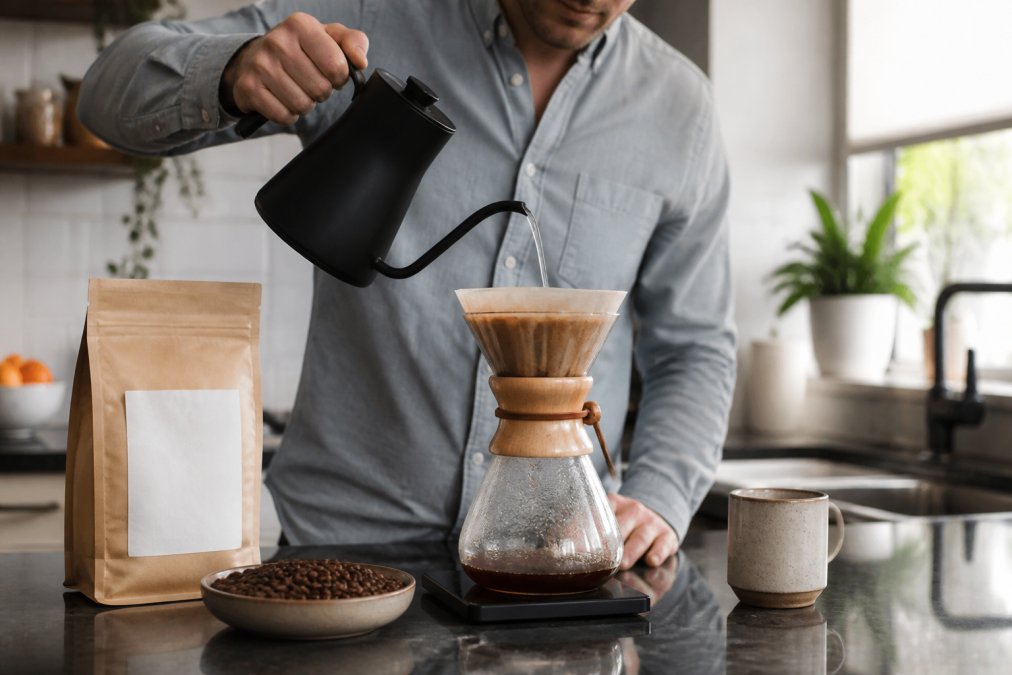
Choosing coffee beans is the single highest-impact decision you make for your daily cup, yet most people default to the same bag they grabbed last time. The right starting point isn't the roast level or the origin story; it is the equipment sitting on your counter. Identify how you brew first, because bean density, grind size, and extraction time all change what you should buy.
At Cuppari Coffee, we roast only after an order is placed and ship the same day. A coarse-ground French press needs a completely different bean profile than a fine espresso grind. Stop reading flavor descriptions first and start with your brewer; the wrong bean for your method will taste flat regardless of its quality.
Coffee Bean Roast Dates Explained: Why Freshness Rules
Coffee is a perishable product, and its flavor peaks within a narrow window after roasting. Unlike wine, which improves with age, roasted coffee begins losing volatile aroma compounds immediately. Specialty roasters print the roast date on the bag because it matters more than any flavor note on the label.
The sweet spot for most brewing methods falls between 4 and 14 days after the roast date (peer-reviewed research). Beans need time to degas carbon dioxide, but waiting too long lets oxygen stale the oils that carry flavor. Many roasters, including Cuppari Coffee, guarantee freshness by roasting to order and shipping the same day, so beans arrive inside that ideal window rather than weeks later from a warehouse shelf.
Single Origin vs Blend Coffee: Which Should You Pick?
The single origin vs blend debate comes down to what you value more: a distinct sense of place or a consistent, balanced cup. Single-origin beans come from one farm or region and showcase that terroir's unique character, often with pronounced acidity and specific tasting notes like citrus or floral hints. Blends combine beans from multiple origins to create a balanced, repeatable flavor profile that roasters control batch after batch.
For pour-over and drip brewing, single origins shine because their delicate notes survive the lower extraction pressure. For espresso and milk-based drinks, blends typically perform better since they hold up against the intensity of the shot and the sweetness of the milk. Most home brewers keep both on hand: a single origin for slow mornings and a reliable blend for the daily driver.
Decode the Label: Altitude, Processing, and Tasting Notes
Once you understand roast dates and origin structure, the label holds the remaining clues to how the coffee will taste. Reading a label like a pro means moving past the marketing copy and decoding the technical specs that actually predict flavor. Three label elements matter most: altitude, processing method, and tasting notes.
Altitude: The Density Signal
Higher altitude generally means denser beans that develop more complex sugars, often translating to brighter acidity and more pronounced sweetness. Look for labels that state the elevation range rather than vague marketing language: "1,600-1,900 meters" is a density clue; "high grown" is a slogan. Denser beans require more heat energy to extract properly, making them better suited for pour-over or espresso where you control water temperature and flow. Softer, lower-altitude beans extract faster and can turn bitter or hollow if pushed with high heat or long contact time.
Processing Method: The Flavor Architecture
The processing method tells you how the cherry was removed from the bean. A washed process removes fruit before drying, producing a clean, bright cup with pronounced acidity (sca.coffee). A natural process dries the bean inside the fruit, yielding heavier body and fruit-forward flavors. These two methods alone explain most of the flavor difference between two coffees from the same region. Honey processing, where some fruit mucilage is left on the bean during drying, splits the difference, offering the body of a natural with the clarity of a washed. If you see "wet-hulled" or "giling basah" on a label, that is a common Indonesian method producing a heavy, earthy, low-acid cup, an outlier but worth knowing.
Tasting Notes: The Roaster's Contract
Tasting notes are the roaster's promise, not a guarantee. A note of "dark chocolate" means the bean has the potential to show that flavor when brewed properly, not that it will taste like a candy bar in your mug. The notes are a map of the bean's potential, and your brewing method is the terrain. A light roast with notes of jasmine and bergamot will not survive a dark French roast profile; those delicate volatiles are destroyed by prolonged heat. Conversely, a bean with notes of cacao and roasted hazelnut will taste thin and sour if under-extracted with a quick pour-over.
The Label-to-Brewer Matching Matrix
The label is not just a story; it is a specification sheet for your equipment. Match the bean's density and processing to your brewer to avoid a flat or bitter cup:
- High-altitude, washed, light roast → Best for pour-over or AeroPress. These beans need a slower extraction and a higher water temperature (around 200-205°F) to unlock their acidity and sweetness.
- Low-to-mid altitude, natural or honey processed, medium roast → Best for a French press or cold brew. The heavier body and lower acidity stand up to immersion brewing and longer contact times without turning harsh.
- High-density, any processing, medium-dark roast → Best for espresso. The density provides the structure for crema, and the roast level balances sweetness against the pressure of the shot.
The Missing Variable: Varietal
One more label element often overlooked is the varietal, the specific cultivar of the coffee plant. Typica and Bourbon are classic heirloom varieties known for balanced sweetness and complexity. Caturra and Catuai are higher-yielding mutations that often produce brighter, cleaner cups. Geisha (or Gesha) is a prized varietal from Ethiopia commanding premium prices for its intense floral and tea-like characteristics. If a label lists a varietal, that signals the roaster is transparent about sourcing and expects you to care about details. If it does not, that is not necessarily a red flag, but it means you are buying a blend of varieties where flavor is more about the roaster's skill than the farm's terroir.
Best Coffee Beans for Espresso: What Actually Works
The best coffee beans for espresso share specific traits that survive high-pressure extraction: full body, low-to-medium acidity, and a roast level that balances sweetness against bitterness without charring. Espresso amplifies every flaw in a bean, so a poorly roasted or stale coffee becomes painfully obvious in a 25-second shot. Dark roasts are common, but many specialty roasters now offer medium roasts that preserve origin character while still producing rich crema.
A common mistake is buying beans labeled "espresso roast" without checking the roast date. Espresso grind and espresso roast are different things; the bean needs freshness more than a specific darkness level. For home espresso, look for beans roasted within the past two weeks, ideally from a roaster that ships immediately after roasting. The crema thickness and the sweetness of the shot will tell you if you chose well.
How to Store Coffee Beans for Freshness
How to store coffee beans for freshness is straightforward: keep them whole, in an airtight container, away from light, heat, and moisture. Whole beans stay fresh far longer than pre-ground coffee because grinding dramatically increases surface area exposed to oxygen. Grind only what you need immediately before brewing.
Your kitchen counter is the worst place for coffee. The cabinet above the stove gets hot, and a clear glass jar lets light degrade the beans. Store beans in the opaque bag they arrived in with the valve closed, or transfer them to a ceramic or stainless steel container with a tight seal. The freezer is debated; for beans you will finish within two to three weeks, room temperature storage in an airtight container works best.
Match Your Budget and Values: Certifications That Matter
Certifications on a coffee bag signal more than marketing; they connect your purchase to specific farming and trade practices. Fair Trade certification ensures farmers receive a minimum price for their crop, while Direct Trade indicates a roaster has built a direct relationship with the grower, often paying above commodity prices (fairtradecertified.org). Organic certification covers farming practices, and Rainforest Alliance focuses on environmental sustainability and worker welfare. Here is what most guides skip: how to interpret these labels against your actual budget and brewing setup.
The Budget-to-Quality Curve
The relationship between price and quality in coffee is not linear, it is a curve with two steep jumps and a long plateau. The first jump happens when you move from commodity-grade beans (often sold pre-ground in supermarkets) to specialty-grade whole beans. That jump is massive: you go from beans harvested, processed, and roasted for volume to beans graded, cupped, and roasted for flavor. The second jump happens when you move from a generic specialty blend to a single-origin lot from a celebrated farm or a microlot with a documented story. That jump is real but smaller, mostly about rarity and provenance rather than a dramatic flavor leap.
The plateau is where most home brewers live. A bag from a reputable specialty roaster will outperform a bag from a brand that spends more on packaging than on sourcing. Commodity-level price per pound hovers around $3 to $5, but the flavor ceiling is low. Specialty coffee typically starts around $15 per 12 ounces, with quality-per-dollar peaking in the $18 to $25 range. Beyond that, you are paying for a specific farm, a rare varietal, or a limited harvest, not for a better daily cup.
Certifications as a Quality Signal
Certifications are not just ethical badges; they are also quality signals. Fair Trade and Organic certifications require third-party audits, meaning the supply chain is more transparent and the beans are more likely traceable to a specific origin. Direct Trade is not a formal certification but a sourcing model where a roaster buys directly from a farm or cooperative, often paying above Fair Trade prices. If a roaster lists the farm name and the price they paid, that is a stronger quality signal than any seal.
However, certifications do not tell you how the coffee will taste in your brewer. A Fair Trade certified natural-processed bean from Brazil will still be a low-acid, heavy-bodied coffee better suited for a French press than a light, washed Ethiopian bean that shines in a pour-over. Match the certification to your values, but match the bean's processing and density to your equipment.
The Equipment-Specific Budget Rule
Here is a practical rule that most guides miss: your brewing method should dictate where you spend your coffee budget. If you brew espresso, the bean is the single most important variable, and you should allocate the largest share of your budget to a fresh, high-quality bean with a documented roast date. Espresso amplifies flaws, so a $12 bag of stale beans will produce a shot that tastes like ash, no matter how good your machine is. If you brew with a French press or drip machine, grind consistency and water quality matter almost as much as the bean, so you can save a few dollars per bag and still get a great cup.
For cold brew, you can go even lower on the budget. Cold brew's long, cold extraction is forgiving of less expensive beans, and it masks acidity and bitterness. A fresh $10 to $12 per bag commodity-grade bean will make a perfectly smooth cold brew concentrate. The opposite is true for pour-over: this method is the most transparent and will expose every flaw in a cheap or stale bean. If pour-over is your daily driver, do not compromise on the bean.
The Hidden Cost of Free Shipping
Finally, factor in shipping. A $20 bag of coffee with $5 shipping is effectively $25. Many roasters, including Cuppari Coffee, offer free shipping on all U.S. orders, which offsets the per-bag cost of buying direct. When comparing prices between a local roaster and an online one, always calculate the delivered cost per ounce. A roaster that charges $18 per bag but ships free is often a better deal than a $15 bag with $7 shipping. The delivered cost is the number that matters for your budget.
Your Next Steps to Better Coffee
Choosing coffee beans well comes down to four decisions made in order: match the bean to your brewing method, verify the roast date, decide between single origin and blend, and store the beans properly. Skip any of these steps and you are leaving flavor in the bag. Start with your equipment, then trust the roast date over the marketing copy.
The fastest upgrade is buying from a roaster that roasts to order. Cuppari Coffee roasts beans only after you place an order and ships them the same day, so your coffee arrives inside that 4-to-14-day peak window instead of after weeks on a shelf. With single origins, blends, and coffee pods all available and free shipping across the U.S., you can experiment with different profiles without committing to a full bag of something you might not love. Get started with Cuppari Coffee and taste the difference that a genuine roast date makes.
Frequently Asked Questions
How do I find the right coffee beans for me?
Start with your preferred brewing method, since grind size and extraction style determine which roast and bean density work best. For pour-over, try lighter roasts with citrus or floral tasting notes. For espresso, look for medium to dark roasts that produce sweetness and body. Then, prioritize freshness: check the coffee bean roast date and aim to brew within 2 to 4 weeks of that date. Finally, sample single-origin beans and blends to see which flavor profile you enjoy most.
What are the best coffee beans for beginners?
Beginners usually do best with a medium roast blend. Blends are designed to balance flavors from multiple origins, offering a consistent and approachable cup. A medium roast provides a good middle ground between the bright acidity of light roasts and the heavy, sometimes charred flavors of dark roasts. Look for tasting notes like chocolatey, nutty, or caramel, which are easy to identify. Check the roast date and buy whole beans to grind at home for the freshest possible taste.
How can you tell if coffee beans are high quality?
High-quality beans are typically specialty grade, meaning they score 80 or above on the Specialty Coffee Association's 100-point scale. Look for arabica beans, which generally have more complex flavor profiles than robusta. The bag should state a clear origin, processing method (washed or natural), and a coffee bean roast date. When brewed, quality beans produce a balanced cup without excessive bitterness, and the aroma should be distinct and pleasant, not flat or burnt.
Does the roast level affect the caffeine content of coffee beans?
The difference is minimal. By weight, dark roasts have slightly less caffeine than light roasts because the longer roasting process reduces bean density. However, coffee is measured by volume for brewing, so a scoop of dark roast beans contains more beans and roughly the same caffeine as a scoop of light roast. Your brewing method and coffee-to-water ratio have a far greater impact on the caffeine in your cup than the roast level does.
What is the difference between single-origin and coffee blends?
Single-origin coffee comes from one specific farm, region, or country, and its flavor profile reflects that location's altitude, soil, and processing methods. Blends combine beans from multiple origins to create a balanced, consistent flavor that stays the same year-round. Choose single-origin to explore unique tasting notes like citrus or floral characteristics. Choose a blend for a dependable, well-rounded cup, especially if you are brewing espresso or adding milk and sugar.
This article was written using GrandRanker