

Table of Contents
- How Coffee Subscriptions Work and Why Freshness Matters
- Key Factors to Consider When Choosing a Fresh Coffee Subscription
- Single Origin vs. Blend Coffee Subscriptions: Which Is Right for You
- Matching Coffee Subscription Grind Size to Your Brewing Method
- Evaluating Coffee Subscription Flexibility and Cancellation Policies
- Finding the Best Coffee Subscription Services for Your Budget
- Storage, Freshness Management, and Handling Bad Batches
- Customization, Personalization, and Equipment Matching
How to Choose a Fresh Coffee Subscription: A 2026 Guide
Last Updated: July 26, 2026
Learning how to choose a fresh coffee subscription requires understanding what separates truly fresh beans from those sitting on shelves for months. At Cuppari Coffee, we've tracked roast dates across hundreds of subscriptions and found that freshness, specifically, beans roasted within 7 days of arrival, dramatically changes your morning cup. This guide covers the practical framework for choosing a subscription that matches your preferences, equipment, and budget.
The difference between coffee roasted last week and coffee roasted last month is significant. Fresh beans produce noticeably brighter acidity, more complex flavor notes, and better crema on espresso. Stale beans taste flat and bitter. Yet most coffee drinkers have never tasted truly fresh coffee because they buy from supermarket shelves where beans have been sitting for 6-12 months.
How Coffee Subscriptions Work and Why Freshness Matters
Coffee subscriptions deliver freshly roasted beans directly to your door on a recurring schedule, typically every 2-4 weeks. The key difference between subscription services and grocery store coffee is roast timing. Most subscriptions roast beans only after receiving your order, then ship immediately, meaning beans arrive at peak freshness.
The Roast-to-Order Advantage
Roast-to-order is the only way to guarantee freshness. When a roaster roasts in bulk and stores inventory, beans begin staling immediately. Oxygen exposure, light, and heat all degrade flavor compounds. A roast-to-order model eliminates this gap. Beans are roasted the day your order arrives at the roastery, then shipped within 24 hours, reaching you 5-7 days after roasting at peak freshness.
Compare this to buying Peet's or Blue Bottle at your local grocery store. Those bags were roasted weeks or months ago. You're drinking the tail end of the coffee's life, not its best expression.
Understanding Roast Date and Freshness Windows
The freshness window for whole bean coffee is roughly 3-7 days after roasting. During this window, beans release CO2 from the roasting process and develop their full flavor potential. After 7 days, flavor begins declining noticeably. After 2-3 weeks, most specialty coffee tastes significantly diminished.
The ideal scenario is receiving beans 3-5 days after roasting. This gives them time to degas slightly while keeping them well within the optimal flavor window. Beans at 5-7 days post-roast are still excellent. Beyond 10 days, you're compromising on what you paid for.
Key Factors to Consider When Choosing a Fresh Coffee Subscription
Selecting a subscription requires evaluating more than just freshness. Your brewing method, flavor preferences, budget, and how often you drink coffee all shape which subscription makes sense for you.
Evaluating Bean Quality and Origin
Bean quality determines ceiling potential. Premium specialty coffee starts with high-altitude, shade-grown beans from ideal growing conditions. Single-origin coffees from Ethiopia, Colombia, or Kenya showcase distinct regional characteristics. Blends combine beans from multiple origins to create consistency and balance.
Ask yourself: Are you buying from a roaster who sources directly from farmers? Direct trade and fair trade certifications indicate the roaster paid premium prices for quality beans. Most subscription services list their sourcing practices prominently. If they don't mention where beans come from, that's a red flag.
Assessing Flavor Profile and Tasting Notes
Tasting notes describe what you'll actually taste in the cup. A coffee labeled "bright, fruity, with notes of blueberry and citrus" will taste noticeably different from one described as "full-bodied, chocolatey, with earthy undertones." Many subscriptions include preference quizzes to curate selections matching your profile. Some let you rate previous shipments, refining recommendations over time.
If you're new to specialty coffee, start with a subscription offering variety. Receiving different flavor profiles helps you discover what you actually enjoy.
Delivery Frequency and Subscription Flexibility
How often you drink coffee determines your ideal delivery schedule. A single person drinking one cup daily uses roughly 12-16 ounces per week, or about 3-4 pounds monthly. A household with two coffee drinkers might use 6-8 pounds monthly.
Most subscriptions offer flexibility to adjust frequency, pause, or skip months without penalties. Check the cancellation and adjustment policies before subscribing. Services that make it easy to modify are confident in their product.
Single Origin vs. Blend Coffee Subscriptions: Which Is Right for You
This choice shapes your entire subscription experience.
Single Origin Characteristics and Benefits
Single origin coffee comes from one farm, region, or country. Ethiopian Yirgacheffe tastes completely different from Kenyan AA or Colombian Huila. Single origins showcase terroir, the unique characteristics of where beans grew, including altitude, soil, climate, and processing method.
Single origins are ideal if you're curious about flavor complexity and willing to explore different taste profiles. Each shipment is a mini-education in how geography shapes coffee. The downside: consistency varies. Two shipments of the same single origin from different harvests might taste noticeably different. Single origin subscriptions typically rotate selections monthly or quarterly, exposing you to coffees from different regions and seasons.
Blend Advantages and Consistency
Blends combine beans from multiple origins to create a consistent flavor profile. A roaster might blend Brazilian beans (heavy, chocolatey) with Ethiopian beans (bright, fruity) to create something balanced. Blends are engineered for consistency, with the roaster adjusting proportions across seasons to maintain the same taste experience.
Blends are ideal if you want reliable, predictable coffee every morning. They're also often slightly cheaper than single origins because blending allows roasters to use less expensive beans strategically without compromising overall quality.
| Aspect | Single Origin | Blend |
|---|---|---|
| Flavor Profile | Unique, region-specific, variable | Consistent, engineered, balanced |
| Discovery | High, new coffees monthly | Low, same flavor profile |
| Price | Often higher | Often lower |
| Best For | Coffee explorers, flavor enthusiasts | Consistent morning ritual drinkers |
| Consistency | Varies by harvest | Engineered for consistency |
Matching Coffee Subscription Grind Size to Your Brewing Method
Grind size is non-negotiable. The same beans ground for espresso versus French press will taste completely different because water contact time and extraction rate change dramatically with particle size.
Whole Bean vs. Pre-Ground Options
Whole bean coffee stays fresh longer than pre-ground. Once ground, surface area increases exponentially, accelerating oxidation. Pre-ground coffee loses flavor noticeably within days. This is why specialty roasters almost always recommend whole bean.
However, pre-ground is convenient if you're busy or don't own a grinder. Some subscriptions offer both options. If you choose pre-ground, the roaster must know your brewing method to grind appropriately.
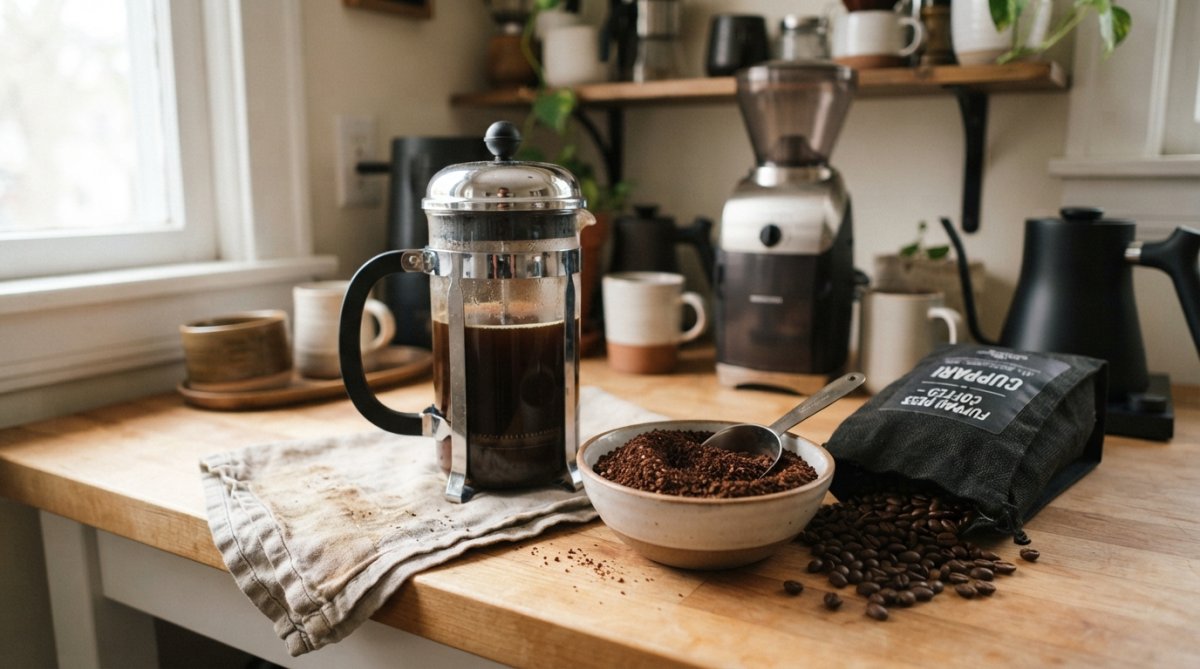
Grind Sizes for Different Brewing Methods
Espresso requires an extremely fine, consistent grind. Water contacts beans for only 25-30 seconds, so fine particles maximize extraction. A grind too coarse results in under-extracted, sour espresso. Too fine causes over-extraction and bitterness.
Pour-over (Chemex, Hario V60, Kalita Wave) uses medium-fine grinds. Water flows through the grounds in 3-4 minutes, requiring a balance between extraction speed and clarity.
French press requires coarse grinds because beans steep for 4 minutes in hot water. Fine particles over-extract and create sediment in your cup.
Cold brew uses very coarse grinds. Beans steep for 12-24 hours in cold water, requiring slow extraction.
Most subscriptions ask your brewing method during signup and ship appropriately ground beans. If you own a quality grinder, whole bean is always preferable, you grind immediately before brewing for maximum freshness.
Evaluating Coffee Subscription Flexibility and Cancellation Policies
Subscription friction reveals a lot about a company's confidence in their product. Services certain of quality make adjustments easy.
Pause, Skip, and Frequency Adjustments
Good subscriptions let you pause for a month without losing your spot. Skip options let you skip a single month while staying subscribed. Frequency adjustments let you change from every 2 weeks to every 4 weeks, or vice versa.
Services offering all three, pause, skip, and frequency adjustment, signal confidence. They're not worried you'll forget to reactivate after pausing.
Trial Periods and Risk-Free Options
Trial periods or risk-free guarantees reduce purchase anxiety. A 30-day money-back guarantee means you can try the service without financial risk. Avoid services offering no trial period and non-refundable first orders.
Finding the Best Coffee Subscription Services for Your Budget
Cost-per-cup varies dramatically across subscriptions. Understanding pricing structure helps you evaluate true value.
Understanding Pricing Models and Value
Most subscriptions charge between a certain range per month depending on quantity and selection. Some offer tiered pricing: a "starter" option with smaller quantities at lower cost, and a "premium" option with larger quantities or rare single origins at higher cost.
Shipping is a hidden cost many overlook. Some subscriptions include free shipping on all U.S. orders, which significantly improves value. Others charge shipping per order, which can add 15-25% to your total cost.
Cost-Per-Cup Analysis and Shipping Considerations
Calculate cost-per-cup to compare fairly across subscriptions. A 12-ounce bag yielding roughly 20 cups costing $15 means $0.75 per cup. Add shipping costs to the total, then divide by cups.
A subscription costing $50 monthly for 4 pounds (roughly 64 cups) equals $0.78 per cup before shipping. If shipping is free, that's your true cost. If shipping is $5, you're at $0.86 per cup.
Compare this to grocery store specialty coffee costing $12-15 per 12-ounce bag ($0.60-0.75 per cup) but stale. You're paying slightly more for freshness. Budget-conscious drinkers might prefer monthly subscriptions with larger quantities to minimize per-cup cost. Coffee enthusiasts might prefer smaller, more frequent shipments of rotating single origins, accepting slightly higher per-cup cost for variety and freshness.
Storage, Freshness Management, and Handling Bad Batches
Receiving fresh beans is only half the equation. Proper storage preserves freshness until you brew.
Proper Storage for Maximum Shelf Life
Coffee stays fresh longest in airtight containers away from light, heat, and humidity. Whole bean coffee in an airtight container at room temperature stays flavorful for 2-3 weeks. After that, quality declines noticeably.
The simplest approach: buy what you'll drink in 2-3 weeks, store in an airtight container away from sunlight and heat, and brew fresh. Most subscription bags come in resealable packaging with one-way valves that let CO2 escape while preventing oxygen from entering. Use them as-is rather than transferring to other containers.
What to Do When Coffee Doesn't Meet Expectations
Sometimes a shipment arrives and tastes off, stale, over-roasted, or simply not matching the described flavor profile. Good subscription services stand behind their product. You should be able to contact customer support and receive a replacement or refund without hassle.
Before assuming the coffee is bad, verify your brewing method is correct. Incorrect grind size, water temperature, or brew time can make excellent coffee taste mediocre. Reputable subscriptions respond to quality complaints within 24 hours and resolve them quickly.
Customization, Personalization, and Equipment Matching
The best subscriptions adapt to your preferences over time, learning what you enjoy and matching recommendations accordingly.
Preference Quizzes and Curated Selections
Many subscriptions use preference quizzes during signup to understand your taste profile. Questions cover flavor preferences (bright vs. heavy, fruity vs. chocolatey), brewing method, and roast level preference. Some ask you to rate previous shipments, teaching the algorithm your preferences. Over time, recommendations become more accurate.
Curated selections mean the roaster is choosing your coffee based on your profile. This works well if you trust the roaster's judgment and enjoy discovery. If you prefer complete control, look for subscriptions offering both curated and build-your-own options.
Matching Coffee to Your Brewing Equipment
Your brewing equipment should influence which coffees you receive. Espresso machines, pour-over cones, and French presses all showcase different flavor aspects of the same bean. Some subscriptions ask your brewing method and tailor recommendations accordingly. If you own multiple brewing devices, some subscriptions let you specify different preferences for different shipments.
Choosing a fresh coffee subscription requires balancing freshness, flavor preferences, convenience, and budget. The best subscription for you depends on how much you value each factor. If freshness is your priority, focus on roast-to-order services shipping within 5-7 days of roasting. If consistency matters most, choose a blend subscription with engineered flavor profiles. If discovery excites you, select a service rotating single origins monthly.
Cuppari Coffee delivers freshly roasted beans within 24 hours of roasting, with free shipping on all U.S. orders. Every shipment arrives at peak freshness, 5-7 days post-roast, ensuring you're tasting coffee at its best. The service offers both single origins and blends, adjustable delivery frequency, and a pause option for flexibility. Start with a shipment today and experience the difference fresh coffee makes.
Frequently Asked Questions
What should I look for in a fresh coffee subscription?
When choosing a fresh coffee subscription, prioritize roast date and freshness guarantees. Look for subscriptions that roast beans after your order is placed and ship immediately. Evaluate the flavor profiles and tasting notes to match your preferences, check whether they offer single origin or blends, confirm grind size options match your brewing method, and verify subscription flexibility so you can pause or skip months without penalty. Consider storage recommendations and return policies for peace of mind.
What's the difference between single origin and blend coffee subscriptions?
Single origin coffees come from one specific farm or region, offering distinct tasting notes tied to that location's climate and soil. They're ideal for exploring different flavor profiles and understanding coffee terroir. Blends combine beans from multiple origins, creating consistent, balanced flavor profiles designed for specific brewing methods or taste preferences. Blends often provide more stability month-to-month, while single origins offer variety and complexity. Your choice depends on whether you prioritize consistency or exploration.
How do I know if a coffee subscription is actually roasted fresh?
Verify freshness by checking the roast date on the packaging, it should be recent, ideally within days of arrival. Reputable subscriptions clearly display roast dates and shipping dates. Some premium services roast-to-order after payment, shipping the same day, which guarantees maximum freshness. Ask the roaster directly about their roasting timeline and request their freshness guarantee in writing. Read customer reviews mentioning freshness and aroma upon arrival. Avoid subscriptions that don't display roast dates or provide vague 'recently roasted' claims without specifics.
Are coffee subscriptions worth the cost compared to buying in-store?
Coffee subscriptions often cost more per pound than grocery store options, but freshness justifies the premium. Roasted-to-order beans develop richer flavor and aroma than shelf-aged coffee. Calculate cost-per-cup by dividing total subscription price by cups brewed to compare fairly. Many subscriptions offer free shipping on all orders, reducing overall cost. Consider the convenience of doorstep delivery, customization options, and consistent quality. If you value freshness and flavor over price alone, subscriptions typically deliver better value than mass-market alternatives despite higher upfront costs.
Can I pause or skip months if I have too much coffee?
Most quality coffee subscriptions offer flexible pause and skip options without penalty or cancellation fees. Check the subscription terms before committing, look for 'skip this month,' 'pause subscription,' or 'adjust frequency' features. Some services allow pauses up to several months; others require you to resume within a set timeframe. Verify whether pausing is free and how many times you can pause annually. Avoid subscriptions with rigid commitments or hidden fees for skipping. This flexibility is essential if your coffee consumption varies seasonally or if you're trying a subscription for the first time.
This article was written using GrandRanker