

Table of Contents
- Why Cleaning Coffee Equipment Matters
- Essential Cleaning Supplies and Tools
- How to Descale a Coffee Maker Properly
- Step-by-Step Cleaning Process for How to Clean Your Coffee Equipment Properly
- Cleaning Coffee Grinder Burrs and Removable Parts
- How Often to Clean Coffee Equipment: Maintenance Schedule
- Best Coffee Machine Cleaning Solution and Techniques
- Common Cleaning Mistakes to Avoid
Last Updated: July 12, 2026
Keeping your coffee equipment clean is essential for brewing the best possible cup. When mineral deposits, coffee oils, and residue accumulate inside your brewer, they degrade flavor and shorten machine lifespan. Below, we'll show you exactly how to clean your coffee equipment properly, from daily maintenance routines to deep cleaning strategies that work for every machine type.
Why Cleaning Coffee Equipment Matters
A buildup of coffee oils and mineral deposits directly degrades flavor. Over time, these residues create bitter, stale-tasting coffee because old oils go rancid and mineral scale interferes with water temperature and flow. According to NSF International's water quality research, mineral buildup is the leading cause of coffee maker failure in households with hard water.
Preventive maintenance keeps everything running smoothly and ensures consistent results for years. Waiting until your machine shows obvious signs of trouble, weak brew, slow water flow, or indicator lights, means damage has already occurred.
Essential Cleaning Supplies and Tools
You don't need expensive specialty products to clean coffee equipment properly. A few core items handle nearly every cleaning task.
Distilled white vinegar is the most effective and affordable descaling agent for home machines. Its acidity dissolves mineral deposits without harsh chemicals. A soft-bristled cleaning brush with a narrow head reaches into tight spaces like spray heads and portafilters. Microfiber cloths absorb moisture without leaving lint, essential for drying removable parts. Cleaning tablets designed for espresso machines (like Cafiza) work well for backflushing and removing stubborn oils. A small bowl or container for soaking removable parts works best in glass, which doesn't absorb odors.
How to Descale a Coffee Maker Properly
Descaling removes mineral buildup from heating elements, pipes, and water chambers. Most home machines need descaling every 2-3 months, depending on water hardness. Hard water requires monthly descaling.
Using Distilled White Vinegar
-
Fill the water reservoir with a 1:1 mixture of distilled white vinegar and water. Never use undiluted vinegar.
-
Run the brew cycle without grounds or filter, letting the solution flow through the entire system.
-
Pause halfway through once you've used about half the vinegar solution. Let it sit for 15-20 minutes so the acid can work on stubborn deposits.
-
Complete the cycle by running the remaining vinegar solution through.
-
Rinse thoroughly by filling the reservoir with fresh water and running 2-3 full cycles through the machine.
-
Final rinse involves running water through the portafilter and group head for at least 30 seconds.
Eco-Friendly Descaling Alternatives
Citric acid offers an environmentally friendlier option while delivering identical results. Mix 1-2 tablespoons of citric acid powder with water to fill your reservoir, then follow the same process as vinegar descaling. Citric acid leaves no odor and rinses more quickly.
Lemon juice, which contains natural citric acid, also works well for lighter descaling. For machines with electronic components or sensitive seals, check your manufacturer's guidance before using any acidic solution.
Step-by-Step Cleaning Process for How to Clean Your Coffee Equipment Properly
Daily maintenance prevents buildup that requires aggressive descaling later. Weekly deep cleaning removes oils and residue that accumulate during regular use.
Daily Maintenance Routine
-
Remove the portafilter and tap out used grounds immediately. Dried grounds are harder to remove.
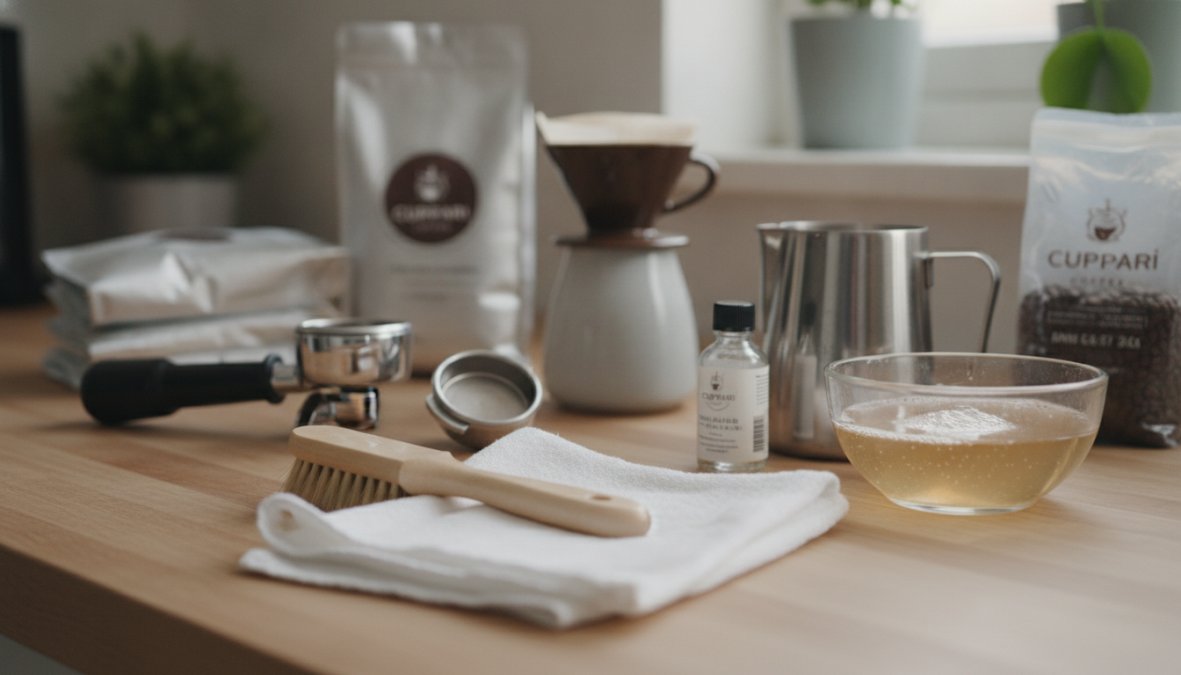
Step-by-step visual guide for Close for clean coffee equipment -
Rinse the portafilter under hot running water, using your cleaning brush to remove grounds stuck in the basket or around the edges.
-
Wipe the group head with a damp cloth to remove loose grounds or oils.
-
Empty the drip tray and rinse it clean.
-
Dry all removable parts with a microfiber cloth immediately.
This takes about 2-3 minutes and prevents the buildup that leads to bitter-tasting coffee.
Weekly Deep Clean
Once per week, dedicate 15 minutes to thorough cleaning:
-
Soak the portafilter, brew basket, and shower screen in hot water mixed with a cleaning tablet or a tablespoon of baking soda for 10-15 minutes.
-
Use your cleaning brush to scrub all surfaces, especially the basket interior and underside of the shower screen.
-
Rinse each part thoroughly under hot running water until the water runs clear.
-
For the group head, backflush if your machine allows it (pull the portafilter out and run water through the group without the basket for 1-2 seconds, repeat 5-6 times).
-
Dry everything completely before reassembling.
-
Run water through the empty group head for 10 seconds to clear remaining debris.
Cleaning Coffee Grinder Burrs and Removable Parts
Burr grinders require different cleaning than brewers because they contain moving parts that can't be soaked.
For burr grinders:
-
Unplug the grinder before any cleaning.
-
Remove remaining grounds from the hopper and grind chamber.
-
Use a dry cleaning brush to sweep out loose grounds from around the burrs and inside the grind chamber.
-
Never use water inside a burr grinder; moisture damages the motor and causes rust.
-
For stubborn buildup, use a specialized grinder cleaning tablet (like Grindz) according to package directions.
For blade grinders, unplug, brush out loose grounds, and wipe the interior with a dry cloth.
For removable brew baskets and filters:
Soak brew baskets weekly in hot water with a cleaning tablet or baking soda for 10 minutes, then scrub with a brush. Rinse thoroughly and dry. Discard paper filters after each use. Metal mesh filters should be rinsed immediately after brewing and soaked weekly.
How Often to Clean Coffee Equipment: Maintenance Schedule
A consistent cleaning schedule prevents accumulation that leads to equipment failure and poor-tasting coffee.
| Cleaning Task | Frequency | Time Required | Impact |
|---|---|---|---|
| Rinse portafilter and basket | After every brew | 2-3 minutes | Prevents grounds from drying in basket |
| Empty and rinse drip tray | Daily | 1 minute | Prevents mold and odor |
| Wipe group head | Daily | 1 minute | Removes loose grounds and oils |
| Deep soak of removable parts | Weekly | 15 minutes | Dissolves stubborn coffee oils |
| Backflush group head | 2-3 times weekly | 5 minutes | Clears trapped grounds from spray head |
| Descale entire machine | Every 2-3 months | 20-30 minutes | Removes mineral buildup from internal pipes |
| Clean grinder burrs | Monthly | 10 minutes | Prevents oil accumulation affecting grind quality |
| Deep clean water reservoir | Monthly | 10 minutes | Removes algae and mineral deposits |
Water Quality Impact on Cleaning Intervals
Hard water dramatically increases descaling frequency. Testing your water hardness is simple; most hardware stores sell inexpensive test strips. Hard water (above 120 ppm) requires monthly descaling. Very hard water (above 180 ppm) might need descaling every 3-4 weeks.
Installing a water filter in your machine's reservoir reduces mineral content significantly and extends descaling intervals. Filtered water plus regular descaling keeps machines running 2-3 years longer than hard water with infrequent cleaning.
Best Coffee Machine Cleaning Solution and Techniques
Different machine types require slightly different approaches, though the core principles remain the same: remove grounds immediately, descale regularly, and dry everything thoroughly.
For automatic drip machines: Run vinegar solution through the brew cycle, then rinse with multiple water cycles. Pay attention to the water reservoir, which can develop algae growth if left with stale water.
For espresso machines: Backflush weekly and descale monthly with hard water, every 3 months with soft water.
For French press: Discard grounds immediately. Soak the glass carafe and metal mesh filter in hot water with baking soda weekly. Never use vinegar on metal filters; the acid can damage the mesh.
For pour-over brewers: Rinse the dripper after each use. Soak weekly in hot water with baking soda.
Commercial vs. Home Machine Considerations
Commercial espresso machines handle higher volume but use the same cleaning principles at a larger scale. Backflushing happens multiple times daily instead of weekly. Commercial machines often require professional group head cleaning annually due to higher pressure and heat.
Home machines benefit from the same descaling discipline. The main difference is frequency: commercial machines need daily attention, home machines need weekly deep cleaning and monthly descaling.
Common Cleaning Mistakes to Avoid
Using tap water for final rinses. Tap water contains minerals that leave spots. Use distilled water after any acidic descaling.
Leaving wet grounds in the portafilter overnight. This creates mold and bacteria that affect your next brew.
Descaling with undiluted vinegar. This can damage seals and gaskets. Always use a 1:1 ratio.
Ignoring the water reservoir. Empty it daily and rinse weekly with fresh water to prevent algae and mineral deposits.
Forgetting to dry removable parts. Moisture creates oxidation and rust.
Using vinegar on metal mesh filters. Acid degrades the mesh over time. Use baking soda instead.
Skipping the backflush step. This is where most grounds and oils hide.
Not checking manufacturer guidelines. Some machines have specific descaling recommendations.
The most common mistake is inconsistency. One thorough cleaning per month doesn't compensate for neglect the other 29 days. Daily maintenance prevents the need for aggressive descaling later.
Proper equipment cleaning directly impacts the quality of coffee you brew and how long your machine lasts. Start with daily rinsing, add weekly deep cleaning, and descale monthly. Your next cup will taste noticeably better.
Frequently Asked Questions
How often should you clean coffee equipment to maintain flavor quality?
Daily rinsing of removable parts like the brew basket and carafe is essential, while descaling should occur every 1-3 months depending on water hardness. Hard water areas require more frequent descaling to prevent mineral buildup and calcium deposits. Burr grinders need weekly cleaning to remove coffee oils and residue that affect flavor profile. Regular maintenance prevents bitter taste and ensures your equipment delivers optimal brew quality.
Can I use distilled white vinegar to descale my coffee maker?
Yes, distilled white vinegar is an effective acidic solution for descaling coffee makers. Run equal parts vinegar and water through a brew cycle, then follow with 2-3 rinse cycles using fresh water. This removes mineral buildup and scale deposits. However, some prefer eco-friendly alternatives like citric acid or specialized cleaning tablets that are food-safe and gentler on equipment. Always check your machine's manual, as some manufacturers recommend specific descaling solutions.
What is the best way to clean coffee grinder burrs properly?
Unplug the grinder and allow it to cool completely. Use a small cleaning brush to gently remove coffee grounds from between the burrs. For deeper cleaning, use specialized grinder cleaning tablets designed to absorb residual coffee oils without damaging burr integrity. Run the cleaning tablets through a full grind cycle, then purge with 10-15 grinds of unroasted rice to absorb remaining particles. Never use water on burr grinders, as moisture damages internal mechanisms and affects appliance longevity.
What supplies do I need to properly clean coffee equipment?
Essential cleaning supplies include a soft cleaning brush, microfiber cloth, distilled white vinegar or cleaning tablets, and a water filter for your rinse water. For portafilters and removable parts, use food-safe dish soap and warm water. Consider eco-friendly alternatives like citric acid for descaling. Keep a small bottle for soaking, a dry towel, and a spray bottle for rinsing. For espresso machines, a backflushing tool helps clear the group head and spray head of coffee residue and oils.
This article was written using GrandRanker