

Table of Contents
- What Makes High Quality Tea Leaves Different
- Step 1: Inspect the Dry Leaf Appearance
- Step 2: Evaluate Aroma and Fragrance
- Step 3: Assess Plucking Standards and Leaf Grade
- Step 4: Brew and Observe Color and Clarity
- Step 5: Taste for Flavor Profile and Mouthfeel
- Loose Leaf Tea vs Tea Bags: Why Grade Matters
- How to Store Loose Leaf Tea for Freshness
Last Updated: August 11, 2026
What Makes High Quality Tea Leaves Different
High quality tea leaves are characterized by their whole leaf structure, vibrant color, and processing method. The difference between premium and mediocre tea comes down to plucking standards, oxidation levels, and storage. A tea made from broken leaves, fannings, and dust will never deliver the complexity or mouthfeel of whole leaf tea.
What separates the exceptional from the ordinary is attention to detail at every stage: terroir, harvest timing, processor skill, and storage care all compound into what you experience when you steep those leaves. Tea Association standards for leaf grading establish formal classifications, but your own sensory evaluation will be just as revealing. You don't need expensive equipment, just knowledge of what signals quality and what signals shortcuts.
Step 1: Inspect the Dry Leaf Appearance
Before you brew anything, examine the dry leaves themselves. This is where many quality markers become immediately visible.
Look for whole leaf and consistent color
Whole leaves are the gold standard. When you pour loose leaf tea into your hand, you should see mostly intact leaves rather than fragments. Whole leaves expand more fully during steeping, creating more surface area for water to extract flavor compounds, tannins, and aromatic oils.
Consistent color signals proper processing and storage. Black teas should show deep, uniform color. Green teas should display vibrant, consistent hues, not dull or faded appearance. Oolong teas often show intentional color variation, but it should be uniform across the batch.
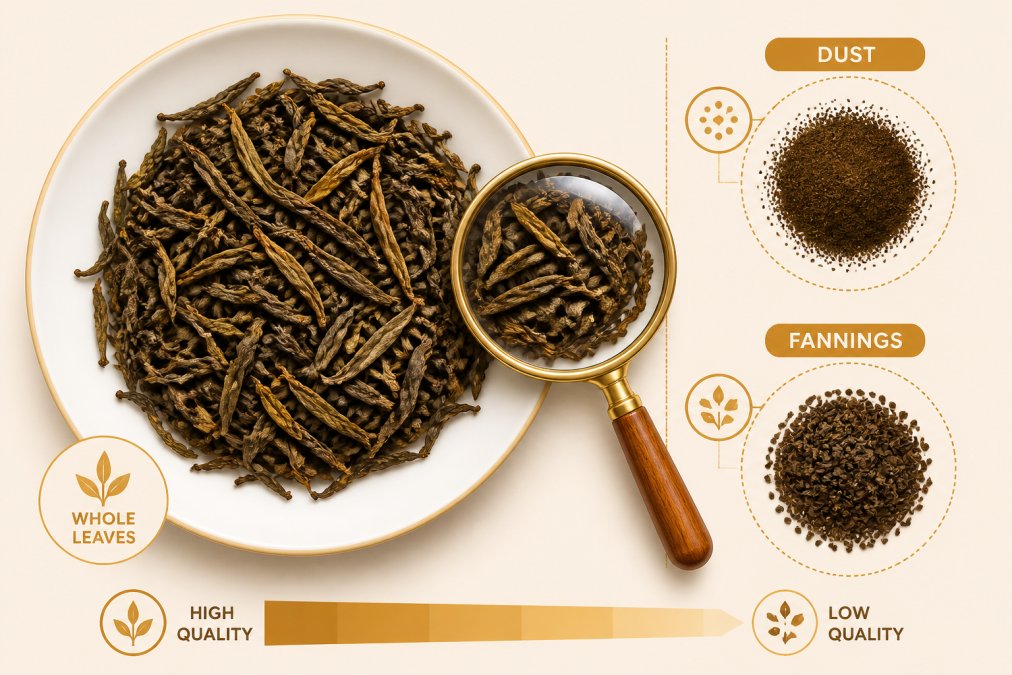
Pay attention to leaf size and shape consistency. Premium teas are often hand-picked and sorted by size and quality grade. A wild mix of leaf sizes suggests the producer didn't invest in careful sorting.
Identify stems, twigs, and debris to avoid
Excessive stems indicate a lower plucking standard. The finest teas come from the youngest leaves and buds at the top of the plant. Lower-grade plucking includes older leaves and woody material, which brew more astringently and less flavorfully.
Look for visible debris: dust particles, sand, or foreign matter. High quality tea should be clean. Some fannings and dust are normal byproducts of handling whole leaves, but they should be minimal. Discoloration or dark spots can signal mold, oxidation damage, or poor storage. Fresh, properly stored tea maintains its color integrity.
Step 2: Evaluate Aroma and Fragrance
Before brewing, bring the dry leaves close to your nose. The aroma reveals freshness, processing quality, and potential flavor profile.
High quality tea should smell clean, fresh, and characteristic of its type. A black tea should smell like black tea, perhaps with floral, fruity, or chocolatey notes. A green tea should smell grassy or vegetal. If the aroma smells musty, stale, or off, the tea has been stored improperly or is past its prime.
Fresher teas typically have more pronounced aroma. If you must put your nose against the leaves to detect any smell, the tea has likely lost volatile aromatic compounds. The aroma should be noticeable without being overwhelming. Trust your instinct if the scent feels stale or musty, aroma is one of your most reliable guides to freshness.
Step 3: Assess Plucking Standards and Leaf Grade
The plucking standard determines which parts of the plant made it into your tea, directly impacting flavor, mouthfeel, and overall quality.
The finest plucking standards include only the youngest leaves and unopened buds. These represent the most delicate, nuanced flavors. Second flush uses slightly older leaves. Third flush and beyond include progressively mature leaves.
When examining loose leaf tea, look for buds, the small, silvery or golden tips on some leaves. Buds indicate a higher plucking standard and typically correlate with premium pricing and superior flavor. The tea leaf grading system (like SFTGFOP, Superb Fine Tippy Golden Flowery Orange Pekoe) communicates plucking standard and leaf size to anyone familiar with the system.
Whole leaf grades are always superior to broken leaf or dust grades. Broken leaves and fannings brew faster but with less complexity and a shorter flavor window. For loose leaf tea, whole leaf is the expectation.
Step 4: Brew and Observe Color and Clarity
Now brew the tea to see its true character. The color and clarity of the brewed liquor reveal processing quality, oxidation level, and freshness.
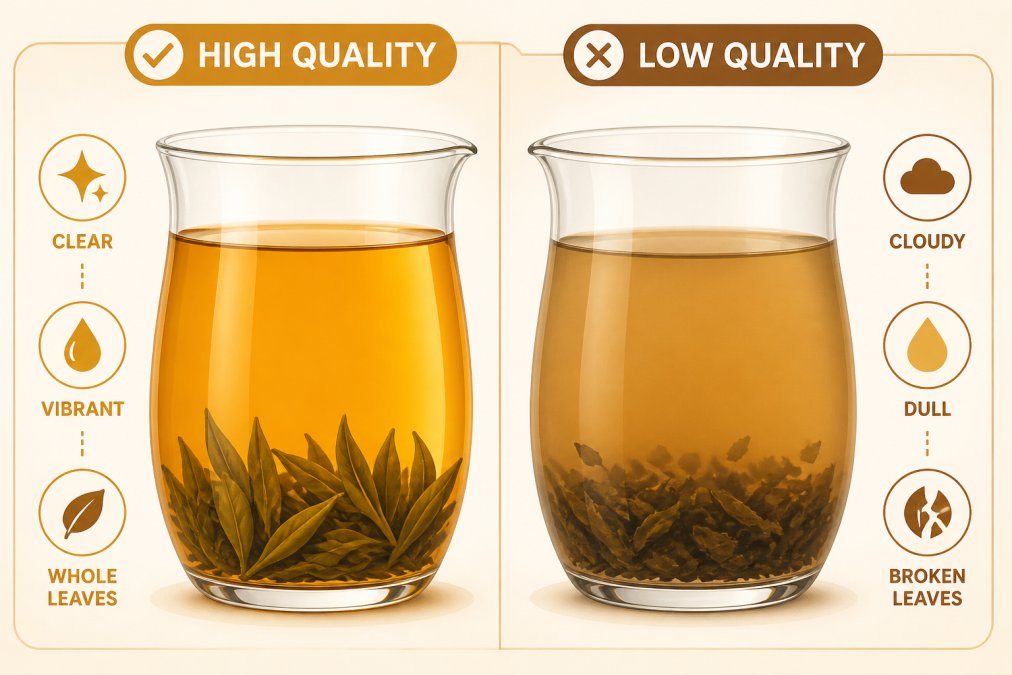
High quality tea produces a clear, bright liquor with vibrant color. A black tea should be rich amber or deep reddish-brown, not murky. A green tea should be pale yellow-green or golden, not brown or gray. Clear liquor is one of the most reliable visual markers of quality.
Observe how quickly the color develops. High quality leaves release their color and flavor compounds relatively quickly because they've been processed to optimize extraction. Pay attention to color consistency across multiple infusions. Premium teas can be steeped multiple times, with each infusion showing color and flavor. If the first steep extracts nearly all the color, you're likely dealing with lower-grade leaves.
Step 5: Taste for Flavor Profile and Mouthfeel
High quality tea should have a complex flavor profile with multiple layers. You might detect primary flavors like floral or fruity notes, but underneath should be subtle secondary flavors that emerge as you continue tasting.
Mouthfeel describes how the tea feels in your mouth, the texture and sensation beyond flavor. Premium teas often have a fuller, smoother mouthfeel from compounds extracted from high-quality leaves. A slight astringency is normal and desirable in some teas, but it should feel clean and refined, not harsh.
Notice whether there's a pleasant aftertaste. High quality teas often leave subtle sweetness or lingering flavor after you swallow. Excessive bitterness usually signals over-steeping or lower-quality leaves. Pay attention to umami, a savory, satisfying quality common in high-grade green teas and some oolongs, it's a hallmark of quality.
Loose Leaf Tea vs Tea Bags: Why Grade Matters
The difference between loose leaf tea and tea bags comes down to what's inside. Loose leaf tea typically contains whole leaves and higher grades. Tea bags usually contain fannings and dust, the broken particles left over after whole leaves have been sorted.
Fannings and dust steep faster because they have more surface area. But they also release flavor and color more quickly, leading to a shorter window of optimal flavor. Whole leaf loose leaf tea expands as it steeps, allowing water to flow through gradually and extract flavor in a balanced way. The same leaves can often be steeped multiple times, with each infusion revealing different flavor layers.
When comparing loose leaf tea vs tea bags, you're comparing different grades of the same plant material. Premium teas are packaged as loose leaf because the whole leaves are the product. If you're serious about experiencing high quality tea leaves, loose leaf is non-negotiable. The difference in flavor, complexity, and overall experience justifies the slightly higher cost and minimal extra effort required to brew properly.
How to Store Loose Leaf Tea for Freshness
Everything you've learned about identifying quality means nothing if you don't store the tea properly after purchase. Loose leaf tea is sensitive to air, light, heat, and moisture.
Store loose leaf tea in an airtight container away from direct sunlight. Glass jars with airtight seals or dedicated tea storage tins work well. Avoid clear glass jars; opaque or dark-colored containers block light that degrades the tea's color and flavor compounds.
Keep tea in a cool, dry place at room temperature. Avoid areas near heat sources or sunny windows. Temperature fluctuations cause condensation inside the container, introducing moisture that damages the tea. Never store tea near stoves or in bathrooms where steam can reach it. A pantry or cool closet is ideal.
Buy tea in quantities you'll actually use. Most loose leaf tea stays fresh for 6-12 months if stored properly, though some types like aged oolongs improve over years. Keep different teas in separate containers, tea absorbs aromas from its environment. Once you open a package, try to use it within a few months. Each time you open the container, you expose the leaves to air and moisture.
At Cuppari Coffee, we understand that freshness matters in tea just as much as it does in coffee. The same principles that drive our commitment to roasting coffee only after you order apply to how you should handle and store the tea you bring home.
Identifying high quality tea leaves is a learnable skill that transforms how you experience tea. Start with visual inspection of dry leaves, progress through aroma evaluation, and finish by tasting the brewed result. Each step builds on the previous one, giving you multiple data points to assess quality. The more you practice this evaluation process, the faster and more intuitive it becomes. Once you've experienced genuinely high-quality tea prepared with care, you'll understand why the investment in premium loose leaf tea and proper storage is worth it.
Frequently Asked Questions
How do I tell if tea leaves are high quality?
High quality tea leaves show several markers: whole leaf structure without excessive dust or fannings, consistent color throughout, a fresh and complex aroma, and bright liquor color when brewed. When steeped, premium loose leaf tea expands fully, releasing layers of flavor with a smooth mouthfeel and minimal bitterness or astringency. Check for hand-picked leaves rather than machine-harvested debris, and inspect for stems or twigs that indicate lower grade tea.
What is the tea leaf grading system explained?
Tea leaf grading measures quality based on leaf size and processing method. Whole leaf grades (like Orange Pekoe or Broken Orange Pekoe) command higher prices due to better flavor. Fannings and dust represent smaller particles left after processing and brew quickly but lack depth. The grading system reflects plucking standards: two leaves and a bud (the finest) versus lower grades with larger, older leaves. Understanding these grades helps you match price to actual quality rather than overpaying for dust that brews thin and bitter.
Why choose loose leaf tea vs tea bags?
Loose leaf tea typically contains whole leaves or larger pieces that expand during steeping, releasing full flavor, aroma, and mouthfeel. Tea bags often hold fannings or dust that brew quickly but taste flat and one-dimensional. Loose leaf tea stays fresher longer when stored properly and lets you control steep time and water temperature for precision. While tea bags offer convenience, loose leaf delivers noticeably better flavor, especially when you select high quality leaves based on appearance, aroma, and leaf grade.
How should I store loose leaf tea to keep it fresh?
Store loose leaf tea in an airtight container away from heat, light, and moisture. Glass jars with tight seals, metal tins, or vacuum-sealed bags work well. Keep tea in a cool, dark cabinet away from direct sunlight and strong odors that can be absorbed by the leaves. Properly stored loose leaf tea stays fresh for 6-12 months, though peak flavor occurs within the first few months. Avoid refrigerators or freezers, which introduce moisture when containers are opened. Freshly roasted and shipped tea (like what Cuppari Coffee delivers the same day it's roasted) gives you the longest window of peak freshness.
This article was written using GrandRanker