

Table of Contents
- Why Skip Syrup and Flavor Coffee Naturally
- What You'll Need: Essential Ingredients and Equipment
- Spices for Coffee Flavoring: Ratios and Methods
- Extracts for Coffee Flavoring Without Added Sugar
- How to Flavor Coffee Beans at Home Before Brewing
- Homemade Coffee Flavorings Without Sugar: Natural Sweetener Options
- Brew Method Variations: Drip, French Press, and Espresso Techniques
- Common Mistakes to Avoid When Making Flavored Coffee at Home
How to Make Flavored Coffee at Home Without Syrup
Last Updated: August 1, 2026
Why Skip Syrup and Flavor Coffee Naturally
Many coffee drinkers are moving away from commercial syrups due to concerns about added sugars and artificial ingredients. At Cuppari Coffee, we've noticed this trend accelerating among customers who want to customize their brews without sweetened additives.
When you make flavored coffee at home without syrup, you control every ingredient, achieve better flavor depth, and often spend less than buying flavored coffee from specialty shops. The key insight most guides miss: flavoring works best when it integrates with the coffee's extraction process, not when it sits on top of a finished cup. Spices, extracts, and natural additions build flavor from the ground up.
What You'll Need: Essential Ingredients and Equipment
Pantry Staples for Flavor
Cinnamon, cardamom, nutmeg, and cloves are the foundation of coffee flavoring. These spices contain volatile aromatic compounds that complement coffee's natural bitterness and acidity.
Pure vanilla extract (not imitation) delivers authentic flavor without syrup's sugar load. Almond extract works similarly for nuttier profiles. Unsweetened cocoa powder adds richness and depth. Date purée, made by blending softened dates with water, provides natural sweetness without processed sugar and carries subtle caramel notes.
Plant-based milk alternatives like almond, oat, and coconut milk contribute their own flavor profiles: almond adds nuttiness, oat brings creaminess, and coconut delivers tropical undertones.
Brewing Equipment Considerations
Your current brewing equipment works fine for flavored coffee. A French press allows spices to steep directly in hot water alongside grounds, creating deeper infusion. Drip coffee makers work best when you add spices to grounds before brewing. A fine-mesh strainer helps when infusing whole spices.
Spices for Coffee Flavoring: Ratios and Methods
Cinnamon, Cardamom, and Nutmeg Blends
Cinnamon is the gateway spice for coffee flavoring. A quarter teaspoon of ground cinnamon mixed into one tablespoon of ground coffee creates noticeable warmth without overpowering the brew.
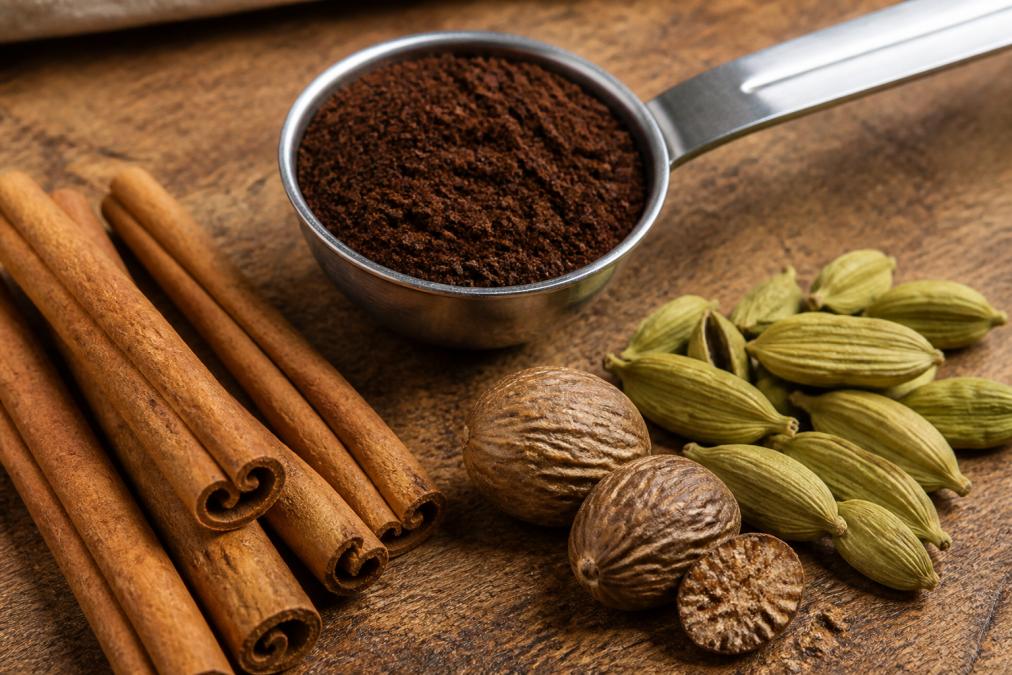
Cardamom brings a sophisticated profile, slightly sweet and floral. Use one-eighth teaspoon of ground cardamom per tablespoon of coffee. Whole cardamom pods work even better: crack three to four pods and add them to your grounds before brewing.
Nutmeg requires caution. More than one-sixteenth teaspoon per tablespoon becomes medicinal. A light dusting is often enough.
A common blend combines two parts cinnamon, one part cardamom, and one-quarter part nutmeg. Store this blend in a small jar and use one-quarter to one-half teaspoon per tablespoon of ground coffee.
Adjusting Spice Ratios by Brew Method
French press brewing allows longer contact between spices and water, so use slightly less spice and still achieve strong flavor. Add your spice blend directly to the grounds, then brew for four minutes as usual.
Drip coffee makers work best with spices mixed into the grounds. Since water passes through more quickly, increase your spice amount by 25-30 percent to compensate.
Cold brew demands different timing. Add spices to your cold brew concentrate and let them sit for the full steeping period (12-24 hours) for subtle spice profile.
Espresso requires precision. Grind your beans slightly coarser than normal, then add a small pinch of ground spices to the portafilter along with the grounds. Tamp gently to avoid over-compacting.
Extracts for Coffee Flavoring Without Added Sugar
Vanilla Extract and Almond Extract Applications
Pure vanilla extract is the most versatile extract for coffee. Add one-quarter to one-half teaspoon to an eight-ounce cup of hot coffee. Vanilla softens harsh edges and adds subtle sweetness without masking coffee's natural character.
Almond extract follows the same ratio but is more concentrated, so use cautiously. Almond works especially well with darker roasts. Other extracts worth exploring include hazelnut, peppermint, and coconut, each following roughly the same ratio as vanilla.
Measuring and Infusing Techniques
The most reliable method is adding extracts directly to your finished cup of hot coffee. Stir well to distribute evenly.
For batch flavoring, add extracts to brewed coffee while hot, then cool before refrigerating. One teaspoon of vanilla extract mixed into a full pot (approximately forty ounces) creates subtle vanilla-flavored cold brew concentrate that lasts three to four days.
Never add extracts to dry grounds before brewing. High heat degrades the extract's flavor compounds. The exception is cold brew, where the absence of heat preserves extract integrity over the long steeping period.
How to Flavor Coffee Beans at Home Before Brewing
DIY Flavor Infusions for Whole and Ground Beans
For whole beans, place freshly roasted beans in a glass jar with a tight-fitting lid. Add a vanilla bean (split lengthwise), two to three cinnamon sticks, and four to five whole cardamom pods. Seal and let sit at room temperature for three to five days.
Ground coffee infuses faster. Mix ground coffee with your spice blend, then store in an airtight container. After one to two days, the flavors have merged.
For extract-based infusions, add one-quarter teaspoon of vanilla extract to one pound of whole beans, seal in a jar, and let sit for two to three days. Ground coffee infused with extract requires one to two days.
Date purée creates a unique infusion when mixed directly with ground coffee. Mix one tablespoon of purée into one pound of ground coffee. Use this infused coffee within one week, as the moisture content can lead to staleness.
Storage and Freshness for Flavored Beans
Flavored whole beans stay fresh longer than ground coffee. Store them in an airtight container away from direct sunlight and heat. A sealed glass jar in a cool cabinet maintains quality for two to three weeks.
Ground flavored coffee has a shorter window. Use infused grounds within one week for best results. If storing longer, freeze them in airtight containers for up to a month.
Beans infused with whole spices last longer than those infused with extracts. The spices continue releasing flavor slowly over time.
Homemade Coffee Flavorings Without Sugar: Natural Sweetener Options
Date Purée, Cocoa Powder, and Plant-Based Milk Additions
Date purée is the closest substitute for syrup's sweetness and texture. Blend one cup of softened dates with one-quarter cup of water until smooth. Store in the refrigerator for up to two weeks. Add one to two tablespoons per eight-ounce cup of hot coffee. Unlike syrup, date purée contains fiber and minerals.
Cocoa powder adds richness and natural bitterness that complements coffee beautifully. Mix one-half teaspoon of unsweetened cocoa powder into one tablespoon of ground coffee before brewing.
Plant-based milks contribute both flavor and mouthfeel. Oat milk adds natural sweetness and creaminess. Almond milk brings subtle nuttiness. Coconut milk creates tropical undertones. Use them as a base (one-quarter to one-third cup per eight-ounce cup of coffee).
Combining Sweeteners with Spices and Extracts
A common winning formula: ground coffee plus cinnamon plus vanilla extract plus oat milk. Each component contributes something distinct.
Another strong combination: dark roast coffee plus cocoa powder plus cardamom plus almond milk. The cocoa and cardamom create a spiced-chocolate profile.
The key principle: avoid combinations that compete. Vanilla and almond extract together create confusion. Cinnamon and peppermint together overwhelm. Stick with one primary extract and one or two complementary spices.
Brew Method Variations: Drip, French Press, and Espresso Techniques
Cold Brew and Iced Coffee Infusion Methods
Cold brew is the gold standard for infused coffee. Since cold water extracts slowly, you can add whole spices directly to your grounds and let them steep for twelve to twenty-four hours.
To make cold brew with spices: combine one pound of coarsely ground coffee with four cups of cold water in a large jar. Add two cinnamon sticks, six cardamom pods, and two whole nutmeg pieces. Stir gently, cover, and refrigerate for eighteen hours. Strain through a fine-mesh filter. The concentrate stays fresh for two weeks.
For iced coffee (hot coffee poured over ice), flavor integration happens during the hot brewing stage. Use standard spice ratios for your brewing method, brew hot coffee normally, then pour it over ice.
Extraction Temperature and Flavor Profile Impact
Water temperature affects how quickly flavoring compounds dissolve. Hotter water (200-205°F) extracts spice flavors faster, creating bold taste. Cooler water (195-200°F) extracts more slowly, producing subtle, nuanced flavor.
Darker roasts tolerate higher temperatures and bold spice additions. Light roasts need gentler treatment. Brew at 200°F with half the spice amount to enhance rather than overwhelm the roast's origin flavors.
Medium roasts sit in the middle. Standard spice ratios and 202°F water temperature work well.
Espresso extraction happens in seconds. Add spices to the grounds and tamp gently. The high-pressure extraction amplifies flavor, so use slightly less spice than you would in drip coffee.
Common Mistakes to Avoid When Making Flavored Coffee at Home
Over-flavoring is the first major mistake. More spice doesn't equal better flavor. Over-spiced coffee tastes medicinal and masks the coffee's natural character. Start conservative.
Adding extracts to dry grounds before brewing wastes flavor. The heat degrades extract compounds, and much evaporates as steam. Always add extracts to hot finished coffee or to cold brew after steeping.
Using low-quality coffee as the base is another common error. Flavoring can't fix stale or poorly roasted beans. Start with fresh, quality beans. At Cuppari Coffee, we roast beans only after your order arrives, ensuring maximum freshness.
Ignoring brew method compatibility wastes effort. Spice ratios that work beautifully in a French press may be too strong in a drip machine. Understanding your specific brew method prevents frustration.
Storing flavored coffee improperly causes rapid flavor degradation. Ground flavored coffee exposed to air loses aromatic compounds within days. Always use airtight containers.
Buying pre-ground flavored coffee expecting the same results as freshly infused beans disappoints. Commercial flavored coffee loses much of its aromatic character during storage and transport.
Finally, many people give up too quickly. Your first batch might not be perfect. Treat the first few batches as experiments, not failures. Each attempt teaches you about your preferences and which techniques work best for you.
Making flavored coffee at home without syrup transforms your daily cup into something intentional and personalized. The techniques we've covered work across any brewing method and any roast level. The challenge most people face isn't understanding the techniques; it's starting with quality coffee beans. Get started with Cuppari Coffee, where beans are roasted only after your order arrives and shipped the same day, guaranteeing the freshness that makes every flavoring technique work better.
Frequently Asked Questions
What can I add to coffee grounds for flavor without using syrup?
You can add spices like cinnamon, cardamom, and nutmeg directly to ground coffee before brewing, use extracts such as vanilla extract, infuse with cocoa powder, or mix in natural sweeteners like date purée. For plant-based options, add almond milk or other dairy alternatives after brewing. The key is adjusting quantities based on your brew method, drip coffee typically requires less spice than cold brew due to different extraction yields and brewing temperatures.
How do I naturally sweeten coffee without sugar or syrup?
Natural sweeteners like date purée, cocoa powder, and plant-based milk alternatives provide sweetness without artificial syrups. Date purée offers a caramel-like flavor when mixed into hot coffee, while cocoa powder adds both sweetness and aroma. Almond milk and other plant-based options contribute subtle sweetness alongside creaminess. These ingredients work well in combination with spices and extracts to create complex flavor profiles without added sugars.
What's the best way to flavor coffee beans at home before brewing?
For DIY flavor infusions, add extracts or essential aromatic compounds to whole beans and seal them in an airtight container for 24-48 hours, allowing the beans to absorb the flavoring agents. For ground coffee, use the drip basket method by placing a small piece of flavoring agent (like a cinnamon stick) in the filter basket during brewing. Store flavored beans in sealed containers away from light and heat to maintain freshness and prevent flavor degradation from oxygen exposure.
Can I use homemade coffee flavorings with specific brew methods like French Press or espresso?
Yes, but adjust your approach by brew method. French Press allows longer contact time with ground coffee, so use lighter spice ratios to avoid over-extraction. Espresso requires precise measurements since the extraction yield is concentrated, use small amounts of extracts or finely ground spices. Drip brewing works well with standard spice-to-ground-coffee ratios. Cold brew benefits from longer infusion times, so you can use more aromatic compounds. Always test small batches first to find your preferred flavor intensity.
This article was written using GrandRanker