

Table of Contents
- Why Storage Method Matters for Coffee Freshness
- Best Coffee Storage Containers and Materials
- How Long Do Coffee Beans Last Once Roasted
- Temperature and Environmental Controls
- Freezing Coffee Beans: Myth vs. Method
- Signs of Stale Coffee Beans and When to Discard
- Daily Habits: From Purchase to Brew
- Frequently Asked Questions
Last Updated: August 6, 2026
Why Storage Method Matters for Coffee Freshness
Coffee beans begin losing flavor immediately after roasting through oxidation and volatile oil degradation. Aromatic compounds peak within the first two to four weeks, after which beans gradually become stale, losing complexity and brightness. Freshness directly impacts extraction quality, stale beans produce flat, muted cups regardless of technique. At Cuppari Coffee, we roast only after an order is placed and ship the same day. But how you store beans from arrival onward determines whether you experience peak flavor or watch it decline week by week. Proper storage preserves your investment in quality coffee.
Best Coffee Storage Containers and Materials
The ideal container blocks light, minimizes oxygen exposure, and prevents moisture from entering.
Airtight containers with one-way valves
An airtight container with a one-way valve is the gold standard. The valve allows carbon dioxide (a byproduct of degassing) to escape without letting oxygen back in. Oxygen triggers oxidation that stales beans. The valve releases internal pressure from degassing while maintaining an oxygen barrier, eliminating the need to open the container frequently.
Look for containers specifically labeled with a one-way valve or degassing valve. Test it by gently squeezing the container to feel for air movement.
Original packaging vs. transfer containers
Specialty coffee roasters, including Cuppari Coffee, ship beans in packaging designed for optimal freshness, typically featuring foil lining, a one-way valve, and a resealable zipper. Original packaging is usually your best option if it has a functional one-way valve and effective seal. Transferring beans introduces unnecessary oxygen exposure and defeats the engineered protection.
If your original bag lacks a one-way valve, transfer carefully to an airtight container with a valve, minimize exposure time, and seal immediately. A nearly-full original bag is better than a half-empty transfer container because more empty space means more oxygen present.
Glass, stainless steel, and opaque vessel options
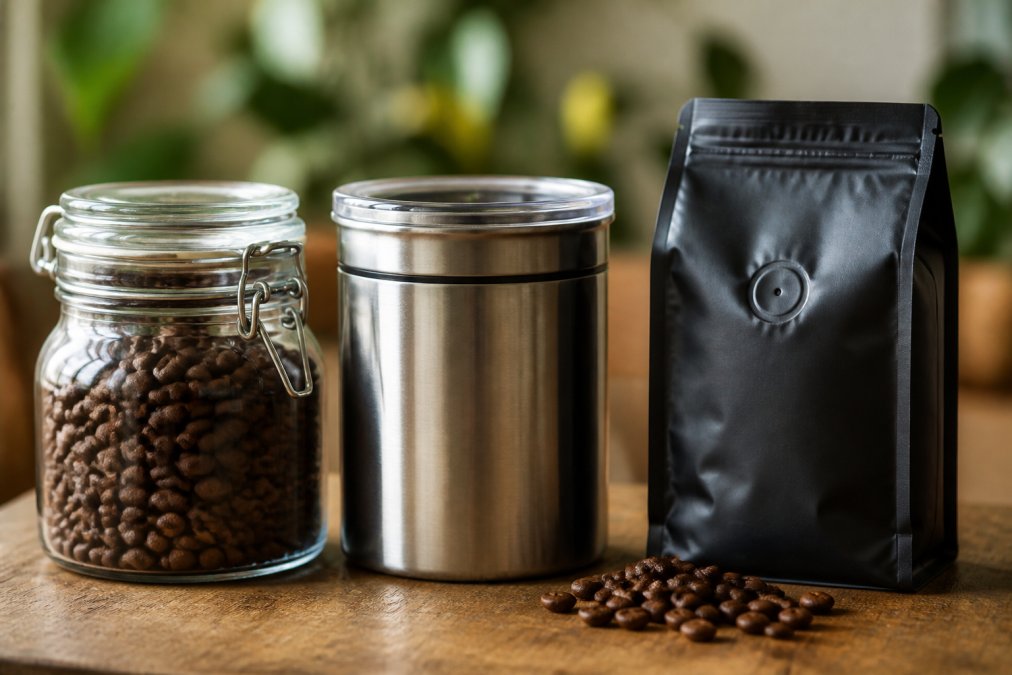
Glass is aesthetically appealing but problematic, it's transparent, allowing light to degrade beans. If you use glass, store it in a dark cabinet away from direct sunlight.
Stainless steel is excellent: opaque, durable, and doesn't interact with coffee oils. It maintains consistent internal temperature better than glass. Stainless steel containers with a one-way valve and airtight seal are ideal for long-term storage.
Ceramic or opaque plastic containers work well if they have a functional one-way valve and tight seal. The key is opacity, the container must block light completely. Avoid materials that absorb odors or interact with coffee oils.
How Long Do Coffee Beans Last Once Roasted
Shelf life depends entirely on storage conditions.
The freshness window and peak flavor period
Roasted coffee beans reach peak flavor between three and ten days after roasting, when degassing has stabilized and the full aromatic profile has developed, but before oxidation has significantly degraded volatile oils. Cuppari Coffee's approach of roasting and shipping the same day ensures beans arrive during this critical window.
After peak period, beans remain drinkable for several weeks but gradually flatten. By week four, most roasted beans have lost enough flavor that enthusiasts notice immediately.
Shelf life under different storage conditions
Beans stored in an airtight container with a one-way valve, kept in a cool dark place away from temperature fluctuations, remain acceptable for up to four weeks. Poor storage dramatically shortens shelf life, beans exposed to light and temperature swings on a kitchen counter taste noticeably stale within ten to fourteen days.
Temperature consistency matters more than absolute temperature. A cool, stable environment like a pantry or cabinet preserves freshness better than a cold environment with fluctuating temperatures. Avoid refrigerators unless planning long-term freezer storage, as repeated temperature changes cause condensation that damages beans.
Temperature and Environmental Controls
Your storage environment directly impacts how quickly beans stale.
Protecting beans from heat, light, and moisture
Heat accelerates oxidation and volatile oil degradation. The ideal storage temperature is between 50 and 70 degrees Fahrenheit. Room temperature is acceptable if stable, but avoid areas with significant warmth.
Light exposure degrades aromatic compounds. Opaque containers are essential, and storing them in a dark cabinet beats visible shelves. If using transparent containers, place them inside a dark cabinet or drawer.
Moisture is the most destructive environmental factor. Coffee beans absorb moisture readily, promoting mold growth and degrading bean structure. Store beans in a dry environment, away from sinks and dishwashers. A pantry or interior cabinet is ideal.
Climate-specific storage strategies
In humid climates, moisture control is primary. Use airtight containers with one-way valves and store in the driest location available, often a bedroom closet or interior cabinet. Consider food-grade desiccant packets inside your container, replacing them monthly.
In hot climates, temperature stability is critical. Avoid areas with direct sunlight or heat buildup. An interior closet maintains more stable temperatures than sun-exposed areas.
In cold climates, temperature fluctuation is the challenge. A stable, cool environment beats one swinging between cold and warm. Avoid unheated garages or entryways where doors cause temperature changes and condensation.
Freezing Coffee Beans: Myth vs. Method
Freezing is genuinely useful when buying in bulk or receiving more beans than you'll consume within the freshness window.
When freezing makes sense for long-term storage
Freezing essentially pauses oxidation. Beans stored at 0 degrees Fahrenheit or below remain acceptable for several months, far longer than room-temperature storage. This is valuable for expensive or difficult-to-replace specialty beans.
Freeze beans you don't plan to use within two to three weeks. Don't freeze beans for immediate consumption, room-temperature storage in proper airtight containers is superior for short-term freshness.
Preventing freezer burn and condensation damage
The primary risk with freezing is condensation. When frozen beans are removed and exposed to warm air, moisture condenses on the surface, damaging the bean structure and promoting mold growth.
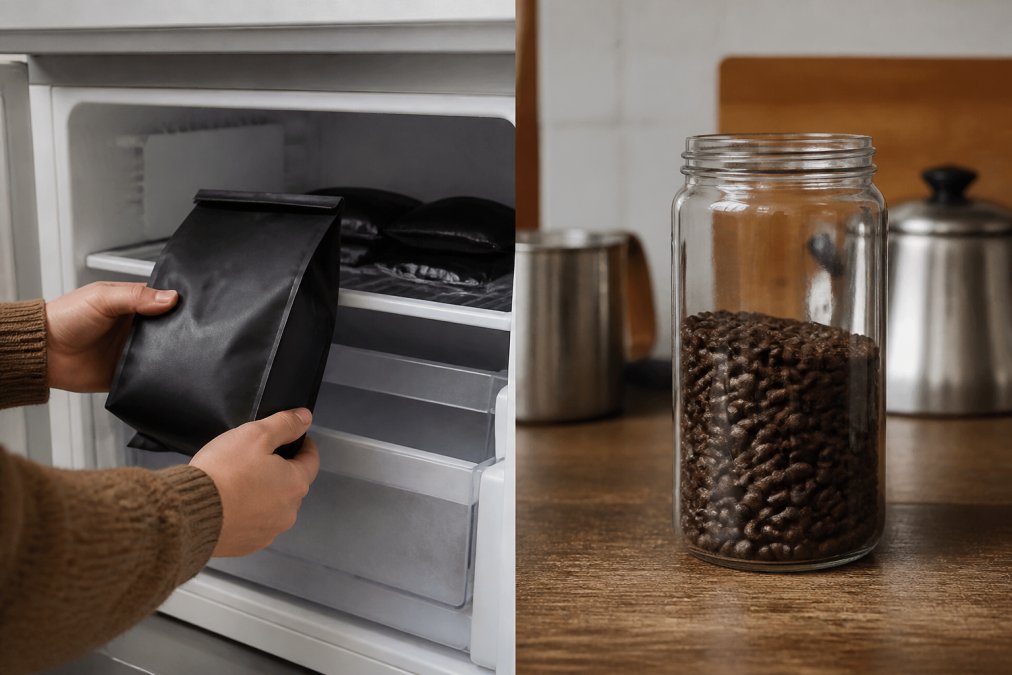
Use airtight containers or vacuum-sealed bags designed for freezer storage. Remove as much air as possible before sealing. Label containers with the roast date. Store frozen beans in the coldest freezer section, away from the door where temperature fluctuations are most dramatic.
Post-thaw protocols for optimal flavor
Never thaw beans at room temperature, the temperature gradient causes condensation. Instead, thaw in the refrigerator over 24 hours. Once thawed, use beans within one week. Don't refreeze thawed beans, as repeated freeze-thaw cycles cause significant degradation.
Alternatively, keep frozen beans sealed and grind directly from the freezer. This minimizes thawing time and condensation exposure, and cold beans grind more consistently.
Signs of Stale Coffee Beans and When to Discard
Knowing when beans have passed their prime helps you avoid disappointing cups.
Visual, aroma, and taste indicators of age
Stale beans appear dull and may show a grayish bloom on the surface, a sign of oxidation and oil degradation. Fresh beans have vibrant color and slight sheen from surface oils.
Aroma is the most reliable freshness indicator. Fresh roasted beans have rich, complex smell with origin and roast-specific notes. Stale beans smell flat, musty, or like old cardboard. Weak or unpleasant aroma indicates beans are past their prime.
Taste confirms what aroma suggests. Stale coffee tastes thin, bitter, or flat, lacking brightness and complexity. Stale beans often taste overly bitter because degraded oils oxidize into compounds that accentuate bitterness.
How oxidation and moisture damage flavor
Oxidation is the primary culprit in flavor degradation. As oxygen reacts with volatile oils, those oils break down into less desirable compounds. This process is irreversible. Moisture damage is equally destructive, beans that absorb moisture soften and oils separate from the cellular matrix, causing flavor to leach out and promoting mold growth.
Discard beans that have absorbed moisture, show visible mold, or smell musty. Beans tasting flat or bitter after only two weeks likely experienced moisture exposure or poor storage conditions.
Daily Habits: From Purchase to Brew
How you handle beans between purchase and brewing matters as much as storage.
Grind size and timing for extraction quality
Grind immediately before brewing. Grinding breaks down the bean structure and exposes the interior to oxygen, accelerating oxidation dramatically. Ground coffee stales within hours rather than weeks. Whole-bean storage preserves beans until the moment you brew, then grind only what you need.
Use a burr grinder that produces consistent particle size. Blade grinders create inconsistent grinds and generate heat that damages beans.
Sealing and air displacement between uses
After each use, seal your storage container immediately. Every minute it sits open, oxygen enters and stales remaining beans.
Minimize air space by using appropriately-sized containers or consolidating beans as you consume them. A half-empty container has twice the oxygen volume of a full one. Some enthusiasts use air displacement techniques, gently pressing down or using a vacuum seal to remove oxygen before sealing.
Storing coffee beans properly transforms how your daily cup tastes. Using airtight containers with one-way valves, maintaining cool dark storage, protecting beans from moisture, and grinding fresh before brewing are straightforward to implement and produce dramatic results.
The challenge most coffee drinkers face isn't complexity; it's consistency. Buying premium beans only to store them poorly wastes the investment. When you receive freshly roasted beans from Cuppari Coffee, they arrive at peak flavor with fully developed aromatic compounds. Your storage decisions determine whether you experience that peak quality or watch it decline. Start with proper containers, choose a dark cool location, and grind immediately before brewing. These three habits alone preserve freshness far better than what most coffee drinkers currently do.
Frequently Asked Questions
How long do coffee beans stay fresh after opening the bag?
Roasted coffee beans peak in flavor during the first 1-2 weeks after roasting, especially days 3-7 when degassing stabilizes. Once opened, beans remain acceptable for 2-4 weeks in an airtight container away from heat and light. After 4 weeks, oxidation and moisture exposure noticeably degrade flavor and aromatic compounds. For maximum freshness, grind only what you'll use within a few days and store the remainder sealed in an opaque, airtight vessel.
What's the best container material for storing coffee beans?
Opaque, airtight containers work best because they block light (which degrades volatile oils), prevent oxygen exposure, and minimize moisture absorption. Stainless steel and dark glass are superior to clear containers. One-way valve containers are excellent for freshly roasted beans because they allow carbon dioxide from degassing to escape without letting oxygen back in. Avoid clear plastic, which permits UV light penetration. Whatever material you choose, ensure a tight seal to maintain an oxygen barrier and protect the bean's porous structure.
Is freezing coffee beans a good idea for long-term storage?
Freezing works for bulk buying and long-term storage (3-6 months) if done correctly. Freeze beans in vacuum-sealed bags or airtight containers to prevent freezer burn and condensation damage. When ready to use, thaw the sealed bag at room temperature for 30-60 minutes before opening to avoid moisture condensation on the beans. Do not refreeze. Freezing halts oxidation and preserves flavor better than room-temperature storage over months, making it practical for those who buy in bulk but want to maintain freshness windows across multiple uses.
How can I tell if my coffee beans are stale?
Stale beans show several signs: a dull, flat appearance instead of a glossy sheen; weak or absent aroma when the bag is opened; a muted, thin flavor during brewing; and reduced extraction quality (weak body and thin mouthfeel). Beans older than 4-6 weeks typically exhibit these traits as volatile oils break down and oxidation progresses. If beans smell musty or off, or if they taste sour or bitter in an unpleasant way, discard them. Fresh, properly stored beans should smell vibrant and produce a rich, complex cup.
This article was written using GrandRanker