

Table of Contents
- Does Coffee Actually Expire?
- Signs of Rancid Coffee Beans and Spoilage
- Understanding 'Best By' vs. Expiration Dates
- How to Store Coffee Beans Long Term
- Whole Beans vs. Ground Coffee Longevity
- Does Instant Coffee Expire?
- Is It Safe to Drink Old Coffee?
- Sensory Degradation: When Quality Declines
Last Updated: August 10, 2026
Does Coffee Actually Expire?
Coffee doesn't truly expire the way milk or meat does. It won't spoil into something toxic overnight. But 10 year old coffee is almost certainly not what you want to brew.
The distinction matters: safety and quality are two different things. Old coffee won't give you food poisoning. What it will do is taste flat, bitter, and nothing like what the roaster intended. The aromatic compounds that make coffee worth drinking break down over time through oxidation. Once they're gone, no amount of brewing skill brings them back.
Most specialty roasters recommend using coffee within 2-4 weeks of the roast date for peak flavor. After that window, the coffee doesn't become dangerous, it becomes disappointing. At Cuppari Coffee, we roast beans only after an order is placed and ship the same day, which is why freshness matters so much to the final cup. A decade-old bag of beans has lost essentially all the volatile compounds that create complexity and brightness.
The real question isn't whether it's safe. It's whether it's worth drinking.
Signs of Rancid Coffee Beans and Spoilage
Visual and Sensory Indicators
The easiest way to evaluate old coffee is through your senses. Look at the beans themselves first. Fresh coffee beans have a rich, uniform color, dark brown for dark roasts, lighter brown for medium roasts. Old beans may appear dull, faded, or inconsistently colored. The surface might look chalky or have lost its sheen.
Smell is your second indicator. Fresh coffee has a strong, pleasant aroma, fruity, nutty, chocolatey depending on the origin. Ten-year-old coffee will smell stale, musty, or flat. Some people describe it as cardboard-like. If you open a bag and get no aroma at all, that's a clear sign the volatile compounds have degraded significantly.
Taste is the final test, but only after brewing. Old coffee tastes thin, hollow, and bitter in an unpleasant way, not the pleasant bitterness of a dark roast, but a harsh, burnt quality. The body feels weak. There's no complexity or sweetness. If you've ever had coffee that tasted like it had been sitting on a burner for hours, that's roughly what decade-old coffee tastes like.
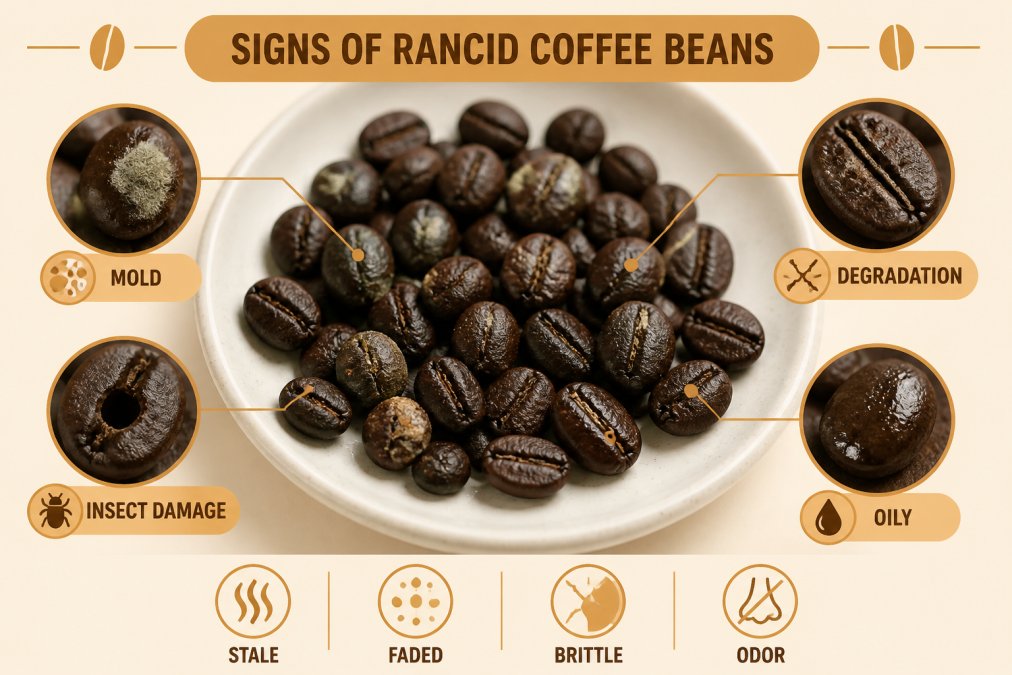
Mold, Oil Extraction, and Degradation
Mold is rare in properly stored coffee but possible in humid conditions. If you see any fuzzy growth, discoloration that looks like mold, or a musty smell that suggests moisture damage, discard the coffee. This is a safety issue, not just a quality one.
More common in old coffee is visible oil extraction and rancidity. Coffee beans contain oils that give them flavor and body. Over time, these oils oxidize. You might see a sticky or greasy coating on beans that were once dry. This oxidation process degrades the flavor compounds and can create a stale, rancid taste. The beans might also appear darker or more brittle than fresh beans.
The timeline for degradation depends on storage conditions. In ideal conditions, cool, dark, airtight, whole beans can maintain acceptable quality for 3-6 months. After a year, flavor loss becomes noticeable. After several years, the coffee is essentially a shell of its original self. At 10 years, assuming any storage mistakes along the way (exposure to light, heat, or air), there's almost nothing left of the original flavor profile.
Understanding 'Best By' vs. Expiration Dates
Coffee bags often carry a "best by" date or "roast date," but these terms mean different things, and neither is a hard expiration.
A roast date tells you exactly when the beans were roasted. This is the most useful information on a coffee bag. It lets you calculate freshness yourself. Coffee roasted 2 weeks ago is fresher than coffee roasted 6 months ago, no guessing required.
A best by date is a manufacturer's estimate of when the coffee will start to noticeably decline in quality. It's not a safety deadline. Coffee doesn't become unsafe on that date. It's more like a quality window. Most roasters set this 6-12 months from the roast date, though it varies. Some use 3 months; others use a year.
Neither date tells you what happened to the coffee in between. A bag roasted 2 years ago but stored in a freezer in an airtight container might taste better than a bag roasted 3 months ago but left open in a warm kitchen. Storage conditions matter more than the calendar date.
For 10 year old coffee, any best by date has long since passed. The roast date is a decade old. Unless it was stored in a vacuum-sealed container in a freezer (which almost never happens with consumer coffee), the coffee has degraded substantially. Even under perfect conditions, 10 years is far beyond any reasonable freshness window.
How to Store Coffee Beans Long Term
Airtight Containers and Vacuum Sealing
The enemy of fresh coffee is oxygen. Oxidation breaks down aromatic compounds and degrades flavor. If you want coffee to last as long as possible, you need to minimize air exposure.
Airtight containers are the baseline. A standard airtight canister with a one-way valve works well. The valve lets CO2 (which coffee releases after roasting) escape without letting oxygen in. These containers keep coffee fresh for several months if stored properly.
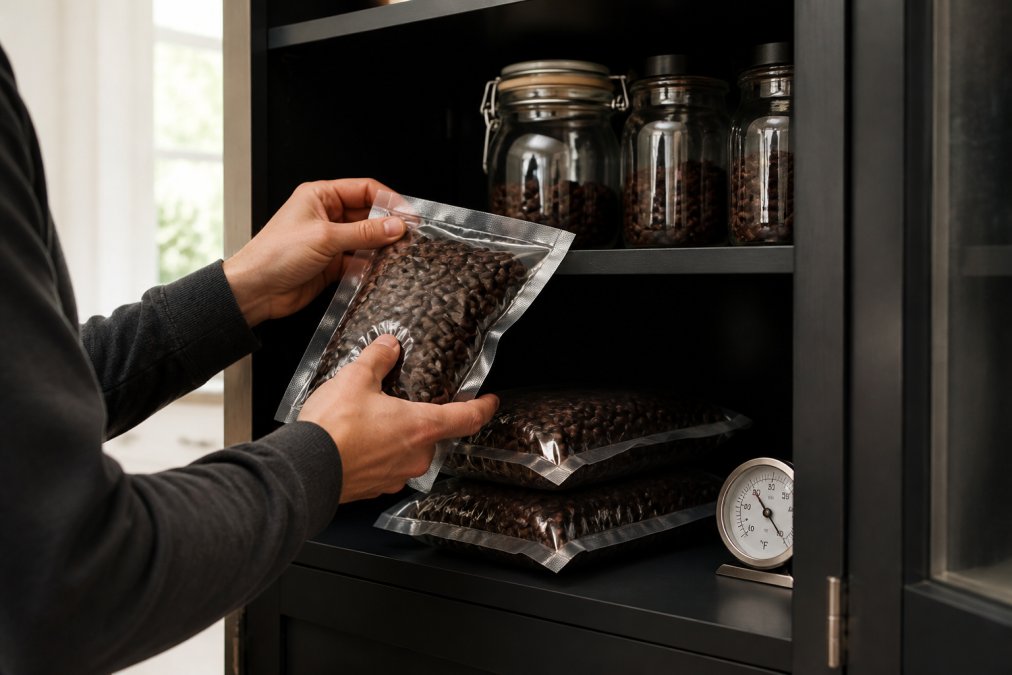
Vacuum sealing goes further. If you remove most of the air from the bag, oxidation slows dramatically. Some people use a home vacuum sealer to package coffee in small portions, then store the sealed bags in the freezer. This method can extend quality for 6-12 months, though flavor will still decline over time.
The key is consistency. An airtight container left open occasionally is worse than a regular container kept closed. A vacuum-sealed bag that gets opened repeatedly loses its advantage. If you're storing coffee long-term, commit to the method and stick with it.
Temperature, Moisture, and Light Control
Temperature is critical. Heat accelerates degradation. Coffee stored at room temperature (70°F) will degrade faster than coffee stored in a cool environment (50-60°F). A freezer (0°F or below) slows degradation significantly, though it doesn't stop it entirely.
Moisture is the second threat. Humidity causes mold growth and can degrade the beans. Store coffee in a dry location. A kitchen cabinet is better than a bathroom. A pantry is better than above the stove. If you live in a humid climate, consider a dehumidifier in your storage area or use sealed containers with desiccant packets.
Light exposure breaks down flavor compounds through photodegradation. Store coffee in an opaque container or in a dark place. Clear glass jars look nice but expose the coffee to light every time you open a cabinet. Dark, opaque containers are better for long-term storage.
The ideal storage setup combines all three: an airtight, opaque container in a cool, dry, dark location. A pantry or cupboard away from the stove and dishwasher is perfect. A freezer works if you use proper vacuum-sealed bags and don't open them frequently.
Whole Beans vs. Ground Coffee Longevity
Whole beans last significantly longer than ground coffee. The difference is surface area.
When you grind coffee, you exponentially increase the surface area exposed to oxygen. A whole bean has a relatively small surface. Ground coffee is fine particles with enormous total surface area. This means oxidation happens much faster.
Whole beans stored in an airtight container might stay acceptable for 3-6 months. Ground coffee in the same conditions will noticeably degrade within 2-4 weeks. After a month, ground coffee tastes stale even in ideal storage.
This is why coffee enthusiasts grind immediately before brewing. It's not just a ritual, it's practical. Grinding 30 seconds before brewing means you're using coffee at its peak freshness.
For 10 year old coffee, the format doesn't matter much. Whether it's whole bean or ground, a decade of oxidation has done its damage. But if you're storing coffee for months (not years), whole beans are the clear choice. They'll maintain quality longer and give you more flexibility in when you grind.
Does Instant Coffee Expire?
Instant coffee is different from whole or ground beans. It's already been brewed and dehydrated, so it's further along the degradation curve when you buy it.
Instant coffee doesn't expire in a safety sense. It won't grow mold or become toxic. But it does lose flavor over time, just like whole beans. The aromatic compounds degrade through oxidation, and the flavor becomes flat and stale.
Most instant coffee stays reasonably drinkable for 2-3 years if stored in an airtight container in a cool, dark place. After that, quality declines noticeably. At 10 years old, instant coffee would taste weak and stale, similar to old whole beans.
The advantage of instant coffee is convenience and shelf stability. It takes up less space and doesn't require grinding. The tradeoff is that it starts with less flavor complexity than whole beans, so degradation is more noticeable. A cup of 10-year-old instant coffee would be barely worth drinking.
Is It Safe to Drink Old Coffee?
Drinking Expired Coffee Side Effects
The short answer: old coffee won't make you sick. It's not like drinking spoiled milk. Coffee is acidic and doesn't support bacterial growth the way dairy does. The biggest risk is mold, which only grows in moisture-exposed beans, and that's rare.
Most people who drink old coffee experience nothing except disappointment. The taste is flat and unpleasant. That's the main "side effect", a bad cup of coffee.
In rare cases, if coffee was stored in humid conditions and developed mold, drinking it could cause mild digestive upset or allergic reactions in sensitive people. But visible mold is obvious. If the coffee looks normal and smells okay (even if stale), it's safe to drink.
The real concern isn't safety, it's waste. Ten-year-old coffee is unlikely to poison you, but it's also unlikely to be enjoyable. Life's too short to drink bad coffee.
Oxidized Lipids and Volatile Compounds
The chemistry of old coffee is worth understanding. Coffee beans contain volatile compounds, aromatic molecules that create flavor. They also contain lipids (oils) that contribute to body and mouthfeel.
Over time, oxidation breaks these down. Volatile compounds evaporate or degrade into less flavorful compounds. Lipids oxidize, which can create a rancid taste. This process accelerates with heat, light, and air exposure.
The oxidized lipids themselves aren't dangerous in the small amounts present in coffee. But they change the flavor profile in negative ways. The coffee tastes harsh, bitter, and hollow, lacking the sweetness and complexity of fresh coffee.
This degradation is irreversible. There's no way to restore old coffee. Brewing it hotter, using more grounds, or adding milk won't bring back the lost flavor. Once the volatile compounds are gone, they're gone.
Sensory Degradation: When Quality Declines
Coffee quality declines on a timeline. Understanding this timeline helps you know what to expect at different ages.
0-2 weeks (peak): The coffee is at its best. Aromatic compounds are at maximum. Flavor is bright, complex, and balanced. This is when specialty coffee should be consumed.
2-4 weeks (good): Still excellent. Most people won't notice significant decline. Aromatic compounds are still strong. This is the typical "use by" window for most roasters.
1-3 months (acceptable): Flavor is noticeably flatter than peak, but still pleasant. Some brightness is lost. The coffee is still worth drinking, especially for drip coffee or espresso where the brewing method adds body.
3-6 months (declining): Flavor is clearly diminished. The coffee tastes stale and thin. It's drinkable but not enjoyable. At this point, most people notice the difference.
6-12 months (poor): The coffee tastes significantly stale. Bitterness increases. Complexity is almost gone. Most people would find this unpleasant.
1+ year (unacceptable): The coffee tastes like it's been sitting on a burner. Flat, harsh, and unpleasant. At this point, it's hard to justify drinking it.
10 years (essentially undrinkable): All aromatic compounds have degraded. The coffee tastes thin, bitter, and stale. There's no complexity or brightness. Unless stored in a freezer in a vacuum-sealed container (which is rare), the coffee is essentially a flavor shell.
The timeline varies based on storage conditions. Perfect storage (cool, dark, airtight, low humidity) extends each phase. Poor storage (warm, light-exposed, open air, humid) accelerates decline. But even with perfect storage, 10 years is far beyond any reasonable freshness window.
The practical answer to "Is 10 year old coffee still good?" is no. It won't poison you, but it will taste flat, stale, and disappointing. Coffee is best enjoyed within weeks of roasting, not years. If you're serious about coffee quality, freshness matters. At Cuppari Coffee, we prioritize this by roasting beans only after an order is placed and shipping the same day, ensuring your coffee arrives at peak freshness. This approach eliminates the guesswork about age and storage conditions. For the best coffee experience, start with fresh beans and store them properly in an airtight container away from heat, light, and moisture.
Frequently Asked Questions
Is 10 year old coffee safe to drink?
10 year old coffee is unlikely to make you sick, but quality degrades significantly over time. The main risk is oxidation of aromatic compounds and lipids, which can produce off-flavors rather than toxins. If stored in an airtight container away from heat and light, whole beans may remain safe longer than ground coffee. However, the flavor profile will be substantially diminished, expect stale, flat notes rather than the lively cup you'd get from freshly roasted beans. Check for mold or rancid smells before brewing.
What are the signs of rancid coffee beans?
Rancid coffee beans show visible mold growth, discoloration, or a musty smell. You may also notice excessive oily residue on the surface, oil extraction accelerates with age and humidity. A sour or cardboard-like odor indicates oxidation of aromatic compounds. If the beans smell stale or lack their typical coffee aroma, they've degraded significantly. Taste a single bean: rancid coffee will have a bitter, unpleasant bite rather than the expected acidity and bitterness of fresh roasted beans.
How should I store coffee beans to extend their shelf life?
Store whole beans in an airtight container or vacuum sealed bag in a cool, dark pantry, ideally between 50-70°F. Keep moisture content low by avoiding humid environments. Never refrigerate or freeze unless necessary, as temperature fluctuations promote condensation. Ground coffee deteriorates faster due to increased surface area, so grind only what you need. Check the roast date on packaging; coffee is best within 2-4 weeks of roasting. For long-term storage beyond a few months, vacuum sealing with minimal oxygen exposure slows oxidation significantly.
What happens if I drink expired coffee?
Drinking expired coffee rarely causes serious illness, but you may experience digestive discomfort if mold is present. The main effect is poor taste, stale, flat, or bitter flavors from degraded aromatic compounds and oxidized lipids. Very old coffee may have higher levels of volatile compounds that taste unpleasant. If the coffee smells rancid or moldy, skip it. Otherwise, old coffee is more of a quality issue than a food safety issue. Stick to coffee within 1-2 years of the roast date for best flavor and peace of mind.
This article was written using GrandRanker