

Table of Contents
- The Real Cost Breakdown: Coffee Subscription vs. Grocery Store
- How to Use a Cost Per Cup Coffee Calculator
- Benefits of Freshly Roasted Coffee Beans
- How to Choose a Coffee Subscription That Fits Your Routine
- Hidden Costs: Packaging Waste, Shipping, and Subscription Fatigue
- Gift Subscriptions and Sample Packs: Low-Risk Ways to Try
- Conclusion: When a Coffee Subscription Pays Off
- Frequently Asked Questions
Last Updated: September 20, 2026
The Real Cost Breakdown: Coffee Subscription vs. Grocery Store
Is a coffee subscription worth the cost? For most daily coffee drinkers, yes, provided you drink enough to avoid waste and you value freshness over the lowest possible sticker price. The math shifts the moment you stop comparing price per bag and start comparing price per cup. This guide from Cuppari Coffee breaks down the real numbers, the hidden costs, and the decision framework that actually settles the question.
A 12-ounce bag of grocery store beans often costs less per bag than a subscription. That comparison is misleading. Grocery beans frequently sit on shelves for months, so you compensate with larger doses to chase flavor that has already faded. Specialty roasters, by contrast, ship within days of roasting. According to USDA coffee market reporting, freshness and origin transparency increasingly drive what consumers pay for.
Here is the throughline: a coffee subscription is not a coffee purchase, it is a freshness purchase. Whether it pays off depends on your consumption volume, your tolerance for repetition, and how you handle the packaging that arrives every month.
How to Use a Cost Per Cup Coffee Calculator
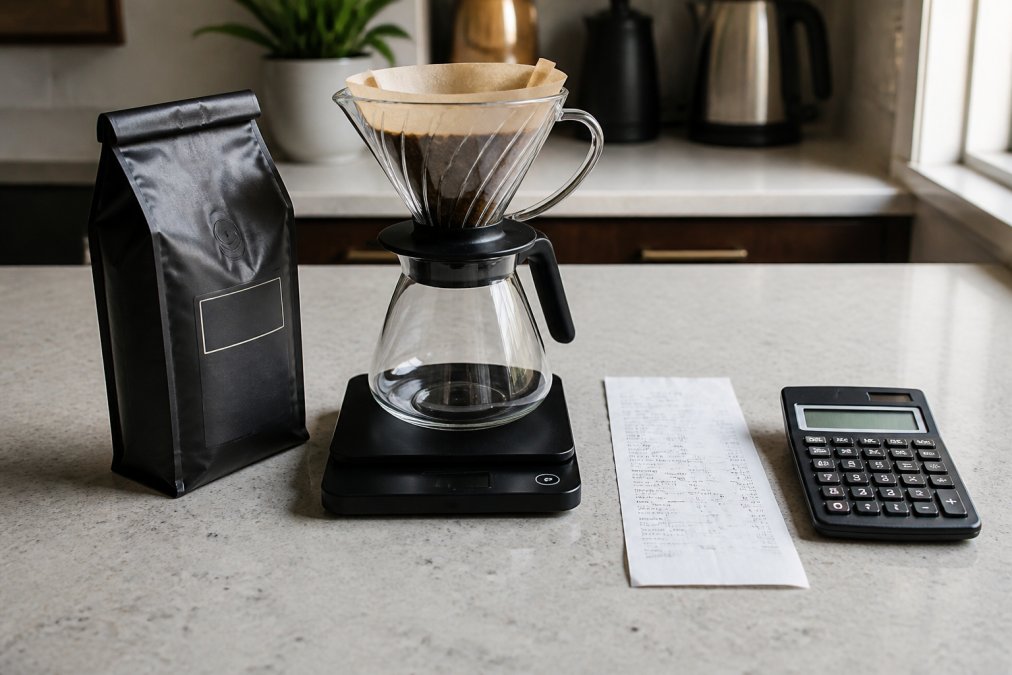
A cost per cup coffee calculator divides your total spend by the number of cups you actually brew. That single number exposes whether a subscription saves money or quietly drains it.
Step-by-Step: Crunching Your Own Numbers
- Weigh your typical dose. Most home brewers use 15 to 18 grams per cup.
- Note your bag size. A 12-ounce bag holds roughly 340 grams.
- Divide grams per bag by grams per cup to get cups per bag.
- Add shipping and any recurring fees to the bag price.
- Divide total cost by total cups.
| Input | Example A | Example B |
|---|---|---|
| Bag size | 12 oz (340 g) | 12 oz (340 g) |
| Dose per cup | 18 g | 15 g |
| Cups per bag | ~18 | ~22 |
| Bag + shipping | $22 | $22 |
| Cost per cup | ~$1.22 | ~$1.00 |
The difference between those two columns is a dosing habit, not a product. Tighten your dose before you blame the subscription.
Benefits of Freshly Roasted Coffee Beans
The benefits of freshly roasted coffee beans come down to one variable: time since roast. Coffee releases carbon dioxide for days after roasting, and that gas affects how evenly water extracts flavor. Beans roasted recently brew with more clarity and sweetness than beans that have been sitting.
Roast Date vs. Best-By Date
A roast date tells you when the beans were actually roasted. A best-by date tells you when a manufacturer suggests you stop using them, and it can be printed months in advance. Look for a roast date, not a best-by stamp.
Cuppari Coffee roasts beans only after an order is placed and ships the same day, which keeps the clock on your side rather than the warehouse's.
How to Choose a Coffee Subscription That Fits Your Routine
Learning how to choose a coffee subscription is mostly about matching delivery cadence to how fast you actually drink. Most guides stop there. The framework below goes one step further: it tells you whether the subscription is worth the cost at all, using your own numbers.
Step 1: Calculate Your Monthly Coffee Volume
Start with grams, not bags. Weigh your typical dose (most home brewers use 15 to 18 grams per cup), multiply by cups per day, then by 30.
| Habit | Dose | Monthly grams | 12 oz bags/month |
|---|---|---|---|
| 1 cup/day | 16 g | ~480 g | ~1.4 |
| 2 cups/day | 16 g | ~960 g | ~2.8 |
| 3 cups/day | 16 g | ~1,440 g | ~4.2 |
That number is your ceiling.
Step 2: Compare Cost Per Cup Against the Cafe
This is the comparison most subscription guides skip, and it is the one that actually settles the question. A drip coffee at a cafe commonly runs $2.50 to $4.00, and a latte runs $4.50 to $6.50. A subscription cup, by contrast, often lands between $0.90 and $1.40 once you divide total cost by cups brewed.
Run the math on your own habit:
- Subscription cup: $22 bag + $0 shipping ÷ 18 cups = ~$1.22 per cup.
- Cafe drip: $3.00 per cup.
- Cafe latte: $5.00 per cup.
Step 3: Match Cadence, Grind, and Roast to Your Setup
Cadence is the biggest lever, but grind and roast matter too. A subscription that ships pre-ground coffee for a drip machine will underperform in a pour-over, and a dark roast tuned for espresso will taste flat in a French press. Before you commit, confirm:
- Can I pause or skip a delivery without a penalty?
- Can I change grind size and roast preference between shipments?
- What does cancellation actually require, a phone call, an email, or a button?
Step 4: Decide Whether the Subscription Is Worth It for You
The decision comes down to three yes-or-no questions:
- Do I drink at least one cup a day, most days?
- Do I care more about freshness than the lowest shelf price?
- Will I actually use the pause or skip feature when a backlog forms?
Cuppari Coffee ships free on all U.S. orders, so testing a smaller cadence costs you nothing extra in shipping.
Hidden Costs: Packaging Waste, Shipping, and Subscription Fatigue
Recurring deliveries carry costs that never appear on the invoice. The three that quietly erode the value of a subscription are packaging waste, shipping structure, and subscription fatigue. Each one has a fix, but only if you name it before you sign up.
Packaging Waste: The Carbon Math Nobody Prints on the Bag
A single 12-ounce bag shipped to your door typically arrives inside a corrugated box, sometimes with a padded mailer, a valve-sealed bag, and a packing slip. Multiply that by twelve deliveries a year and you have a small mountain of material that a bulk grocery run would have consolidated into one trip.
What actually moves the needle:
- Bag material. Look for recyclable or compostable bags, or roasters that ship in a single sealed bag without an outer box.
- Consolidation. If you drink two bags a month, ask whether the roaster will ship both in one delivery rather than two.
- Grind-at-home. Whole bean in a resealable valve bag beats pre-ground in a foil pouch you cannot reseal.
Shipping: The Line Item That Decides the Math
Shipping is where a subscription either earns its keep or quietly loses to the grocery store. A $22 bag with $6 shipping is a $28 bag, and that changes your cost per cup by roughly 27 percent before you brew a single cup.
Before you commit, ask:
- Is shipping free, flat, or variable by weight?
- Does the free-shipping threshold require a larger order than you actually drink?
- Are there handling fees, taxes, or subscription-management fees on top?
Subscription Fatigue and the Backlog Problem
Subscription fatigue is the quieter problem, and it is the single most common reason people cancel. When boxes arrive faster than you drink them, you stop noticing what you have. Inventory management becomes guesswork, and half your shelf goes stale before you reach it.
The fix is unglamorous:
- Track how many bags you actually finish in a month for two months.
- Set your delivery cadence one notch below that number.
- Use the pause or skip feature the moment a backlog forms.
Gift Subscriptions and Sample Packs: Low-Risk Ways to Try
A gift subscription or sample pack lets you test a roaster before committing to recurring billing. This is the smartest entry point if you are unsure whether a coffee subscription is worth the cost for your habits.
Conclusion: When a Coffee Subscription Pays Off
A coffee subscription pays off when your consumption volume is steady, your cadence matches your habit, and freshness matters more to you than the lowest shelf price. It loses when boxes outpace your drinking and beans go stale on the counter.
Frequently Asked Questions
Is it worth getting a coffee subscription?
It depends on how much you value freshness and convenience. If you drink coffee daily and want beans roasted within days of arrival, a coffee subscription can be worth the cost. If you buy cheap bulk beans and rarely notice staleness, the premium may not justify itself.
Are coffee subscriptions cheaper than buying beans at the store?
Not always on sticker price. A 12-ounce bag from a subscription might cost $18 to $22, while grocery store beans can run $8 to $14. However, when you calculate cost per cup using a coffee subscription, the gap narrows because freshly roasted beans often need less coffee per brew to achieve full flavor. The real savings show up in quality consistency, not the shelf price.
How do you calculate the cost per cup of a coffee subscription?
Divide the bag price by the number of cups it yields. A 12-ounce bag typically makes 16 to 20 cups depending on your brew ratio. If the bag costs $20, that is roughly $1.00 to $1.25 per cup. Add shipping if it is not free. Compare that number to your current setup. Cuppari Coffee offers free shipping on all U.S. orders, which simplifies the math.
How often should you receive coffee deliveries to ensure freshness?
Match delivery frequency to your consumption. Most households drink one to two cups per person daily, which means a 12-ounce bag lasts about one to two weeks. If you drink less, choose a monthly plan or pause deliveries to avoid stale beans piling up.