

Table of Contents
- Light Roast vs Dark Roast Caffeine Content: The Quick Answer
- Why Roasting Doesn't Burn Off Caffeine
- Bean Density and Mass vs Volume: The Real Difference
- How to Measure Coffee Beans for Caffeine Consistency
- Caffeine Content by Brewing Method: Extraction Rate at Work
- Arabica vs Robusta: Caffeine Variance by Bean Variety
- Health Benefits of Light vs Dark Roast
- Frequently Asked Questions
Last Updated: September 26, 2026
Light Roast vs Dark Roast Caffeine Content: The Quick Answer
The answer surprises most coffee drinkers: light roast vs dark roast caffeine content is nearly identical when measured by weight. The idea that dark roasting burns off caffeine is one of the most persistent myths in coffee. At Cuppari Coffee, we roast every order only after it's placed, so we think about bean chemistry constantly. Below, we'll show you exactly why roast level barely touches caffeine, and what actually changes your morning cup.
Why Roasting Doesn't Burn Off Caffeine
Caffeine survives roasting because the molecule is remarkably heat-stable. According to chemical safety data on caffeine from the National Library of Medicine, caffeine's melting point sits well above the temperatures a roaster reaches. Beans typically peak between 370°F and 480°F, and even the darkest roast doesn't hold caffeine at a temperature long enough to destroy it in meaningful amounts.
Thermal Degradation and the Stability of the Caffeine Molecule
Thermal degradation does occur during roasting, but it targets other compounds first. Sugars caramelize, acids break down, and water evaporates. Caffeine largely stays put. Some studies on roast degree suggest a small decline at the extreme dark end, but the loss is minor and rarely noticeable in the cup.
Bean Density and Mass vs Volume: The Real Difference
Bean density is the hidden variable in every roast caffeine debate. Green coffee beans are dense and moist. As roasting progresses, they expand, crack, and lose water weight, sometimes shedding 15% to 20% of their mass. A dark roasted bean is physically larger but lighter than its light roasted twin.
How Roast Profile Changes What a Scoop Holds
This is where mass vs volume decides your actual caffeine intake. If you measure by weight, a gram of light roast and a gram of dark roast contain nearly the same caffeine. If you measure by scoop, the math shifts.
| Measurement Method | Light Roast | Dark Roast | Caffeine Outcome |
|---|---|---|---|
| By weight (grams) | Same bean count | Same bean count | Nearly identical |
| By scoop (volume) | Denser beans, more mass | Lighter beans, less mass | Dark roast slightly lower |
| By tablespoon | Packs more coffee | Packs less coffee | Light roast edges ahead |
How to Measure Coffee Beans for Caffeine Consistency
Consistency starts with a scale, not a scoop. A digital kitchen scale removes the density variable entirely, because you're measuring mass rather than volume. This is the single most reliable habit for anyone tracking caffeine.
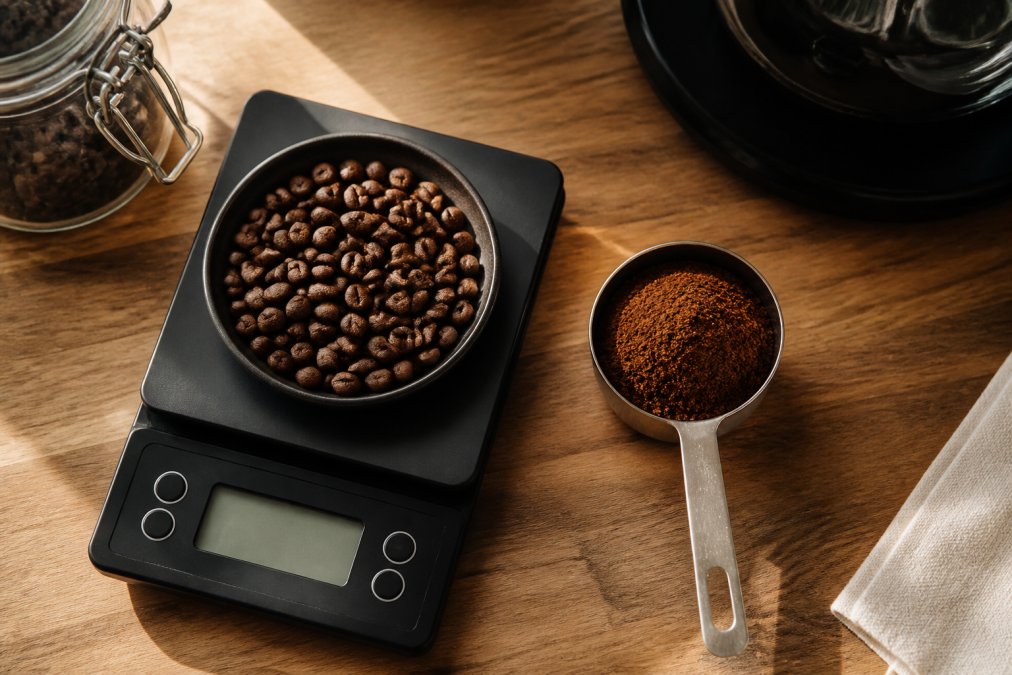
Here's a simple routine to follow:
- Weigh whole beans before grinding (a standard starting point is 18 grams per 12 oz cup)
- Grind fresh, right before brewing, to protect aroma
- Match your coffee-to-water ratio by weight, not by eye
- Log your grams for a week to spot your true daily caffeine intake
- Adjust one variable at a time when dialing in flavor
Caffeine Content by Brewing Method: Extraction Rate at Work
Brewing method usually moves caffeine more than roast level does. Extraction rate, the percentage of soluble material pulled out of the grounds, is driven by grind size, water temperature, contact time, and the ratio of coffee to water. Roast level only enters the picture indirectly, by changing how a given grind behaves.
Grind Size Interacts With Roast Density
This is the part most roast comparisons skip. A dark roast bean is more porous and more brittle than a light roast bean. Under the same grinder setting, brittle dark beans fracture into more fine particles, while dense light beans produce a coarser, more uniform bed. More fines means more exposed surface area, which means faster extraction, including faster caffeine extraction.
So the interaction runs like this:
- Same grinder setting, different roast: dark roast typically produces more fines and extracts caffeine slightly faster
- Same target grind, different roast: you often need to grind dark roast coarser to hit the same extraction time
- Same brew time, uncontrolled grind: the roast with more fines can overshoot, pulling more caffeine and more bitterness together
Caffeine by Brew Method: Typical Ranges
These are common ranges for a standard 12 oz (355 ml) serving, assuming a typical dose and grind for each method:
| Brew Method | Typical Dose | Contact Time | Typical Caffeine |
|---|---|---|---|
| Drip | 15-18 g | 4-5 min | 95-165 mg |
| Pour-over | 15-18 g | 3-4 min | 95-165 mg |
| French press | 15-18 g | 4 min steep | 80-135 mg |
| Espresso (single shot) | 7-9 g | 25-30 sec | 60-75 mg |
| Espresso (double shot) | 14-18 g | 25-30 sec | 120-150 mg |
| Cold brew (concentrate, diluted) | 20-30 g | 12-24 hr | 150-200 mg |
| Moka pot | 15-18 g | 3-5 min | 100-130 mg |
Why the Same Beans Can Land in Different Ranges
Change one variable and the caffeine shifts:
- Grind finer: more surface area, faster caffeine release, a fine drip grind can pull noticeably more than a coarse one in the same time
- Raise water temperature: hotter water extracts faster; most brewing sits between 195°F and 205°F, and going hotter speeds caffeine without improving flavor
- Extend contact time: a French press left to steep 8 minutes instead of 4 extracts more caffeine, along with more bitterness
- Increase the dose: the single biggest lever, 20 g of coffee delivers roughly a third more caffeine than 15 g of the same beans
A Practical Way to Compare Roasts Fairly
To isolate roast from brewing, hold everything else constant: same dose by weight, same water volume, same temperature, same contact time, and a grind adjusted so both roasts finish extraction in the same window. Brew a light roast and a dark roast that way and the caffeine in the cup will be close enough that you would not notice the difference.
Arabica vs Robusta: Caffeine Variance by Bean Variety
Bean variety changes caffeine far more than roast profile ever will. Arabica beans generally contain less caffeine than Robusta, often by a wide margin. That's why a dark roasted Arabica blend can still deliver less caffeine than a lighter Robusta-heavy coffee.
| Roast | Bean Type | Flavor Profile | Caffeine Tendency |
|---|---|---|---|
| Ethiopia Natural | Arabica, single origin | Fruity, caramel, chocolate | Moderate |
| Blonde | Arabica blend | Sweet, bright | Moderate |
| French Roast | Arabica blend | Bold, smoky | Moderate |
| Italian Roast | Arabica/Robusta blend | Intense, dark | Higher |
| 6 Bean Blend | Dark roast blend | Rich, espresso-ready | Moderate to higher |
Health Benefits of Light vs Dark Roast
The health differences between light and dark roast come down to which compounds survive roasting, not to caffeine. Caffeine is largely unchanged across roast levels, so any health effect tied to caffeine is essentially the same in both. What shifts is the antioxidant and acid profile.
Chlorogenic Acid and the Roast Curve
Chlorogenic acid is the main antioxidant in green coffee, and it degrades steadily as roast progresses. A light roast retains the most; a medium roast keeps a moderate amount; a dark roast retains the least, because the longer, hotter roast breaks it down. That is the clearest chemical difference between the two.
Acidity, Stomach Comfort, and the Dark Roast Trade-Off
Dark roasts are generally lower in the acids that bother sensitive stomachs. Compounds like caffeic and quinic acid, along with the chlorogenic acid family, decline as roasting continues. That is why many people who find light roast coffee harsh report that a dark roast sits more easily. The trade-off is that dark roasts can taste more bitter, because the same roast that reduces acid also develops bitter compounds.
A few practical patterns:
- Sensitive stomach: a dark or medium-dark roast is often the gentler choice
- Antioxidant-focused: a light or medium roast retains more chlorogenic acid
- Caffeine-focused: roast level is irrelevant, look at dose and bean variety instead
- Flavor-focused: pick the roast you actually enjoy, since adherence matters more than marginal compound differences
What the Guidance Actually Says
According to dietary guidance on coffee from the FDA, moderate coffee consumption, generally up to about 400 mg of caffeine per day for healthy adults, fits within a healthy diet for most people. That figure is about caffeine, not roast, so it applies equally to light and dark. Pregnant individuals, people with certain heart conditions, and those sensitive to caffeine are typically advised to stay lower.
The Honest Bottom Line
For most people, the health difference between light and dark roast is small and largely a matter of trade-offs: more chlorogenic acid in light, fewer irritating acids and more melanoidins in dark. Neither is clearly "healthier" across the board. If you have a sensitive stomach, dark roast often wins on comfort. If you are chasing antioxidant compounds, light roast has the edge.
Frequently Asked Questions
Does dark roast or light roast have more caffeine?
By weight, light roast and dark roast contain nearly identical caffeine. The caffeine molecule stays stable through roasting temperatures, so it is not destroyed. The common belief that dark roast is stronger comes from measuring by scoop: dark beans lose moisture and become less dense, so a scoop holds fewer beans and less caffeine. Weigh your coffee for an accurate comparison.
Does blonde roast have more caffeine than dark roast?
When measured by weight, blonde and dark roast have essentially the same caffeine content. The difference appears when you measure by volume. Blonde beans are denser, so a level scoop packs more coffee mass and therefore more caffeine than the same scoop of dark roast. For consistent caffeine, use a scale and measure in grams rather than scoops.
Which is healthier, light or dark roast coffee?
Both fit into a healthy routine, but they differ slightly. Light roast beans retain more chlorogenic acid, an antioxidant linked to reduced inflammation. Dark roast beans develop higher levels of N-methylpyridinium, a compound that may support stomach comfort. The health benefits of light vs dark roast depend on your priorities, and either choice delivers caffeine and beneficial plant compounds.
How does measuring coffee by scoop versus weight change caffeine intake?
A scoop measures volume, not mass, so the caffeine in your cup varies with bean density and grind size. A level scoop of dense light roast can weigh 20% more than the same scoop of dark roast. A digital scale removes that guesswork. Weighing 18 grams of coffee gives you a predictable caffeine range no matter which roast you brew.
Does the roasting process destroy caffeine?
No. Caffeine remains stable at roasting temperatures, which typically peak between 380°F and 480°F. Some caffeine may sublimate at very high temperatures, but the loss is negligible. Roast profile changes flavor, acidity, and bean density, not caffeine potency.