

Table of Contents
- How to Make Coffee at Home Without a Coffee Maker: The Basics
- The Cowboy Coffee Method: Classic Simplicity
- Saucepan Brewing: Controlled Heat Method
- Coffee to Water Ratio: Getting the Proportions Right
- How to Strain Coffee Without a Filter
- Steep Time for Manual Coffee: Timing and Extraction
- Common Mistakes When Making Coffee Without a Machine
- Troubleshooting Specific Bean Types
- Frequently Asked Questions
Make Coffee at Home Without a Maker: 5 Methods
Last Updated: July 1, 2026
Learning how to make coffee at home without a coffee maker opens up brewing possibilities most people overlook. Whether you're traveling, your equipment broke, or you want to explore traditional techniques, manual coffee methods transform your kitchen into a capable brewing station. You can produce café-quality coffee using nothing more than basic kitchen tools and a few minutes of attention.
The beauty of brewing without a machine lies in the control it gives you. You manage water temperature, steeping time, and extraction directly, which means you can dial in flavors that automatic machines often miss. Below are five proven methods that have produced excellent coffee for centuries, complete with step-by-step instructions and troubleshooting advice.
How to Make Coffee at Home Without a Coffee Maker: The Basics
Making coffee without a dedicated machine requires understanding three core principles: water temperature, coffee-to-water ratio, and steeping time.
Water temperature matters most. Coffee extracts best between 195-205°F (90-96°C). Too cool, and you'll under-extract and get sour, weak coffee. Too hot, and you'll pull excessive tannins, creating harsh bitterness. A simple thermometer removes guesswork, though experienced brewers learn to judge temperature by watching steam patterns.
The coffee-to-water ratio determines strength and body. Most manual methods work best with a 1:16 ratio, one part coffee to sixteen parts water by weight. For a standard mug (8 ounces of water), use roughly 0.5 ounces or about two tablespoons of ground coffee.
Grind size dramatically affects extraction speed. Coarser grounds slow extraction, ideal for immersion brewing where coffee steeps for minutes. Finer grounds speed extraction, suited for methods where water passes through quickly. A burr grinder gives you precise control.
The Cowboy Coffee Method: Classic Simplicity
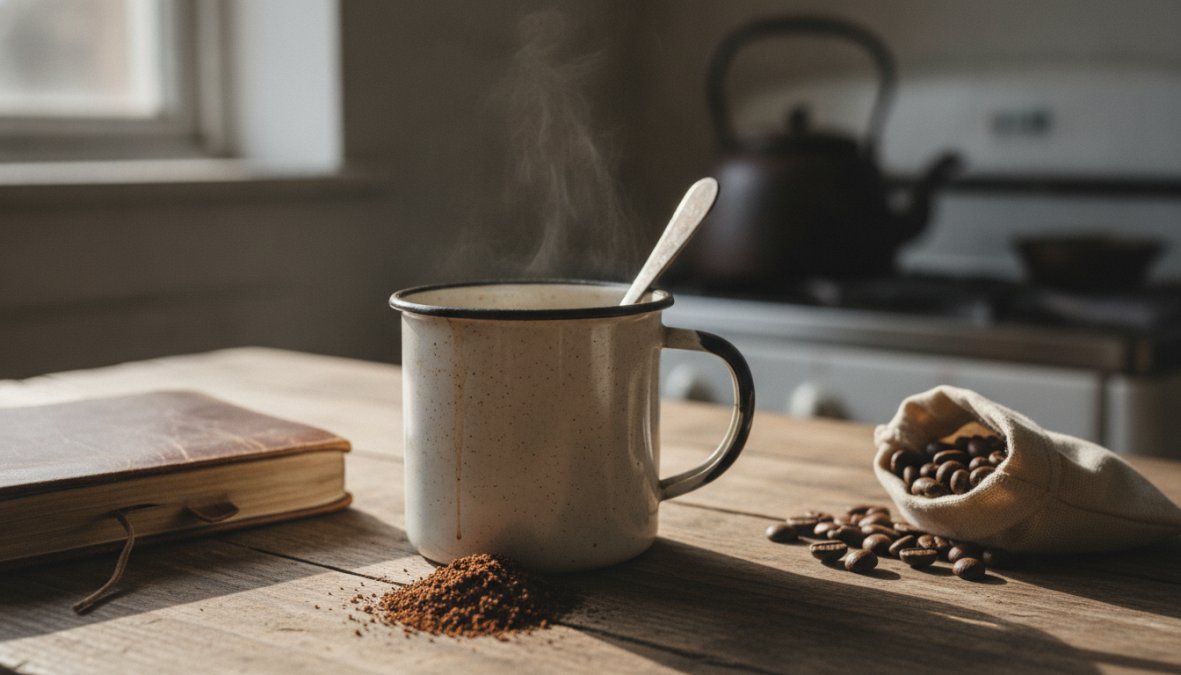
The cowboy coffee technique represents the oldest manual brewing approach, requiring only a pot and heat source. This method has produced reliable coffee for centuries because it's forgiving and delivers full-bodied results.
Step-by-Step Instructions
Step 1: Heat Your Water (3-5 minutes) Fill a pot with cold water and bring it to a rolling boil. Use roughly one cup of water per person, plus extra for absorption. Once boiling, remove from heat and let it cool for 30 seconds.
Step 2: Add Coffee Grounds (30 seconds) Add approximately 0.5 ounces of coarsely ground coffee per 8 ounces of water. Pour grounds directly into hot water and stir thoroughly to saturate all grounds. This initial contact "blooms" the coffee, releasing CO2 and preparing flavors for extraction.
Step 3: Steep (4 minutes) Let grounds settle at the bottom. Resist stirring during this time. After four minutes, most flavor compounds have transferred to the water.
Step 4: Settle and Pour (2 minutes) Add a small splash of cold water, about one tablespoon per cup. This causes grounds to sink faster, clarifying the liquid above. Wait 30-60 seconds, then carefully pour into your mug, leaving sediment behind.
Pros and Cons
Pros:
- Requires only a pot and heat source
- Produces full-bodied, rich coffee
- Forgiving method, difficult to under-extract
- No filters or special equipment needed
Cons:
- Sediment at the bottom is unavoidable
- Requires careful pouring to avoid stirring up settled grounds
- Over-extraction risk if you steep longer than five minutes
Saucepan Brewing: Controlled Heat Method
The saucepan method gives you more temperature control than cowboy coffee, making it ideal when you want cleaner cups with less sediment.
Step-by-Step Instructions
Step 1: Add Water and Coffee Together (1 minute) Pour cold water into a saucepan, roughly 8 ounces per serving. Add coarsely ground coffee (0.5 ounces per 8 ounces of water) directly to the cold water. Stir to combine.
Step 2: Heat Gradually (3-4 minutes) Place the saucepan over medium heat. Do not use high heat. Watch for small bubbles forming around the edges. When you see consistent small bubbles (around 190°F), reduce heat to low.
Step 3: Maintain Temperature (3-4 minutes) Keep the saucepan on low heat for three to four minutes. You want gentle movement in the water, not a rolling boil. Stir occasionally to keep grounds in contact with water.
Step 4: Strain Carefully (1-2 minutes) Remove from heat and let grounds settle for one minute. Pour slowly through a fine-mesh strainer or cheesecloth into your mug. This method typically produces less sediment than cowboy coffee.
This method works particularly well with medium to dark roasts, which have strong flavors that withstand extended heat exposure.
Coffee to Water Ratio: Getting the Proportions Right
The ratio of coffee to water determines your cup's strength, body, and flavor clarity. Getting this right is the single most important variable after water temperature.
Standard Ratios for Different Methods
| Method | Ratio | Example (8 oz water) | Result |
|---|---|---|---|
| Cowboy Coffee | 1:16 | 0.5 oz grounds (2 tbsp) | Full-bodied, forgiving |
| Saucepan Brewing | 1:15 | 0.53 oz grounds (2.5 tbsp) | Balanced, clean |
| Cheesecloth Pour | 1:17 | 0.47 oz grounds (1.5 tbsp) | Lighter, brighter |
| Immersion (8 hours) | 1:8 | 1 oz grounds (4 tbsp) | Concentrated, smooth |
The 1:16 ratio serves as your starting point because it balances extraction efficiency with drinkability. The first 18-22% of extraction pulls the best flavors. Beyond 30% extraction, you're pulling bitter compounds.
Adjusting for Your Taste Preference
If your coffee tastes sour or weak, you're under-extracting. Use finer grounds, hotter water, or longer steeping time. If it tastes bitter or harsh, you're over-extracting. Use coarser grounds, cooler water, or shorter steeping time.
Most people find their preference within the 1:14 to 1:18 range. Light roasts typically need slightly hotter water and longer steeping to fully develop their complex acidity. Dark roasts prefer slightly cooler water and shorter steeping to avoid over-extraction.
How to Strain Coffee Without a Filter
Straining separates liquid from grounds cleanly, and you have several effective options beyond commercial filters.
Using Cheesecloth and Fine Mesh Sieves
Cheesecloth is your most accessible filtering option. Fold a piece into quarters, then line a fine-mesh strainer with it. Pour your brewed coffee slowly through the cheesecloth into your mug. Rinse the cheesecloth immediately after brewing and hang it to dry, it's reusable dozens of times.
A fine-mesh sieve alone works reasonably well for coarser grounds, though some sediment will pass through. Sieves labeled "fine mesh" typically have openings around 0.2mm, which catches most grounds larger than powder.
Paper Towel and Paper Filter Alternatives
A coffee filter works identically to cheesecloth. If you have paper filters but no coffee maker, fold one into a cone shape, place it in a mug, and pour grounds into it. Slowly pour hot water through.
Paper towels work in a pinch but require care. Use a double layer to prevent tearing, and rinse them first to remove paper dust. The results are slightly coarser than commercial filters because paper towel fibers are larger.
Steep Time for Manual Coffee: Timing and Extraction
Steeping duration is your primary control lever once water temperature and ratio are set. Time directly determines extraction percentage, which determines flavor.
How Long to Steep Each Method
Cowboy coffee requires four minutes of steeping. This timing allows full extraction without over-pulling bitter compounds. The method's coarse grind size means extraction happens slowly.
Saucepan brewing steeps for three to four minutes on low heat. The constant heat accelerates extraction slightly, so you can reduce time by 30-60 seconds.
Cheesecloth pour-overs typically steep for two to three minutes. The finer grind used extracts faster, so shorter steeping prevents over-extraction.
Cold immersion brewing steeps for eight to twelve hours at room temperature. The cold water extracts much more slowly, requiring extended contact time.
Avoiding Over-Extraction and Bitterness
The first sign of over-extraction is a bitter, harsh aftertaste. If you experience this, reduce steeping time by 30 seconds on your next brew. Over-extraction happens faster with finer grinds because water contacts more surface area.
Temperature also accelerates extraction. Hotter water extracts faster, so if you're brewing with water hotter than 205°F, reduce steeping time by 30 seconds.
Common Mistakes When Making Coffee Without a Machine
Most people's first attempts at manual brewing fail because of one or two avoidable errors.
Grind Size and Water Temperature Issues
Using pre-ground coffee from a grocery bag is the #1 mistake. Pre-ground coffee loses flavor compounds within days of grinding. Invest in a burr grinder and grind immediately before brewing.
Grinding too fine is the second-most common error. Fine grounds extract so quickly that you over-extract within three minutes. For manual methods, aim for a grind size similar to sea salt.
Water temperature is frequently overlooked. Use a thermometer for your first five brews. Once you develop intuition, you can skip it, but precision matters when learning.
Sediment and Sludge Problems
Sediment at the bottom indicates under-straining. Use a finer mesh sieve or add a cheesecloth layer. Pour more slowly and deliberately.
Sludge comes from grinding too fine or over-stirring during steeping. When you stir vigorously, you break apart grounds into powder-sized particles that pass through any strainer. Stir gently once at the beginning, then leave it undisturbed.
Let your brewed coffee sit for 60 seconds after removing from heat. Grounds need time to settle completely before pouring.
Troubleshooting Specific Bean Types
Different roast levels and origins behave distinctly in manual brewing.
Light Roasts vs Dark Roasts
Light roasts have delicate, complex acidity with floral and fruity notes. They require slightly hotter water (200-205°F) and slightly longer steeping (3.5-4 minutes) to fully extract their nuanced flavors. If your light roast tastes sour, increase steeping time by 30 seconds.
Dark roasts have bold, low-acid flavors with chocolate and caramel notes. They extract faster because their compounds are already developed by roasting. Use slightly cooler water (195-200°F) and shorter steeping (3-3.5 minutes) to avoid over-extraction. Dark roasts forgive brewing errors more than light roasts.
Single-origin coffees have distinct flavor profiles that respond differently to brewing parameters. Ethiopian coffees tend toward bright acidity and work best with slightly longer steeping. Brazilian coffees lean toward chocolate and body, preferring slightly shorter steeping.
Single Origin vs Blends
Single-origin coffees showcase one region's characteristics. They're more sensitive to brewing variables because you're highlighting their specific flavor profile. Adjust one variable at a time and note the result.
Blends combine beans from multiple origins, balancing each origin's strengths. They're more forgiving because the blend's design already balances acidity, body, and flavor. This makes blends ideal for learning manual brewing because you can focus on technique without fighting bean characteristics.
Making coffee at home without a machine transforms your relationship with coffee. You gain control over every variable that determines flavor, which means you can produce results matching or exceeding café quality. The challenge most people face isn't the brewing technique, it's using stale beans that have already lost their best flavors before you brew them. Using freshly roasted beans and grinding immediately before brewing dramatically improves results regardless of origin or roast level. Start with foundational blends to master your brewing technique, then explore single-origin options once you've dialed in your process.
Frequently Asked Questions
Can you really make coffee without a coffee maker?
Yes, absolutely. You can make excellent coffee at home without a coffee maker using immersion brewing methods like cowboy coffee, saucepan brewing, or French press alternatives. These methods rely on steeping coffee grounds in hot water, then straining. The key is using the right water temperature (around 195-205°F), proper coffee-to-water ratio, and adequate steeping time. Freshly roasted beans will produce noticeably better results than pre-ground coffee.
What's the best coffee to water ratio for manual brewing?
The standard coffee-to-water ratio is 1:16 (one part coffee to sixteen parts water by weight). For example, use 1 ounce of coffee grounds to 16 ounces of water. This produces a balanced cup. If you prefer stronger coffee, adjust to 1:15, or go lighter at 1:17. Coarse grind coffee works best for immersion brewing methods, as it extracts more evenly and produces less sediment than fine grounds.
How do you strain coffee without a filter?
Several effective options exist: use a fine mesh sieve to pour coffee through slowly, wrap cheesecloth over a mug and strain through it, or use a paper towel held over your cup. For cowboy coffee, let grounds settle at the bottom for 2-3 minutes before carefully pouring into your mug, leaving sediment behind. A fine mesh sieve produces the cleanest cup with minimal sludge, though some grounds may still pass through.
How long should you steep coffee when making it manually?
Steeping time depends on your method and grind size. For cowboy coffee with coarse grounds, steep 2-4 minutes. Saucepan brewing typically requires 4-5 minutes at medium-high heat. Finer grounds extract faster and need shorter steeping times (2-3 minutes) to avoid over-extraction and bitterness. Start with 4 minutes and adjust based on taste. Under-extracted coffee tastes weak and acidic; over-extracted coffee tastes bitter.
Is the cowboy coffee method safe to drink?
Yes, cowboy coffee is safe when made correctly. The hot water kills pathogens, and letting grounds settle before pouring removes most sediment. The main concern is avoiding over-extraction, which creates excessive bitterness and tannins. Use medium-high heat, coarse grind beans, and don't exceed 4-5 minutes of steeping. While some sediment may remain, it's harmless. Freshly roasted beans produce cleaner, better-tasting cowboy coffee than stale pre-ground coffee.
This article was written using GrandRanker