

Table of Contents
- Plant-Based Milk Alternatives for Coffee
- How to Make Homemade Coffee Creamer
- Seed Oil-Free Coffee Creamer Options
- Best Natural Sweeteners for Coffee
- Dairy-Based Natural Creamers
- Comparing Nutritional Profiles and Cost
- Conclusion
- Frequently Asked Questions
Why Natural Coffee Creamers Matter
The coffee ritual is personal. For many, it's not just about caffeine, it's about that moment of comfort in a cup. Artificial creamers often contain hydrogenated oils, corn syrup solids, artificial flavors, and stabilizers designed for shelf life, not nutrition (the FDA). When you're drinking coffee daily, those additives accumulate.
Natural alternatives have shifted from niche to mainstream because the gap between them and conventional options has become impossible to ignore. The texture is better. The taste is cleaner. Your body processes real ingredients differently than synthetic compounds. At Cuppari Coffee, we believe that customers who switch to natural creamers can experience better-tasting coffee and more sustained energy.
Coffee is one of the few things most adults consume every single day. A small improvement in what you add to it compounds over time. Whether you're exploring plant-based milk alternatives, making homemade creamer, or seeking seed oil-free options, the underlying principle is the same: ingredients you recognize beat ingredients you can't pronounce.
Plant-Based Milk Alternatives for Coffee
Plant-based milk alternatives have become the default for people avoiding dairy. They're widely available, come in multiple varieties, and work reliably in hot coffee. The difference between a thin milk and a true creamer often comes down to fat and emulsifier content.
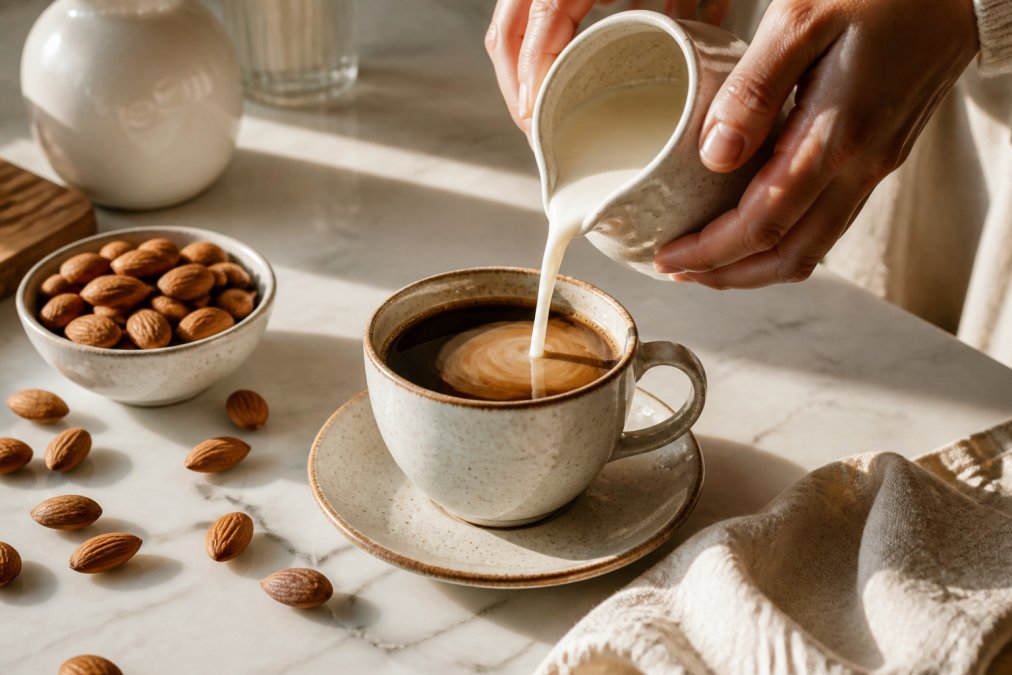
Almond Milk Creamers
Almond milk creamers deliver a mild, neutral flavor that doesn't compete with your coffee. The best versions use whole almonds as the primary ingredient rather than almond flour, producing a smoother mouthfeel. Califia Farms Almondmilk Coffee Creamer exemplifies this approach with simple plant-based ingredients in both sweetened and unsweetened varieties. The unsweetened option contains no added sugar, making it ideal if you're controlling your glycemic index.
A proper almond cream creamer uses emulsified fat to create that silky pour and rich coating on your palate. Nutpods Dairy-Free Creamer combines almond and coconut cream, producing a denser product closer to half and half without the dairy. Some commercial almond creamers contain gums and stabilizers for shelf stability; if you're avoiding thickening agents, look for minimal additives.
Oat Milk Creamers
Oat milk has become the default plant-based option for people who want something that froths and steams like dairy milk. Oatly Oat Creamer and Coffee Mate Natural Bliss Oat Milk Creamer both deliver this functionality. The "Barista Edition" from Oatly specifically addresses microfoam, formulated to create the airy texture that makes lattes and cappuccinos work.
Oat milk's naturally slightly sweet and neutral flavor profile doesn't clash with coffee. For drip coffee drinkers, this neutrality is an asset. For espresso-based drinks, it's essential, you need something that complements rather than competes with the espresso's intensity. Oat milk's texture comes from the oats themselves, not from added gums in most cases, making it a solid choice for clean ingredients.
Coconut Milk Creamers
Coconut milk creates the richest, most indulgent texture of the plant-based options. So Delicious Organic French Vanilla Coconutmilk Creamer demonstrates this well, made from organic coconut milk and delivering a creamy mouthfeel that rivals dairy creamers. Coconut fat emulsifies beautifully in hot liquid, creating that silky texture people associate with real cream.
The limitation: coconut flavor isn't for everyone. Even "neutral" coconut creamers carry subtle coconut notes that some find off-putting in coffee. Test a small carton before committing to a bulk purchase.
How to Make Homemade Coffee Creamer
Homemade creamers solve two problems simultaneously: you control every ingredient, and you eliminate packaging waste. The base formula is simple, fat plus liquid plus optional sweetener.
Basic Coconut Cream Recipe
Start with full-fat coconut milk from a can. Pour the can into a blender without shaking it first; the cream rises to the top. Blend one part coconut cream with one part filtered water. If you want sweetness, add a teaspoon of honey or maple syrup and blend for 30 seconds.
Store in a glass jar in the refrigerator for 5-7 days. When ready to use, shake well. The separation isn't spoilage, it's the fat and water naturally separating over time. This method eliminates gums, carrageenan, and stabilizers entirely while costing far less than commercial creamer.
Vanilla Almond Creamer Recipe
Blend one cup of unsweetened almond milk with two tablespoons of coconut oil. The coconut oil transforms thin almond milk into actual creamer. Add a quarter teaspoon of vanilla extract and one teaspoon of honey. Blend until fully combined.
This recipe produces a lighter texture than pure coconut cream but richer than plain almond milk. It works well for drip coffee and iced coffee but won't create microfoam for espresso drinks. Store in a glass jar for up to 5 days. If you want longer shelf life, add one tablespoon of lecithin, which acts as a natural emulsifier and extends the creamer to 10-12 days.
Seed Oil-Free Coffee Creamer Options
Seed oils, soy, canola, safflower, appear in most commercial creamers as the primary fat source. They're cheap, shelf-stable, and effective at creating texture. But their omega-6 polyunsaturated fat profile has become controversial among people tracking their macronutrient balance. Seed oil-free creamers replace these with alternatives like coconut oil, almond oil, or grass-fed dairy fat.
Nutpods Dairy-Free Creamer avoids seed oils entirely, using almond and coconut cream instead. The ingredient list reads like food, not chemistry: almonds, coconut, water, salt. This simplicity appeals to people who've spent years reading ingredient labels and finding unrecognizable compounds.
The trade-off is availability and cost. Seed oil-free creamers cost more and appear in fewer stores than conventional options. Making your own creamer is the most reliable way to guarantee seed oil-free status. When you blend coconut cream with almond milk and vanilla, you control every ingredient.
Best Natural Sweeteners for Coffee
Honey dissolves readily in hot coffee and adds subtle floral notes. One teaspoon per cup is standard. The glycemic index of honey is lower than white sugar, though it's not zero (peer-reviewed research). Maple syrup works similarly but adds a distinct maple character that works beautifully in some coffees and clashes with others.
Stevia and monk fruit are zero-calorie options derived from plants. Stevia has a reputation for aftertaste, though modern products have improved significantly. Monk fruit tends to be cleaner-tasting but costs more.
The most overlooked option is adjusting your coffee itself. When you're using freshly roasted coffee with clean flavor, the need for heavy sweetening diminishes. A naturally sweet coffee variety requires less added sugar than a bitter, over-extracted brew. This is where the quality of your starting coffee matters, and where Cuppari Coffee's same-day roasting philosophy delivers tangible value. Fresh beans simply taste better, which means you need less creamer and less sweetener to enjoy your cup.
Dairy-Based Natural Creamers
For people who tolerate dairy, grass-fed and organic creamers offer a middle ground between artificial creamers and plant-based alternatives. Grass-fed dairy contains higher levels of omega-3 fatty acids and conjugated linoleic acid (CLA) compared to conventional dairy (peer-reviewed research). The taste difference is undeniable, grass-fed cream is richer and more complex.
Organic dairy creamers eliminate synthetic pesticides and hormones like rBST. If you're seeking to reduce exposure to agricultural chemicals, organic certification provides that assurance. The trade-off is cost.
Half and half remains the simplest dairy option. It's just cream and milk, nothing else. No gums, no stabilizers, no added sugars unless you buy a flavored version. For people who tolerate dairy and prefer simplicity, half and half is hard to beat. Dairy creamers have shorter shelf lives than plant-based alternatives, once opened, most last 10-14 days.
Comparing Nutritional Profiles and Cost
| Creamer Type | Fat per Tablespoon | Added Sugar | Cost per Month | Best For |
|---|---|---|---|---|
| Almond Milk (Califia) | 1g | 0-1g | $8-12 | Low-fat, budget-conscious |
| Oat Milk (Oatly) | 1.5g | 0g unsweetened | $10-14 | Frothing, neutral flavor |
| Coconut Milk (So Delicious) | 1g | 0g unsweetened | $9-13 | Rich texture, plant-based |
| Homemade Coconut | 2g | 0-1g optional | $3-5 | Control, cost, waste reduction |
| Grass-Fed Dairy (Half & Half) | 1.8g | 0g | $12-18 | Richness, simplicity, dairy tolerance |
| Nutpods (Almond + Coconut) | 1g | 0g | $14-18 | Seed oil-free, clean ingredients |
Homemade creamers are the cheapest option by far. A can of coconut milk produces several days' worth of creamer for under a dollar. Plant-based commercial creamers cost roughly the same as dairy, despite cheaper base ingredients; the premium reflects branding, packaging, and distribution. Grass-fed dairy occupies a premium position, justified by ingredient quality.
Nutritional profiles vary more than most people realize. Almond milk creamers are lowest in calories and fat. Coconut and grass-fed dairy creamers are highest in fat but deliver more satiety per serving. Oat milk sits in the middle, providing moderate fat and slightly higher carbohydrates from the oats.
Conclusion
The shift from artificial to natural coffee creamers isn't complicated. You're choosing between plant-based options that dissolve cleanly, dairy products without additives, or spending five minutes blending your own. Each path delivers better taste and cleaner ingredients than conventional creamers.
If you want the simplest switch, try Califia Farms Almondmilk Coffee Creamer or Oatly Oat Creamer, both widely available and cost roughly the same as artificial versions. If you're willing to invest time, homemade coconut cream costs pennies and takes two minutes to blend. If you tolerate dairy, grass-fed half and half delivers the richness most people want from cream without mystery ingredients.
Freshness and ingredient quality compound over time. When you're drinking coffee daily, what you add to it matters. Cuppari Coffee's freshly roasted beans deserve a creamer that matches that quality, something that enhances rather than masks the coffee's natural flavor. Start with a natural creamer that fits your lifestyle, then upgrade your coffee. The combination transforms your daily ritual from routine to something genuinely worth savoring.
Frequently Asked Questions
Q: What is the healthiest substitute for coffee creamer?
A: The healthiest substitute depends on your dietary priorities. Plant-based options like unsweetened oat milk or almond milk offer clean ingredients and lower saturated fat than traditional dairy creamers. If you prefer whole food ingredients, coconut cream or grass-fed heavy cream provide natural fats without emulsifiers or gums. For minimal additives, homemade creamers using just coconut milk and vanilla offer complete control over what goes in your cup. Look for options labeled carrageenan-free and without added sugar to maximize nutritional benefit.
Q: Can I use almond milk as a coffee creamer?
A: Yes, almond milk works as a coffee creamer, though results vary by brand and type. Unsweetened almond milk blends smoothly into hot coffee and provides a mild flavor that doesn't overpower your brew. For better texture and emulsification, choose creamer-specific almond products rather than drinking milk, as they're formulated with higher fat content and stabilizers designed to create a micro-foam without separating. Refrigerated almond creamers typically perform better than shelf-stable varieties in terms of texture and temperature stability.
Q: How can I make my own coffee creamer without artificial ingredients?
A: Homemade creamers are simple: blend equal parts coconut milk and heavy cream (or coconut milk alone for dairy-free), add vanilla extract or cinnamon, and refrigerate. For a protein-enriched version, you can add collagen peptides, which dissolve easily in hot coffee. Store homemade creamer in a sealed jar for up to two weeks. The advantage is complete control over ingredients, no carrageenan, gums, or added sugar unless you choose to include them. Whisking or blending ensures proper emulsification before each use.
Q: Are seed oils in coffee creamers bad for you?
A: Seed oils like soy and canola oil are common in commercial creamers as emulsifiers to prevent separation. While not inherently harmful, many consumers prefer to avoid them due to their high omega-6 content and processing methods. Seed oil-free creamers use whole food fats like coconut, almond, or oat, along with natural thickening agents like guar gum. If seed oil avoidance is important to you, check ingredient lists carefully, many plant-based creamers now highlight seed oil-free formulations as a selling point.
Q: What are the benefits of switching to natural coffee creamers?
A: Natural creamers eliminate artificial additives, thickening agents, and excess added sugar found in many commercial options. They often contain fewer ingredients overall, making them easier to digest for those sensitive to artificial ingredients. Plant-based natural creamers support those following vegan or dairy-free diets, while grass-fed dairy options provide higher levels of omega-3 fatty acids. Homemade versions offer cost savings and refrigerated options can reduce packaging waste. Many people report improved digestion and fewer afternoon energy crashes when switching from heavily processed creamers.
This article was written using GrandRanker