

Last Updated: October 24, 2026
Quick Summary
Organic soft-baked cookies differ from regular cookies through sourcing standards, ingredient composition, and processing methods, but organic certification does not automatically mean low sugar or nutritionally superior. While organic soft-baked cookies typically use whole-food sweeteners like date syrup and plant-based oils instead of refined sugars and hydrogenated oils, they still contain sugar and calories and should be evaluated by reading nutrition facts panels rather than relying on marketing claims.
- Organic certification means no synthetic pesticides or artificial additives, but does not guarantee low sugar or fewer calories.
- Organic soft-baked cookies use higher fat ratios and binding ingredients to retain moisture and create a chewy texture.
- Check the nutrition facts panel for added sugars and fiber content; if sugar appears in the first three ingredients, the cookie is primarily sweetened.
- Organic oat flour contains beta-glucans linked to cholesterol management, while coconut sugar has a lower glycemic index than refined sugar.
- Organic soft-baked cookies typically remain fresh for 2-3 weeks in an airtight container due to minimal preservatives and high moisture content.
Table of Contents
- What Makes Organic Soft-Baked Cookies Different from Regular Cookies
- Understanding Labels: What 'Organic' and 'Healthy' Actually Mean
- Evaluating Healthy Soft-Baked Cookies by Ingredient Quality
- Low-Sugar Cookie Snacks: Finding Options That Fit Your Goals
- Fruit-Sweetened Cookie Recipe Basics and Why They Matter
- Organic Cookies for Kids: Safety, Allergens, and Practical Guidance
- Choosing Your First Soft-Baked Cookies
- Frequently Asked Questions
What Makes Organic Soft-Baked Cookies Different from Regular Cookies
Organic soft-baked cookies differ fundamentally from conventional cookies in three ways: sourcing standards, ingredient composition, and processing methods. The term "organic" means the ingredients were grown without synthetic pesticides, herbicides, or fertilizers, and processed without artificial additives. Soft-baked cookies maintain moisture through specific fat ratios and binding techniques that keep them chewy rather than crisp.
Regular cookies often rely on refined sugars, hydrogenated oils, and preservatives to extend shelf life and reduce production costs. Organic soft-baked cookies typically use whole-food sweeteners like date syrup or coconut sugar, plant-based oils like coconut oil, and natural binding agents. This distinction matters because the ingredient list directly affects both nutrition and how your body processes what you're eating.
The texture difference is intentional. Soft-baked cookies retain moisture by using higher ratios of fat and binding ingredients, which creates that characteristic chewy consistency. This isn't just about mouthfeel, the moisture content affects how quickly the cookie is digested and how stable blood sugar remains after eating.
At Cuppari Coffee, we understand that snacking choices matter. Just as we prioritize freshness in every coffee order roasted and shipped the same day, choosing cookies with transparent ingredient lists means knowing exactly what you're consuming.
Understanding Labels: What 'Organic' and 'Healthy' Actually Mean
Organic certification is a regulated claim verified by the USDA. It means a product meets specific production standards: no synthetic pesticides, no artificial preservatives, no GMOs, and compliance with organic handling procedures. However, organic status does NOT automatically mean low sugar, low calories, or nutritionally superior.
Many consumers conflate "organic" with "healthy," but these are separate attributes. An organic cookie can still contain high amounts of added sugars or calories. The certification guarantees production methods, not nutritional outcomes.
"Healthy" is an unregulated marketing term with no legal definition. One brand's "healthy" cookie might contain 12 grams of sugar per serving, while another contains 5 grams. The FDA does not define what makes a snack healthy, so manufacturers use the term freely. This creates confusion at the shelf.
When evaluating cookies, read beyond the label claim. Check the nutrition facts panel for added sugars, fiber content, and protein. Look at the ingredient list, can you identify and pronounce each item? Ingredients listed first comprise the largest percentage by weight.
The distinction between whole-food sweeteners matters contextually. Date syrup and coconut sugar are less processed than refined white sugar, but your body metabolizes them similarly. The advantage lies in micronutrients, date syrup contains some minerals and fiber, while coconut sugar has a lower glycemic index than refined sugar. These differences are modest, not transformative.
Evaluating Healthy Soft-Baked Cookies by Ingredient Quality
Quality ingredients form the foundation of a nutritionally sound cookie. Start by identifying the primary ingredients, typically fats, sweeteners, and flours.
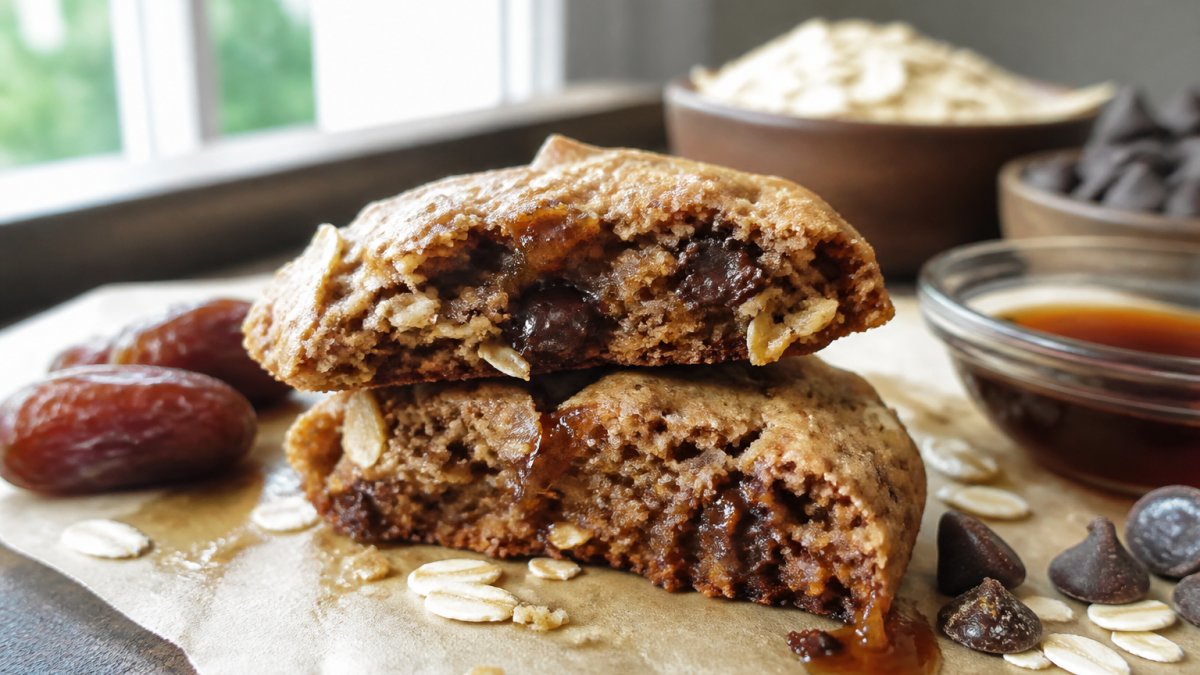
Flour choices directly impact nutrition. Organic oat flour contains beta-glucans, a soluble fiber linked to cholesterol management and sustained energy (A Review of Health-Beneficial Properties of Oats).
Sweeteners deserve scrutiny. Coconut sugar has a lower glycemic index than refined sugar, meaning slower blood sugar rise (Coconut Sugar: Chemical Analysis and Nutritional Profile; Health Impacts; Safety and...).
Chocolate chips matter. Organic chocolate chips made from organic cocoa liquor, cocoa butter, and cocoa powder contain polyphenols, antioxidants with cardiovascular benefits (The Cardiovascular Effects of Cocoa Polyphenols, An Overview).
Binders like baking soda should be minimal. Cookies requiring excessive leavening agents often compensate for poor ingredient quality. A well-formulated organic cookie uses minimal baking soda because the fat-to-flour ratio and binding ingredients naturally create structure.
Himalayan pink salt appears in quality soft-baked cookies for a reason: it balances sweetness and enhances flavor complexity without adding sodium significantly.
The Skout Organic Oatmeal Chocolate Chip Soft Baked Cookies exemplify ingredient transparency. Each component, organic date syrup, organic coconut oil, organic oats, organic chocolate chips, serves a functional and nutritional purpose.
Low-Sugar Cookie Snacks: Finding Options That Fit Your Goals
Low-sugar cookies serve specific dietary needs: blood sugar management, reduced calorie intake, or weight maintenance. However, "low sugar" is marketing language without regulatory definition. A cookie labeled low-sugar might contain 5 grams of sugar per serving, while another contains 8 grams. Compare nutrition facts panels directly rather than relying on front-of-package claims.
Cookies sweetened with sugar alcohols like erythritol or xylitol contain fewer calories and minimal blood sugar impact. However, these sweeteners can cause digestive discomfort in some people, including bloating and loose stools. Natural doesn't mean side-effect-free.
Fruit-sweetened cookies use concentrated fruit juice or fruit puree as the primary sweetener. These still contain natural sugars, typically fructose and glucose, but often include fiber from the fruit, which slows absorption.
Protein-enriched cookies address satiety. Adding plant-based protein powder or bean flour increases the protein-to-carbohydrate ratio, which extends fullness and stabilizes energy. A cookie with 3 grams of protein keeps you satisfied longer than one with negligible protein.
Skout Organic Soft Baked Cookie Sample Pack →
When selecting low-sugar options, prioritize cookies with at least 2 grams of fiber per serving. Fiber slows sugar absorption, moderates blood sugar response, and supports digestive health. Cookies meeting this threshold typically use whole grains, seeds, or legumes, ingredients that contribute both fiber and micronutrients.
Fruit-Sweetened Cookie Recipe Basics and Why They Matter
Fruit-sweetened cookies rely on concentrated fruit juice, fruit puree, or dried fruit as the primary sweetener. Date syrup, made from blended dates, is the most common choice because it provides sweetness, moisture, and binding properties simultaneously. This multifunctional ingredient reduces the need for additional fats or binders.
The advantage of fruit-based sweetening lies in micronutrient density. Dates contain potassium, magnesium, and B vitamins alongside natural sugars. Banana puree adds potassium and natural pectin for binding. Applesauce provides moisture and subtle sweetness with minimal sugar concentration. These ingredients contribute nutritional value beyond empty calories.
Moisture retention is critical in fruit-sweetened cookies. Fruit purees contain water, which keeps cookies soft and chewy during storage. Traditional recipes compensate with added fats or preservatives; fruit-based recipes achieve the same texture through fruit content.
The trade-off is shelf life. Cookies with high moisture content and minimal preservatives deteriorate faster than conventional cookies. Organic soft-baked cookies typically remain fresh for 2-3 weeks in an airtight container, compared to 4-6 weeks for conventionally preserved cookies.
Homemade fruit-sweetened cookies offer control over ingredient ratios. Store-bought versions sometimes add refined sugar alongside fruit sweeteners to reduce production costs. Reading the ingredient list reveals whether fruit is the primary sweetener or a secondary ingredient. If sugar appears before fruit on the list, the cookie is primarily refined-sugar sweetened despite fruit-sweetened marketing.
Organic Cookies for Kids: Safety, Allergens, and Practical Guidance
Organic certification provides assurance about production methods, but allergen safety requires separate attention. Organic cookies can still contain common allergens, peanuts, tree nuts, soy, dairy, eggs, and sesame. Organic status does not mean allergen-free. Parents must read ingredient lists and allergen statements carefully.
Cross-contact during manufacturing is a practical concern. A facility processing peanuts may contaminate nut-free products even without intentional inclusion. Look for allergen statements like "processed in a facility that also processes peanuts." If your child has a severe allergy, this matters more than organic certification.
Sugar content requires scrutiny for children. Pediatric guidelines recommend limiting added sugars to less than 25 grams daily for children ages 4-8, and less than 36 grams for ages 9-13. A single cookie with 8 grams of sugar represents 30% of a younger child's daily limit.
Whole-food ingredients benefit children's developing bodies. Organic oat flour provides sustained energy without blood sugar spikes. Organic coconut sugar and date syrup offer micronutrients alongside sweetness. These choices support stable energy and focus throughout the day, particularly relevant during school hours.
Introduce new cookies gradually. You can explore kid-friendly organic cookie bundles that meet these safety and allergen considerations. Some children experience digestive adjustment when transitioning to higher-fiber, whole-food-based cookies. Starting with one cookie per day allows their digestive system to adapt without discomfort.
Choosing Your First Soft-Baked Cookies
Starting with a sample approach reduces commitment and waste. The Skout Organic Soft Baked Cookie Sample Pack contains 2 packs each of four flavors, Peanut Butter, Oatmeal Chocolate Chip, Double Chocolate, and Lemon Poppyseed, allowing real evaluation before purchasing full-size boxes.
Flavor preference is individual. Once you know what you enjoy, the Skout Organic Soft Baked Cookie Variety Pack offers three full-size boxes at a better value than buying individual flavors.
Texture assessment matters. Soft-baked cookies should feel slightly yielding to pressure, not rock-hard, not falling apart. Moisture should be noticeable but not greasy. Tasting cookies from different brands reveals how texture varies with fat content, binding methods, and ingredient ratios.
Ingredient transparency should guide your choice. If you're prioritizing whole-food ingredients, compare ingredient lists across brands. Shorter lists typically mean fewer additives. If you're managing sugar intake, compare nutrition facts panels directly.
| Consideration | What to Evaluate | Why It Matters |
|---|---|---|
| Ingredients | Whole-food vs. processed, recognizable items | Determines nutritional value and digestive response |
| Sugar content | Grams per serving, sweetener type | Affects blood sugar, energy stability, and portion control |
| Allergens | Ingredient list and facility statement | Critical for safety, especially with children |
| Texture | Moisture, firmness, chewiness | Affects satisfaction and eating experience |
| Shelf life | Freshness window, storage requirements | Influences cost-per-serving and convenience |
| Flavor variety | Available options, taste preferences | Determines long-term enjoyment and adherence |
Soft-baked cookies fit into a balanced snacking routine when chosen intentionally. They're more nutrient-dense than traditional cookies but still contain sugar and calories, not a substitute for whole fruits or nuts, but a legitimate snack option when you want something sweeter.
Quality matters. A cookie made with organic oat flour, date syrup, and coconut oil delivers more sustained energy than one made with refined ingredients. You'll likely feel fuller longer and experience fewer energy crashes.
Choosing the right organic soft-baked cookies requires reading beyond marketing claims and understanding what "organic" and "healthy" actually mean on a nutrition label.
Frequently Asked Questions
Are organic soft-baked cookies actually healthy?
Organic soft-baked cookies can be part of a healthy snacking routine, but 'organic' doesn't automatically mean low in sugar or nutritionally complete. What matters is the full ingredient list, sugar content per serving, and how often you eat them. Look for cookies made with whole-food ingredients like oats, date syrup, and coconut sugar rather than refined sugars. Pair them with protein (nuts, yogurt) to balance blood sugar impact and make them a more satisfying snack.
What should I look for when choosing low-sugar cookie snacks?
Check the nutrition label for total sugars per serving, aiming for 5 grams or less if possible. Look at the ingredient list first: fruit-sweetened options using date syrup or coconut sugar tend to have a lower glycemic impact than refined white sugar. Verify that fiber content is at least 2 grams per serving, which slows sugar absorption. Avoid products listing multiple sweeteners, which often signals higher total sugar content masked across ingredients.
Are soft-baked cookies better than crunchy cookies for healthy snacking?
Soft-baked cookies aren't inherently healthier than crunchy ones; it depends on ingredients and how much you eat. Soft-baked varieties often contain more moisture and oil, which can make them feel more satisfying in smaller portions. However, the key difference is ingredient quality. An organic soft-baked cookie made with whole oats and date syrup beats a crunchy cookie loaded with refined flour and high-fructose corn syrup, regardless of texture.
Can organic soft-baked cookies work for kids' snacks?
Yes, organic cookies for kids can be a good snack option if you verify allergen information and portion sizes. Check labels for common allergens like peanuts, tree nuts, soy, and sesame. Soft-baked cookies often have a moist texture that's easier for younger children to chew. Pair them with milk or yogurt to add protein and calcium. Limit to one cookie per snack to avoid excess sugar intake, and always read ingredient lists for any additives your child should avoid.
