
Table of Contents
- Why a Nutritional Comparison of Plant-Based Creamers Matters
- Plant-Based Coffee Creamer Nutrition Facts: What the Labels Actually Say
- Almond, Oat, Soy, Coconut, and Cashew: How the Bases Differ
- Oat Milk Creamer vs Almond Milk Creamer: Texture, Sugar, and Protein
- How to Find the Healthiest Non-Dairy Coffee Creamer
- Why Unsweetened Vegan Coffee Creamer Is Usually the Smarter Buy
- Ingredients, Emulsifiers, and Allergens: Reading Past the Front Label
- Conclusion
- Frequently Asked Questions
Last Updated: October 17, 2026
Why a Nutritional Comparison of Plant-Based Creamers Matters
Walk down any dairy aisle and you'll count a dozen cartons promising creaminess without the cow. But a nutritional comparison of plant-based creamers reveals something the front labels hide: these products vary wildly in sugar, fat, protein, and additives. At Cuppari Coffee, we roast and ship coffee the same day an order comes in, so we care a great deal about what goes into the cup alongside our beans. The creamer you pour can undo a great brew, or at least muddy the picture of what you're actually drinking.
Most shoppers pick a plant-based creamer by flavor and texture alone. That's understandable. It's also how people end up with a "healthy" oat creamer carrying more added sugar per serving than a flavored syrup.
Below, we'll walk through how to read the label, compare bases side by side, and choose a creamer that fits your diet and your coffee. The good news: once you know the four numbers that matter, the decision takes about thirty seconds per carton.
Plant-Based Coffee Creamer Nutrition Facts: What the Labels Actually Say
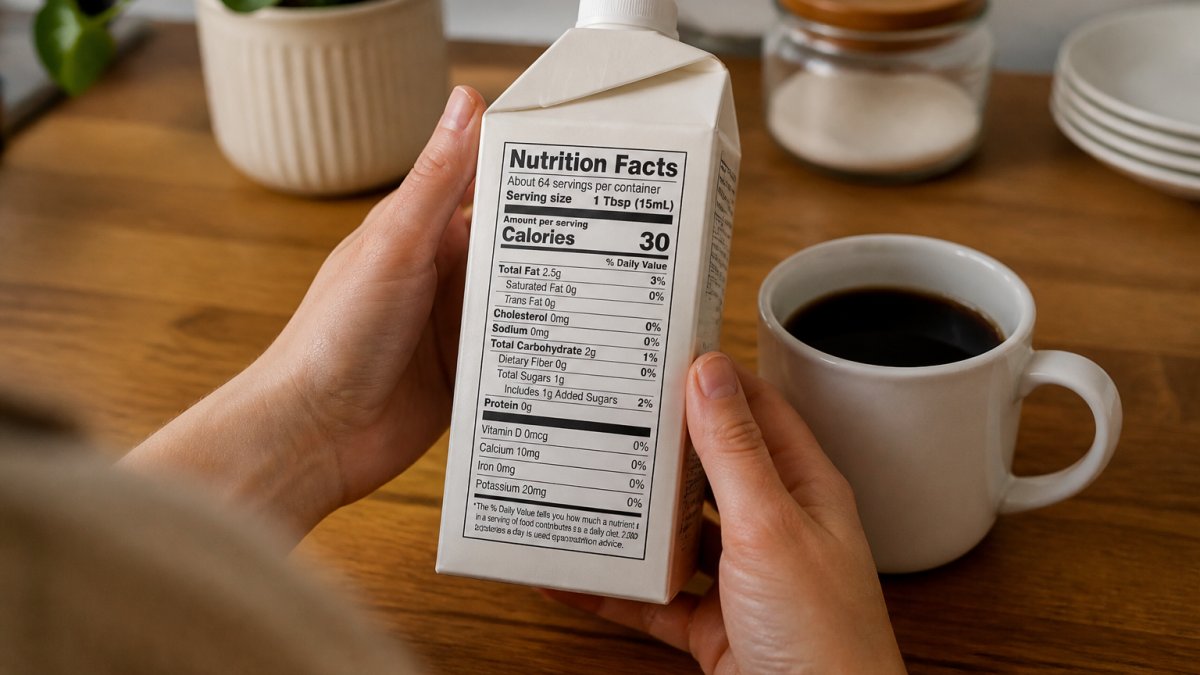
Plant-based coffee creamer nutrition facts are only useful if you compare them on equal footing. That means matching serving sizes first, then reading the numbers in a consistent order. The FDA sets the standard Nutrition Facts panel format, and you can review the current labeling requirements through the FDA nutrition labeling guidance. Most confusion comes from skipping that first step.
Serving Size: The Number That Changes Everything
Serving sizes on creamer labels range from one tablespoon to two tablespoons, and some brands list a "cup" measurement that isn't comparable to anything. A creamer showing 30 calories per one-tablespoon serving may actually deliver 60 calories at the two-tablespoon pour most people use. Before any comparison, convert every product to the same serving size, ideally the amount you actually pour.
The Four Numbers to Compare First
Ignore the marketing badges and look at these four lines:
- Added sugar in grams, not total sugar
- Saturated fat in grams
- Protein in grams
- Total calories per consistent serving
Protein is where most plant creamers fall short. Almond and oat creamers typically deliver little to none per serving, while soy creamer tends to lead the group. If protein matters to you, that single line will narrow your list fast.
Almond, Oat, Soy, Coconut, and Cashew: How the Bases Differ
Each plant base brings a different nutrition profile and a different texture to coffee. None is universally "best." The right pick depends on whether you prioritize protein, low sugar, creaminess, or a neutral flavor that won't fight your roast. But to compare fairly, you have to look at consistent serving sizes and understand that brands vary widely within the same base.
| Base | Typical Calories per 1 Tbsp | Typical Protein | Typical Saturated Fat | Typical Added Sugar | Texture in Coffee | Key Processing and Allergen Notes |
|---|---|---|---|---|---|---|
| Almond | 10-20 | 0-1 g | 0 g | 0 g | Thin, light | Often uses gums (gellan, locust bean) for body; tree nut allergen; may contain carrageenan in some brands |
| Oat | 15-25 | 0-1 g | 0-0.5 g | 0 g (unsweetened) | Creamy, thick | Enzymatic processing can raise total carbohydrates and natural sugars even with no added sugar; gluten cross-contact possible in shared facilities |
| Soy | 20-30 | 1-2 g | 0-0.5 g | 0 g | Rich, stable | Soy allergen; beany flavor in some brands; often fortified with calcium and vitamin D |
| Coconut | 20-35 | 0 g | 2-4 g | 0 g | Very rich | High saturated fat per serving; coconut classified as a tree nut by FDA for labeling; often uses guar gum |
| Cashew | 15-25 | 0-1 g | 0-0.5 g | 0 g | Smooth, mild | Tree nut allergen; added sugar common in flavored versions; gums for stability |
Hemp, rice, and flax creamers round out the shelf. Hemp brings a slightly nutty flavor and some plant protein, though usually less than soy. Rice creamer is mild and low-allergen but thin, and it often relies on added oils for body. Flax creamer is uncommon and usually blended with another base. All three are worth trying if you have allergen restrictions, though availability is limited compared with the big five.
The table makes one thing clear: within any base, the brand matters as much as the plant. An unsweetened almond creamer and a flavored oat creamer can differ by several grams of added sugar and saturated fat per serving. That is why the next step is reading the ingredient list, not just the base name.
Oat Milk Creamer vs Almond Milk Creamer: Texture, Sugar, and Protein
The oat milk creamer vs almond milk creamer question comes down to a trade-off. Oat creamers win on texture: they're creamier and hold up better in hot coffee without curdling. Almond creamers win on lightness and usually on sugar, especially unsweetened versions. Protein is a near-tie, with both sitting low per serving.
There's a catch with oat. Oat bases are naturally starchy, and many brands add enzymes that convert those starches into sugars during processing. The result tastes sweet with little or no added sugar on the label, but the carbohydrate count still climbs. If you're watching carbs or blood sugar, read the total carbohydrate line, not just added sugar.
Almond creamers avoid that issue but often compensate for thinness with gums and emulsifiers. Neither base is the "healthy" one. They solve different problems, and your coffee habits should decide which problem you need solved.
How to Find the Healthiest Non-Dairy Coffee Creamer
The healthiest non-dairy coffee creamer is the one that fits your dietary goals with the fewest unwanted additions. There is no single "healthiest" product, because the right choice depends on whether you are managing saturated fat, added sugar, protein intake, or allergens.
Start with a transparent methodology. Pick a serving size you actually use, typically one or two tablespoons. Convert every product to that size before comparing. Note the date you checked the label, because formulations change.
Then run this checklist on any carton before it goes in your basket:
- Serving size matches how much you actually pour
- Added sugar reads zero grams (check total carbohydrates too, especially for oat bases)
- Ingredient list is short and recognizable
- No carrageenan or long emulsifier chains if you're sensitive
- Allergen statement covers your restrictions, including "may contain" lines
- Protein line isn't zero if protein is a goal
- Fortification (calcium, vitamin D, B12) is listed if you rely on plant milks for those nutrients
A creamer that passes all seven is a solid choice regardless of which base it uses. One that fails two or three isn't rescued by a "dairy-free" badge.
Evidence-based context matters here. Major nutrition sources, including the FDA nutrition labeling guidance, emphasize that added sugar and saturated fat are the nutrients to watch for most Americans. The USDA food additive and ingredient information explains how emulsifiers and gums are regulated. Neither source says one plant base is universally healthier.
Finally, account for product variability. Two oat creamers can differ by several grams of added sugar per serving. Two almond creamers can differ in whether they use carrageenan. That is why the checklist above is more reliable than any single "best" list.
Why Unsweetened Vegan Coffee Creamer Is Usually the Smarter Buy
Unsweetened vegan coffee creamer gives you control. You decide how much sweetness goes in, whether that's a teaspoon of sugar, a dash of maple, or nothing at all. Sweetened creamers make that decision for you, and they make it generously. A flavored vanilla or maple creamer can carry several grams of added sugar per small serving, which adds up across multiple cups a day.
There's a flavor argument too. Freshly roasted coffee has its own sweetness and complexity, and a heavy sweetened creamer flattens it. If you're drinking a single origin you paid good money for, you want to taste it. Unsweetened creamer lets the coffee lead.
The practical play: buy unsweetened, then sweeten to taste. You'll use less sugar overall and taste more of the cup.
Ingredients, Emulsifiers, and Allergens: Reading Past the Front Label
The back of the carton tells the real story. Plant-based creamers rely on emulsifiers and stabilizers to keep oil and water from separating, and gums like gellan or locust bean add body that the plant base alone can't provide. These ingredients are generally recognized as safe, and the USDA food additive and ingredient information covers how they're regulated. Still, some drinkers prefer to limit them, and that's a legitimate label-reading choice.
Allergens deserve a hard look. Almond and cashew creamers carry tree nut warnings. Soy creamer carries a soy warning. Coconut is classified as a tree nut by the FDA for labeling purposes, which surprises people who tolerate it fine. Oat and rice creamers are the safest bets for nut and soy allergies, though cross-contamination in shared facilities is always possible. Check the "may contain" line, not just the bolded allergen list.
One more thing most guides skip: "dairy-free" and "vegan" aren't identical claims. A product can be dairy-free and still contain other animal-derived ingredients. If vegan matters to you, look for the certified vegan mark.
Conclusion
The plant-based creamer aisle rewards a five-minute label habit. Compare serving sizes, check added sugar and protein, scan the ingredient list, and confirm the allergen statement. Do that, and the "healthiest" option becomes obvious rather than a guess.
Great coffee deserves a creamer that doesn't bury it. Cuppari Coffee roasts beans only after an order is placed and ships the same day, with free shipping on all U.S. orders, so the cup starts fresh. Pair that with a clean, unsweetened creamer and you'll taste what you paid for. Add to cart and see the difference freshness makes.
Frequently Asked Questions
Which plant-based creamer has the least sugar?
Unsweetened varieties almost always win. Unsweetened almond, soy, and coconut creamers typically list 0-1 g of sugar per serving, while flavored or sweetened versions often run 4-6 g or more. The catch is that serving sizes vary, so compare per 1 tablespoon rather than per splash. Check the ingredients list for added sweeteners like cane sugar, brown rice syrup, or maltodextrin, which can appear even when the front of the carton says "original." Buying unsweetened and adding your own vanilla or maple gives you control.
Is oat milk creamer healthier than almond milk creamer?
Neither wins across the board. Oat creamers generally deliver more protein and a creamier texture, which suits drip coffee well, but they also carry more carbohydrates and often more added sugar. Almond creamers are lower in calories and carbs but thin out quickly in hot coffee and provide little protein. If you want the creamiest cup with fewer additives, oat is the easier choice. If you are watching carbohydrate intake, almond is usually the safer pick. Read both labels at the same serving size before deciding.
What should I look for on a plant-based creamer nutrition label?
Start with serving size, because a 1-tablespoon figure and a 2-tablespoon figure are not comparable. Then check added sugar, saturated fat, protein, and total calories in that order. Scan the ingredients list for the base ingredient's position, added oils such as coconut or sunflower oil, and emulsifiers like carrageenan or gellan gum. Finally, confirm allergen statements if you avoid tree nuts, soy, or gluten. A short ingredient list with the plant base first is generally a good sign.
Why do some non-dairy creamers contain milk?
Some products labeled non-dairy still contain sodium caseinate or other milk-derived proteins, because the U.S. labeling rules for "non-dairy" do not guarantee the absence of milk ingredients. For anyone with a dairy allergy or strict vegan preference, that matters. Look for a certified vegan mark or an explicit "contains milk" allergen line, and read the ingredients list rather than trusting the front panel. Truly dairy-free creamers will list a plant base first and no casein, whey, or lactose.