

Table of Contents
- Rook Coffee vs CoffeeBeanDirect: Overview
- Brewing Methods and Flavor Profiles
- Best Coffee Beans for Espresso
- Freshly Roasted Coffee Delivery and Shipping
- How to Store Coffee Beans for Freshness
- Sourcing, Roasting, and Quality Standards
- Subscription Models and Value
- Which One Should You Choose?
- Frequently Asked Questions
Last Updated: September 1, 2026
Rook Coffee vs CoffeeBeanDirect: Overview
When shopping for premium coffee online, you're choosing between specialty roasters prioritizing freshness and established distributors emphasizing variety and consistency. Rook Coffee vs CoffeeBeanDirect represents that tension. Both deliver coffee directly to your door, but approach freshness, sourcing, and customer experience differently.
Coffee quality degrades predictably after roasting, most loses peak flavor within 2-4 weeks (peer-reviewed research). That timing constraint shapes which roasters you buy from, shipping speed, subscription choices, and ultimately how your morning coffee tastes. This comparison examines brewing methods, flavor profiles, sourcing practices, subscription models, and storage recommendations so you can decide which aligns with your priorities.
Brewing Methods and Flavor Profiles
Rook Coffee specializes in cold brew and medium-to-dark roasts designed for immersion brewing. Extended contact time between water and grounds extracts chocolate, caramel, and nutty notes while minimizing perceived acidity. Cold brew's 12-24 hour steeping pulls different flavor compounds than hot brewing, creating a naturally smoother cup (peer-reviewed research).
CoffeeBeanDirect stocks light, medium, and dark roasts optimized for multiple brewing methods: pour-over, French press, espresso, and automatic drip. Flavor profiles range from bright and acidic (light roasts retaining origin characteristics) to deep and bold (dark roasts). This versatility appeals to households with different preferences, but no single roast is optimized for any one method.
If you brew pour-over daily, Rook's medium roasts will taste more intentional, roasted specifically for that method's water temperature and contact time. CoffeeBeanDirect's medium roasts perform acceptably across styles but may not excel at any single one.
Light roasts preserve more origin acidity and brightness. Rook's darker roasts mute acidity and build body, making them forgiving for immersion methods. CoffeeBeanDirect's light roasts work well for pour-over but can taste thin in French press without careful grind size and water temperature control.
Best Coffee Beans for Espresso
Espresso demands precision. Water forced through finely ground beans under pressure (9 bars) for 25-30 seconds requires beans with proper density, moisture content, and roast profile.
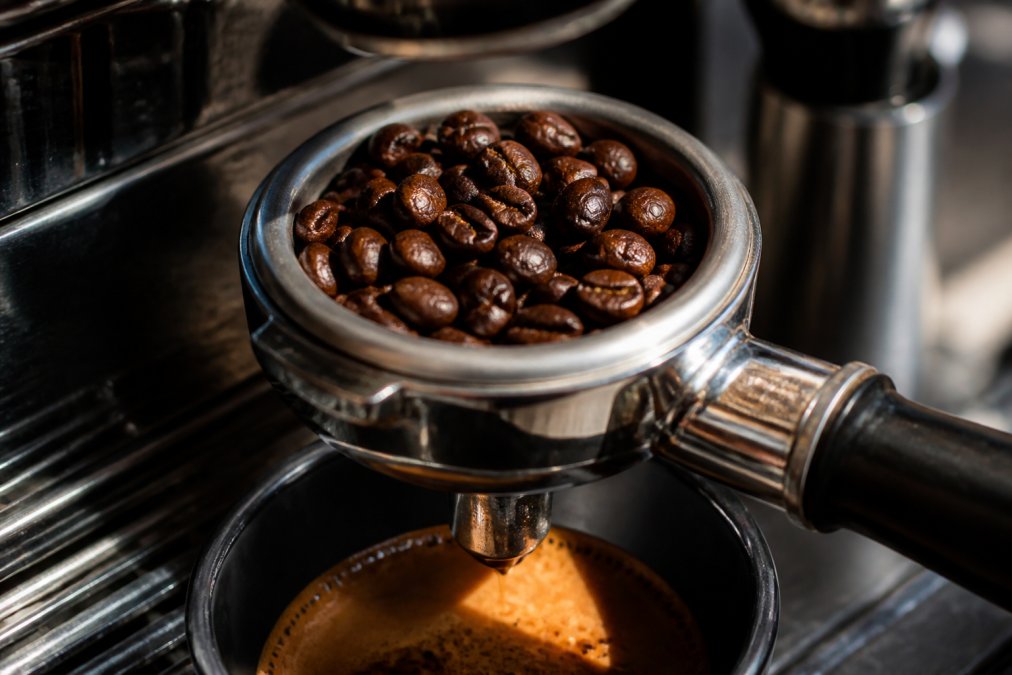
Rook Coffee's espresso offerings lean toward darker roasts (Full City or French roast). Darker roasts develop oils during roasting that create signature espresso crema. The oils reduce extraction time, critical at 9 bars. Lower density also means less channeling, improving consistency shot-to-shot.
CoffeeBeanDirect carries espresso-specific blends across the roast spectrum. Their medium-dark blends develop some oils for crema while retaining origin character. Lighter espresso options exist but are less common, lighter roasts are denser and require longer extraction times.
For espresso, roast date matters as much as roast level. Beans need 5-14 days rest after roasting for peak performance (peer-reviewed research). Too fresh (1-3 days) causes inconsistent shots from excess CO2 release. Too old (beyond 6 weeks) loses the oils creating crema. Rook's same-day shipping means fresher beans overall, though you may need to wait a week before pulling your first shot. CoffeeBeanDirect's standard shipping means beans arrive further along in their rest cycle, sometimes at optimal window, sometimes past it.
Freshly Roasted Coffee Delivery and Shipping
Rook roasts to order and ships the same day. Beans leave the roastery within hours of roasting. CoffeeBeanDirect roasts in batches and ships within 2-3 business days.
A Rook bean roasted Monday morning arrives Wednesday at roughly 4-5 days old. A CoffeeBeanDirect bean roasted Friday and shipped Monday arrives Thursday at roughly 7-10 days old. By brewing time, that age difference becomes noticeable, the fresher bean tastes brighter and more complex with cleaner extraction.
Both use sealed packaging to minimize oxygen exposure. Rook's faster turnaround means less transit time and warehouse sitting. CoffeeBeanDirect's longer lead time means more time in various supply chain stages.
Rook's made-to-order model requires frequent roasting runs (smaller batches, higher labor cost per unit). CoffeeBeanDirect's batch roasting is more efficient, often translating to lower per-pound pricing. However, Rook's freshness premium appeals to those willing to pay more for peak flavor.
Both offer subscriptions. Rook's same-day roasting ensures freshest coffee on your schedule. CoffeeBeanDirect's subscriptions offer predictability and discounts, trading some freshness for convenience and savings.
How to Store Coffee Beans for Freshness
Once beans arrive, storage becomes your responsibility. Coffee degrades through oxidation and moisture absorption. The enemies are oxygen, light, heat, and humidity, in that order of impact.
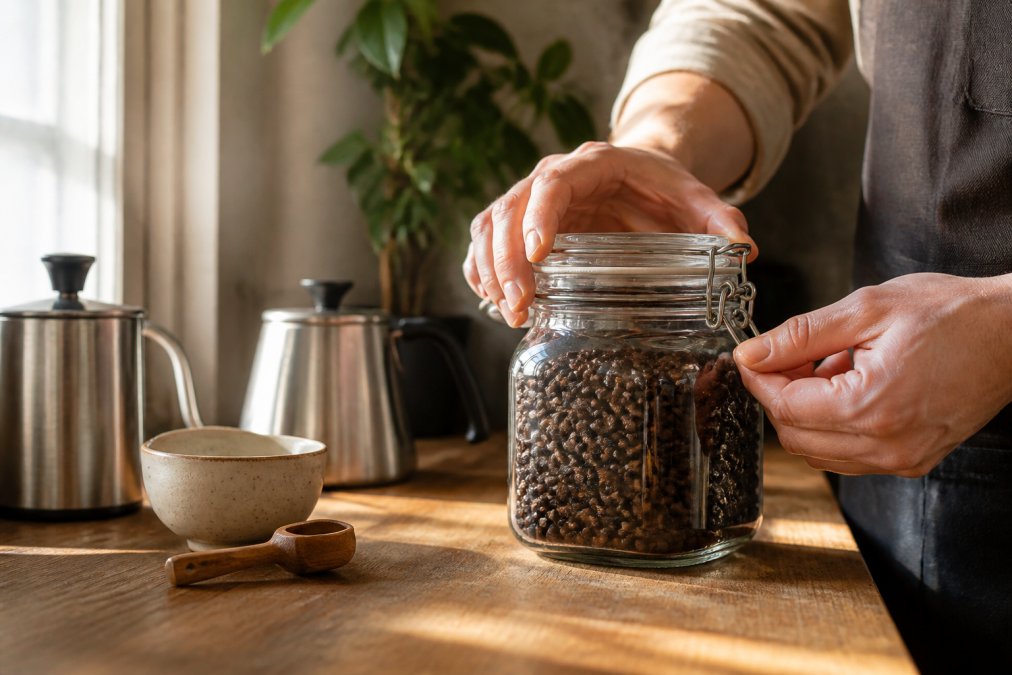
The ideal storage container is airtight, opaque, and cool. Glass with airtight seal, vacuum-sealed bags, or ceramic canisters with rubber gaskets work. Open bowls, clear containers, or rolled-up bags don't, oxygen still reaches the beans.
Room temperature (65-75°F) is fine. Above 75°F accelerates staling. Below 65°F (refrigerator or freezer) introduces moisture risk, beans absorb water from humid air, promoting mold and off-flavors. Freezing coffee is a persistent myth; repeated temperature cycling creates condensation that damages flavor faster than room-temperature storage.
Humidity is secondary. Coffee beans are hygroscopic and absorb moisture from air. High humidity (above 60%) speeds this process. In humid climates, airtight containers are critical. Some add silica gel packets to absorb ambient moisture.
Whole beans last 2-4 weeks at peak freshness when stored properly. After 4 weeks, they're drinkable but noticeably flatter. After 8 weeks, they're stale. Ground coffee deteriorates faster, within 1-2 weeks, because grinding increases surface area exposed to oxygen.
Rook's same-day roasting gives a longer freshness window because beans are younger at arrival. Beans received 4 days after roasting have roughly 2-4 weeks of peak flavor ahead. CoffeeBeanDirect's older beans compress that window slightly, but proper storage still preserves quality for several weeks.
Sourcing, Roasting, and Quality Standards
Rook sources directly from specialty farms, emphasizing single-origin lots with detailed sourcing information: farm names, elevations, processing methods, and harvest dates. Custom roasting profiles highlight each origin's unique characteristics, requiring significant expertise and equipment investment.
CoffeeBeanDirect works with broader supplier networks, including direct-trade relationships and commodity brokers. Sourcing is transparent but less granular, you know country and region but not always specific farm or harvest date. This broader model provides consistent supply and wider variety but less traceability per lot.
Rook uses third-party cupping (professional tasting) to validate each batch, with roasts scored for consistency and accuracy. CoffeeBeanDirect maintains quality through established relationships and spot-checking but doesn't publish cupping scores publicly.
Rook uses smaller-batch roasters (5-10 kg per batch) allowing precise temperature control. Smaller batches mean more attention per pound but higher per-unit cost. CoffeeBeanDirect uses larger commercial roasters (20-50 kg batches), more efficient but requiring more standardization.
Roasting develops flavors through the Maillard reaction, the chemical process creating brown color and complex flavors when heat meets amino acids and sugars. Light roasts preserve origin characteristics. Medium roasts develop more Maillard products while retaining origin flavor. Dark roasts emphasize Maillard compounds, creating chocolate, caramel, and smoky notes. Rook emphasizes highlighting origin even in darker roasts. CoffeeBeanDirect's roasts tend toward more pronounced roast-level flavor.
Subscription Models and Value
Rook's subscription is straightforward: choose frequency (weekly, biweekly, monthly), select roasts, and they ship on schedule. You can pause, skip, or modify anytime. Pricing depends on quantity and selection. The advantage is consistency; the disadvantage is managing subscriptions to avoid overstock.
CoffeeBeanDirect offers similar flexibility with more aggressive discounts, typically 10-15% lower than one-time purchases. They also offer bulk discounts for larger quantities, appealing to high-volume drinkers.
The value calculation depends on consumption rate and freshness priorities. For 1-2 cups daily, monthly subscription from either service makes sense. For 3+ cups daily, biweekly or weekly keeps beans fresher. For occasional drinkers (few cups weekly), one-time purchases may be smarter.
Cuppari Coffee roasts to order, ships the same day, and offers subscription flexibility with free shipping on all U.S. orders. The freshness guarantee, beans roasted only after your order is placed, aligns with Rook's philosophy with added same-day shipping and sealed capsules preserving freshness with no oxygen inside.
Storage cost is invisible but real. Larger quantities require more storage space and careful management. Smaller, frequent shipments reduce storage burden but increase shipping frequency. Neither charges for shipping, so the trade-off is managing freshness and storage.
Which One Should You Choose?
Rook Coffee is better if you prioritize freshness and have the budget for premium pricing. Same-day roasting, direct sourcing, and methodical roasting deliver peak coffee. For daily pour-over or cold brew drinkers wanting brightest, most complex flavors, Rook's model is built for you.
CoffeeBeanDirect is better if you value variety, competitive pricing, and consistent quality without the freshness premium. Broader roast range and sourcing network mean something for every brewing method. For regular coffee drinkers not obsessive about peak freshness, their beans satisfy at lower price.
Rook's coffee tastes noticeably fresher and more complex for 3-4 weeks after arrival. CoffeeBeanDirect's coffee tastes good for 2-3 weeks with slightly shorter peak window. Both are legitimate; the decision hinges on valuing that freshness premium.
For freshness guarantee combined with subscription convenience, Cuppari Coffee delivers that combination. Beans roasted only after your order is placed, shipped the same day, with free shipping on all U.S. orders. Sealed capsule design ensures freshness with no oxygen inside, and improved filter design delivers a lively cup every time.
| Comparison Factor | Rook Coffee | CoffeeBeanDirect | Cuppari Coffee |
|---|---|---|---|
| Roasting Model | Made-to-order, same-day ship | Batch roasted, 2-3 day ship | Made-to-order, same-day ship |
| Freshness at Arrival | 4-5 days old | 7-10 days old | 2-3 days old |
| Sourcing Transparency | Single-origin, farm-level detail | Regional, supplier-level detail | Premium, freshly roasted selection |
| Roast Variety | Specialized per origin | Broad range (light-dark) | Diverse selection including pods |
| Subscription Flexibility | Full (pause, skip, modify) | Full (pause, skip, modify) | Full flexibility with free shipping |
| Price Point | Premium | Competitive | Premium with value guarantee |
| Specialty Drinks | Cold brew focus | Broad brewing methods | Single origin, blends, flavored, pods |
Choosing between Rook Coffee and CoffeeBeanDirect depends on whether you prioritize peak freshness or prefer broader variety at lower price. For coffee drinkers demanding absolutely freshest beans roasted for their brewing method, Rook delivers. For those wanting reliable quality across multiple styles without premium pricing, CoffeeBeanDirect is practical. For freshness guarantee with subscription convenience and free shipping, Cuppari Coffee roasts beans only after your order is placed and ships the same day, ensuring you experience freshly roasted coffee delivered straight to your doorstep.
Frequently Asked Questions
Q: What is the difference between Rook Coffee and CoffeeBeanDirect?
A: Rook Coffee and CoffeeBeanDirect differ primarily in sourcing, roasting philosophy, and delivery speed. Rook Coffee emphasizes single-origin beans and regional roasting, while CoffeeBeanDirect focuses on bulk coffee supply with wider variety. Both offer online ordering, but their roast-to-order timelines and packaging approaches vary. Your choice depends on whether you prioritize specialty sourcing or bulk convenience.
Q: Which roaster is better for freshly roasted coffee delivery?
A: Freshly roasted coffee delivery depends on roast-to-order capability and shipping speed. Roasters that roast after your order and ship within 24 hours preserve peak flavor and aroma better than pre-roasted inventory. Check each brand's roasting date on packaging and shipping timeline. Beans reach optimal flavor 3-7 days after roasting, so fast delivery keeps them in that sweet spot.
Q: Are there significant price differences between these two brands?
A: Price differences between specialty roasters and bulk suppliers vary by order size and bean selection. Specialty single-origin beans typically cost more per pound than blends or bulk offerings. Subscription discounts, free shipping thresholds, and minimum order amounts affect total cost. Compare per-pound pricing on similar roast levels and bean origins to find true value for your budget.
Q: How do I know which coffee beans are best for espresso?
A: Best coffee beans for espresso have medium to dark roasts with lower acidity and fuller body. Look for beans labeled as espresso blends or those with tasting notes like chocolate, nuts, or caramel. Espresso requires consistent particle size and balanced extraction, so freshly ground beans from quality roasters perform better. Check roast dates and ask roasters about their espresso-specific recommendations.
This article was written using GrandRanker