

Table of Contents
- What Does Stale Coffee Taste Like?
- How to Tell if Coffee Beans Are Bad
- How to Store Coffee Beans Fresh
- Coffee Bean Shelf Life and Roast Level
- The Science of Lipid Oxidation and Degassing
- Brewing Adjustments for Older Beans
- Conclusion
Last Updated: August 26, 2026
What Does Stale Coffee Taste Like?
Stale coffee beans produce a flat, dull cup that lacks the brightness and complexity of fresh coffee. The flavor profile becomes muted, those vibrant notes of chocolate, fruit, or caramel fade into something one-dimensional and cardboard-like. You'll notice the absence of acidity, which gives fresh coffee its liveliness and snap. Instead, the taste turns bitter and hollow, as if someone removed all the interesting elements and left behind only harshness.
The difference between fresh and stale is immediate if you've experienced truly fresh coffee. A cup brewed from beans roasted days ago versus weeks ago tastes like two entirely different products. This is why Cuppari Coffee roasts beans only after an order is placed and ships the same day, that window between roasting and brewing is where coffee's best flavors live.
When coffee ages, volatile compounds that carry flavor escape into the air through a process called degassing. Carbon dioxide leaves the beans, taking aromatic compounds with it. What remains is a shell of the original coffee: bitter, flat, and unsatisfying. Some people describe it as tasting like stale cardboard or wet newspaper. Others say it tastes thin, as if the coffee has been diluted. The real issue is that oxidation has begun breaking down the lipids and oils that create complexity.
The transition happens gradually. A week after roasting, most coffee is still excellent. By three weeks, the decline becomes noticeable (ncausa.org). By six weeks, most people would find it unpleasant.
How to Tell if Coffee Beans Are Bad
Identifying stale coffee beans requires checking three signals: how they look, how they smell, and how they taste. Each tells part of the story.
Visual signs of stale beans
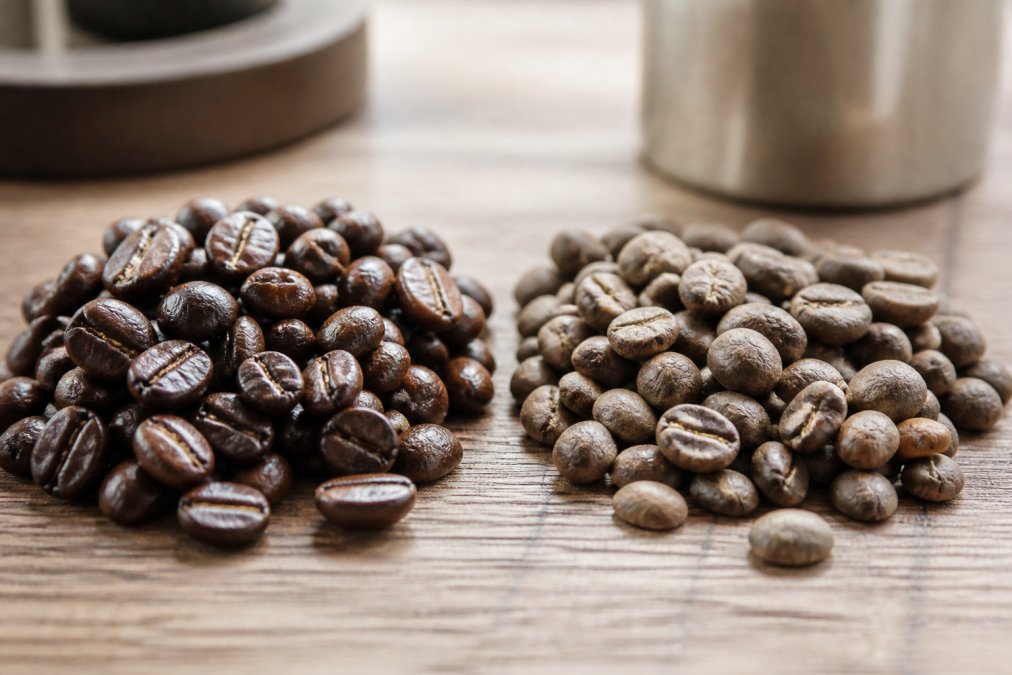
Fresh coffee beans have a uniform color and visible sheen. They look alive. Stale beans lose that luster and begin to look dull and faded, like they've been sitting in sunlight too long.
Look for these visual markers:
- Loss of sheen, Fresh beans have a slight oily surface that catches light. Stale beans appear matte and flat.
- Color fading, Beans that were dark brown become a lighter, greyish brown. The color becomes washed out.
- Surface cracks, As beans lose moisture, the surface develops fine cracks or a wrinkled appearance.
- Uneven coloring, Discoloration patches indicate oxidation has accelerated in certain spots.
- Powdery residue, A fine dust on the beans or inside the container suggests the beans are breaking down.
The most telling sign is comparing fresh beans side-by-side with older ones. The difference in sheen and color becomes obvious immediately. If your beans look dull compared to what you remember from a fresh bag, they've likely been sitting too long.
Smell test for coffee beans
Your nose is one of the most reliable tools for detecting stale coffee beans. Fresh beans smell complex and aromatic, you might pick up notes of chocolate, caramel, nuts, or fruit depending on the origin and roast level.
Stale beans smell flat and musty. The aroma either disappears almost entirely or shifts to something unpleasant. Some describe it as cardboard-like or similar to old paper. Others notice a slightly sour or vinegary note as oxidation progresses.
To perform a proper smell test:
- Open a fresh bag and take a deep breath, Note the intensity and complexity of the aroma. This is your baseline.
- Smell your stored beans, Put your nose close to the beans and inhale deeply. If the aroma is noticeably weaker or has shifted in character, they're aging.
- Compare directly, If you have access to freshly roasted beans, smell both samples side-by-side. The contrast is unmistakable.
- Trust your instinct, If the smell seems off, flat, or unpleasant, the beans are likely stale.
The smell test works because volatile compounds, the aromatic molecules that make coffee smell appealing, escape rapidly once beans are roasted. As these compounds leave through degassing, the aroma fades. What you're smelling is literally the coffee losing its best qualities.
Taste evaluation
The definitive test is brewing a small cup and tasting it. Fresh coffee from quality beans tastes clean, bright, and complex. Stale coffee tastes flat, bitter, and one-dimensional.
When you brew stale beans, pay attention to:
- Mouthfeel, Fresh coffee has body and texture. Stale coffee feels thin and watery.
- Brightness, Fresh coffee has acidity that makes it lively. Stale coffee tastes dull and lifeless.
- Flavor notes, Can you taste the intended flavor profile (chocolate, fruit, etc.)? Stale beans taste generic and bitter.
- Aftertaste, Fresh coffee leaves a pleasant finish. Stale coffee leaves a harsh, bitter aftertaste that lingers unpleasantly.
If your coffee tastes flat and bitter no matter how you brew it, the beans are likely the problem, not your technique. This is a common frustration for people who buy coffee weeks in advance, by the time they open the bag, the best flavors have already escaped.
How to Store Coffee Beans Fresh
Storage determines how long your coffee stays fresh. The enemy is exposure to oxygen, light, heat, and moisture. Each degrades the beans in different ways.
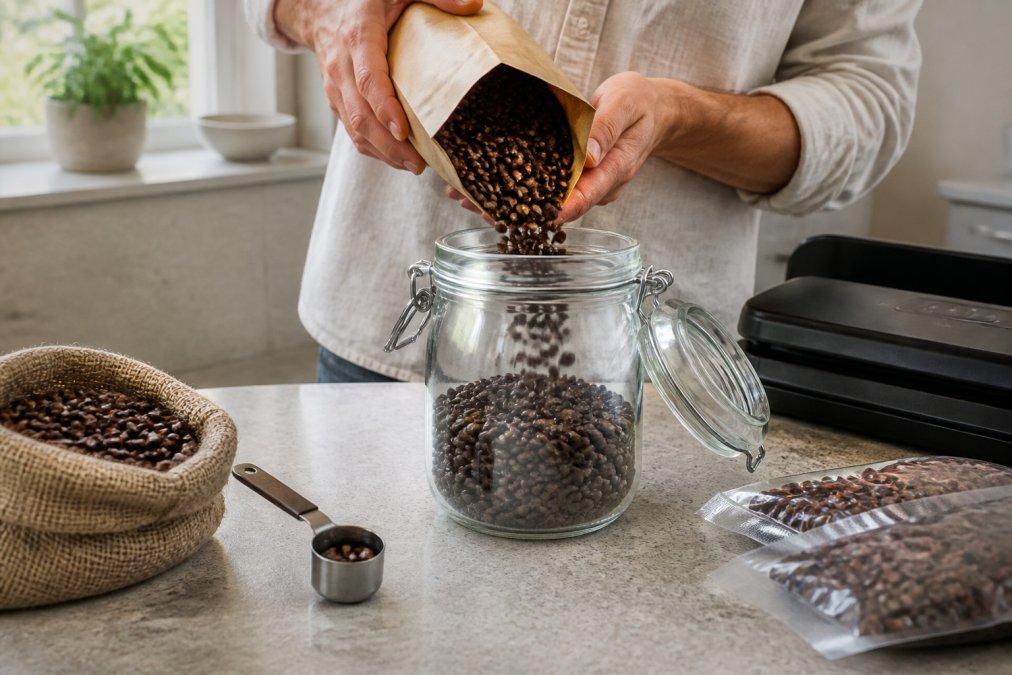
The ideal storage setup uses an airtight container kept in a cool, dark place. A sealed jar on a pantry shelf beats a bag left open on the counter every time. Oxygen accelerates oxidation, which breaks down the lipids that create flavor. Light accelerates the same process. Heat speeds everything up. Moisture can introduce mold and off-flavors.
Here's what works:
- Use an airtight container, Glass jars with rubber seals or vacuum-sealed bags work best. The goal is zero oxygen exposure. Cuppari Coffee's sealed capsules with no oxygen inside help maintain freshness.
- Keep it dark, Store containers in a cabinet or opaque container. Clear jars on a sunny shelf will stale faster.
- Keep it cool, Room temperature (around 60-70°F) is ideal (peer-reviewed research). Avoid the freezer, moisture from condensation damages beans. The refrigerator is also risky for the same reason.
- Keep it dry, Humidity introduces moisture, which promotes mold and off-flavors. A dry pantry is better than near a sink or dishwasher.
- Grind just before brewing, Whole beans stay fresh longer than ground coffee. Once ground, the surface area exposed to oxygen increases dramatically, and the beans stale within days.
Most people underestimate how quickly ground coffee stales. A bag of whole beans might stay good for three weeks, but ground coffee begins losing quality within a week. If you grind in advance, store the ground coffee in the smallest airtight container possible to minimize oxygen exposure.
Coffee Bean Shelf Life and Roast Level
How long coffee beans stay fresh depends on the roast level and storage conditions. Light roasts, medium roasts, and dark roasts age differently.
Light roasts have the shortest shelf life, usually 2-3 weeks at peak freshness. Light roasts contain more of the bean's original structure and are more porous, which allows gases to escape faster. The roasting process is gentler, so fewer protective compounds develop.
Medium roasts stay fresh for about 3-4 weeks. The roasting process creates more protective compounds, and the bean structure is more stable.
Dark roasts can maintain acceptable quality for 4-6 weeks because the roasting process creates a denser bean structure and more protective compounds. However, "acceptable" is not the same as "peak." Even dark roasts taste noticeably better in the first two weeks.
The roast date matters more than the expiration date. A bag labeled "Best by September 2026" tells you nothing if you don't know when it was roasted. Always look for the roast date. If a bag doesn't have one, ask before buying.
The first 5-7 days after roasting is the sweet spot for most coffees (ncausa.org). This is when degassing has released enough carbon dioxide that extraction works smoothly, but volatile compounds haven't yet escaped. After three weeks, most coffee has declined noticeably. After six weeks, most coffee is stale enough that many people would find it unpleasant.
This is why freshness guarantees matter. When you order from Cuppari Coffee, the beans are roasted after your order arrives and shipped the same day. You receive coffee at its peak, not coffee that's been sitting in a warehouse for weeks.
The Science of Lipid Oxidation and Degassing
Understanding what happens to coffee at the molecular level explains why freshness matters so much.
Coffee beans contain lipids (oils) and volatile aromatic compounds. Immediately after roasting, the beans begin degassing, releasing carbon dioxide that was created during the roasting process. This degassing takes 24-48 hours to reach its peak and continues slowly for weeks.
During the first few days, degassing is actually beneficial. It allows carbon dioxide to escape so water can penetrate the beans evenly during brewing, improving extraction. This is why very fresh coffee (less than 24 hours old) can sometimes be harder to extract than coffee that's 3-5 days old.
But as degassing continues, volatile compounds escape alongside the carbon dioxide. These aromatic molecules are what create flavor and complexity. Once they're gone, they're gone. You can't put them back.
Simultaneously, oxidation begins. Oxygen in the air reacts with the lipids in the beans, breaking them down into smaller compounds. This process accelerates with exposure to light, heat, and moisture. Oxidation is what creates that cardboard or musty smell in stale coffee. It's also what creates the flat, bitter taste.
The lipid oxidation process is inevitable once beans are roasted. You can't stop it entirely, but you can slow it dramatically by eliminating oxygen exposure, light, heat, and moisture. An airtight, opaque, cool container slows oxidation significantly. Vacuum-sealed packaging slows it even more.
This is why the timing between roasting and consumption matters so much. The longer beans sit, the more oxidation occurs. By the time beans are six weeks old, a significant portion of their flavor-creating compounds have oxidized or escaped. What remains is a flat, bitter shell.
Brewing Adjustments for Older Beans
If you're stuck with beans that are past their peak, adjustments can help extract what flavor remains. They won't make stale beans taste fresh, but they can make them taste better than they would with standard brewing.
Increase the grind size slightly. Older beans have less to extract, their volatile compounds have already escaped. Finer grinds will over-extract what remains, making the coffee taste even more bitter. A slightly coarser grind reduces extraction, which can minimize bitterness.
Use slightly hotter water. Older beans need more heat to extract what flavor compounds remain. If you normally brew at 195°F, try 200°F. Don't exceed 205°F or you'll over-extract and increase bitterness.
Increase the coffee-to-water ratio. Use slightly more coffee than usual. This compensates for the reduced flavor compounds in the beans.
Shorten brew time slightly. Reduce contact time between water and grounds. This prevents over-extraction of the remaining bitter compounds.
Blend with fresh beans if possible. Mix older beans with fresh ones. This masks the staleness while using up the old stock.
Use them for cold brew. Cold brewing extracts differently than hot brewing and can mask some of the flat, bitter notes of stale beans. The longer steeping time compensates for the reduced flavor compounds.
These adjustments won't save truly stale beans, but they can make a noticeable difference with beans that are only moderately aged. The best solution is preventing staleness in the first place by buying fresh coffee and storing it properly.
The difference between fresh and stale coffee is dramatic once you've experienced truly fresh beans. Stale coffee tastes flat, bitter, and cardboard-like because volatile compounds have escaped and lipid oxidation has degraded the flavor-creating compounds. You can identify stale beans by their dull appearance, musty smell, and flat taste.
Storage in an airtight, cool, dark container extends freshness significantly, but the clock starts the moment beans are roasted. The first two to three weeks offer the best flavor. After six weeks, most coffee is noticeably stale. When you choose freshly roasted coffee from Cuppari Coffee, roasted after your order and shipped the same day, you eliminate the guesswork. You know your beans arrived at peak freshness, with all their complex flavors intact and no oxidation damage. That's the difference between a memorable cup and one you'd rather skip.
Frequently Asked Questions
How do I tell if my coffee beans are stale?
Stale coffee beans display three clear indicators: a dull, faded appearance instead of a glossy sheen, a flat or musty aroma lacking the original brightness, and a bland, muted taste with reduced acidity and flavor notes. Fresh beans have an oily sheen, vibrant aroma, and complex flavor profile. If your beans smell like cardboard or taste flat, they've likely lost their volatile compounds through oxidation and degassing.
How long do coffee beans stay fresh after opening?
Coffee beans remain at peak freshness for 7-14 days after roasting, with the optimal window being 3-7 days post-roast when carbon dioxide release (degassing) and flavor development are ideal. After opening a bag, beans begin losing aroma and brightness within 2-3 weeks if stored in a standard container. An airtight container extends freshness to 3-4 weeks, though flavor gradually diminishes. For best results, purchase smaller quantities roasted closer to your purchase date.
Can stale coffee beans make you sick?
Stale coffee beans are not dangerous to consume and will not make you sick. Staleness refers to loss of flavor and aroma through oxidation and moisture absorption, not spoilage or bacterial growth. Coffee's low moisture content and acidic nature prevent mold and harmful pathogens. However, beans stored in damp conditions or exposed to moisture for extended periods can develop mold, which should be discarded. Properly stored stale beans are safe but simply taste unpleasant.
What causes coffee beans to go stale?
Staleness results from two primary processes: lipid oxidation (oils on the bean surface reacting with oxygen, creating rancid or musty flavors) and degassing (carbon dioxide naturally escaping after roasting, reducing aroma and brightness). Moisture absorption and prolonged exposure to light accelerate these processes. Roast level affects shelf stability, lighter roasts stale faster due to lower oil content, while darker roasts' higher porosity allows faster moisture penetration. Storing beans in an airtight container away from light and heat slows oxidation significantly.
This article was written using GrandRanker