

Table of Contents
- Why Humidity Is Coffee's Biggest Enemy
- Understanding Relative Humidity Thresholds for Coffee Storage
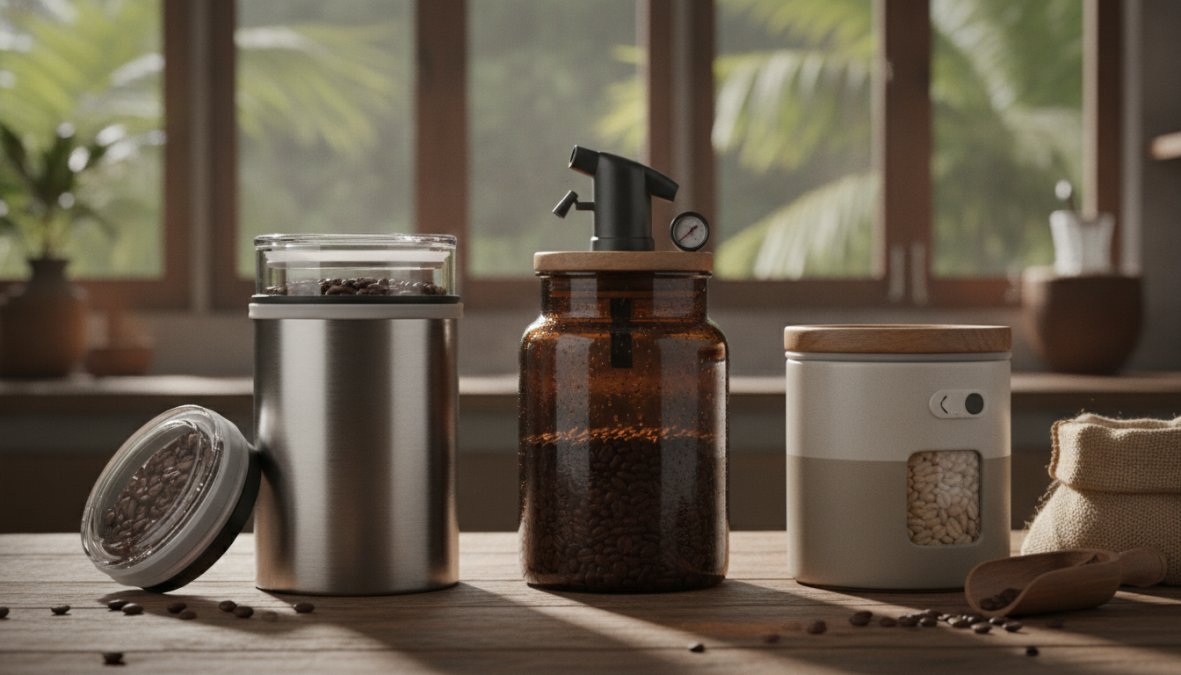
- Best Coffee Storage Containers for Humidity Control
- How to Store Coffee Beans in Humid Climates: Step-by-Step
- How Long Does Coffee Stay Fresh in Humid Climates
- Signs of Moisture Damage in Coffee Beans
- Freezer Storage and the Condensation Trap
- DIY Humidity Solutions for Coffee Storage
- Frequently Asked Questions
Last Updated: July 6, 2026
Storing coffee beans in humid climates requires specific strategies beyond standard advice. Humidity accelerates oxidation, promotes mold growth, and degrades flavor compounds within days. Research from the Specialty Coffee Association indicates improper storage in humid conditions can reduce freshness by up to 50% within two weeks. This guide covers five proven strategies: humidity monitoring, container selection, desiccant use, temperature control, and freezer techniques that prevent condensation damage.
Why Humidity Is Coffee's Biggest Enemy
Coffee beans are hygroscopic, they absorb moisture from the air. When relative humidity exceeds 60%, water penetrates the porous bean structure, weakening cell walls and degrading volatile compounds responsible for flavor. In climates exceeding 70% humidity, beans become noticeably stale within 7-10 days of opening.
How moisture absorption degrades flavor
When coffee absorbs excess moisture, aromatic compounds, esters, aldehydes, and terpenes, break down through hydrolysis. These molecules create brightness, sweetness, and complexity. By day three in humid environments, coffee tastes less vibrant. By day seven, character shifts noticeably. By day fourteen, most original complexity vanishes.
Moisture also accelerates lipid oxidation, producing rancid, papery, or musty flavors that brewing cannot reverse.
Oxidation and mold growth in high humidity
Water facilitates chemical reactions, allowing oxygen to dissolve more readily and break down the bean's oils and aromatics at accelerated rates. Vacuum-sealed containers dramatically outperform open storage.
Mold growth is the most dangerous outcome. When beans exceed 12-13% moisture content, they create ideal conditions for mold spores. Once visible, beans must be discarded. Some molds produce mycotoxins, which are harmful if consumed. At 75% humidity, mold can appear within 5-7 days in permeable containers.
Understanding Relative Humidity Thresholds for Coffee Storage
Relative humidity, the amount of moisture in air compared to what the air can hold at that temperature, determines storage success.
Safe humidity percentage ranges
Below 60% relative humidity, beans remain stable for several weeks in airtight containers away from light and heat. Between 60-70%, beans stay fresh 1-2 weeks with proper containers. Above 70%, degradation accelerates significantly and mold risk becomes real.
Roasters recommend storing beans at 50-55% relative humidity and 60-70°F (15-21°C) for maximum shelf life. In humid climates, achieving this requires active moisture management through desiccant packets.
Why 60% relative humidity is the critical tipping point
At 60% relative humidity, coffee's equilibrium moisture content reaches approximately 11%, near the upper safety limit. Above 60%, beans absorb moisture faster than they release it. This threshold matters because mold spores germinate reliably above 60%; below it, they remain dormant.
Temperature interacts with this threshold. A room at 75°F and 65% humidity is riskier than the same humidity at 65°F, because absolute moisture content is higher.
Best Coffee Storage Containers for Humidity Control
The container you choose determines whether moisture penetrates your beans.
Airtight containers and one-way valve bags
One-way valve bags allow CO2 escape while preventing oxygen and moisture entry. They work well in moderate humidity but have limitations in tropical climates, the valve itself allows microscopic moisture penetration over time.
For humid environments, store beans in the original valve bag, then place that bag inside an airtight container. This dual-layer approach reduces moisture exposure significantly.
Glass jars with rubber gasket seals and metal canisters with snap-lock lids provide the strongest protection. Test your container by sealing it for 24 hours, then opening it. A sharp hiss indicates a good seal; silent opening suggests compromise.
Container material comparison: glass vs. metal vs. ceramic
Glass is transparent but allows light exposure, which degrades beans. Store glass containers in dark cupboards. Glass is inert and easy to clean, but heavy and breakable.
Metal canisters (stainless steel or aluminum) provide superior light and oxygen protection. They're durable and lightweight, but you cannot see inside without opening. In humid climates, this is actually advantageous, opaque material blocks all light.
Ceramic is porous and absorbs moisture from air. Avoid ceramic for long-term humid climate storage.
Vacuum seal options for maximum protection
Vacuum-sealed containers remove most oxygen, dramatically slowing oxidation. In humid climates, vacuum sealing combined with desiccant packets provides the strongest home storage protection.
Vacuum storage bags with hand pumps are affordable and effective. Vacuum-sealed canisters offer convenience but create seal stress over time. Check monthly for air leakage.
:::pro tip In climates above 75% humidity, combine vacuum sealing with desiccant packets inside the container. This extends shelf life by 50-100% compared to either method alone. :::
How to Store Coffee Beans in Humid Climates: Step-by-Step
This 10-minute process creates a system that keeps beans fresh for 3-4 weeks in high humidity.
Step 1: Choose your airtight container
Select based on climate and usage. For daily opening, use a glass jar with rubber gasket seal. For weekly opening, use a vacuum-sealed canister. For bulk purchases, use multiple smaller containers rather than one large one.
Test seal quality by placing a paper towel inside, sealing overnight. If the towel feels damp, upgrade the container.
Step 2: Add desiccant packets for moisture absorption
Before adding beans, place one food-grade desiccant packet inside. For a quart-sized jar, use one standard 5-gram silica gel packet; for larger containers, use two.
Position the packet where it won't contact beans directly. Desiccant packets are reusable, when saturated (usually after 2-4 weeks), dry them in a 200°F oven for 30 minutes to restore capacity.
Step 3: Store in a cool, dark place away from light
Light exposure degrades coffee through photodegradation. Store containers in dark cupboards, pantries, or closets, never on countertops or windowsills.
Temperature stability matters equally. Avoid storing near heat sources like ovens or radiators. The ideal location is a cool cupboard away from the kitchen's warmest areas.
Do not store in the refrigerator unless using the freezer method. Temperature fluctuations cause condensation inside containers, introducing moisture.
Step 4: Monitor ambient temperature and humidity
Use inexpensive digital hygrometers ($10-15) to track conditions in your storage cupboard. If ambient humidity exceeds 70%, increase desiccant packet frequency or move to freezer storage.
Temperature should stay between 50-70°F. Above 75°F, consider freezer storage for long-term beans.
How Long Does Coffee Stay Fresh in Humid Climates
Shelf life depends on storage method, container quality, and ambient humidity.
Shelf life for roasted beans vs. green coffee
Roasted coffee in an airtight container with desiccant packets stays fresh for 3-4 weeks in humid climates. After 4 weeks, oxidation noticeably degrades flavor. After 6 weeks, most specialty coffee tastes stale.
Without desiccant packets, roasted coffee lasts 2-3 weeks. Without an airtight container, coffee degrades to unpleasant within 5-7 days above 70% humidity.
Green (unroasted) coffee is far more stable. Raw beans have lower moisture content and don't release CO2, allowing months of storage in cool, dry conditions. Home roasting small batches as needed ensures maximum freshness.
Degassing timeline and CO2 release in humid conditions
Freshly roasted coffee releases CO2 for 7-14 days after roasting. One-way valve bags are standard because they let CO2 escape while preventing oxygen and moisture entry.
In humid climates, degassing takes slightly longer because moisture interferes with CO2 release. By day 14, most beans have degassed sufficiently for espresso. For filter coffee, you can brew beans still degassing, extra CO2 enhances bloom and extraction.
Degassing and moisture absorption happen simultaneously in humid environments. Use beans quickly during the first two weeks while they're degassing, before moisture absorption becomes significant.
Signs of Moisture Damage in Coffee Beans
Recognizing moisture damage early lets you adjust storage strategy before losing an entire batch.
Visible mold, discoloration, and bean porosity changes
Visible mold appears as white, gray, or green fuzzy growth. Discard the entire batch, mold spores spread quickly and invisibly.
Discoloration indicates moisture damage even without visible mold. Beans should be uniformly dark brown (dark roasts) or medium brown (medium roasts). Lighter patches or streaking suggest uneven moisture absorption.
Moisture-damaged beans often feel slightly softer when bitten. Healthy beans are hard and brittle.
Taste and aroma indicators of humidity damage
Open your container and smell the beans. Healthy coffee has clean, origin-specific aroma. Moisture-damaged beans smell musty, flat, or slightly sour.
In the cup, moisture damage manifests as flatness, lack of brightness, and papery or cardboard-like flavor. Excessive sourness or vinegar notes suggest fermentation from excessive moisture.
Freezer Storage and the Condensation Trap
Freezing extends shelf life dramatically, but only if you prevent condensation damage.
When freezing helps (and when it backfires)
Freezing slows oxidation to nearly zero. Beans in freezer-safe containers stay fresh for 3-6 months, compared to 3-4 weeks at room temperature in humid climates.
Freezing works best for long-term storage of beans you won't use immediately. Freezing backfires when beans thaw in humid environments, moisture condenses on surfaces as frozen beans warm to room temperature.
Preventing freezer burn and condensation damage
Freeze beans in smaller portions and thaw in airtight containers. Use vacuum-sealed bags or small jars, not large containers. Divide beans into weekly or bi-weekly portions before freezing.
When ready to use frozen beans, remove one portion and place it in an airtight container. Leave it sealed at room temperature for 2-3 hours to thaw gradually while isolated from humid air.
Never open a frozen container, remove a handful, then re-freeze the rest. Repeated thawing and freezing creates condensation each time and accelerates degradation.
DIY Humidity Solutions for Coffee Storage
For large quantities or optimized storage spaces, create a controlled microenvironment without expensive equipment.
Making your own silica gel desiccant packets
Food-grade silica gel is inexpensive and reusable. Bulk silica gel beads cost $15-20 per pound online, enough for dozens of packets.
Cut small squares of breathable fabric (cheesecloth, muslin, or coffee filters). Fill each with approximately 5 grams of silica gel beads. Tie corners closed. Place one packet per quart of storage volume inside containers. Dry in a 200°F oven for 30 minutes when saturated.
Climate control strategies for humid homes
For serious storage, consider a small dehumidifier in your storage cupboard. Portable dehumidifiers with automatic shutoff cost $50-100 and reduce ambient humidity by 15-20%.
Alternatively, use a sealed storage cabinet with tight-fitting doors and multiple desiccant packets, replacing them monthly.
For kitchens in very humid climates (above 80%), store most coffee in the freezer and keep only a week's worth at room temperature.
Humidity is unforgiving with coffee. Beans that taste excellent when fresh become flat and stale within days if exposed to moisture. Airtight containers, desiccant packets, temperature control, and freezer storage work because they prevent water from reaching your beans.
The real solution is freshness at the source. Cuppari Coffee roasts beans only after orders arrive and ships the same day, ensuring peak freshness upon delivery. No storage strategy improves coffee already weeks old. Start with the freshest possible beans, then apply these humidity-control techniques to extend that freshness as long as possible.
| Storage Method | Humidity Tolerance | Shelf Life | Best For |
|---|---|---|---|
| Paper bag | Below 50% only | 3-5 days | Not recommended for humid climates |
| One-way valve bag | Below 60% | 2-3 weeks | Short-term storage in moderate humidity |
| Airtight container + desiccant | Up to 70% | 3-4 weeks | Standard humid climate storage |
| Vacuum-sealed container + desiccant | Up to 75% | 4-6 weeks | Extended humid climate storage |
| Freezer (vacuum-sealed portions) | Any humidity | 3-6 months | Long-term storage, bulk quantities |
Frequently Asked Questions
Does humidity ruin coffee beans?
Yes, humidity significantly damages coffee beans by increasing moisture absorption and accelerating oxidation. When relative humidity exceeds 60%, beans absorb moisture that promotes mold growth and degrades flavor profile. High moisture content also triggers premature CO2 release and bean porosity changes, reducing shelf life and coffee freshness considerably. Storing beans in humid climates requires airtight containers and desiccant packets to prevent degradation.
What is the best container for storing coffee in humid weather?
The best containers are airtight options with one-way valves that allow CO2 to escape while preventing air exposure and moisture entry. Glass jars with rubber seals, metal canisters with tight lids, or vacuum-sealed bags work well. Metal containers offer superior thermal stability and light protection. Include silica gel desiccant packets inside to absorb ambient moisture. Avoid plastic containers, which are permeable to moisture and oxygen. Ensure your chosen container maintains a cool, dark environment away from direct light.
How can you tell if coffee beans have been affected by humidity?
Signs of moisture damage include visible mold spots, discoloration or darkening of beans, and a musty or off odor. Affected beans may feel slightly sticky or clumped together. Taste indicators include sour, stale, or flat flavors lacking the original brightness. Bean texture may become brittle or show changes in porosity. If you notice any of these signs, discard the beans immediately, as mold growth indicates the coffee is unsafe for consumption and storage conditions have been compromised.
Should you store coffee beans in the freezer in humid climates?
Freezing can help extend shelf life in humid climates, but only if done correctly. The main risk is the condensation trap: when frozen beans warm to room temperature, condensation forms, introducing moisture. To freeze safely, use airtight, vacuum-sealed containers and keep beans frozen until you're ready to use them, never thaw and refreeze. Freezing works best for long-term storage of roasted beans you won't use immediately, but for regular consumption, a cool, dark pantry with desiccant protection is typically more practical.
[EXTERNAL_LINK: Specialty Coffee Association storage guidelines | sca.coffee]
[EXTERNAL_LINK: USDA food storage moisture content standards | usda.gov]
[EXTERNAL_LINK: Journal of Food Science research on coffee oxidation rates | sciencedirect.com]
This article was written using GrandRanker