

Table of Contents
- What Coffee Is Best for Acid Reflux? A Quick Comparison
- Best Low Acid Coffee Options: Roast, Origin, and Processing
- Decaf Coffee for Acid Reflux: Does Removing Caffeine Help?
- Cold Brew Coffee and Acid Reflux: Why Brewing Method Matters
- How to Drink Coffee With Acid Reflux Without Giving It Up
- What the Evidence on Low-Acid Coffee Actually Shows
- When to Talk to a Doctor About Coffee and Reflux
- Frequently Asked Questions
Last Updated: October 11, 2026
What Coffee Is Best for Acid Reflux? A Quick Comparison
What coffee is best for acid reflux comes down to three things: roast darkness, brewing method, and your own body. No single coffee works for every sensitive stomach, but the research points to a shortlist: darker roasts, certain single-origin beans, decaf, and cold brew.
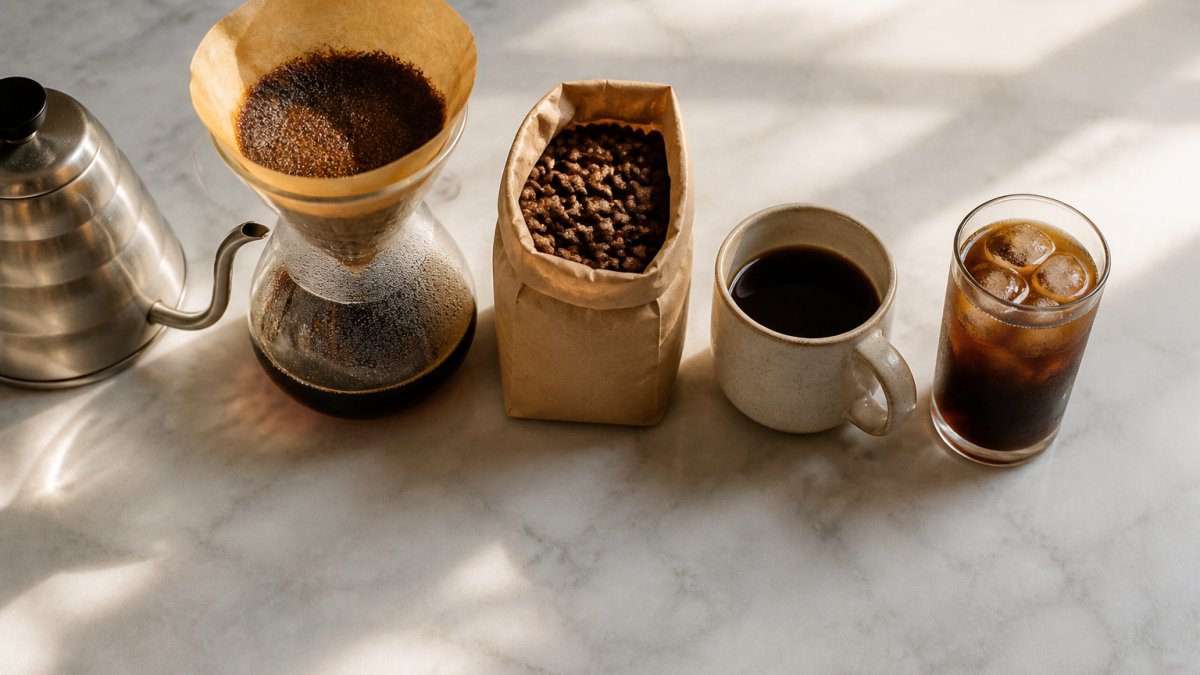
The short answer: low-acid coffee is any coffee chosen or brewed to reduce compounds that irritate a sensitive stomach, dark roast beans, cold brew, and decaf. Below, we compare each option, what the evidence supports, and how to test what works for you.
How the Options Compare at a Glance
| Option | Acidity Level | Caffeine | Best For |
|---|---|---|---|
| Dark roast (French, Sumatra) | Lower | Regular | Daily drinkers who want full flavor |
| Medium roast single origin | Moderate | Regular | Balanced taste, mild sensitivity |
| Decaf (Swiss Water Process) | Lower | Minimal | Evening drinkers, caffeine sensitivity |
| Cold brew | Lower | Regular | Those who react to hot-brewed coffee |
| Chicory or mushroom blends | Lowest | None | People avoiding coffee entirely |
Best Low Acid Coffee Options: Roast, Origin, and Processing
The best low acid coffee options are dark roasts and specific single-origin beans, because roast level and growing region both influence how much acid ends up in your cup.
We recommend our Sumatra for sensitive stomachs: medium acidity, a syrupy body, and notes of dark chocolate and dried fruit, with wet-hulled processing for a rounded, earthy profile rather than a sharp bite. Our Bali Blue, a medium-dark roast from Kintamani, brings dark chocolate and molasses with a smoother finish.
Single-Origin Beans That Tend to Sit Easier
Single-origin beans let you isolate one variable at a time when hunting your trigger. Our Brazil Santos is a medium roast with elegant cocoa notes and low perceived sharpness; our Uganda, a fully washed bean from the Sipi region, offers mild acidity with floral and chocolate notes. Each is $21.99, and every U.S. order ships free.
Decaf Coffee for Acid Reflux: Does Removing Caffeine Help?
Decaf coffee for acid reflux helps if caffeine is one of your triggers, but it is not a guaranteed fix. Caffeine relaxes the valve between stomach and esophagus, letting acid creep upward; removing it addresses that mechanism, yet decaf still contains the coffee acids themselves.
Processing matters too. Our Peru Decaf uses the Swiss Water Process. It is a medium roast with caramel, smooth, and citrus notes, single origin from the Piura region, our pick for coffee flavor without the caffeine jolt.
Cold Brew Coffee and Acid Reflux: Why Brewing Method Matters
Cold brew coffee and acid reflux is a pairing worth understanding, because brewing temperature changes the chemistry of the final cup.
The trade-off is strength and time: cold brew needs coarse grounds and a long steep, often twelve hours or more, and the concentrate can be potent, so dilute it before drinking.
How to Drink Coffee With Acid Reflux Without Giving It Up
How to drink coffee with acid reflux without quitting comes down to adjusting variables rather than eliminating the drink. Most people who react badly are reacting to one or two specific factors, not coffee as a category. Change those, and the cup often becomes tolerable again.
Start with these adjustments:
- Choose a darker roast or a low-acid single origin
- Switch to cold brew or a gentler brewing method
- Reduce your serving size rather than cutting coffee out
- Drink it with food instead of on an empty stomach
- Avoid drinking it right before lying down
- Keep a simple log of what you drank and how you felt
A Simple Self-Test to Find Your Trigger
Generic advice says "try dark roast" or "try decaf." That is not a test. A real test changes one variable at a time, holds everything else steady, and lets you compare days.
Step 1: Establish a baseline (days 1-5). Drink your normal coffee, same amount, time, and additions.
Step 2: Remove coffee entirely (days 6-10). Switch to water, herbal tea, or a chicory blend, keeping meal timing, portions, and other habits unchanged.
Step 3: Reintroduce one variable at a time (days 11-20). Add back a single cup of one specific coffee and hold it for two to three days before changing anything else. A practical order:
- Dark roast, hot brewed, same serving size as baseline
- Same dark roast, brewed as cold brew and diluted
- Swiss Water Process decaf, hot brewed
- Your original coffee, same as baseline, as a control
Keep the serving size, cup size, brew strength, and time of day identical across each block. If you change roast and brewing method on the same day, you learn nothing.
Variables Beyond Acidity Worth Testing
Acidity is only one lever. When you compare options, hold these in mind:
- Caffeine dose. A 12-ounce drip coffee can carry more caffeine than a single espresso shot, even though espresso tastes stronger. Caffeine relaxes the lower esophageal sphincter, one mechanism behind reflux symptoms.
- Serving size and concentration. Two small cups across a morning may sit differently than one large mug. Cold brew concentrate is easy to over-pour; dilute to a consistent ratio before comparing days.
- Timing. Coffee on an empty stomach, or within two to three hours of lying down, tends to provoke more symptoms than the same cup after a meal.
- Additives. Citrus, flavored syrups, and large amounts of dairy or cream can each be their own trigger. Test black coffee first, then add one item back at a time.
- Individual sensitivity. Two people can drink the same cup and report opposite results. Your log is more useful than any general ranking.
Personalized symptom testing beats generic advice every time. The coffee that works for someone else may not be the coffee that works for you, and a structured two-to-three-week log tells you more than any label claim.
What the Evidence on Low-Acid Coffee Actually Shows
What the evidence on low-acid coffee actually shows is more limited than the marketing suggests, and the gap between measured acidity and symptom relief is the most important thing to understand before you buy.
What pH Does and Does Not Establish
pH measures how acidic a liquid is on a 0-14 scale, where lower numbers are more acidic. Plain water sits near 7; most brewed coffee lands in the mid-4s to low-5s, mildly acidic but far less than lemon juice or vinegar.
What pH does not establish is how your stomach will respond. Reflux symptoms come from stomach contents moving up past the lower esophageal sphincter, not from the pH of the coffee itself.
"Low-acid" is also not a regulated term the way "organic" or "decaffeinated" carry defined standards.
How to Compare Options on Evidence, Not Labels
Instead of trusting a low-acid badge, compare products on the variables you can actually verify. A transparent framework looks like this:
| Criterion | What to Look For | Why It Matters |
|---|---|---|
| Roast level | Dark or medium-dark, stated clearly | Darker roasting degrades some acids that lighter roasts retain |
| Caffeine content | Milligrams per serving, if published | Caffeine relaxes the lower esophageal sphincter |
| Brew method | Cold brew, or hot brew with a stated ratio | Extraction temperature changes which compounds end up in the cup |
| Origin and processing | Single origin, washed or wet-hulled noted | Origin and processing influence flavor and perceived sharpness |
| Decaf method | Swiss Water Process or CO2 | |
| Evidence strength | Any published measurement data, or none | A number you can inspect beats a claim you cannot |
Most roasters publish none of this. When a brand does publish brew pH, caffeine per serving, or extraction data, that transparency is itself a useful signal, even if the claim is modest.
What Independent Sources Actually Say
According to guidance from the National Institute of Diabetes and Digestive and Kidney Diseases, diet and lifestyle factors are commonly reviewed when managing GERD symptoms, which is why a single "best" coffee does not exist. That framing matters: the clinical conversation is about patterns and triggers, not about one product that solves reflux.
The honest summary: low-acid coffee may help some people some of the time, and the mechanism is plausible, but the evidence base is thin and largely comes from product marketing rather than independent trials. That does not make it useless, treat it as one variable to test, not a guaranteed fix.
When to Talk to a Doctor About Coffee and Reflux
When to talk to a doctor about coffee and reflux is whenever symptoms persist, worsen, or interfere with daily life.
Coffee is one possible trigger among many. Trigger foods, meal timing, body weight, and medication all play a role, and a doctor can help sort out which matter most for you.
If you are simply looking for a gentler daily cup, our freshly roasted single origins give you a clean starting point to test. Each is roasted after you order and shipped the same day, and every U.S. order ships free.
Frequently Asked Questions
How can I drink coffee if I have acid reflux?
Try a darker roast brewed with a paper filter, keep the serving size to about 8 ounces, and drink it with food rather than on an empty stomach. Cold brew made with coarse grounds is another option because the lower brewing temperature extracts fewer acids. Track your symptoms for a week so you can see which change actually helped instead of guessing.
Is decaf coffee better for acid reflux?
Decaf coffee for acid reflux can help because caffeine relaxes the lower esophageal sphincter, the muscle that keeps stomach acid where it belongs. Swiss Water Process decaf removes caffeine, so you keep the flavor. Decaf still contains some acids, so it is not a guaranteed fix, but many people find it gentler than regular.
Is cold brew less likely to trigger acid reflux?
Cold brew coffee and acid reflux often get paired because cold water extracts fewer acidic compounds than hot water does. The result is a smoother, less bitter cup. Keep in mind that cold brew is usually served in larger portions and can be more concentrated, so measure your serving and dilute if needed.
Does low-acid coffee help with GERD?
Low-acid coffee may reduce irritation for some people with GERD, but the evidence is limited and results vary. Acidity is only one trigger; caffeine, serving size, and timing matter too. If symptoms persist after switching, talk to your doctor, because GERD often needs treatment beyond dietary changes.
Is dark roast coffee better for acid reflux than light roast?
Dark roast coffee tends to be slightly less acidic than light roast because longer roasting breaks down some of the acids in the bean. The difference is small, but if you are sensitive, a medium-dark or French roast is worth trying. Pair it with a paper filter to catch more of the compounds that can irritate your stomach.
Finding a coffee that respects a sensitive stomach takes some trial and error, and the process is easier when you start with fresh, well-documented beans. Cuppari Coffee roasts only after you order and ships the same day, so you know exactly what you are testing. Start with our Sumatra or Bali Blue for a darker, lower-acid cup, or try our Peru Decaf if caffeine is your trigger. Add to cart and let your own two-week log tell you which one works.