

Table of Contents
- What Is the Coffee Blooming Process and Why Does It Happen?
- How the Coffee Blooming Process Affects Flavor Extraction
- How Long to Bloom Coffee: Timing for the Best Results
- Coffee Blooming Ratio: How Much Water to Use
- Degassing Coffee Beans: Freshness, Roast Date, and Bloom Quality
- How to Bloom Coffee Step by Step
- Blooming Differences by Brew Method, Roast Profile, and Water Temperature
- Conclusion
Last Updated: June 17, 2026
Understanding what is coffee blooming process is the first step toward brewing coffee that actually tastes like it should. This guide from Cuppari Coffee covers everything from the chemistry behind the bloom to method-specific timing, roast profile differences, and how to spot a bloom that has gone wrong. Most guides stop at "pour a little water and wait." That is not enough. Below, we will show you exactly how to bloom coffee correctly, why it matters more than most brewers realize, and what happens when you skip it entirely.
Here is what most guides get wrong: they treat blooming as a ritual rather than a chemical process. The bloom is not decorative. It is functional. Getting it right changes the flavor in your cup in ways that no amount of expensive equipment can compensate for.
What Is the Coffee Blooming Process and Why Does It Happen?
The coffee blooming process is the pre-infusion step in which a small amount of hot water saturates freshly ground coffee, triggering the rapid release of carbon dioxide gas trapped inside the beans since roasting. The resulting dome of bubbles is not just visually satisfying, it is evidence that your coffee is fresh and that degassing is happening before extraction begins.
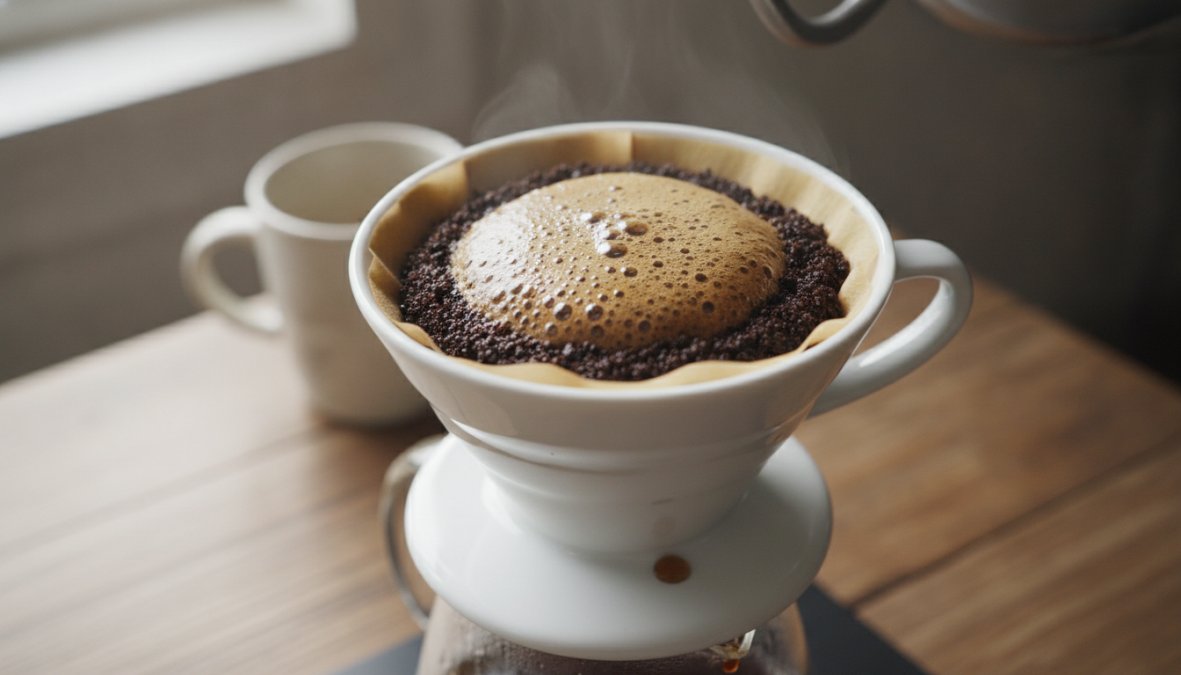
Roasting drives moisture out of the bean and generates significant volumes of carbon dioxide as organic material breaks down. That gas becomes trapped inside the bean's cellular structure. When you grind the beans and introduce hot water, it rushes out fast. CO2 and water do not mix well, if gas is still present during extraction, it repels water from fully saturating the grounds, causing uneven extraction, sour notes, and a flat flavor profile. Blooming removes the gas before it can interfere.
According to the Specialty Coffee Association's brewing resources, proper pre-infusion is considered a foundational step in achieving consistent extraction yield across all manual brewing methods.
The Role of Carbon Dioxide in Coffee Grounds
Carbon dioxide is the central character in the coffee blooming story. The amount present is directly tied to roast date: beans roasted within the last week will bloom aggressively, while beans roasted six weeks ago will barely bubble. During brewing, CO2 creates a barrier that prevents water from absorbing into the grounds, blocking the soluble compounds responsible for sweetness, acidity, and tasting notes from dissolving into your brew.
The Science of Degassing and Gas Release
Degassing is the gradual process by which roasted coffee releases CO2 after roasting. Whole beans degas more slowly than ground coffee because the cellular structure remains intact, grinding dramatically increases surface area and accelerates gas release. This is why grinding immediately before brewing produces a more vigorous bloom than grinding the night before.
How the Coffee Blooming Process Affects Flavor Extraction
Skipping the bloom does not just miss a step, it actively degrades extraction. CO2 present during the full brew creates uneven saturation across the coffee bed, pulling bitter compounds from over-extracted zones while leaving sweet and acidic compounds under-extracted in others. A properly bloomed coffee bed allows water to flow evenly through the grounds, producing cleaner acidity, more defined tasting notes, and less harsh bitterness.
As documented in research on coffee extraction chemistry from the Journal of Agricultural and Food Chemistry, the interaction between CO2 and water during brewing measurably affects the solubility of key flavor compounds, including chlorogenic acids and Maillard reaction products.
What Happens If You Skip the Bloom?
Skipping the bloom causes channeling in the coffee bed, where water finds paths of least resistance rather than saturating grounds evenly. In pour-over methods, you will often notice water pooling in some areas and racing through others. In the cup, the result is a muddier flavor profile, reduced sweetness, and a flat finish. Skipping the bloom on very fresh coffee is especially noticeable; on older coffee, the difference is less dramatic simply because there is less CO2 to cause problems.
How Long to Bloom Coffee: Timing for the Best Results
The ideal bloom time is 30 to 45 seconds for most brewing methods. Coffee roasted within the past three days may need the full 45 seconds; coffee two to three weeks past its roast date may only need 25 to 30 seconds. A practical rule: watch the bloom, not just the clock. When bubbling slows noticeably and the dome begins to settle, that is your signal to continue pouring.
Coffee Blooming Ratio: How Much Water to Use
The coffee blooming ratio is the amount of water used during the bloom phase relative to the weight of dry coffee grounds. The widely used starting point is twice the weight of coffee in water, for 20 grams of coffee, use 40 grams of water. Too little water leaves dry pockets where CO2 cannot escape efficiently; too much begins extraction prematurely.
| Coffee Dose | Bloom Water | Bloom Ratio |
|---|---|---|
| 15g | 30g | 1:2 |
| 20g | 40g | 1:2 |
| 25g | 50g | 1:2 |
| 30g | 60g | 1:2 |
Some brewers prefer a 1:2.5 ratio for very fresh, light roast coffee that blooms aggressively. For darker roasts with less CO2 retention, the standard 1:2 ratio works well. Note that bloom water is part of your total brew water, not added on top.
Degassing Coffee Beans: Freshness, Roast Date, and Bloom Quality
The quality of your bloom is a direct indicator of your coffee's freshness. A vigorous, domed bloom with sustained bubbling means the beans are fresh; a weak, flat bloom means they have been sitting too long. Whole beans stored in a sealed container at room temperature retain CO2 meaningfully for two to four weeks after roasting. Ground coffee loses its CO2 within hours.
This is why the roast date matters more than the "best by" date. According to the National Coffee Association's guide to coffee freshness, coffee is at peak flavor within two to four weeks of roasting, and the bloom is one of the clearest signs of where a bag falls within that window.
Cuppari Coffee roasts beans only after an order is placed and ships the same day, which means the coffee arriving at your door is as close to the roast date as possible, translating directly to a bloom that actually performs.
How to Bloom Coffee Step by Step
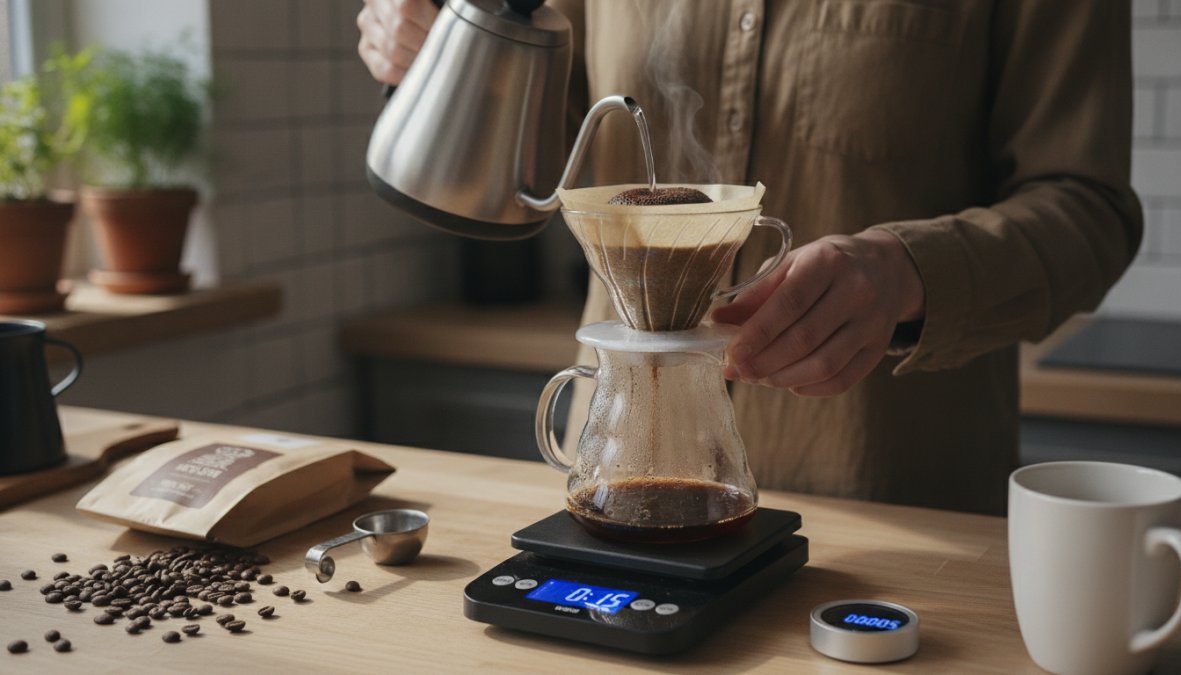
What You'll Need:
- Freshly ground coffee (ground immediately before brewing)
- Gooseneck kettle for controlled pouring
- Digital scale
- Timer
- Pour-over dripper or other manual brewer
Total Time: 30-45 seconds for the bloom phase
- Heat your water to the appropriate temperature for your roast. For most medium roasts, 93-96°C (200-205°F) is the target range.
- Weigh your coffee and grind it immediately before brewing to maximize CO2 retention.
- Place the filter and coffee in your dripper. Give the coffee bed a gentle shake to level it.
- Start your timer and begin pouring. Use twice the weight of coffee in water, for 20g of coffee, pour 40g of water.
- Pour in slow, concentric circles starting from the center and moving outward, ensuring all grounds are saturated.
- Watch the bloom form. A fresh coffee bed will dome upward and produce visible bubbling within seconds.
- Wait 30 to 45 seconds. When bubbling slows and the dome begins to settle, proceed with your main pour.
Blooming Differences by Brew Method, Roast Profile, and Water Temperature
Not all brewing situations call for the same approach. The bloom behaves differently depending on how you brew, what you roast, and how hot your water is.
Pour-Over and Gooseneck Kettle Technique
Pour-over is where the bloom has the most visible impact and the most room for error. A gooseneck kettle is not optional, it controls flow rate and pour placement in ways a standard kettle cannot match. Aim for a slow, even pour that saturates the entire coffee bed without agitating the grounds, as agitation during the bloom can cause channeling in the subsequent extraction. The bloom should look like a slow, even rise across the whole bed, not a rapid eruption in one spot.
Light vs. Dark Roast: Bloom Intensity by Roast Profile
Dark roasts degas faster after roasting because the extended roasting process breaks down more cellular structure. A dark roast bean that is one week old may bloom with similar intensity to a light roast bean that is three weeks old. Light roasts retain CO2 longer due to their denser cellular structure and can bloom vigorously for up to three weeks after roasting.
The practical implication: adjust bloom timing based on roast level. Light roasts on fresh beans may need 40-50 seconds. Dark roasts that are two weeks old may only need 25 seconds.
Water Temperature Impact on Bloom Intensity
Water temperature directly affects how aggressively CO2 is released. For light roasts, water in the 94-96°C range produces an energetic bloom that clears gas quickly. For dark roasts, slightly cooler water around 88-92°C slows the bloom and gives more control. Cold brew methods produce virtually no bloom at all, the extraction happens without CO2 interference, but the water-to-coffee saturation dynamic is entirely different.
As explained in food science research on temperature and CO2 solubility, higher temperatures reduce gas solubility in water, which is why hot water triggers faster CO2 release from coffee grounds.
Visual Indicators of a Failed Bloom
A failed bloom is one of the most useful diagnostic signals in home brewing.
Signs of a weak or failed bloom:
- Minimal or no bubbling after water contact
- No dome formation, just flat wet grounds
- Bloom subsides in under 10 seconds
These signs point to coffee that is too old, was pre-ground, or was brewed with water that is too cool.
Signs of an overly aggressive bloom:
- Grounds overflow the filter or dripper
- Excessive foam that takes more than 60 seconds to settle
This usually means the coffee is extremely fresh, within 24 to 48 hours of roasting. The fix is simple: wait one or two more days before brewing, or extend your bloom time and pour more carefully.
The bloom is honest. It tells you exactly what your coffee has to offer before you commit to the full brew.
Great coffee starts before the first full pour. The challenge most home brewers face is not technique but freshness: if the beans are stale, no amount of careful blooming will recover the flavor. Cuppari Coffee roasts every order to order and ships the same day, so the beans you receive are at peak CO2 content and ready to bloom properly. With free shipping on all U.S. orders and a selection that covers single origin, blends, and flavored coffees, there is no reason to brew with stale beans. Add to cart and taste the difference a roast date makes.
Frequently Asked Questions
Why do you bloom coffee?
Blooming coffee releases trapped carbon dioxide gas that builds up inside freshly roasted coffee beans during the roasting process. If this CO2 is not purged before brewing, it can interfere with water saturation of the coffee grounds, creating uneven extraction. By pre-wetting the grounds and allowing them to degas for 30-45 seconds, you give hot water better access to the organic material inside each coffee bean, which leads to a more balanced and flavorful cup.
What happens if you don't bloom coffee?
Skipping the coffee blooming process can result in uneven extraction because CO2 gas creates a barrier between the water and the coffee grounds. This often produces a flat, underdeveloped flavor profile with less sweetness and acidity. The water may channel through the coffee bed inconsistently rather than saturating it evenly, reducing extraction yield. For freshly roasted beans especially, skipping the bloom is one of the most common reasons a brew tastes noticeably hollow or sour.
How much water should I use for the coffee bloom, and how long should it take?
The standard coffee blooming ratio is roughly twice the weight of your dry coffee grounds in water. For example, if you are brewing with 20 grams of coffee, use about 40 grams of water for the bloom. After pouring, allow the coffee to bloom for 30 to 45 seconds before continuing your pour. Fresher beans with more CO2 may need the full 45 seconds, while older beans that have already partially degassed may need only 30 seconds.
Does the age of coffee beans affect the bloom?
Yes, significantly. Freshly roasted coffee beans contain the most CO2, which produces a vigorous, domed bloom with active bubbling. As beans age past their roast date, they gradually degas on their own, and the bloom becomes less pronounced. Beans that are several weeks old may show very little bubbling at all. This is why sourcing coffee with a clear roast date matters, a strong bloom is one of the best visual signs that your beans are genuinely fresh and full of flavor potential.
Is the coffee blooming process necessary for all brewing methods?
Blooming is most impactful for manual brew methods like pour-over, where water flow and saturation are controlled by the brewer. For French press, it is still beneficial and easy to incorporate. Espresso machines handle extraction under pressure, which partially compensates for CO2 interference, though many baristas still rest freshly roasted espresso beans for a few days before use. Automatic drip machines rarely allow for a dedicated bloom step, though some higher-end models include a pre-infusion setting that mimics it.
This article was written using GrandRanker