

Table of Contents
- What Is Single Origin Coffee? The Core Definition
- Coffee Terroir Explained: Why Geography Shapes Every Sip
- Single Origin vs Blend Coffee: Which One Is Right for You?
- Flavor Profiles, Cupping Notes, and What to Expect in the Cup
- The Role of Processing Methods in Single Origin Coffee
- Transparency, Traceability, and Ethical Sourcing in Single Origin Coffee
- How to Brew Single Origin Coffee for the Best Results
- Frequently Asked Questions
Last Updated: May 18, 2026
Specialty coffee drinkers ask what is single origin coffee more than almost any other question when they start moving beyond supermarket blends. The answer shapes everything from how you buy, how you brew, and what you taste in the cup. This guide from Cuppari Coffee breaks down the full picture: the definitions, the flavor science, the ethical stakes, and the practical brewing advice that most guides skip entirely.
Here is the part most guides get wrong: single origin is not a marketing label. It is a sourcing philosophy with real implications for traceability, quality control, and the economics of coffee farming. Understanding those implications makes you a sharper buyer and a better brewer.
Below, we cover the complete picture, from micro-lot distinctions to processing methods to fraud prevention, so you can make genuinely informed decisions every time you add to cart.
What Is Single Origin Coffee? The Core Definition
Single origin coffee is coffee sourced from one specific geographic location, whether a single country, a single region, a single farm, or even a single plot within a farm, where the beans share a common growing environment and harvesting season.
That definition sounds simple. The execution is anything but.
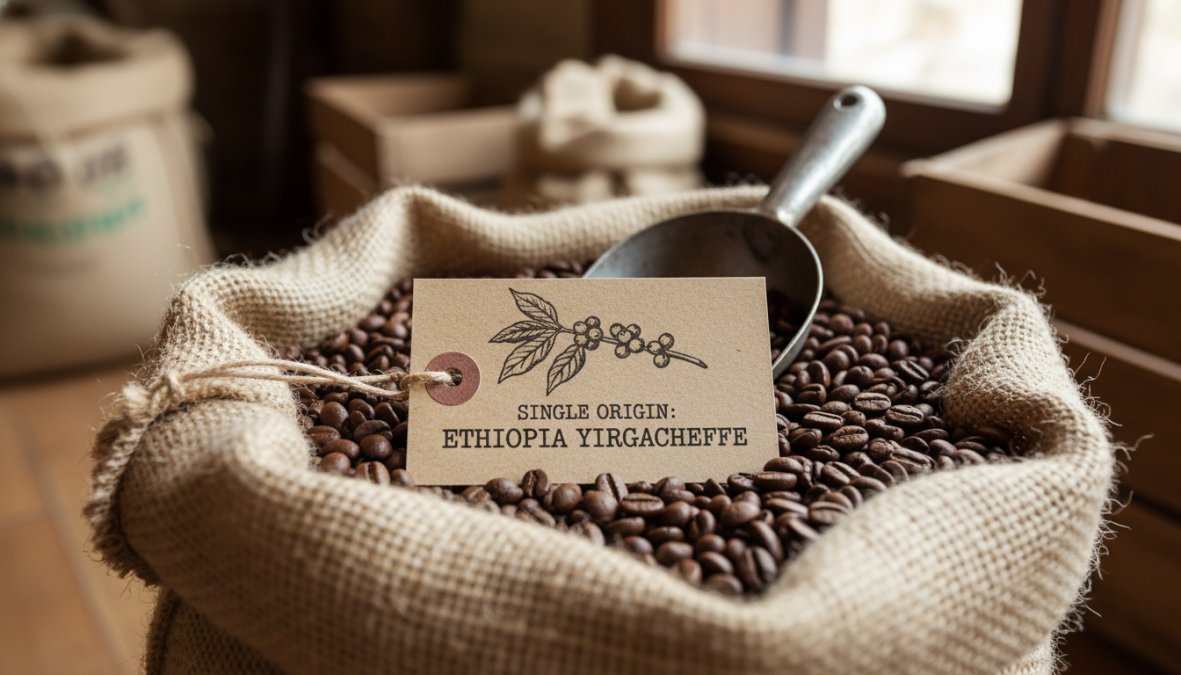
The core promise of single origin is transparency. When you buy a bag labeled "single origin," you should be able to trace those beans back to a specific producer, crop, and growing season. That traceability is what separates it from a commodity blend, where beans from dozens of countries are combined to hit a consistent flavor target at the lowest possible cost.
Single-Farm, Micro-Lot, and Regional: What's the Difference?
The terminology inside the single origin category matters more than most retailers acknowledge.
Regional single origin refers to beans from a broad geographic area, such as "Ethiopia Yirgacheffe" or "Colombia Huila." These are still single origin in the sense that they come from one country or region, but they may include beans from multiple farms and producers within that area. Flavor consistency is higher; individual character is somewhat averaged out.
Single-farm or estate coffee narrows the source to one specific farm or cooperative. You get a more precise flavor profile because all the beans share the same soil, altitude, microclimate, and harvesting practices. This is where terroir becomes a meaningful concept rather than a borrowed wine term.
Micro-lot coffee is the most granular category. A micro-lot refers to a small, separately processed batch from a specific section of a farm, often harvested from a single varietal or a particular elevation band. Micro-lots are the closest coffee gets to single-vineyard wine. They are also the most expensive and the most volatile, because a bad season on that one plot means no supply.
The practical takeaway: regional single origin is a good entry point. Micro-lot is where the most distinctive cupping notes live, but you pay a premium and accept seasonal unavailability as part of the deal.
Coffee Terroir Explained: Why Geography Shapes Every Sip
Terroir is the reason two coffees labeled "Ethiopian" can taste completely different from each other. The concept, borrowed from winemaking, captures how geography, climate, and soil combine to produce flavor characteristics that cannot be replicated elsewhere. But unlike wine, where terroir is widely accepted as foundational, coffee terroir is still underexplained, most guides name the variables without explaining the mechanisms. Understanding the mechanisms makes you a sharper buyer.
According to the Specialty Coffee Association's resources on coffee terroir and origin, altitude is one of the most consistent predictors of cup quality. The reason is biochemical, not mystical.
The Biochemical Mechanism: Why Slow Ripening Produces Better Coffee
Coffee flavor compounds, the acids, sugars, and aromatic precursors that become the notes you taste, develop inside the coffee cherry during the maturation period. The longer and slower that maturation, the more complex the compound profile that accumulates in the seed.
At high altitudes, cooler temperatures slow the metabolic processes inside the cherry. A cherry that takes 9-10 months to ripen at 1,800 meters above sea level has had significantly more time to accumulate malic acid, citric acid, and sucrose than a cherry that ripens in 6-7 months at 900 meters. Those compounds are the direct precursors to the brightness, sweetness, and aromatic complexity that distinguish high-grown specialty coffee from low-grown commodity coffee.
This is why altitude is not just a proxy for quality, it is a causal variable. The flavor difference is not about prestige. It is about chemistry.
How Altitude, Soil, and Climate Influence Flavor Profile
Three variables drive terroir in coffee more than any others, and each operates through a distinct mechanism.
Altitude affects density, acidity, and aromatic complexity. Beans grown above 1,500 meters tend to be physically denser (slower growth means tighter cell structure), with brighter acidity and more complex aromatics. Beans grown at lower elevations ripen faster, producing a softer body and less pronounced acidity. The Specialty Coffee Association's grading systems use screen size and density as quality proxies precisely because density correlates with altitude and slow maturation.
Soil composition influences the mineral environment in which the root system operates, which affects the availability of nutrients that feed cherry development. Volcanic soils, common in Guatemala's Antigua region and in parts of Sumatra, are high in minerals and drain well, producing beans with earthy, full-bodied profiles and a distinctive heaviness on the palate. The well-drained, iron-rich red soils of Ethiopia's Sidama and Yirgacheffe highlands produce the floral, tea-like qualities that make Ethiopian coffee so recognizable. Kenya's red volcanic loam, combined with high altitude, produces the intense blackcurrant and tomato acidity that makes Kenyan AA one of the most distinctive profiles in specialty coffee.
Climate and rainfall patterns determine the length and uniformity of the growing season. Regions with a single, well-defined rainy season, like Ethiopia's main harvest cycle, tend to produce more uniform ripening across the crop, which simplifies processing and produces more consistent lots. Colombia's geography, straddling the equator with mountain ranges that create multiple microclimates, allows for two main harvest cycles per year (the main crop and the mitaca), which provides supply stability but also means Colombian lots can vary significantly depending on which harvest season they came from.
A Practical Terroir Comparison: Four Origins, Four Mechanisms
Abstract terroir principles become useful when you can map them to specific cups. Here is how the mechanisms play out across four major single origin regions:
Ethiopia (Yirgacheffe, Sidama, Guji): Altitude 1,700-2,200m. Ancient heirloom varietals with genetic diversity found nowhere else. The combination of high altitude, distinct dry season, and unique varietals produces the floral and stone fruit aromatics that define the category. Washed process lots emphasize jasmine and bergamot; natural process lots shift toward blueberry and fermented fruit. The terroir here is inseparable from the varietal diversity, Ethiopia is the genetic origin of arabica coffee, and that heritage shows in the cup.
Kenya (Nyeri, Kirinyaga, Murang'a): Altitude 1,400-2,000m. Double-fermentation washed processing is standard. The combination of volcanic red soil, high altitude, and the SL28 and SL34 varietals (developed specifically for Kenyan conditions) produces the intense phosphoric acidity and blackcurrant character that makes Kenyan coffee immediately identifiable. The terroir here is partly natural and partly the result of decades of varietal selection by the Scott Agricultural Laboratories.
Colombia (Huila, Nariño, Antioquia): Altitude 1,500-2,100m. Consistent rainfall, stable temperatures, and the Castillo and Caturra varietals produce a balanced, approachable profile with caramel sweetness and red apple acidity. Nariño, Colombia's southernmost coffee region, sits at some of the highest altitudes in the country and produces some of the most complex Colombian lots, a direct expression of the altitude-complexity relationship.
Sumatra (Mandheling, Gayo): Altitude 1,000-1,500m. Wet-hulled processing (a method unique to Indonesia, called Giling Basah) removes the parchment layer while the bean still has high moisture content, producing the characteristic earthy, herbal, low-acid profile. Sumatra's terroir is inseparable from its processing method, the flavor is as much a product of how the bean is handled as where it is grown. This is a useful reminder that terroir and processing interact; they are not independent variables.
Vintage Variation: The Honest Implication of Terroir
The practical implication of terroir that most guides skip: no two harvests from the same farm will taste identical. Rainfall patterns, temperature anomalies, and pest pressure vary year to year. A drought year in Yirgacheffe produces a different cup than an ideal rainfall year, even from the same trees on the same plot.
This vintage variation is real in specialty coffee, just as it is in wine. A roaster who acknowledges it, who notes the harvest year on the bag and describes how this season's lot differs from last year's, is being honest about the nature of agricultural products. A roaster who promises identical flavor year after year is either blending origins to average out variation or is not being transparent about their sourcing.
For buyers, vintage variation is not a problem to be solved. It is part of what makes single origin coffee interesting. Tracking how a favorite farm's coffee changes across harvests is one of the more rewarding habits a coffee drinker can develop.
Single Origin vs Blend Coffee: Which One Is Right for You?
The single origin vs blend coffee debate gets framed as a quality argument, but that framing is wrong. Blends are not inferior. They serve a different purpose.
| Factor | Single Origin | Blend |
|---|---|---|
| Flavor profile | Distinct, terroir-driven | Balanced, consistent |
| Traceability | High, specific source | Low, multiple sources |
| Seasonal availability | Limited to harvest window | Year-round consistency |
| Best for | Pour-over, filter, black | Espresso, milk drinks |
| Price point | Higher, especially micro-lot | Generally lower |
| Vintage variation | Yes, crop-to-crop | Minimized by blending |
Single origin shines when you want to taste a specific place. The acidity of a Kenyan AA, the blueberry-forward natural process Ethiopian, the dark chocolate notes of a Guatemalan Antigua: these are flavors that only exist because of where and how those beans were grown. Blending them with other origins would dilute exactly what makes them interesting.
Blends, on the other hand, are engineered for consistency and balance. A well-designed espresso blend combines origins to achieve a specific body-to-acidity ratio that holds up under pressure extraction and through milk. Seasonal variation in one origin can be compensated by adjusting the ratio of another.
The honest answer: if you drink black coffee and care about flavor complexity, single origin is worth the premium. If you drink lattes or need a consistent espresso base, a quality blend is the smarter choice.
Flavor Profiles, Cupping Notes, and What to Expect in the Cup
Cupping notes on a single origin bag are not marketing fiction, though they are frequently misunderstood. A bag that says "notes of jasmine, peach, and brown sugar" is not claiming the coffee was flavored with those ingredients. It is describing the aromatic compounds naturally present in the bean as a result of its varietal, terroir, and processing method.
What to expect by major region:
- Ethiopia: Floral aromatics (jasmine, bergamot), stone fruit, tea-like body, bright acidity. Natural process lots lean toward blueberry and fermented fruit.
- Kenya: Bold acidity, blackcurrant, tomato, full body. One of the most distinctive profiles in specialty coffee.
- Colombia: Balanced acidity, caramel, red apple, medium body. Approachable and versatile.
- Guatemala: Dark chocolate, brown sugar, mild acidity, heavier body. Excellent for espresso.
- Sumatra: Earthy, herbal, low acidity, syrupy body. A divisive profile, but intensely distinctive.
- Panama (Geisha varietal): Jasmine, tropical fruit, extraordinary clarity. The most expensive single origin on the market for a reason.
Acidity in coffee is not sourness. It is brightness, the same quality that makes a citrus fruit taste alive rather than flat. Body refers to the physical weight of the liquid on your palate. A coffee with high body feels full and coating; low body feels clean and tea-like. Learning to read these two variables will make every bag description make sense immediately.
The Role of Processing Methods in Single Origin Coffee
Processing is the step between harvesting coffee cherries and producing the green bean ready for roasting. It is also the single most underappreciated variable in single origin coffee flavor. Two beans from the same farm, processed differently, can taste like they came from different countries.
As documented in World Coffee Research's varietal and processing resources, processing method has a measurable impact on the final cup's sweetness, acidity, and body, independent of terroir.
Washed Process vs Natural Process: How It Changes the Bean
Washed (wet) process: The coffee cherry's fruit is removed before drying. The bean ferments briefly in water tanks to remove remaining mucilage, then dries on raised beds. The result is a clean, transparent cup where terroir and varietal characteristics come through with precision. Acidity is typically higher and more defined. This is the dominant method in Ethiopia, Kenya, and Colombia.
Natural (dry) process: The whole coffee cherry dries with the fruit intact, sometimes for weeks. The bean absorbs sugars and fermentation byproducts from the surrounding fruit. The result is a heavier body, lower acidity, and pronounced fruit-forward sweetness, often described as wine-like or jammy. Ethiopia's Harrar region and Brazil are known for natural process lots.
Honey process: A middle path. Some fruit is left on the bean during drying, with the amount determining the "color" of the honey process (yellow, red, black). More fruit left on means more sweetness and body, less clarity.
The real-world implication: if you see a single origin labeled "natural process Ethiopia," expect something dramatically different from a "washed process Ethiopia" from the same region. They are not interchangeable. A common mistake is buying based on country alone without checking the processing method, then being surprised when the cup tastes nothing like the last Ethiopian you enjoyed.
Transparency, Traceability, and Ethical Sourcing in Single Origin Coffee
Single origin coffee's greatest structural advantage over commodity coffee is the traceability it creates. But traceability is not just a quality signal, it is an economic mechanism that directly changes what a farmer earns and how they farm. Most guides mention transparency as a feature. Few explain the chain of cause and effect that makes it matter.
Here is how that chain actually works.
The Economics of Traceability: What Happens When a Buyer Can Name the Farm
Commodity coffee is priced against the C-market, the global futures exchange where arabica trades as an undifferentiated bulk product. When a roaster buys commodity coffee, the price is set by market forces that have nothing to do with the quality or effort of any individual farmer. A producer in Yirgacheffe and a producer in a low-altitude Brazilian estate receive prices determined by the same ticker.
Single origin sourcing breaks that link. When a roaster can identify and market a specific farm or cooperative, that farm's coffee is no longer competing on the C-market. It is competing on its own merits. The roaster can justify paying a premium above commodity price because the story and the quality are differentiated. That premium flows back through the supply chain, though how much reaches the producer depends entirely on the sourcing model.
Three sourcing models, three very different outcomes for farmers:
| Sourcing Model | Price to Producer | Traceability | Relationship Type |
|---|---|---|---|
| Commodity / broker | C-market price, often below cost of production | None | Transactional, anonymous |
| Fair trade certified | C-market + fixed premium floor | Country or cooperative level | Certified but arms-length |
| Direct trade / relationship sourcing | Negotiated above fair trade floor, often significantly | Farm, producer, harvest year | Long-term, personal |
Fair trade certification sets a price floor, which provides a safety net when the C-market drops below the cost of production. That is genuinely valuable. But fair trade certification does not guarantee quality, does not require the buyer to visit the farm, and does not create the kind of multi-year relationship that allows a producer to invest in better processing equipment or experimental varietals with confidence that there will be a buyer next season.
Direct trade, when practiced rigorously, does all of those things. A roaster who has visited a farm, knows the producer's name, and has committed to buying multiple harvests is a fundamentally different kind of customer than a broker placing a spot order. That relationship stability is what allows producers to take risks, planting a new varietal, building a raised-bed drying station, experimenting with honey processing, that improve quality over time.
Environmental Practices and the Single Origin Connection
Traceability also creates accountability for environmental practices in a way that commodity sourcing cannot.
When a roaster sources from a named farm and publishes that relationship, the farm's practices become part of the product story. A producer who clear-cuts shade trees to increase yield, or who dumps processing wastewater into local waterways, risks losing a premium buyer relationship that may represent a significant share of their income. The economic incentive to maintain good environmental practices is built into the sourcing model.
Shade-grown coffee, which preserves forest canopy and supports bird habitat, is more common among farms that sell into the specialty single origin market than among commodity producers. This is not coincidental. Shade-grown trees slow cherry ripening, which increases cup quality, the same outcome that makes a farm attractive to a specialty buyer. The quality incentive and the environmental incentive point in the same direction.
Water use in coffee processing is a significant environmental variable, particularly for washed-process coffees, which traditionally require large volumes of water for fermentation and rinsing. Some farms supplying the specialty single origin market have moved to eco-pulping or closed-loop water systems that dramatically reduce water consumption. These investments are expensive. They are more likely to happen when a producer has a stable premium buyer relationship that makes the capital expenditure rational.
What Genuine Transparency Looks Like on a Bag
For consumers, the practical question is: does the bag tell you who grew this coffee and under what conditions?
A country name alone is not transparency. A farm name, producer name, harvest year, and processing method is the minimum for genuine traceability. The most rigorous roasters go further, publishing the price paid to the producer (sometimes expressed as a multiple of the C-market price), the producer's own description of their farm, and photos or video from sourcing trips.
This level of disclosure is hard to fake. It requires an actual relationship. When you see it, you are looking at a sourcing model that is structurally different from commodity purchasing, not just in what it tastes like, but in what it does for the people who grew it.
Authentication and How to Spot Fraud When Buying Single Origin
Single origin fraud exists. The most common form is relabeling: a roaster buys a regional blend or a lower-quality lot and markets it as a specific estate or micro-lot coffee. Because most consumers cannot taste the difference without a reference point, it goes undetected.
A more sophisticated form involves geographic misrepresentation, labeling a coffee with a prestigious region name (Yirgacheffe, Kona, Geisha) when the beans originate from a different, less-valued area. Kona coffee from Hawaii is one of the most frequently adulterated origins in the market, with a well-documented history of blends being sold as 100% Kona.
Researchers have developed genomic fingerprinting methods that can match a roasted bean's genetic profile to a specific growing region or even a specific farm's varietal population. This technology is used by some importers and certification bodies to verify origin claims, though it is not yet standard practice at the consumer level. Its existence matters because it signals that origin fraud is a known, documented problem, not a theoretical concern.
Red flags to watch for when buying single origin:
- No farm or producer name, only a country or region
- Prices significantly below market rate for the claimed origin (genuine Geisha below $20 per 250g is implausible at current market conditions)
- No roast date on the bag (freshness transparency and sourcing transparency tend to travel together in honest operations)
- Vague cupping notes that could describe any coffee ("smooth, balanced, nutty")
- No information about processing method
- "Single origin" claims on espresso blends that list multiple countries in the fine print
The most reliable signal is a roaster who publishes sourcing details including the producer relationship, the harvest season, and ideally the price paid. That level of disclosure is hard to fake and signals genuine commitment to traceability.
How to Brew Single Origin Coffee for the Best Results
Brewing method optimization for single origin coffee is where most guides go silent, which is exactly where the most practical value lives.
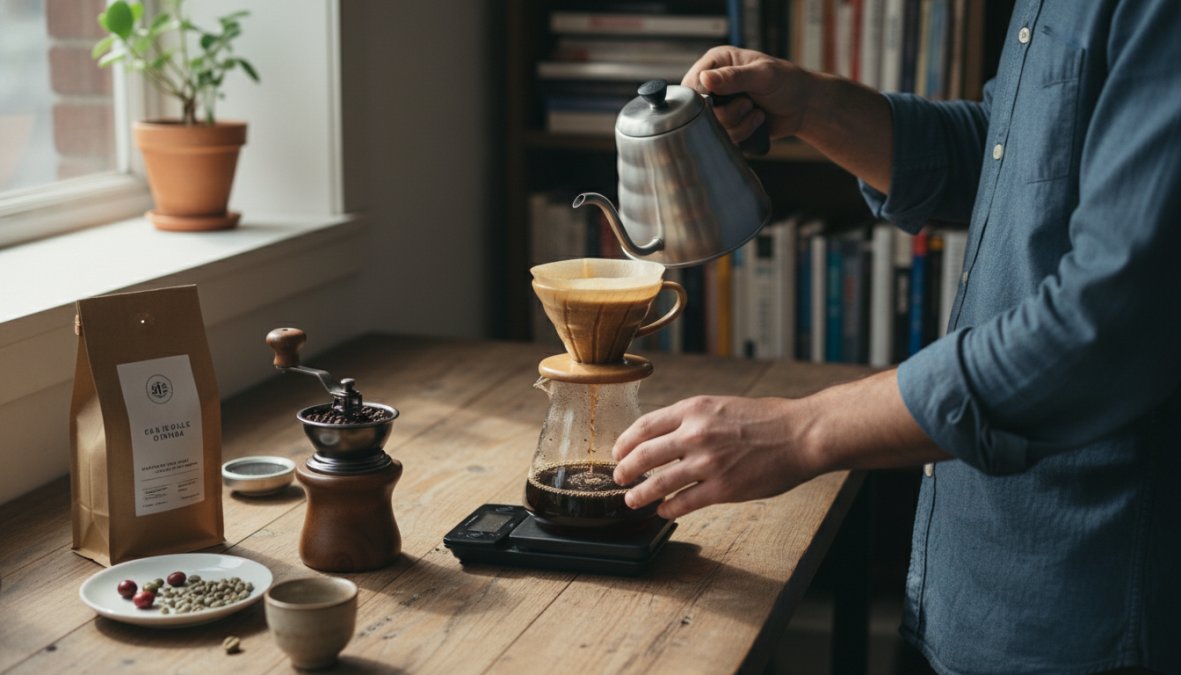
The core principle: single origin coffee rewards methods that preserve clarity and highlight individual characteristics. High-pressure extraction (espresso) can work, but it compresses the flavor spectrum. Filter methods let the origin speak.
Recommended brewing methods by profile:
-
Pour-over (V60, Chemex): Best for washed process coffees with high acidity and floral notes. The clean extraction highlights terroir with precision. Use water at 93-96°C, a medium-fine grind, and a 1:15 to 1:17 coffee-to-water ratio.
-
AeroPress: Versatile and forgiving. Works well for both washed and natural process lots. Produces a concentrated, clean cup. Experiment with inverted method for more body.
-
French press: Best for natural process or honey process coffees with heavy body and fruit-forward sweetness. The immersion method adds body; the lack of paper filter allows oils through, amplifying richness.
-
Cold brew: Excellent for high-acidity origins like Kenya or Ethiopia. The cold extraction softens acidity into a smooth, sweet concentrate. Steep 18-24 hours at 4°C with a 1:8 ratio.
-
Espresso: Stick to medium-dark roasted single origins with lower acidity (Guatemala, Brazil). Dial in carefully: single origins are less forgiving than blends because there is no blending buffer for extraction inconsistency.
Grind fresh, every time. Pre-ground single origin coffee loses its distinguishing aromatics within days. The investment in a quality burr grinder returns more flavor than almost any other variable. Blade grinders produce uneven particle sizes that cause simultaneous over- and under-extraction, which flattens exactly the complexity you paid for.
Water quality matters more than most people expect. Filtered water with moderate mineral content (around 150 ppm TDS) extracts single origin coffee better than either distilled water (too soft, flat extraction) or heavily mineralized tap water (over-extraction, harsh flavors). According to the Specialty Coffee Association's water quality standards for brewing, water chemistry is one of the most controllable variables in achieving a consistent cup.
A practical single origin brewing checklist:
- Check roast date: use within 2-6 weeks of roast for optimal flavor
- Grind immediately before brewing
- Match brew method to processing type (washed = pour-over; natural = French press)
- Use filtered water at 93-96°C for hot brew methods
- Start with a 1:15 coffee-to-water ratio and adjust to taste
- Taste the coffee black before adding anything: single origin is designed to be experienced without milk or sugar
This is where Cuppari Coffee's roast-to-order model makes a real difference. Because every order is roasted only after it is placed and shipped the same day, you receive beans at peak freshness, which is the single most important variable in tasting what a single origin actually has to offer.
Frequently Asked Questions
What makes coffee single origin?
Single origin coffee comes from one specific, identifiable geographic source, whether that's a single country, region, estate, or micro-lot. The key requirement is traceability: you should be able to trace the beans back to their producer and growing location. This stands in contrast to blended coffee, which combines beans from multiple origins to create a consistent, balanced flavor profile year-round.
Is single origin coffee better than blends?
Neither is objectively better, it depends on what you value. Single origin coffee offers unique, terroir-driven flavor profiles and full transparency about sourcing, making it ideal for those who enjoy exploring distinct cupping notes and supporting specific producers. Blends, on the other hand, deliver consistency and balance across seasons. If you want a reliable everyday cup, a blend may suit you better. If you want to taste the character of a specific region or farm, single origin wins.
Does single origin coffee taste different from blended coffee?
Yes, noticeably so. Because single origin beans come from one place, they reflect the terroir of that location, the soil, altitude, climate, and processing methods all contribute to a distinct flavor profile. You might taste bright citrus acidity from an Ethiopian washed-process coffee, or heavy body and dark fruit from a Brazilian natural-process bean. Blended coffees are intentionally crafted to smooth out those extremes into a more uniform, predictable taste.
How can you tell if coffee is genuinely single origin?
Look for specific origin details on the packaging: country, region, farm or estate name, varietal, and processing method are all good signs of authentic single origin coffee. Reputable specialty coffee roasters will also share direct trade or fair trade certifications and may provide lot numbers or harvest season information. Vague labels like 'South American blend' are a red flag. When in doubt, buy from roasters who publish transparent sourcing information and roast to order.
How should I brew single origin coffee to get the best flavor?
Brewing method matters significantly for single origin coffee. Pour-over and AeroPress methods highlight delicate acidity and floral or fruity notes, making them ideal for light-roast washed-process coffees. French press works well for naturally processed beans with heavier body. Use filtered water at around 200°F (93°C), grind fresh just before brewing, and adjust your grind size to the method. Because single origin beans have pronounced characteristics, avoid dark roasts that can mask their unique terroir-driven flavor profile.
Is single origin coffee always more expensive than blends?
Generally, yes, but not always dramatically so. Single origin coffees, especially micro-lot or estate coffees, involve more precise harvesting, careful processing, and direct trade relationships with producers, all of which add to the cost. However, the price premium reflects genuine quality and traceability. Specialty coffee subscriptions can make single origin beans more accessible by delivering freshly roasted coffee regularly, often at a better value than buying individual bags from a café or retail store.
The biggest obstacle to enjoying single origin coffee is not the price or the complexity. It is receiving stale beans that have already lost the volatile aromatics that make the origin worth buying in the first place. Cuppari Coffee solves that directly: beans are roasted only after your order is placed, shipped the same day, and delivered with free shipping on all U.S. orders. You taste the origin as it was meant to be tasted. Add to cart and experience the difference freshness makes.
This article was written using GrandRanker