

Table of Contents
- White Tea vs Green Tea: How Processing and Oxidation Shape the Cup
- Antioxidant Profiles: Catechins, EGCG, and Free Radicals
- Caffeine Content in White vs Green Tea
- Heart Health, Oral Hygiene, and Skin: Where Each Tea Excels
- Tea for Weight Management: Metabolic Rate and Insulin Sensitivity
- How to Brew White Tea for Maximum Health Benefits
- Contraindications, Caffeine Sensitivity, and Side Effects
- Frequently Asked Questions
Last Updated: September 27, 2026
White Tea vs Green Tea: How Processing and Oxidation Shape the Cup
The health benefits of white tea vs green tea begin on the bush, not in the cup. Both teas come from the same plant, Camellia sinensis, but white tea is picked earlier and processed less, which preserves higher levels of certain polyphenols. This guide from Cuppari Coffee breaks down what the research says about antioxidants, caffeine, and how to brew each tea for maximum benefit.
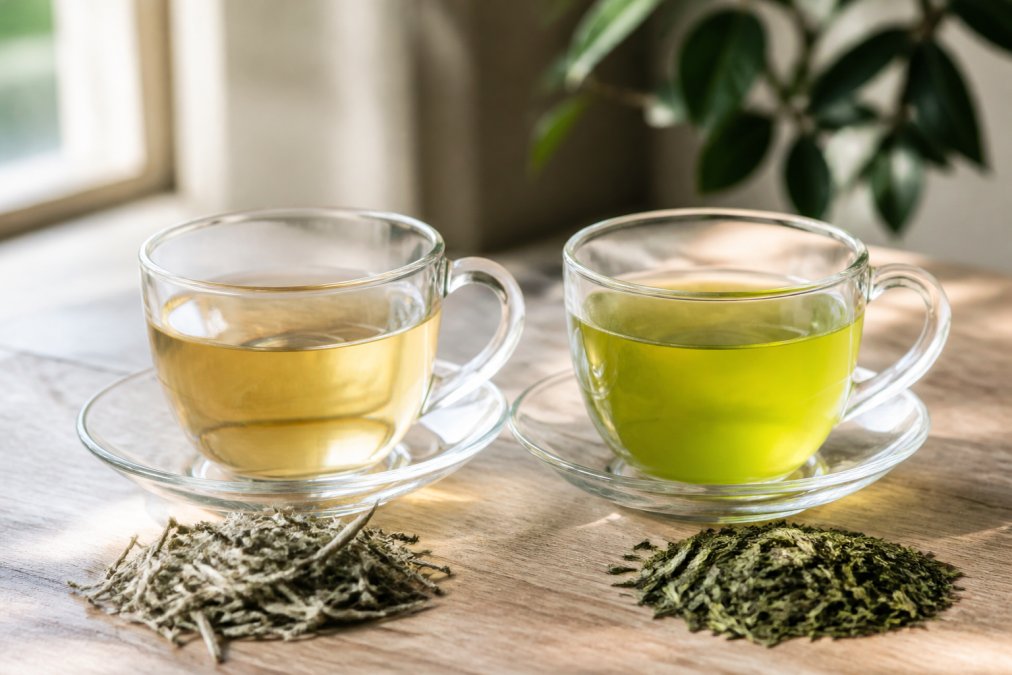
Buds vs Leaves: What Gets Picked
White tea uses the unopened bud and sometimes the first leaf, harvested in early spring before the plant fully opens. Green tea typically uses more mature leaves. Because buds contain different concentrations of compounds than leaves, the picking stage alone changes the nutritional profile.
Why Oxidation Levels Matter for Polyphenols
White tea is the least oxidized tea, followed closely by green tea. Lower oxidation preserves more of the plant's original polyphenols, the compounds linked to most reported health effects. Green tea's brief heating step deactivates oxidizing enzymes but adds a small amount of processing that white tea skips.
Antioxidant Profiles: Catechins, EGCG, and Free Radicals
Both teas are rich in catechins, a family of antioxidants that includes epigallocatechin gallate, or EGCG. According to Oregon State University's Linus Pauling Institute on tea polyphenols, EGCG is the most studied catechin in tea and appears in both white and green varieties.
Bioavailability: How Much Your Body Actually Absorbs
Drinking tea and absorbing its compounds are two different things. Catechins are poorly absorbed in the gut on their own. Pairing tea with a squeeze of lemon or drinking it between meals can improve absorption. This is one reason two people drinking the same tea may see different results.
Caffeine Content in White vs Green Tea
Caffeine content in white vs green tea is closer than most people assume. White tea often contains slightly less caffeine because it is made from young buds, but the difference is small and depends heavily on steeping time and water temperature.
| Factor | White Tea | Green Tea |
|---|---|---|
| Caffeine level | Generally lower | Generally higher |
| Steeping time | 4-5 minutes | 2-3 minutes |
| Water temperature | 175°F | 175°F |
| Catechin retention | Higher (less processed) | High |
| Flavor profile | Delicate, floral | Grassy, vegetal |
Heart Health, Oral Hygiene, and Skin: Where Each Tea Excels
These three benefit areas are where the white-vs-green comparison gets interesting, because the teas diverge less on which compounds they contain than on how much research backs each one. Green tea carries the heavier evidence base; white tea carries a comparable compound profile with thinner documentation. Here is what that means area by area.
Cardiovascular Health
The mechanism most often cited for tea and heart health is catechin-mediated: EGCG and related catechins are associated with reduced LDL oxidation and improved endothelial function, the ability of blood vessel linings to relax and regulate blood flow. Green tea has the deeper literature here, including population studies from Japan and meta-analyses linking habitual green tea intake to modest reductions in LDL cholesterol and blood pressure.
Oral Health and Antibacterial Activity
Both teas contain fluoride, which is incorporated into tooth enamel and helps resist demineralization by acid. Both also contain catechins that appear to inhibit Streptococcus mutans, the bacterium most associated with cavity formation, and to reduce the enzymes that oral bacteria use to break down sugars into plaque. Green tea's antibacterial catechins are the more studied of the two, and green tea mouthwash has been examined in small clinical trials for gingivitis.
Skin Health and Anti-Aging
Skin research leans toward green tea, and it splits into two routes: topical and dietary. Topically, green tea extracts and EGCG have been studied for anti-inflammatory effects in conditions like rosacea and acne, and for reducing UV-induced oxidative stress. Dietarily, the evidence is softer, drinking tea delivers catechins to the skin at much lower concentrations than a topical preparation, so the anti-aging claims for drinking either tea are more modest than marketing suggests.
The Shared Caveat
None of these effects are dramatic in isolation. A cup or two of tea a day is a small, consistent input, not a treatment. The cardiovascular, oral, and skin benefits attributed to tea come from habitual consumption over years, often alongside other healthy behaviors that are hard to separate out in the studies. Treat tea as one supportive habit among several, not as a substitute for dental care, dermatological treatment, or cardiovascular management.
Tea for Weight Management: Metabolic Rate and Insulin Sensitivity
Tea for weight management works, if modestly. Catechins and caffeine together may slightly raise metabolic rate and support insulin sensitivity, the body's ability to manage blood sugar. Green tea has the bulk of the research here, largely because it is consumed more widely.
How to Brew White Tea for Maximum Health Benefits
Most brewing guides tell you a temperature and a time. Few explain why those numbers matter for the compounds you are actually trying to extract. That is the gap this section fills: a compound-by-compound look at how water temperature and steeping time change what ends up in your cup.
What Extracts, and When
Tea leaves release their soluble compounds in roughly this order as temperature and time increase:
- Catechins (including EGCG), these extract well across a wide range, from about 160°F upward. They are relatively heat-stable, so a slightly hotter or longer steep does not destroy them the way it destroys vitamin C. This is good news: you do not need to baby the water to get your antioxidants.
- Caffeine, extraction rises steeply with temperature and time. A short steep at lower temperature yields noticeably less caffeine than a long steep at higher temperature, even from the same leaf. This is the single biggest lever you control over caffeine content.
- Amino acids (L-theanine), L-theanine, the compound associated with tea's calm-alert feeling, extracts readily at lower temperatures. Steeping white tea cooler actually favors the theanine-to-caffeine ratio, which is why a 160-175°F steep tends to feel smoother than a boiling-water steep.
- Tannins, these extract more aggressively at higher temperatures and longer times, and they are what turns a delicate cup bitter and astringent. They are not harmful, but they mask the flavor and signal that you have over-extracted.
A Practical Temperature and Time Guide
| Goal | Water temp | Steep time | What you get |
|---|---|---|---|
| Maximum antioxidants, lower caffeine | 160-170°F | 3-4 min | Good catechin yield, gentler caffeine, more theanine |
| Balanced cup | 175°F | 4-5 min | Full flavor, solid catechin extraction, moderate caffeine |
| Strongest flavor, higher caffeine | 185-190°F | 2-3 min | Bolder taste, more caffeine, risk of bitterness if pushed further |
White tea's young buds are delicate, so boiling water (212°F) is the most common mistake. It does not destroy the catechins, but it over-extracts tannins and caffeine, producing a bitter cup with more jitter potential and no antioxidant advantage.
Green Tea, by Comparison
Green tea is more forgiving of heat because its leaves are more mature and its catechins are similarly heat-stable. A common approach is 175°F for 2-3 minutes. Matcha is the exception: because you consume the entire ground leaf rather than steeping and discarding it, you ingest the full catechin and caffeine load regardless of temperature, which is why matcha tends to hit harder than steeped green tea.
Three Habits That Actually Change Absorption
- Add citrus. Catechins are poorly absorbed in the gut on their own. Vitamin C, a squeeze of lemon or lime, is associated with improved catechin absorption in studies of green tea. The same logic applies to white tea.
- Drink it between meals, not with them. Some research suggests that milk proteins can bind catechins and reduce absorption, and that drinking tea with iron-rich meals can inhibit iron uptake. If you are watching iron levels, keep tea an hour or two away from iron-heavy meals.
- Do not over-steep to "get more." Past about five minutes, additional catechin extraction flattens out while tannins and caffeine keep climbing. You are mostly adding bitterness, not benefit.
A Note on Water and Leaf
Use fresh, filtered water, chlorine and heavy mineral content can flatten flavor and, in hard-water areas, affect extraction. Measure roughly one teaspoon of loose leaf per cup, or about two grams. Loose leaf generally extracts more evenly than bagged dust, but the temperature and time rules apply either way. For those who prefer green tea, Cuppari Coffee's Matcha is stone-ground and suited to traditional preparation, while Jasmine and Moroccan Mint offer flavored green tea options. Hojicha is a roasted green tea powder with lower caffeine and a toasty, mellow profile.
Contraindications, Caffeine Sensitivity, and Side Effects
Tea is generally safe, but a few cautions matter. People with caffeine sensitivity may experience anxiety, insomnia, or a racing heartbeat, especially with strong green tea. Those taking blood thinners should talk to a doctor, since tea catechins can interact with certain medications.
Frequently Asked Questions
Is it safe to drink white tea every day?
Yes, for most healthy adults. A typical cup contains roughly 15-30 mg of caffeine, well below the 400 mg daily limit the FDA considers safe. The bigger variable is brewing: a short steep at 175°F keeps caffeine and catechins in a comfortable range. If you take blood thinners, have iron-deficiency anemia, or are pregnant, talk to your doctor first because tea polyphenols can interfere with iron absorption and certain medications.
Does white tea have more antioxidants than green tea?
It depends on what you measure. White tea is minimally processed, so it retains high levels of catechins, including EGCG, and often shows strong antioxidant activity in lab tests. Green tea, however, is more widely studied and its catechin content is well documented. The practical takeaway: both are rich in polyphenols, and consistent daily drinking matters more than picking a winner on paper.
How does the caffeine content in white vs green tea compare?
White tea generally has slightly less caffeine than green tea, though the gap is small. An 8-ounce cup of white tea averages 15-30 mg, while green tea averages 25-40 mg. Steeping time and water temperature swing these numbers more than the leaf type itself. A 5-minute steep at 185°F extracts noticeably more caffeine than a 2-minute steep at 175°F.
Which tea is better for skin health: white or green?
Both contain flavonoids and polyphenols linked to protecting skin from oxidative stress, but the evidence is stronger for green tea because it has been studied more. EGCG in green tea is associated with reduced inflammation and collagen protection. White tea offers similar compounds in a gentler cup. If you drink tea for skin support, consistency and overall diet matter more than which leaf you choose.
How should you brew white tea versus green tea to preserve nutrients?
Use cooler water than you would for black tea. White tea does best at 175°F for 2-3 minutes; green tea at 175-185°F for 2-3 minutes. Water above 190°F can degrade catechins and make both teas bitter. Loose-leaf tea gives you more control than bags. For white tea specifically, a shorter steep preserves the delicate buds and keeps the amino acid L-theanine intact.
Choosing between white tea and green tea for health comes down to what you value most: white tea's delicate flavor and minimal processing, or green tea's deeper research base and bolder taste. Both deliver antioxidants, modest caffeine, and real benefits when brewed well. At Cuppari Coffee, we source premium teas and roast coffee only after you order, shipping the same day with free shipping on all U.S. orders. Explore our tea selection and add to cart to start brewing a better cup.