

Table of Contents
- Whole Bean vs Pre-Ground Coffee: Key Differences
- How Freshness Affects Your Cup
- Grind Consistency and Extraction
- How to Store Coffee Beans Fresh
- Convenience vs. Quality Trade-Offs
- Cost Analysis: Whole Bean vs Pre-Ground
- Which Option Is Right for You
- Conclusion
Last Updated: August 30, 2026
Whole Bean vs Pre-Ground Coffee: Key Differences
The moment you open a bag of whole beans, you're starting a race against oxidation. Whole bean vs pre-ground coffee isn't just a matter of freshness, it's about preserving the volatile oils and aromatic compounds that define what you taste in your cup. At Cuppari Coffee, we roast beans only after your order arrives and ship them the same day, which means you're working with coffee at peak freshness regardless of which form you choose.
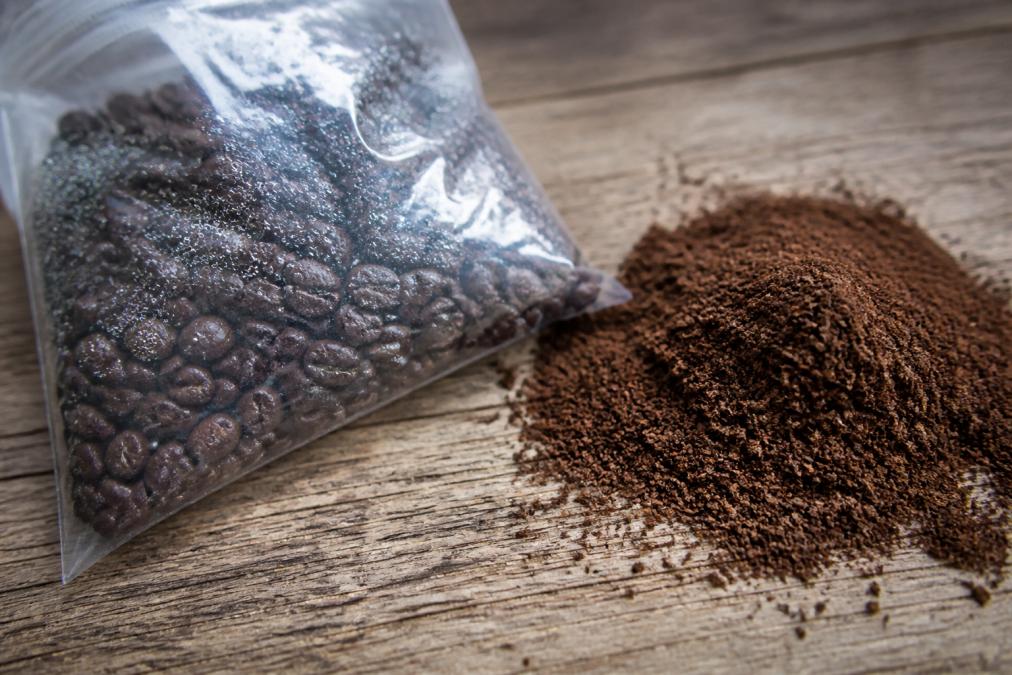
Whole beans have significantly less surface area exposed to oxygen. Pre-ground coffee exposes far more of the bean's interior to air, triggering oxidation and degassing, the release of CO2 and aromatic compounds that give coffee its flavor. Once those compounds escape, they're gone.
Whole beans maintain their flavor profile for 2-4 weeks after roasting when stored properly (peer-reviewed research). Pre-ground coffee begins noticeably degrading within days, with most aromatic quality fading by the end of the first week (peer-reviewed research). This is why coffee professionals grind immediately before brewing.
How Freshness Affects Your Cup
Fresh coffee tastes brighter, more complex, and more alive. Stale coffee tastes flat and muted. The difference comes down to chemistry: freshly roasted beans contain volatile aromatic compounds and oils that create good coffee. As those compounds degrade through oxidation and CO2 loss, the coffee loses complexity.
Oxidation and Degassing in Whole Beans
Oxidation is the chemical process where oxygen reacts with compounds in roasted coffee, breaking them down into simpler, less flavorful molecules. Degassing is the release of CO2 created during roasting. Both happen continuously after roasting, but much faster once the bean is ground.
Whole beans undergo both processes slowly. The bean's exterior acts as a protective barrier, limiting oxygen exposure to the surface. The interior remains largely protected until you break it apart.
Pre-ground coffee has maximum surface area exposure. When a single bean is broken into hundreds of particles, exposed surface area increases dramatically. Oxidation accelerates, and CO2 escapes rapidly. Within 24 hours, a significant portion of aromatic compounds have degraded (peer-reviewed research).
How Long Does Ground Coffee Last
Pre-ground coffee begins losing flavor immediately after grinding. The window where it tastes genuinely fresh is roughly 24-48 hours. By day 7, most aromatic quality has faded.
This timeline assumes proper storage in an airtight container away from light and heat. Exposure to air, light, and temperature fluctuations accelerates degradation dramatically.
Whole beans remain flavorful for 2-4 weeks post-roast under the same storage conditions. Lighter roasts tend to hold freshness slightly longer than darker roasts, which degrade faster after roasting.
Grind Consistency and Extraction
The size and uniformity of coffee particles directly determines extraction rate, how quickly water pulls flavor compounds from grounds during brewing. Inconsistent particle sizes mean some grounds over-extract (becoming bitter) while others under-extract (remaining sour).
Whole bean coffee gives you control: a quality burr grinder produces uniform particles sized precisely for your brewing method. You grind immediately before brewing, extracting from the freshest possible grounds.
Pre-ground coffee is ground at the factory, often days or weeks before you brew it. The grind size is a one-size-fits-most compromise, usually medium, which works for drip coffee but isn't optimized for French press, espresso, or pour-over. By the time you brew it, those grounds have already lost aromatic compounds.
Particle Size and Brew Method
Different brewing methods require different grind sizes. French press needs coarse grounds; espresso needs fine grounds; drip coffee works best with medium grounds. Pre-ground coffee is typically ground to medium as a compromise, which may not match your brewing method.
Whole beans let you grind to the exact size your brewing method requires, optimizing extraction across all methods.
Best Coffee Grinder for Home Use
A quality burr grinder is essential for whole bean coffee. Burr grinders use two rotating surfaces to crush beans into uniform particles. Blade grinders chop beans randomly, producing inconsistent sizes and generating heat that damages flavor.
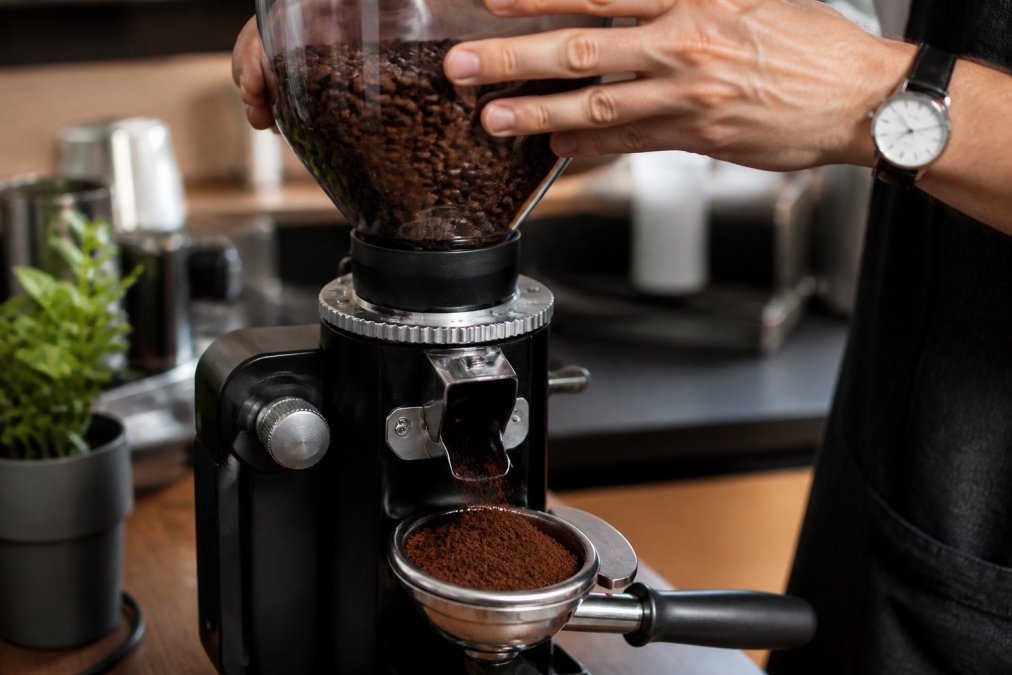
All are burr grinders, which is the non-negotiable baseline. A burr grinder costs more upfront than a blade grinder, but the improvement in consistency and flavor is immediate and dramatic.
How to Store Coffee Beans Fresh
The enemies of coffee freshness are oxygen, light, heat, and humidity. An airtight container that blocks light and sits in a cool, dark place, a kitchen cabinet, not the counter, will keep whole beans fresh for 2-4 weeks. Vacuum-sealed bags or containers with one-way valves work well and are inexpensive.
Avoid the freezer. Condensation that forms when frozen coffee warms to room temperature introduces moisture, which accelerates degradation. Room temperature storage in an airtight container is better.
Pre-ground coffee benefits from the same storage conditions, but the timeline is compressed. Even in perfect storage, pre-ground coffee is noticeably degraded by day 7.
For maximum freshness, buy whole beans and grind immediately before brewing. The flavor difference is most noticeable with specialty, single-origin coffees where complexity matters.
Convenience vs. Quality Trade-Offs
Whole bean coffee requires a grinder, takes an extra 2-3 minutes in the morning, and demands you think about freshness. Pre-ground coffee requires nothing, open the bag, scoop, brew.
The flavor difference is undeniable: whole bean coffee tastes noticeably better. If you're someone who enjoys coffee as part of your morning ritual, those extra 3 minutes are worth it. If you drink coffee primarily for caffeine, pre-ground is fine.
Cuppari Coffee ships whole beans roasted the same day your order arrives, giving you coffee at peak freshness without the challenge of sourcing freshly roasted beans locally. A subscription model guarantees freshness on every order, unlike retail pre-ground coffee which may be weeks old.
Cost Analysis: Whole Bean vs Pre-Ground
Whole bean coffee typically costs more per pound than grocery store pre-ground. But this comparison is misleading because pre-ground coffee loses flavor rapidly. By the time you brew it, you're paying full price for already-degraded coffee.
Whole bean coffee from a specialty roaster costs more upfront, but you're paying for actual freshness. A quality burr grinder is a one-time investment that pays for itself within months through improved quality.
Which Option Is Right for You
Choose whole bean coffee if:
- You have 3-5 minutes in the morning for grinding
- You own or are willing to invest in a burr grinder
- You actually taste your coffee and notice flavor differences
- You want maximum freshness and flavor complexity
Choose pre-ground coffee if:
- You need coffee ready in seconds with zero preparation
- You're traveling or grinding isn't practical
- You drink coffee primarily for caffeine, not flavor
- You're on a tight budget
For most people who care about coffee quality, whole bean is the better choice. The flavor difference is real, the equipment investment is modest, and the time cost is minimal.
The difference between whole bean and pre-ground coffee comes down to freshness, flavor, and how much you value both. Whole bean coffee stays fresh longer, lets you grind for your specific brewing method, and tastes noticeably better. Pre-ground coffee trades all of that for convenience. Cuppari Coffee delivers whole beans roasted the same day your order ships, ensuring you get coffee at peak freshness. If you're ready to experience the difference fresh coffee makes, explore Cuppari Coffee's single-origin and blend options and enjoy free shipping on all U.S. orders.
| Aspect | Whole Bean | Pre-Ground |
|---|---|---|
| Freshness Window | 2-4 weeks | 24-48 hours |
| Surface Area Exposure | Minimal | Maximum |
| Flavor Profile | Complex, nuanced | Flat, muted after 1 week |
| Equipment Required | Burr grinder | None |
| Time to Brew | 5-7 minutes (including grinding) | 2-3 minutes |
| Grind Customization | Full control | Fixed to medium |
| Oxidation Rate | Slow | Fast |
| Best For | Flavor enthusiasts | Convenience-focused |
| Storage Life | Weeks | Days |
| Cost Per Serving | Higher upfront, lower long-term | Lower upfront, stale product |
Frequently Asked Questions
Q: Is it better to get whole bean coffee?
A: Whole bean coffee stays fresher longer because the beans' surface area limits oxygen exposure. Grinding immediately before brewing captures volatile oils and aromatic compounds that degrade quickly in pre-ground coffee. For coffee drinkers who brew daily and own a grinder, whole bean delivers noticeably better flavor and aroma. Pre-ground works if convenience matters more than peak freshness or if you brew immediately after opening.
Q: How long does pre-ground coffee stay fresh compared to whole beans?
A: Pre-ground coffee peaks within 15-30 minutes of grinding, then steadily loses flavor as CO2 dissipates and volatile oils oxidize. In an airtight container, it stays acceptable for 3-5 days. Whole beans maintain their freshness window for 2-4 weeks when stored properly in a sealed, opaque container away from heat and light. The larger surface area of ground coffee accelerates staling significantly.
Q: Does 1 lb of coffee beans equal 1 lb of ground coffee?
A: Yes, 1 pound of whole beans becomes 1 pound of ground coffee by weight. However, grinding increases surface area, which means the ground version stales faster. The volume may appear slightly different due to how particles settle, but the actual mass remains the same. This matters for storage: ground coffee takes up similar space but requires airtight conditions to preserve freshness.
Q: Is it worth buying pre-ground coffee?
A: Pre-ground coffee is worth buying if you prioritize convenience over maximum freshness, ideal for busy mornings or when you brew immediately after opening. It eliminates the need for a grinder and grinding time. However, you'll sacrifice the flavor intensity and aroma complexity of freshly ground beans. For coffee enthusiasts seeking the best-tasting cup, whole bean with a quality grinder delivers superior results and typically better value over time.
This article was written using GrandRanker